Star Wars: The Last Jedi - 10 Great (Canon) Books To Read While You Wait
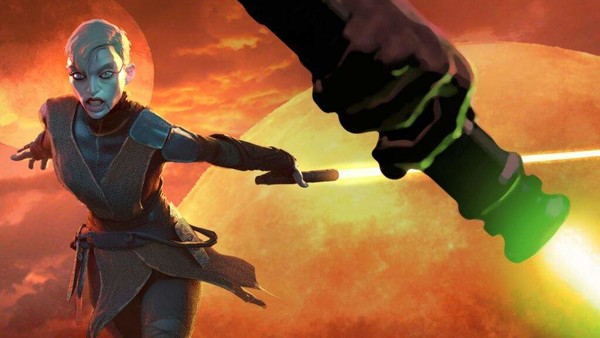
Did you know that The Clone Wars got its REAL finale in print?
If, like me, you spent April's Celebration month curled up on your sofa, freaking out over the numerous panels, cosplayers and trailers that graced Star Wars’ foremost event, then you’re probably feeling a tad upset that the whole thing came to a close so soon. It seems as though just as the trailers for The Last Jedi and Battlefront II debuted, the doors were shut on Celebration Orlando. And, like it or not, there’s still a hefty five month wait for the year’s next adventure in a galaxy far, far away. Quite the bummer.
It’s not all doom and gloom however. Though it’s only been about three years since Lucasfilm started re-expanding the Expanded Universe (much to the chagrin of those ol' 'Legends Never Die' folks), fans are now in the very fortuitous position of being able to sample a whole host of new Star Wars literature, and yes, all of it is canon. Indeed, Disney can now boast a vast bibliography of Star Wars stories, with writers tackling everything from shadowy Clone Wars conspiracies to nuanced character studies of some of the franchise’s most overlooked heroes and villains. It is, in many ways, a resurgent period for Star Wars on print.
But what should you really be checking out in the run up to Episode VIII? With so many stories to choose from, things can get a little overwhelming. Fret not however, because we've got you covered with a whole heap of recommendations to make this Star Wars-less period just that little bit more bearable.
10. Tarkin

As far as Star Wars villains go, they don't get anymore one-dimensional, ostensibly, than A New Hope's Grand Moff Tarkin. That isn't to say that there's anything necessarily wrong with Peter Cushing's foul-stenched imperial officer - he is, after all, one of the most recognisable villains of the franchise - but it is obvious the character only served one purpose: to personify the malice of the Empire in full.
Of course, Cushing's portrayal lends Tarkin an edge that few Star Wars villains can match (though some would perhaps argue that he lacks the aesthetic flare to compete with the likes of Boba Fett), and that in turn has fuelled a discernible level of interest in the character from the fanbase. Enter James Luceno, who, having commanded various Star Wars novels in the past, set about exploring the character in a massive way in 2014. There, we see Tarkin, the eponymous soon to be commander of the Death Star, morph from a loyal ally of the Republic into the iron hand of the Emperor, a process that adds some much needed depth to one of the most recognisable faces of the Star Wars mythos.
Luceno is something a veteran of the franchise, and his experience with the universe more than pays off in Tarkin. If you've just gotten round to revisiting Rogue One (and you're after more of that Episode III/IV hype), then you could do a lot worse than to give this book a shot.
9. A New Dawn
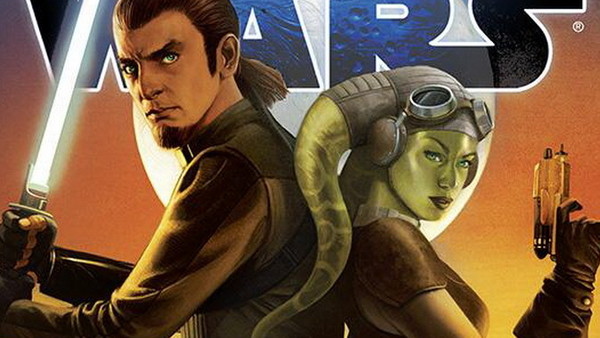
Though Rebels was never the successor to The Clone Wars we hoped it would be, it has done a more than admirable job in examining the formative years of the Rebel Alliance. Central to the show's relative success is, one would argue, the partnership between former Jedi Kanan Jarrus and ace pilot Hera Syndula. By a mile they're the best thing about the show (bar Chop), so it should come as no surprise that they too have been given the literary treatment.
John Jackson Miller is one of the best Star Wars writers going, with 'Kenobi' - a westernised take on Old Ben's nomadic years spent on Tatooine - solidifying his position at the forefront of the franchise's literary endeavours. In 'A New Dawn', however, the writer yet again brings his A-game, producing a piece of work that, by all means, goes above and beyond what Rebels has been able to give fans during its three or so years on the air.
Taking place five or so years before the events of the show, the book follows Kanan and Hera in their first encounter together, and does a great job on exploring Kanan's reluctance to reconcile a then fledgling smuggling career with his Jedi past. It's a grim time for the Outer Rim, and one of Miller's greatest strengths is his ability to convey that atmosphere in the rawest sense. Of course, it still possesses much of the charm of the show it precedes, but - tonally at least - it depicts a much darker galaxy than we've seen on animation.
A New Dawn makes great strides in the construction of the Star Wars timeline, but it does so within the context of an engaging, character driven narrative. Fans of the show will find plenty to love with the book in this case, but, even if you're not accustomed to the exploits of Phoenix Squadron, it's more than worth a shot. Do it.
8. Aftermath
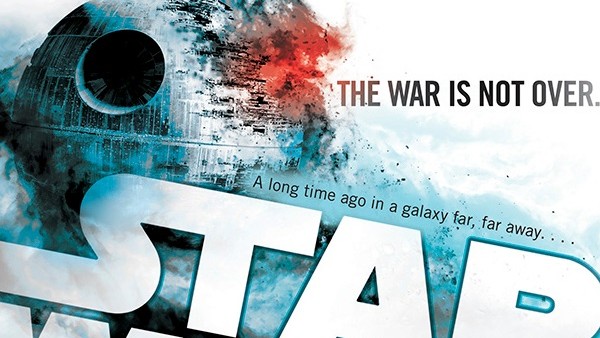
The first of the big books to really tackle the gap between Episode VI and VII, Aftermath - as the cover would intimate - takes place in the fallout of the destruction of the Second Death Star. It's more exposition-y than the other books out there in the wilderness, but it's still a worthy addition to any fan's Star Wars library.
As the first release to bridge the gap between the old and new trilogies, there was a lot of responsibility resting on Chuck Wendig's shoulders. Given the success of the book however, it's clear to say that it didn't weigh too heavily upon Wendig, a writer who, having commanded various novels and comic book series' over the years, was a surefire choice to make the book the success it was two years ago.
Wedge Antilles - one of the more famous side characters from the original trilogy - dominates most of the title's action, but the book is also famous for including one of the first openly gay heroes of the saga in Sinjir Rath Velus, an imperial deserter turned agent of the New Republic.
7. Battlefront: Twilight Company
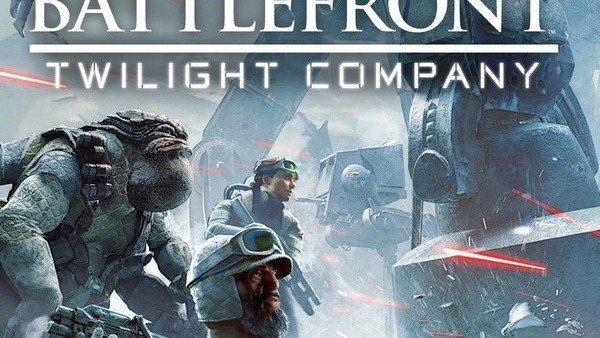
Despite the name, Battlefront: Twilight Company doesn't actually have all that much in common with the video game series. What it did have, however, was an actual story, something that not even the real Battlefront could include.
Centred around the exploits of Twilight Company, the vanguard of the Rebel Alliance's military, the book takes a more action-oriented approach to the Star Wars license, featuring the typical humans and humanoids that you'd expect to form a part of a rag-tag band of freedom fighters. Set during the Battle of Hoth and the events following the evacuation of Echo Base, it also plugs in some gaps from what remains a relatively unexplored period period in the wider Star Wars canon.
Given the impending release of Battlefront II's Inferno Squadron tie-in, it's clear that Twilight Company was successful. As a jumping on point for some light Star Wars reading, it excels and then some.
6. Catalyst: A Rogue One Novel
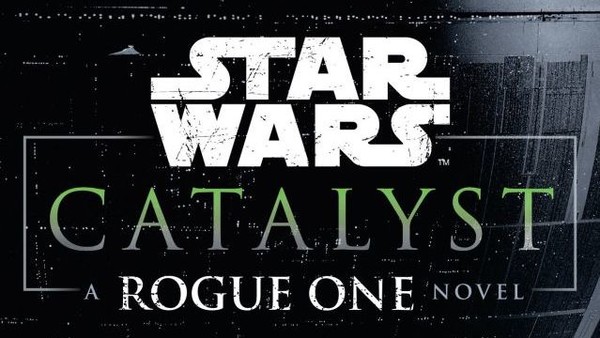
Another Luceno work, Catalyst: A Rogue One Novel takes place in the years preceding the first Star Wars spin-off, examining the rise of Orson Krennic and the time Galen Erso and his family spent in the employ of the Empire.
Like Tarkin, Catalyst concerns itself mainly with exploring the characters that inhabit the Star Wars universe rather than any aspects of world building, although the novel does draw attention to certain details in the burgeoning canon of the Disney era. For fans of Rogue One, however, the main draw will most likely be seeing Mads Mikkelsen's character before the events of the film, as well as Krennic in the Republic era.
One of the best things about the book actually is its treatment of Lyra, whose relationship with Galen receives some much needed development, making her death in Rogue One all the more upsetting. If you were a massive fan of that film when it released last year, then Catalyst is definitely a book that'll tide you over until the next Star Wars Story.
5. Thrawn

Hardcore Star Wars fans will need no introduction to Grand Admiral Thrawn, a character as famous for his appearance in Rebels as much as he is for the OG Dark Horse EU comics themselves.
For those unfamiliar with the blue-skinned alien, Thrawn is the master tactician of the Imperial Navy, and one of the main adversaries to have featured in Star Wars: Rebels. Timothy Zahn's novel featuring the character, however, isn't set during this period. Instead, it examines the character's rise to power, rooting itself in both the Republic and Imperial eras.
Being such a fan favourite character, and having orchestrated many other Thrawn stories in the past, Zahn's handling of the Admiral feels both immediately familiar and infinitely refreshing. Like many of the other novels to have released after Disney's EU reboot, it again takes a look at the transitory phase between the Republic's fall and the rise of the Empire, and although the period between Episodes III and IV is well traversed territory at this point, the focus on that transition is always interesting to witness, especially though the eyes of someone who advocated that transition during the Clone Wars themselves.
If you're familiar with Zahn's work, then you'll know that the writer's reputation precedes him. As far as Star Wars novels go, Thrawn is certainly up there.
4. Aftermath: Empire's End

Another Chuck Wendig novel with a lot to boast, Aftermath: Empire's End (like the novel before it) is set in the months ensuing the destruction of the second Death Star and the subsequent collapse of the Empire. The book picks up where the sequel, Life Debt, left off, following the likes of Antilles, Velus and Jas Emari, as they navigate the new post-Imperial order of things in the galaxy.
As the concluding chapter to the Aftermath trilogy, Empire's End did a lot to tie-in to The Force Awakens, including showing the birth of Ben Solo, and even the commencement of the First Order trooper programme. On top of this, the book also expands upon the lore of Jakku, making the final battle in the Galactic Civil War sound all the more impressive and indeed, an element we're likely to see further expanded upon in Star Wars: Battlefront II.
There's a lot to love about Wendig's writing, and Empire's End is an obvious highpoint in the novels to have been released since Disney's acquisition of LucasFilm so far.
3. Ahsoka
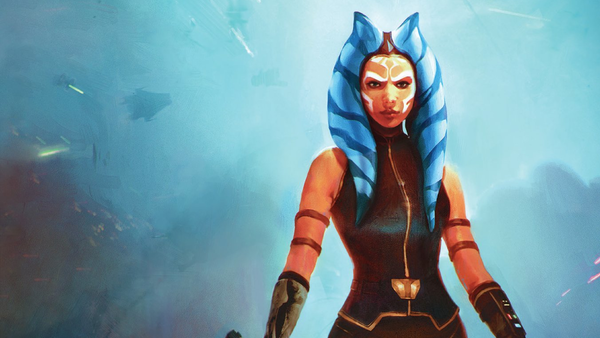
Ahsoka has to be one of, if not the, best Expanded Universe character out there. She's someone we've seen grow from a padawan into an older face of the rebellion, and, although she still technically isn't a Jedi Knight, her time spent with Phoenix Squadron only typified the character's coolness, as did her nifty-looking silver lightsabers.
Her novel, set in between the events of her resignation from the Jedi Order and the beginning of Star Wars Rebels, was also pretty cool. The story sees the character forge an alliance with perennial anti-Empire agitator Bail Organa, and elaborates upon the plot line from Rebels' second season where the Empire was stealing force-sensitive children.
Written by E. K. Johnston and published a little under a year ago, Ahsoka is a relatively new addition to the Star Wars library, but one that ranks among the best books in its shelves. If you're a fan of the character, or indeed Rebels, then you should consider it essential reading.
2. Lost Stars
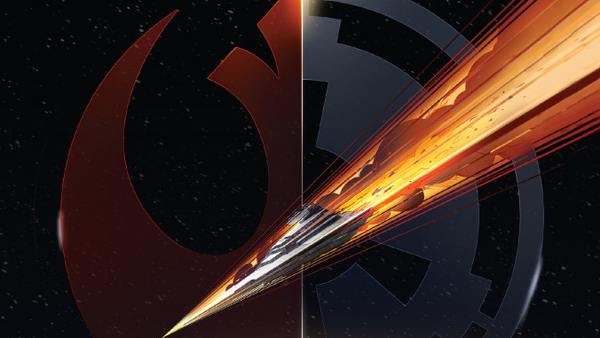
Lost Stars is genuinely so good.
Claudia Gray's novel about a pair of star-crossed lovers in a divided galaxy is a story well worth investing in, especially since it happens to be something of an epic. The book takes place over the course of the entire original trilogy, and tells the story of Thane Kyrell and Cienna Ree, two ace pilots from the planet of Jelucan. Though both originally aspire to join the Imperial Navy and become ace fighter pilots in the Galactic Civil War, Thane defects to the Rebel Alliance, furious at having witnessed the brutality of the Imperial regime and having become increasingly dejected at the Imperial bureaucracy during his stay at the Imperial Academy, while Cienna stays, undeterred by the destruction of the Death Star.
It's a brilliant story, and delves further into the personal implications of the conflict between the Rebellion and the Empire in a way that no other Star Wars materials have managed to do. That's impressive, considering the sheer scale of the mythos, and Los Stars continues to impress two years after it first released.
It's a genuinely exciting take on the mythos, and something all fans of the Original Trilogy should read if they get the chance to do so.
1. Dark Disciple

Despite its rocky start, 2008's Clone Wars series ended up turning into one of the finer adaptations of the Star Wars license, exceeding the quality of the Prequel Trilogy by a large margin and leaving behind a devoted fan following in the process.
The show was cancelled before it was given the opportunity to wrap things up fully. Which, while indeed a massive shame, allowed for Christie Golden to swoop in and adapt one of the series' many unaired scripts; one that featured political intrigue, assassinations, and Asajj Ventress herself.
Dark Disciple works so well because it takes a completely different approach to its appraisal of the Jedi Order, depicting what could even be considered the Order's lowest moment, where the council - seemingly embracing the cynicism of the era - orchestrate the assassination of Count Dooku. Tasked with the deed is Quinlan Voss, a favourite of Legends lore and a character that the animated series only devoted minimal screen-time to. Supervised by Obi-Wan and equipped with a plan to manipulate Ventress' grudge against Dooku to the Republic's benefit, Voss embarks on a journey that completely transforms the character by the book's end, forcing him to reassess his impressions of the Jedi Order and his actual commitment to it as well.
Ventress is by far the book's greatest triumph however; Christie Golden (the upcoming author of the Inferno Squad tie-in to Battlefront II) finds a voice for the character that embodies both the whit and cynicism that made her so enjoyable in the Clone Wars series, and seeing her delve deep into the former apprentice's motivations adds a whole new dimension to the former Sith Lord. It makes for a brilliant read, and provides closure for the series in a manner that exuded its atmosphere perfectly.
Golden paints the decline of the Jedi Order with all the subtle inflections that such a topic necessitates, and does it all whilst providing the perfect ending to one of the series' finest supporting roles. It is for that reason, among many others, that Dark Disciple triumphs.
-
Are you excited for The Last Jedi? Have you read any of the new novels to have released so far? Let us know in the comments below!