10 Essential Batman Stories For New Readers
The beginner's guide to reading Batman comics!
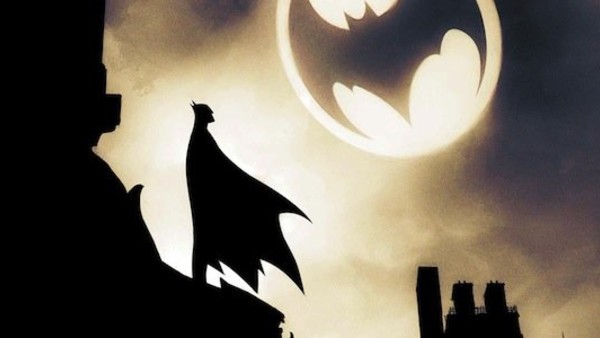
Batman has barely been off our screens since the nineties animated series, and between the DCEU, Gotham, and countless animated movies, that's showing no signs of stopping.
In the comics, Bats is going through something of a renaissance thanks to the efforts of Scott Snyder, Tom King and countless other writers and artists who have all done an incredible job of retooling the Caped Crusader for new readers. Still, even with the brilliant main Batman title and an origin story that's so well know it's practically a modern myth, 75 years of history can be more than a little intimidating for people who are just now getting into the comic books. Maybe they really enjoyed Christian Bale's depiction, perhaps they caught Beware The Batman on Cartoon Network before it got shunted to the graveyard slot, they may even have come across him for the first time in the Injustice series of videogames. They want to get started with reading the Batman comics, but with over seven decades of material to choose from, where do they start?
Well, that's where we come in. We've compiled a list of the essential Batman stories for new readers, for people who have little to no idea of what the Dark Knight is like in his comic book incarnation. This isn't necessarily a countdown of the best Batman stories, period, but a carefully curated selection of the single issues, story arcs and graphic novels that will give novices the best handle on the character, his extended Bat Family, his rogues gallery, his home city, and his place in the DC Universe. And it just so happens we will touch on some of the best Batman stories along the way, as well as some that are less well known.
With that in mind, let's get started with this beginner's guide to Batman! And if there's any other essential starting points we missed, shine the Bat signal in the comments and at the very least we'll have Huntress come along and check it out.
10. The Court Of Owls

The New 52 might be dead and buried, but the first story arc by Scott Snyder and Greg Capullo that reintroduced old fans to the Dark Knight and made new readers just as welcome is still very much reading.
The Court of Owls - and its sequel, City of Owls - didn't bother going over the tragic childhood of Bruce Wayne that led to him adopting the cowl, instead heading straight into an established crime fighter facing the toughest challenge of his career thus far. Capullo's art is certainly stylised, but teamed with colourist FCO Plascencia he creates a dark, cold version of Gotham City instantly familiar from the Christopher Nolan films.
Scott Snyder, meanwhile, focusses on Batman's reputation as the World's Greatest Detective as he uncovers a decades-long conspiracy that is engaging and exciting, whilst also giving us a peek into the character's family history and building to a confrontation which reminds us that, unlike most superheroes, Bruce Wayne is only human.
9. Hush

The City of Owls is mostly concerned with Batman as a solitary figure. There are cameo appearances by his various wards, each of whom have held the title of his sidekick Robin - Dick Grayson, Tim Drake, and his son Damian Wayne - but otherwise, there are no other superheroes involved, and his celebrated rogues gallery of villains are only briefly seen in the opening pages. Jeph Loeb and Jim Lee's contemporary classic Hush, meanwhile, opens up the Batman and DC Universe toy box, and puts it to great use.
A perfect entryway for new readers, the story introduces the new villain Hush, a mysterious and dangerously psychopathic bad guy whose identity is masked by bandages that cover his entire body. His plan to defeat Batman takes in almost every iconic enemy the Dark Knight has ever faced, including Two-Face, the Joker and Poison Ivy, the latter of whom is recruited to brainwash Superman and have him fight his friend.
To defeat these assembled foes, Batman has to rely on the help of his partners Nightwing, Robin, Commissioner Gordon and Catwoman, with whom he becomes romantically involved.
If you want a rollicking good mystery that introduces pretty much every important element of the character and his supporting cast, you can't do much better than Hush.
8. The Killing Joke

The dearly departed Heath Ledger's portrayal of Batman's greatest villain was one of the most talked about parts of the Dark Knight movie, and that portrayal wouldn't have been possible without The Killing Joke.
The Clown Prince of Crime is almost as well known as his eternal enemy, his ghostly visage as easily recognisable as the cowl, his bright purple suit as iconic as the Bat symbol. This is the story that cemented The Joker as a truly insane and dangerous threat, whilst also establishing his and Batman's ongoing relationship and delving into his backstory for the first time.
Beginning with Batman acknowledging the pair's past, the story goes on to see the Joker throwing himself into one last big scheme: to drive Commissioner Jim Gordon insane, and prove to the world that all it takes is "one bad day" to drive a good man mad, with flashbacks to his pre-villain life implying that's what happened to him.
With breathtakingly detailed art by Brian Bolland and lyrical writing by comics legend Alan Moore, The Killing Joke is the definitive Joker story and, so, one of the definitive Batman stories.
7. The Man Who Laughs

Of course, if you wanted a little more backstory on that decades-long relationship between Batman and his oldest foe, we've got you covered.
Ed Brubaker, who later went on to write the excellent Gotham Central about the cops in Batman's city, and artist Doug Mahnke put together this one-shot graphic novel which retold the pair's first encounter, which originally appeared in 1940's Batman #1 (not actually the first appearance of the Dark Knight, but we'll get to that in a bit).
Updating and expanding the story for a modern audience and setting, Brubaker and Mahnke get as close to a perfect depiction of the Joker as anyone ever has. Not only does The Man Who Laughs show us the early days of the Joker's one-man crime wave, but it also brings in core parts of the Batman mythos like Arkham Asylum (the prison for the criminally insane where all of his villains end up), the Batcave, Alfred and - at the story's end - the Bat Signal, which Commissioner Gordon plans to use to call the vigilante up whenever another supervillain of the Joker's ilk rears their ugly head. And even a rookie comic reader knows it wasn't long until that happened.
6. Tower Of Babel

So we've established most of what makes Batman great - his friends, his enemies, his city, his wonderful toys - but, for the most part, he's still been confined to his home in Gotham City.
In DC Comics, there are two main depictions of Batman. There's the Batman of Gotham, who solves mysteries and fights street-level crime in his city. Then there's the superheroic Batman, who's friends with Superman, The Flash, Wonder Woman, and frequently teams up with them to fight world (and sometimes universe) threatening menaces as part of the Justice League. Who have a headquarters on the moon.
That poses two big questions, especially considering the character we've built up in the previous four stories. For one, where does the Dark Knight find the time to help out when he's supposed to be governing Gotham? And for another, what good is a normal bloke with a bunch of gadgets on a team of near gods? There's no good answer to the former, but the latter is explored by the JLA storyline Tower of Babel, where a villain discovers the secret files Batman has been keeping on the weaknesses of his team mates, just in case any of them turned bad.
He is part of the team because he's so smart, and this brilliant Mark Waid and Howard Porter joint shows how that intelligence is just as powerful as Superman's rippling muscles. It also starkly illustrates how he things of his fellow heroes, and what they think of him.
5. The Long Halloween

One writer who will appear on this list more than any other is Jeph Loeb, and that's because he seems to have such a good handle on the character in both his modern day and retro depictions.
Hush is one of the great Batman stories of contemporary times, but even better is The Long Halloween, Loeb and artist Tim Sale's story of the character's early days. The story throws in some of Batman's other villains - The Riddler and The Scarecrow both familiar from their own movie depictions - whilst also retelling the tragic story of Gotham District Attorney Harvey Dent's transformation into Two Face. It's also just a really, really good classic detective story, with the organised crime in Gotham being just as fleshed out - and just as much of a threat - as well as new bad guy Holiday.
More than that, though, it gives a greater insight into both Batman and Bruce Wayne, and how that dual identity works, and also provides a little more background into the comradery between the Caped Crusader and Commissioner Gordon. Plus Tim Sale's art is gorgeous and his use of shadows makes this into a none-more-noir Batman tale.
4. Dark Victory

Apart from, perhaps, the pair's follow up.
Dark Victory is a direct sequel to The Long Halloween, with Two Face engaged in a turf war with the mob over Gotham's streets, which Batman has to deal with whilst also unravelling the mystery of a serial killer known only as the Hangman. Along with introducing more of the Dark Knight's rogues gallery - as well as a new District Attorney who provides a different, critical view on his methods - Dark Victory tells the story of how young circus performer Dick Grayson was orphaned and became Batman's first sidekick, Robin.
Artist Tim Sale was initially reluctant to work on the story, due to a personal dislike of the Robin character, which he didn't feel squared with the dark and gritty Batman character. His fears were allayed, as any sceptical new readers might be, with a story which showed how essential he was as a counterbalance to the Dark Knight, still in his early years and struggling with his chronic loneliness and fear that he will make the wrong decision.
Robin, we learn, is important to Batman on both a personal and a crime fighting level. And there's still a lot of awesome crime fighting to be seen in Dark Victory, which ties up the threads of The Long Halloween with aplomb, whilst holding onto its noir sensibilities.
3. The Dark Knight Returns

On the other end of the spectrum is Frank Miller's classic Dark Knight Returns, which sees Bruce Wayne in his later years. He begins the story having long since hung up the Batman title, following the death of second Robin Jason Todd at the hands of the Joker.
After decades of screwball adventures and wildly shifting tones - the comics were still struggling to find their footing after the campy sixties Adam West TV show - the Dark Knight Returns reminded readers of why Batman did what he did, and why he has to do what he does.
Spurred to return to his double life by the degradation of society and the sorry state of Gotham City, having survived a car crash the elderly Bruce Wayne begins training again, although not always for the reasons you expect. As well as being a great story, the Dark Knight Returns hints that Wayne's reasons for becoming Batman weren't entirely altruistic - he reflects on the murder of his parents, but also admits to the kick he gets out of fighting bad guys - and explores his responsibility when it comes to the supervillains he has fought and possible even inspired, as each comes out of retirement themselves as a result of seeing their old enemy's return.
2. Year One

Not content with penning the greatest story ever told of Batman's later years, Frank Miller teamed up with artist David Mazzucchelli to produce the greatest story ever told of Batman's early years.
One of the main influences on Batman Begins and the Gotham TV show, Year One is as much the story of Bruce Wayne's rise to the mantle of Batman as Jim Gordon's rise to Police Commissioner of Gotham City, and of the City's own descent into the crime-ridden hell hole that required these two heroes to try and save it.
Year One is the perfect introduction to almost every one of the main facets of the Batman mythos. We get the retelling of his origin story - not just the death of his parents, but all of his training, and the inspiration to dress as a Bat - as well as his initial meetings with the gangs of Gotham, Jim Gordon's early experience of the corruption in the city, and early appearances by Selina Kyle (later to become Catwoman) and Harvey Dent, ending with a nod and a wink to the Joker.
Basically any incarnation of Batman you've come across that's led you to picking up the comics? It was down to this story. So there's a good chance you'll enjoy it a lot.
1. Detective Comics #27

Where do you go after the greatest story ever told of Batman's early years? Well, you go for the earliest Batman story ever told.
Created by Bill Finger and Bob Kane, the Dark Knight's first ever appearance was in the pages of Detective Comics (which would later give the burgeoning DC Comics their name), and a surprising amount of the character's distinguishing features and elements were established which still exist 75 years later. The Bruce Wayne/Batman secret identity is not only there, but very similar to how the two are differentiated today. As Wayne he plays the part of billionaire playboy, oblivious to the goings on in Gotham, whilst as Batman he is fuelled by the murders of his parents to tackle the growing organised crime in the city.
There's Commissioner Gordon, the Bat cave, the costume and utility belt. The Case of the Chemical Syndicate also establishes Batman first and foremost as a detective, as he is called in to solve a crime that has the city's police force puzzled.
There are some notable differences from his later characterisation, however, especially when he lets the villain of the piece die, in line with the pulp heroes that inspired his creation. Still, Detective Comics #27 does such a good job of introducing the character of Batman, and everything that makes him great, that it's still yet to be bettered.