10 Major Milestones In Comic Book History
Nothing was ever the same again.
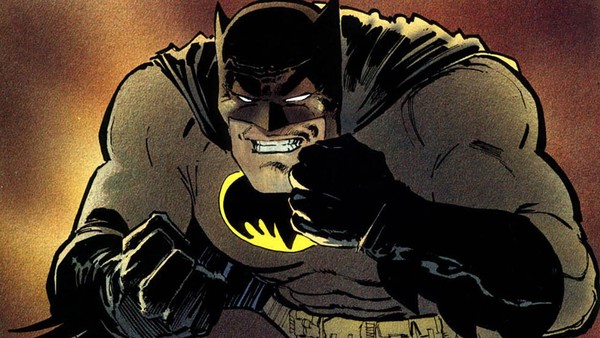
There are few mediums out there that have commanded as big an influence as comic books have. The cultural landscape is littered with superhero paraphernalia at the mo', and with that comes a massive history to boast. They have, after all, been chugging along for the better part of a century, and, like other mediums, they've come along way in doing so.
Indeed, while comic book history is still very much a burgeoning aspect of scholarly study, there are a certain events out there that historians have marked as being instrumental in the medium's development, and indeed, in its wider influence on history too.
Certainly, the 'big two' (Marvel and DC) have much to say on this issue. As the two, well, biggest companies in the industry, it's obvious that they'd be responsible for the greater part of its history, but they've been both heroes and villains over the years; vilified during the fifties comic boom and revered during its eighties resurgence; reviled for their lack of diversity and applauded for their strident social commentary. It's an amazing journey to dissect, and one that will, imaginably, be getting the biopic treatment in a few years time.
But what were the milestones that really changed the face of the medium? It's hard enough having to narrow down just ten, what with so many having left their own indelible impact on the industry, but still, with comics continuing to dominate the cultural landscape, it's important to highlight just how far they've come.
10. Lee, Kirby, Ditko & Co. Create Modern Marvel
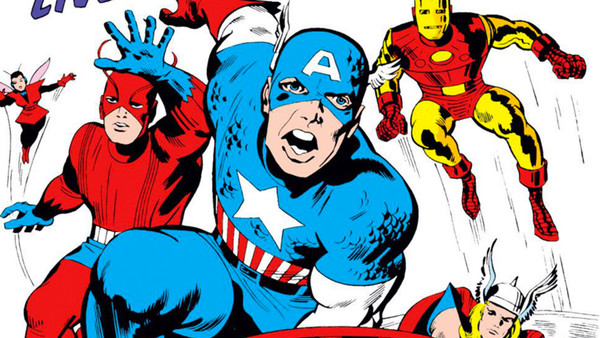
Joe Simon, Jack Kirby, Stan Lee, Steve Ditko and John Romita are all names that every comic book fan should be aware of, because they - along with some other exemplary talent at the company during the sixties - created the Marvel Universe we know today.
Prior to this quartet's involvement at the company, Marvel had mainly been known as Timely Comics, with their most successful character having been Captain America - the Nazi-smashing embodiment of American anti-fascism - along with other wartime characters, like the Submariner.
Simon, Kirby, Lee, Ditko and Romita all had a hand in creating the likes of Iron Man, Spider-Man, the X-Men and the Fantastic Four to name but a few - characters that have, in no small way, fundamentally changed the way audiences looked at comic books. Modern Marvel made an effort to create relatable characters defined as much by their own humanity as they were their superpowers, their strengths and their weaknesses; the X-Men themselves were a famous analogue for the Civil Rights Movement too.
With these characters, Lee, Kirby et al. established a precedent that would ensure that the company remained socially conscious (for the most part), and that relatable characters were the norm. These elements are intrinsically linked to Marvel's DNA, and without the involvement of these guys, well, it's safe to say that Marvel wouldn't be the company it is today.
9. Sixties Batman Defines The Caped Crusader

Sixties Batman is kind of the best.
Though we can argue all day about which Batman is the most definitive, or indeed the most iconic (it's BTAS, obvs), it's an inalienable truth that sixties Batman - with all its onomatopoeic action, puns, and shark-repellant - is definitive. It's certainly not indicative of today's Caped Crusader, but, at the time, Adam West's Batman was truly authentic, and provided what was the defining image of the character for decades in spite of the numerous cinematic releases, reboots and remakes that have featured The Dark Knight in recent years.
Indeed, the significance of West's Batman cannot be overstated. Though the character had had live action turns before, his was the one that truly propelled the character into the spotlight, and it was an interpretation that resonated both on and off the page - at least until 1970.
8. ...Before Dennis O'Neil Redefines Him

Dennis O'Neil has to be the most influential figure in comic book-dom that you've (probably) never heard of.
Over the years, the writer has turned his attention to Green Arrow, Green Lantern, Daredevil, The Question and, most famously of all, Batman, in what many would deem to be the most influential run the character has ever seen. Indeed, prior to his involvement with DC's venerable vigilante, the character was still thought of as being in the Adam West-vein. That's not bad, mind you, but there was a consensus amongst the DC hierarchy that the character had somewhat departed from the vision that Bob Kane and Bill Finger (mostly Finger) initially had in mind when they created him.
Enter O'Neil, who, along with Neal Adams, took The Dark Knight by the ears and dragged him kicking and screaming into a darker, more gothic environment than had previously been the norm prior to the seventies. Together, they introduced characters like Ra's al Ghul, and distilled the world's greatest detective to produce what many would seemingly deem to be the most definitive version of the character in print. Not only that, but O'Neil set his sites on the character's rogues too, reinventing the Joker as a murderous maniac and reviving the character of Harvey Dent. His influence, it must be said, is massive.
He pretty much created the modern mythos of the character, and, since he's the most popular one out there, it's a fairly major milestone to note. Frank Miller, eat your heart out.
7. The 'Seduction Of The Innocent' Begets The Comics Code
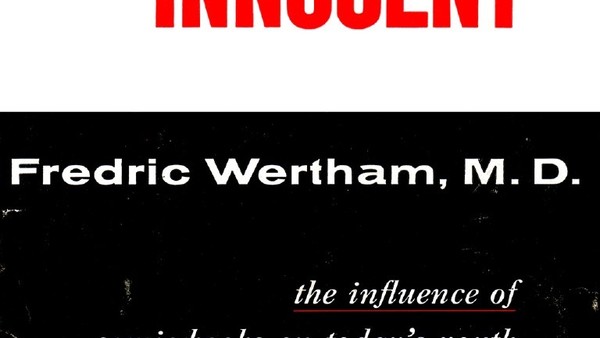
Fredric Wertham is sort of the bogeyman of the comic book world, what with the pathos behind the 'Seduction of the Innocent' having censored the comics industry for some time.
Basically, in the fifties, comics sales were booming. Superhero stories were of course popular, but pulpy tales of suspense and horror were also finding a massive audience and that, much to the annoyance of creators everywhere, didn't sit well with one Fredric Wertham, whose book spawned a congressional inquiry into the effects of comics on America's youth and later gave way to the Comics Code Authority.
The comics code severely limited what publishers could and couldn't show in their stories, and, while it did continue to exist in a somewhat neutered aspect until 2011, counter-organisations like the Comic Book Legal Defense Fund were still being founded as late as 1986.
As far as critics of the comic industry go, they don't get any worse - or notorious - than Fredric Wertham.
6. Black Panther - T'Challa - Is Introduced In 1966

Almost thirty years on from Superman making his debut in Action Comics, Black Panther - the first black superhero to be featured in a mainstream American comic book - made his first appearance. Said appearance came in Fantastic Four #52, which was written and drawn by Stan Lee and Jack Kirby, and saw the Four head to Wakanda by invitation of the king himself.
The fact that it took as long as it did to have a hero of colour in a comic book is scandalous in itself, but what's particularly amazing about T'Challa's creation is his superhero identity. The Black Panthers were, of course, a radical self-defence organisation founded by Huey P. Newton and Bobby Seale at the peak of the Civil Rights movement, so to feature a superhero bearing their name during the same period was, while not intentional, quite revolutionary in itself.
Three years later, Marvel would also introduce The Falcon, Captain America's longtime friend and eventual successor, before DC would bring in characters like John Stewart and Black Lightning. T'Challa undoubtedly paved the way however, and with a cinematic solo feature releasing next year, it's important to illustrate just how important the character really is.
5. Crisis On Infinite Earths Shatters The DC Multiverse

Though the current industry landscape is littered with events, crossovers and oh, more events, it's important to remember that it wasn't always the case. Marvel's Secret Wars did, at first, kick off the trend, but it was DC's first Crisis that truly defined what an event should be.
1985's Crisis on Infinite Earths was written by Marv Wolfman and illustrated by George Perez, and it completely shattered the DC Universe as it then existed. It did away with the multiverse, killed off Supergirl and Barry Allen, and again, altered the DCU from the ground up. This, 'post-crisis' continuity would later be altered by other Crises, Zero Hours and other micro-retcons over the years, but it's by no means any less influential. In fact, it's probably the most influential comic book event of all time, what with there having been so many retcons, renumberings and reboots over the years.
This year's Justice League film seems to be paying homage to the red sky motif of DC's various Crises, so it'll be interesting to see if, like the Crisis of the comics, in can leave a major impact on a different medium.
4. Moore And Miller Redefine The Medium

There are few creators out there that have influenced the medium to the degree that Frank Miller and Alan Moore have.
Granted, Miller's work is all kinds of blegh these days, but there was a time where he commanded the respect of audiences, critics and colleagues alike. The Dark Knight Returns - as seminal as it is - may not have redefined the Caped Crusader as much as some are led to believe, but it did leave a remarkable impact nonetheless.
Forgive us for breaking out the 'dark and gritty' cliché handbook here too, but it's true, Miller's work lent itself well to the dark and, well, gritty resurgence that the medium was experience as the eighties closed. Alan Moore, however, really took things up a notch, starting with a seminal run on Swamp Thing before creating a little old book called Watchmen, which - as most audiences will attest - is commonly regarded as being the finest comic book story of all time.
There are countless other names that really penetrated the industry during the eighties, but Moore and Miller certainly exemplified the shift in tone that it experienced during the period.
3. Women In Refrigerators Is Founded

When Ron Marz axed off Alexandra DeWitt and stuffed her into a fridge, little could he have known that it would spawn a massive online movement regarding the treatment of women in comics. Said movement took the form of the website 'Women in Refrigerators', which was founded by Gail Simone and others to collate and document the number of women killed off/maimed/tortured/de-powered in the medium and dissect what the implications of the trend actually meant.
Simone received numerous responses from writers in the industry, including Marz, and many themselves admitted that it had given them pause for thought in regards to their own plotting techniques in respect to women. Simone would later (awesomely) go on to write comic books full time, kicking things off with a stint on Deadpool before going on to write acclaimed stints on Birds of Prey and Secret Six. Today, the phrase is commonly used in online circles, and other movements like The Hawkeye Initiative have also targeted the industry's often bizarre attitude towards women in comics.
While the medium is still relatively light on women-led books, there are far more women working in the industry than there were in 1994. Simone and the others behind WIR played a massive role in forcing a conversation on the issue, and though it may not be cited at such, the site had a massive role to play in the development of the medium as we currently see it.
2. World War II
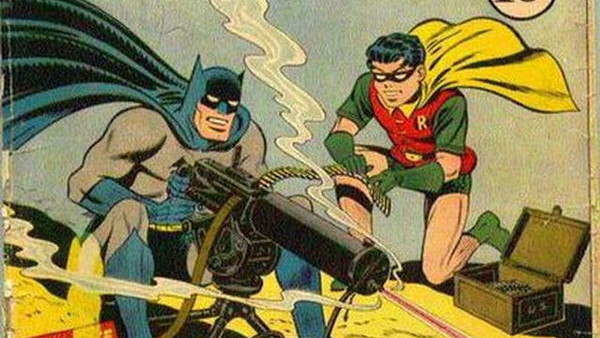
World War II was the single most climactic event in the history of the 20th century, and so it should come as no surprise, really, that comics had a part to play in it too.
And really, who doesn't love seeing superheroes punching/shooting/destroying Nazis? Both DC and Marvel (formerly Timely Comics) got in on the action, with the latter most famously breaking sales with the introduction of Captain America in 1941. Soon, comics published in the States would be perforated with picturesque propaganda (including this delightful number above), with the likes of Batman, Superman and Wonder Woman all rallying the cause with calls for citizens to buy war bonds to keep the good fight going (remember, each one you buy is a bullet in the barrel of your best guy's gun).
The war still features prominently in comics today, what with Cap getting his debut during that period and all. And again, superhero comics boomed massively during the pre and post-war period. Jewish creators like Simon and Kirby helped establish a strong anti-fascist tenet that would guide the genre going forward, and the popularity of comics like Captain America provided Timely with the base necessary to expand after the conflict had ended.
World War II was instrumental in not only the success of the superhero genre in this sense, but also in providing an outlet for creators to produce powerful symbols of resistance against oppressive forces and power structures. We've most recently seen this in the form of Kamala Kahn's Ms. Marvel, whose image warded off an Islamophobic ad-campaign in San Francisco; which, it must be said, embodies the spirit of Simon and Kirby's original comic perfectly.
It's a testament to the strength of the medium that it continues to tackle injustice in much the same way it did when Cap socked Hitler in the face back in 1941, and, at least in that respect, World War II was a major milestone for the medium.
1. Action Comics #1 Releases In 1938

Although comics had existed in some capacity before the big blue boy scout arrived on the scene in 1938, none were of the superhero genre as we'd perceive it today. Jerry Siegel and Joe Shushter did, of course, break this trend with the release of Action Comics #1, which contained the first appearance of the world's most famous hero, Superman.
The sheer fact that Siegel and Shushter's book kickstarted the superhero genre in print is cause enough to take note of its significance, but it also introduced the world to Superman too! Today, he's one of if not the most recognisable fictional character in modern history. His creation, too, birthed a massive modern day mythology, one that's spanned across film, TV, gaming and, of course, comics themselves as well.
The release of Action Comics is, without doubt, the most important event in comic book history - a fact that hasn't been lost on collectors, with the most recent sale of the book having come at a price of over three million dollars. It's money well spent, one would imagine, as there's little chance that the issue's value (both monetarily and historically) will deteriorate in the foreseeable future.
Supes may cut a divisive figure these days, but his role in ushering in a golden age of storytelling cannot - and should not - be underestimated.
-
Are there any other events out there that you think have influenced the medium? Let us know in the comments below!