10 Things DC Wants You To Forget About Lex Luthor

What has Jesse Eisenberg got in store for us? Probably not stealing forty cakes.

Superman may be the archetypal superhero from whose rib all later comic book heroes were created, but Lex Luthor is far from your typical supervillain. The Man Of Steel's arch nemesis is a smart, conniving, megalomaniacal and intensely driven sort that isn't a world away from Facebook founder Mark Zuckerberg; or at least the Mark Zuckerberg from the recent movie The Social Network. And if his world domination plan involved social media instead of robots. Which makes Jesse Eisenberg's casting as the villain in Zack Snyder's upcoming Batman V Superman: Dawn Of Justice a stroke of genius. Eisenberg has the requisite chops to not only make Luthor the true threat he is €“ despite lacking any powers of his own, and coming up against the indestructible Last Son Of Krypton €“ whilst also conveying what a complex character Lex is. Plus, as the picture released by Snyder this week proves, he doesn't look half bad with the iconic slap head either. Last time Lex was on screen Kevin Spacey took the part with a delightfully scenery-chewing performance meant to recall Gene Hackman's previous spell as the character in the same way that Superman Returns was supposed to be a love letter to the Christopher Reeve films. That's probably not what this new Luthor is like. It's also not how he's been characterised in the comics for a good long while, instead opting for a smooth and suave industrialist who wields his influence to make a difference. That difference being killing Superman. He's changed a lot over the years, and these are ten things DC probably wants you to forget about Lex Luthor.

10. When He Had Hair

A characteristic that was lost back in the Gene Hackman era, there was a time when Lex Luthor had hair. In fact, with the DC continuity constantly in flux, there have been multiple times where he's switched from the chrome dome look to having a luxurious mane of bright red hair, most recently during the Man Of Steel comic book reboot presided over by John Byrne, which saw Superman growing a mullet. The reason Hackman had hair when he played Luthor in the Christopher Reeve films was simply because he's a prissy diva and refused to shave his head for the role, but that meant the comics had to struggle to adapt so new readers wouldn't be confused that paper Lex didn't look like the on-screen Lex. Now it seems they're fully committed to the baldy Luthor, with that Jesse Eisenberg photo towing the party line that's been in place since they debuted their latest continuity reboot. The New 52 reset the status quo for all their characters, and in it Luthor has been bald the whole time. Probably never gonna change, either, so just forget about that dream in ginger.

9. The Time He Stole 40 Cakes

Luthor has since become one of the most feared and respected villains in DC Comics, a man who has choked people with his bare hands when his plans haven't gone how he wanted, as well as being a super-genius who can cook up any number of gadgets and gizmos to threaten the world and, by extension, Superman. But like his fellow heroes and villains, there was a period duing the late Golden/Silver Age of comic books where he was a little more prosaic. In fact, one of Luthor's more innocent characterisations has since become an internet meme. The current Lex has more in line with Walter White at his worst, but instead of a meth empire he had the resources of a huge company with sci-fi levels of technology. He's a serious threat. And yet many best remember him as the man who stole forty cakes, which is as many as four tens and is terrible. As chronicled in the 1978 children€™s dictionary The Super Dictionary, which featured a bunch of DC characters and another section where Lex literally paints Superman. He ties him up and paints him. Why? Who knows. But that's a very silly, not Eisenberg-level serious version of Luthor, and it got confirmed as canon in the DC universe a while ago. Kid Lex stealing cakes isn't the most inspiring supervillain origin story.

8. The Legion Of Doom

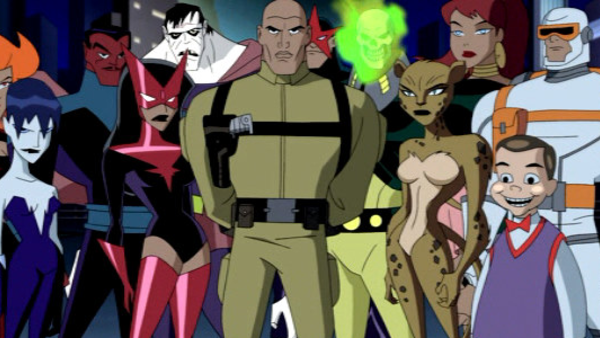
Luthor works best when he isn't being a full-blown supervillain. The true genius of the man who tries time and again to destroy Superman is that he does it whilst still seeming like an okay guy to the world at large; most of the time he justifies his actions as a way to defend humanity about the threat of alien invasion (Clark Kent being from Krypton and all), or else he manages to spin any of his encounters with the Man Of Steel so they both come out smelling of roses. Seeing the hoops he leaps through to act like a supervillain but never get accused of being one €“ some writers will have him acting entirely civil and sane with everyone except Superman, furthering the illusion €“ is part of what's interesting about the character, what elevates him to a higher plane than your average comic book antagonist. The Legion Of Doom is totally antithetical to that idea. Eisenberg is going to be a more complex version of the character (presumably) than the guy who leads The Legion Of Doom, the evil counterpoint to the Justice League and hangs out with irredeemably bad people like Braniac, Sinestro and Captain Cold.

7. When He Was An Orange Lantern

Not only does the Lex Luthor who hangs out with Green Lantern villains ring false compared to his current characterisation, but so does the time he actually became a Green Lantern villain himself. The Blackest Night crossover saw an evil version of the superpowered police force €“ the Black Lanterns €“ formed from resurrected heroes and villains from across DC history. Word started to spread (in the comics that is) that everyone who ever died was returning to life, zombie movie-style, and so Lex sealed himself away in a bunker for fear of recriminations for all the people whose deaths he had caused over the years. As it happens they do, and start feasting on his greedy heart. The greed that fuels him activated a latent power, however, and he was called up to a member of the Orange Lantern Corps! Basically the same as the Green Lanterns €“ power ring and all €“ except a different colour scheme and feeling fuelling them. Eventually he loses that power, obviously, but not before admitting he liked it cos it made him more like Superman. Both since retconned.

6. All The He-Man Woman Hater Stuff

Luthor is a bad guy, that's for sure. But just making him €œbad€ for the sake of it isn't interesting. Any experienced writer will tell you, to make a compelling villain you have to give him a real motivation for his actions, make him as fully developed as your hero, and perhaps even have some sympathy for his plight. Just having them do evil stuff doesn't ground their personality in anything real. So, Lex is at his best when he's the guy who genuinely thinks the world is a worse place for Superman being in it €“ even if that's rooted in his jealousy at his rival's power. That fuels his attempts to take the Man Of Steel down at all cost, and sometimes there's collateral damage. It doesn't explain him being a total misogynist. And yet that was one of his main character traits for a period in the comics. In 1993's Superman Annual #5 he choked his female fencing instructor to death cos he lost to her, he had female subordinate Mercy killed, had Clark Kent's ex Lana Lang kidnapped and beaten so he could get info on Superman, and coerced an employ into sleeping with him. Gross. None of that nowadays, quite thank you.

5. Being A Douche To His Sister

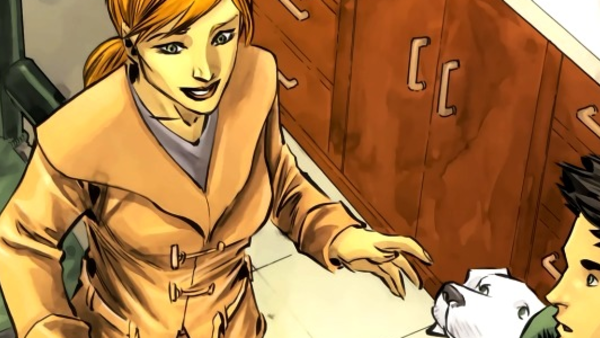
The real d*ck move and middle finger to the fairer of the sexes probably came in the form of Lex's relationship with his sister. In her earliest appearances she went by Lena Thorul, her surname a bad anagram of Luthor, so as to let her live a life free of the shame of being associated with the world's greatest supervillain. Then her parents just straight up told Lex she'd died in a mountain biking accident so that he'd leave her alone. Turns out they were right to try and keep the two apart because, years later, when Lex and Lena were reunited, it didn't end well for her. In the rebooted, post-Crisis On Infinite Earths continuity, Lena is Lex Luthor's younger sister and grew up alongside Lex until he left Smallville. In this case it's Lex denying any connection to his sibling because he's ashamed of his small-town past. They didn't reunite until he showed up on her doorstop years later. Lena ends up stricken down with illness and housebound, raising a daughter named Lori on her own. Lori ends up befriending Superboy, a failed Superman clone of Lex's, and its their connection that inspires the elder Luthor to come visit and cure his sister's illness...before giving it her again, to show off to Superboy how powerful he was.

4. That He Killed His Parents (Probably)
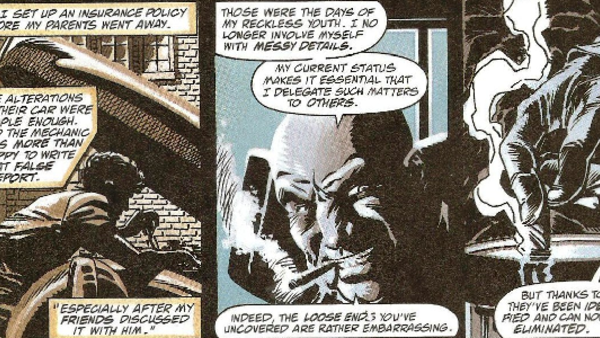
Stuff like that just makes Lex too villainous. Of course, go to far in the other direction and you get to the Golden Age Luthor whose entire career in supervillainy and burning hatred of Superman goes back to his childhood, where a failed experiment results in a young Man Of Steel saving his life, and Lex losing his hair in a fire. Losing your hair as an excuse for villainy? Again, the Walter White comparison is apt... But anyway, the opposite is just as true. Lex as the monster who toys with the life of his sister and strangles women he doesn't like is just too ridiculous, too classically €œbad guy€ without any real motivation. The same can be said for the part of his frequently-held origin where he murdered his parents. In The Man Of Steel reboot from the early nineties he grew up poor and neglected in the slums of Metropolis, only acquiring his wealth as a teenager when he put out a big life insurance premium on his mum and dad before cutting the breaks on their car, ensuring a violent death and a huge cash pay out for him to reap as a result. Mostly that's remained his official origin, but it's not been mentioned for a while now. It's kinda dark.

3. That Goofy Suit

The exact opposite problem comes in that mech suit he's so frequently seen tooling around in. As recent as the DC Comics crossover Forever Evil he's been seen using it, a purple-and-green monstrosity that acts as a robotic exoskeleton, giving Luthor a fraction of the superpowers that his nemesis has whilst also making him a credible physical threat when fighting other heroes (or villains, as his also recent spell with the Justice League saw him doing). Yeah, don't expect to see Jesse Eisnberg in that. And because modern comic book corporate culture is all about synergy, expect to see it phased out of the pen-and-ink Lex Luthor as well. Just like how Peter Quill started to look more like Chris Pratt in Marvel's Guardians Of The Galaxy titles and the Batman books started to get darker around the time of the Christopher Nolan films. Besides from being a horribly garish and cheesy design, that suit is another example of a fundamental misunderstanding of what makes Luthor a great villain. It's precisely because he isn't a physical threat to Superman or anybody else, really, that makes him intriguing as the arch enemy of the guy with the most power in the world.

2. His Time As President

That said, one of the most interesting things that happened with Lex Luthor in living memory was when he became the guy with the most power in the world. Despite the interventions of the planet's superheroes, he got elected President Of The United States. Superman was the one who came forward and stopped his pals intervening in the democratic process. Because, if nothing else, Superman stands for Truth, Justice, And The American Way, and fixing elections is the work of traitors like, erm, George W Bush. Batman assures him that €œWhen the time is right, we'll take Luthor down€ but the Man Of Steel remains unconvinced, and tries to navigate life where his nemesis is basically his boss. Instead of wacky Horrible Boss-style situations, though, Luthor's time in office is mainly spent spreading the idea that Superman is a bad guy, an emissary for an alien invasion, a trouble maker who levels cities in his battles with villains. It was an interesting switcheroo, one since removed from continuity and mostly forgotten.

1. Smallville

Luthor used his influence to try and bury his past in the backwater Kansas town of Smallville in some versions, but DC are probably equally eager for you to forget the show of the same name. For a brief, glittering moment The CW wasn't home to surprisingly faithful comic book adaptations like The Flash and Arrow. It was the place to go if you wanted to see a Dawson's Creek-style teen soap opera about a pre-powers Clark Kent living on a farm. Eventually the show struggled to fit into the prequel structure and, much like Gotham is doing now, introduced most of Superman's supporting cast that wasn't supposed to show up until he started swanning about Metropolis in his undercrackers. That included Lex Luthor, who was played with some admirable moral complexity by Michael Rosenbaum, whose daddy issues put Clark's parental situation to shame. But the Lex Luthor of Smallville is not the Lex Luthor of today. He's too young, too green, too wet behind the ears and too prone to mistakes. He also conjures up images of, well, a Dawson's Creek-style teen soap opera about a pre-powers Clark Kent living on a farm. That's not the sort of image you want when you think of your premiere superhero, or his upcoming superhero sequel. That Lex will be forgotten just as that Smallville: Season 11 comic already has been. And in that case, it might be for the best. Rosenbaum is dead, long live Eisenberg!

Contributor
Contributor

Tom Baker is the Comics Editor at WhatCulture! He's heard all the Doctor Who jokes, but not many about Randall and Hopkirk. He also blogs at http://communibearsilostate.wordpress.com/