10 Things Everyone Gets Wrong About The Punisher
You know it's not a good idea to idolise a murderer... right?

The Punisher might be one of Marvel's most popular and captivating characters, but there's a whole lot of misinformation floating around regarding him.
And given Frank Castle's unique position in the Marvel Universe, that makes sense. He's one of the few anti-heroes in the publisher's world that straight-up kills people, and that, for lack of a better explanation, is completely fascinating.
Castle might not be everyone's favourite character in that sense - and there are plenty of valid reasons to dislike the him and the cult status he enjoys - but the Punisher's ability to provoke makes him an important aspect of the Marvel landscape. Granted he’s divisive, but he serves an important purpose nonetheless.
He'd be missed if he was no longer there.
But what exactly is it about the character that fans seem to misapprehend? Is it ideology, psychology, or something else entirely? There's certainly no doubting the skull-clad vigilante's appeal, and now is as good a time as any for a crash course in the character's fundamentals.
10. The Reason Behind The Violence

Although mainstream interpretations of the character would tell you that Frank Castle wasn't an inherently violent man - that his path to vigilantism was birthed the moment his family were killed - the reality is a little more nuanced.
Garth Ennis' Punisher series is seminal for a whole host of reasons, but the key one is undoubtedly the writer's decision to reappraise Frank Castle's ideology. This came in Punisher Born, a storyline that's set during the Vietnam War.
The book - apart from being considered one of the greatest Punisher tales ever - really made an effort of showing the burgeoning moments of Frank's Punisher-self. This moment occurs during an attack on Valley Forge, where the then scout sniper is left as the sole survivor of an enemy ambush. Ennis shows Frank making a metaphorical 'deal with the Devil' in order to survive, and hints heavily that the character's path to vigilantism was formed in the fires of that battle.
It's a fascinating angle to consider, especially since more conventional interpretations have largely reiterated the primacy of his family's murder in forcing the character's violent response. What Ennis does, in this sense, is add a whole other layer of tragedy to Castle, and provide verifiable proof that - although people will try otherwise - the character is not one to be romanticised.
9. His Allies

Popular opinion would dictate that Frank Castle is something of a lone wolf, and for the most part that is the case. The Punisher's by no means a team-player, and has double-crossed more superhero team-ups than one would care to mention.
That doesn't mean he's refrained from having a partner on occasion, however. His most famous long-time collaborator happened to be a guy called Micro, an ex-member of military intelligence who outfitted Frank with a whole host of gadgets, weaponry and intel, but even then their relationship was more complex than some would suspect.
Although the pairing is certainly iconic, the two actually went their separate ways during the OG War Journal spin-off, and it led to deadly consequences. There, Micro protests that Frank has gone too far in his vigilante efforts, and is becoming more and more like the villains he kills. He even goes so far as to pick out a replacement vigilante, and Frank - upon discovering this - ends up confronting Micro in a firefight, only for the one-time ally to be killed by a third-party.
That's not to mention what happened in Max either, where the Punisher kills his friend after Micro attempts to take him in safely. The main thing to takeaway from this is that Castle can't make a friendship sale when it has to, and although the Lieberman-Castiglione partnership is an iconic one, it's in no way indicative of the character's attitude to team-ups.
8. Where He Works Best
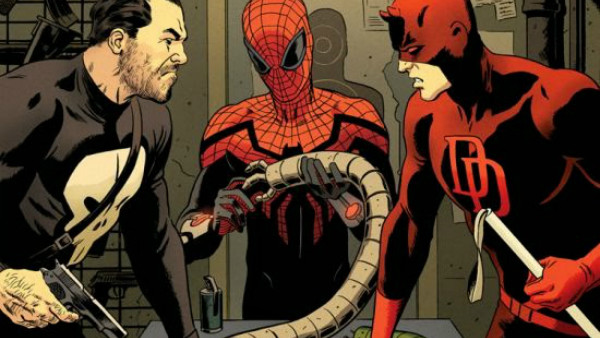
Despite the Punisher having been the subject of many a revered run over the years, the simple fact of the matter is that the character works best when placed next to Marvel's other heroes.
This dynamic was best displayed in season 2 of Daredevil, where John Bernthal really let loose with Castle as he verbally sparred with Matt Murdock on a Hell's Kitchen rooftop. The scene, inspired by an issue from the aforementioned Ennis Max series, illustrated what Castle can bring to the less murderously-inclined among New York's heroes; Daredevil is forced to justify his brand of vigilantism and the implications of it, and Castle has to operate in a community that outright shuns his methods.
It's an endlessly fascinating dynamic that writers today continue to mine, and while there hasn't been a shortage of brilliant solo Punisher stories in the past, most of the better ones have come at the behest of a botched team-up and/or superhero interaction. Daredevil and Punisher always seem to conjure a brilliant storyline when they interact, but other characters - like Blade and Captain America - manage to do the same as well.
Indeed, Frank's perception of Steve Rogers always seems to make for a compelling story, with Cap personifying the hero Frank wishes he could - but ultimately can't - be. That's brilliant no matter how you look at it, and while there's no doubt that the Punisher will be the subject of brilliant solo series in the future, it'll be the team-ups that fans anticipate the most.
7. It's All Lethal
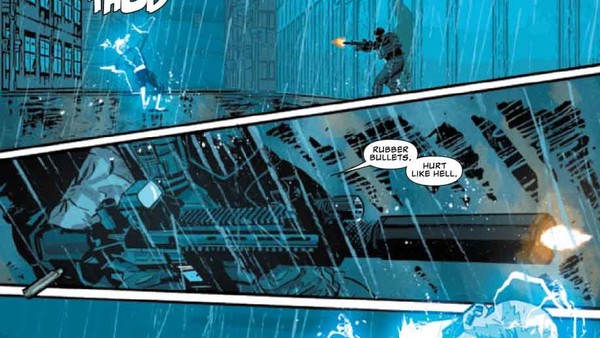
While there's much to make of Frank Castle's lethal tendencies (the dude is a fan of guns, after all), he didn't always used to kill his enemies - preferring instead to pelt them with volley after volley of subsonic ammunition.
Dubbed 'mercy bullets', rubber ammunition was Castle's weapon of choice during the formative moments of his crimefighting career, and he even continued to use them when collaborating with other heroes like Daredevil and Spider-Man too. Frank was actually using the ammo in 2014, where he managed to take down Electro with nothing more than some topically applied rubber.
And while yes, live ammo is and always will be the Punisher's weapon of choice, it's important to remember that he's not as rigid as some would say. If he needs help from a hero, and the mandate is not to kill, then you can bet he'll leave the FMJ in his locker. Considering he's just as effective without it as he is with it, it's not as big a distinction as one would initially think.
6. Which Film is His Best?

Punisher: War Zone is the best Frank Castle's ever gotten on the big screen.
Thomas Jane might have delighted audiences with his authentic and more human portrayal of the Marine veteran in the 2004 production, but the rest of the film is overhyped and underwhelming. John Travolta is as cooky as ever as the film's antagonist, the action is thin and interrupted by forgettable characters - even if they were inspired from the comics - and, despite the fact Jane looks the part, he's never really given much to do with the role.
The less that is said about the Dolph Lundgren film too, the better.
Ray Stevenson, on the other hand - the star of Lexi Alexander's film - looks just like the Castle of the comics, and has the ice-cold demeanour to match. On top of that, Wayne Knight - of Seinfeld and Jurassic Park fame - was the perfect Micro, and even Dominic West did well in the role of Jigsaw.
The film certainly has its flaws, and is blown away completely by Bernthal's efforts in the MCU, but it's still the best big screen feature to have taken an interest in Frank Castle, or at the very least the most authentic. Jane's still manages to dominate conversation though, perhaps aided in part by the Dirty Laundry short a few years back, and while there are certain positives that can be gleaned from that film, it's Alexander's that emerges up top.
5. He's Always Been An Anti-Hero

Although the Punisher of today might commonly be viewed as an anti-hero, he didn't originally start off like that. In fact, when he was introduced in The Amazing Spider-Man #129 the character was portrayed as being an out and out villain - one with a serious bone to pick with Spidey.
Later series would, of course, transform the character into the Punisher we know today, but the Gerry Conway and John Romita-penned issue was never quick to make that delineation. It makes it clear that the Punisher is a vigilante, but not a particularly intuitive one at that. After getting hired by the Jackal (the most villain-looking villain you'll ever see), Castle goes after Spidey fully invested in the concept that he's a normal criminal.
Learning that, y'know, this wasn't the case, Castle leaves to appear in future Spidey titles. And while the Punisher's characterisation has remained relatively consistent since, it's easy to forget that he was originally introduced as a Spidey foe, and not as the morally complex vigilante we know today.
4. His Name
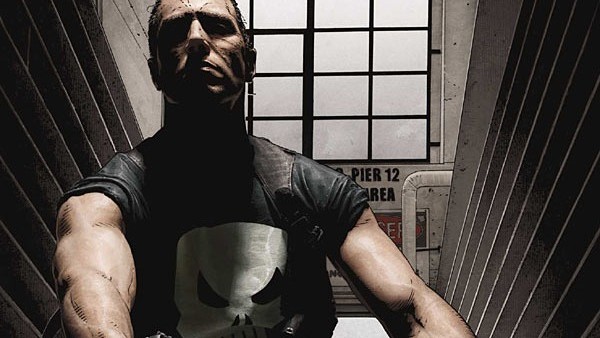
Yes, we all know that the Punisher is called Frank Castle, but did you know he was actually born Francis Castiglione?
The character is actually of Sicilian descent, and even trained to be a Catholic Priest until he decided that he couldn't forgive criminals and other evil-doers. Castle's religious background also adds another dynamic to his relationship with Daredevil, in that it illustrates he always had the potential to embark on a different path than the one he chose - one very similar to that of the one Murdock walked, guided by his Catholic beliefs.
It's a small detail, and while Frank Castle is a brilliant name in every sense, the character's Sicilian background is all too often overlooked. In regards to the character being used as a critique of the American Dream, and with New York representing the gateway to that dream for so many migrants, it's an integral aspect at that.
3. His Inspiration
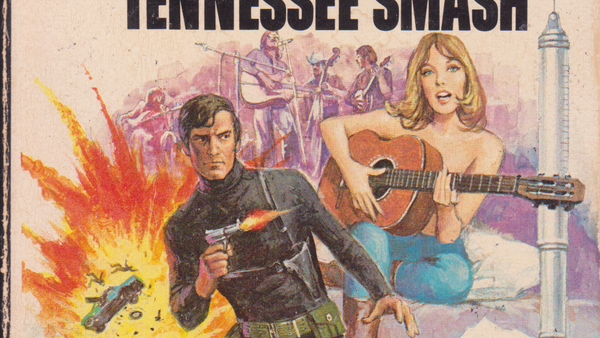
Anyone who's anyone will know that the concept of a grief-stricken, highly trained vigilante going on a revenge-driven rampage is fairly ubiquitous throughout pop-culture - what with all the Liam Neesons, Bruce Willises and Kevin Costners of the world rehashing that trope fairly well for the last two or so decades - so it should come as no surprise to learn that the Punisher isn't a particularly original concept either.
Although comparisons have been levelled between the character of Frank Castle and the Paul Benjamin character from Death Wish, comics historians commonly point towards Don Pendleton's Executioner series for having inspired the Marvel hero. The similarities are certainly stark, with both leads sporting a battle van of sorts, a similar narrative style (a war journal was used in both series), and an equally familiar gallery of rogues.
Gerry Conway cited the Pendleton novels specifically when he described the creative process that birthed the character, and given the popularity of those books at the time, it makes sense. They even bear a similar namesake, and while the Punisher has done much to distance himself from the Pendleton character throughout the years, there's no getting away from the fact that his origin - tragic as it may be - is fairly derivative.
2. His Weaponry

It's not all about firearms when it comes to Frank Castle.
In fact, the character has gotten seriously creative over the years, having used everything from the Green Goblin's pumpkin bombs to the same villain's glider on occasion. He's gotten his hands on Pym Particles (and even the entire Ant-Man suit), as well as Captain America's shield, Hawkeye's quiver and Doctor Octopus' tentacles too.
The man is very resourceful, and while the use of these more outlandish weapons might not sit well with the Punisher faithful, it's an interesting prospect to consider all the same.
Like, why wouldn't Frank Castle try and use his enemies' weaponry against them? Sure, it might not fit his style, but using a goblin glider makes perfect sense in that 616 context, especially when he lacks the powers to compete with the universe's heaviest hitters.
1. His Problematic Elements
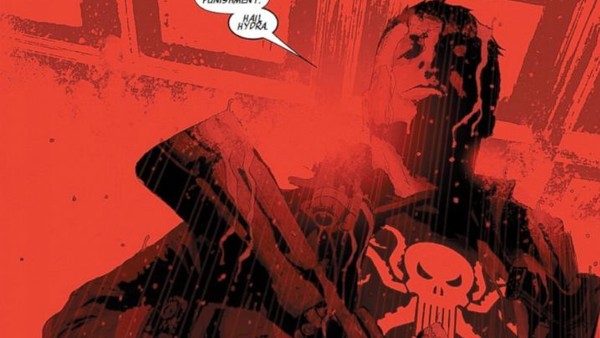
Look, let's not beat around the bush here: Frank Castle is a very controversial character. Interesting? Yes. Idolised? Wrongfully so.
The Punisher is not your typical Marvel hero: he kills cooly - without remorse - and does so often in grotesque and even sadistic ways. That makes him a fascinating character to dissect in the sense that he's diametrically opposed to popular perceptions of what it means to be a hero, but all too often we see people lionise Frank Castle as a symbol of resistance, power, and ideological purity.
There's nothing wrong with liking the Punisher. He is, after all, a uniquely entertaining and wholly absorbing character to engage with, and one that this writer has explored on numerous occasions. However, there is a massive problem at play here when so many people can so fundamentally misread the character that they place him above others as the ideal superhero to celebrate, rather than castigate.
We've seen as such in real life contexts, where - as CBR columnist Kieran Shiach notes - police officers and military units have adopted the character's symbology, emboldened by Castle's simplistic and uniquely callous ideology where life itself is of trivial importance in the pursuit of justice. That's a major concern, particularly when writers have repeatedly bludgeoned home the point that Frank Castle is who he is because of violence. Worse still, it intimates a disregard for legal process, and while the same rule could be applied if, say, the Bat-symbol adorned military and police equipment, Batman doesn't kill, or display as sacrosanct or as brutal a dogma as his black and white counterpart most certainly does.
It's okay to enjoy the Punisher, but now - more than ever - it's important to be aware of how the character can be misappropriated. In a milieu as volatile as today's, however, it's essential.
-
What do you think people get wrong about the Punisher? Is he as interesting as people make him out to be? Let us know in the comments below!