50 Greatest Batman Comics

On the heels of Christopher Nolan's massively successful Dark Knight Trilogy, the announcement of Zack Snyder's upcoming Batman vs. Superman flick, and a year filled with several awesome Batman comics from Scott Snyder and Greg Capullo, it's safe to say that the Caped Crusader is enjoying another high point in his long career. DC's New 52 line of comics is still young, so it's the perfect time to jump in if you're a comic book newbie. But before you do, it's worth digging through the publication history of Batman comics to find elements of the Dark Knight that survive and influence today's comics, movies, and television shows. If you've already familiarized yourself with some of Batman's back issues, you probably realize that there are hundreds and hundreds of fantastic stories to be read - and, yes, quite a few not-so-fantastic ones. And so, in collecting the 50 Greatest Batman Comics, it's necessary to lay down a few criteria. First, these stories either have strong implications inside and outside the DC Universe or make a point of standing on their own two feet (Elseworlds stories, for example, aren't included in the standard continuity). Second, this list focuses heavily on the Modern Era of comics; the New 52 and other recent comics have some arcs that would definitely make this list someday, but they're still a bit too fresh to count among the greatest ever just yet. By a similar token, certain Batman comics from the 1940s, '50s and '60s are really hard to get ahold of, and thus those decades receive smaller representation on this list. Qualifications aside, this list simply aims to compile the most essential Batman tales ever told. If you're already a Batman expert, hunt for your favorite stories and then despair in the comments section about a more prominent placement or, better yet, applaud the judgement of the good-looking author. If all you know about Batman is that his ears are pointy, consider this an extensive cheat-sheet to an incredibly long publication history. Without further ado - and with a minor spoiler warning for a few recent entries - these are the 50 greatest comics featuring the Batman.

50. Nine Lives (2002)

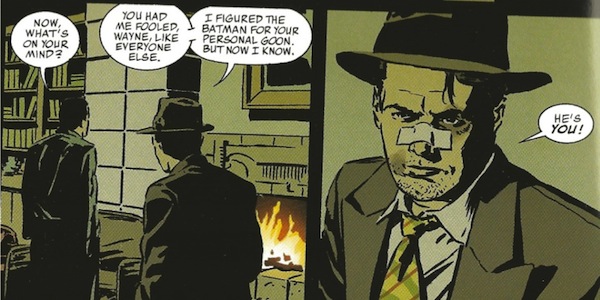
Written by Dean Motter, illustrated by Michael Lark. Elseworlds is (maybe "was", as there haven't been many recent publications under the banner) a series that takes familiar heroes and places them in unfamiliar eras and settings, changing a single element about their established mythology or changing many. Not all of them are worthwhile, but "Nine Lives" is one of the select few that nail it. Placing Batman and Co. in the 1940s and turning Dick Grayson into a private eye, Motter and Lark achieve something approaching noir perfection. The characters all fit perfectly in this time period, especially the boozehound Grayson and the dapper crook Oswald Cobblepot. All of Gotham gets the '40s treatment, but as with every good Elseworlds tale "Nine Lives" makes it feel like this version is the most fitting one.

49. Justice League: A New Beginning (1987)
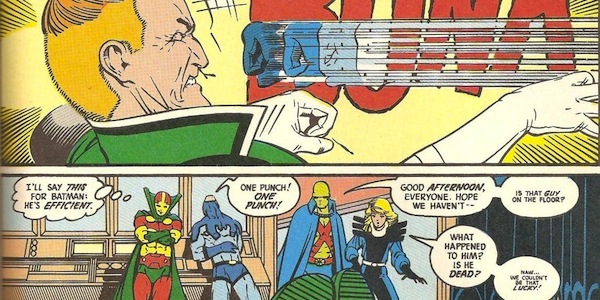
Written by Keith Giffen and J.M. DeMatteis, illustrated by Kevin Maguire. A single punch merits the inclusion of €œJustice League: A New Beginning€ on this list, despite Batman€™s limited stage time within the issue. Guy Gardner, the mushroom-topped loudmouth Green Lantern, is causing trouble within the ranks of the League, asserting that he should be leader and picking a fight with Batman. Yeah, bad idea. Words are exchanged, Gardner charges, and Batman does what Batman does best: he swiftly knocks him out with one punch. The scene is hilarious as the other members of the Justice League act like their team just won the cup, Blue Beetle incredulously repeating €œOne punch. ONE punch!€ for the next few pages and Black Canary arriving late, pissed off that she missed Batman clocking Gardner.

48. Year 100 (2006)

Written and illustrated by Paul Pope. Paul Pope€™s strange, compelling Batman tale €œYear 100€ gleefully refuses to appeal to a mainstream audience, and is all the better for it. Set in a dystopian, police-state Gotham even more terrifying than the Gotham of today, Batman is framed for a murder and hunted ruthlessly €“ but it€™s 2039€shouldn€™t Bruce Wayne be dead? This book asks a lot more questions than it cares to answer, but ultimately manages to push the Bat-myth forward into new, uncharted territory.

47. Prodigal (1994-95)

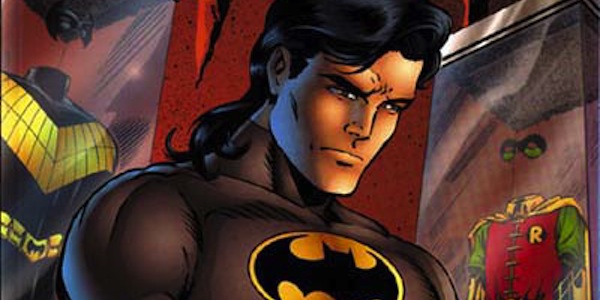
Written and illustrated by various. €œProdigal€ is the storyline immediately following DC€™s epic €œKnightfall€ event, which saw Bruce Wayne systematically broken down and subsequently replaced by a more violent Batman before rising again to reclaim the cape and cowl. But Bruce isn€™t ready to be Batman full-time again, and so he passes the mantle on to Dick Grayson for safekeeping. Grayson, first known as Robin and then Nightwing, isn€™t sure he€™s up to the task, but as €œProdigal€ unfolds he finds sure footing as a hero in his own right. Despite plenty of plot flaws and Bruce Wayne not being in the central role, €œProdigal€ is an essential Batman tale that heralds later Grayson stories by Grant Morrison, examines relationships between Batman and characters like Commissioner Gordon, and furthers the Batman mythos in a unique way.

46. All My Enemies Against Me (1983)

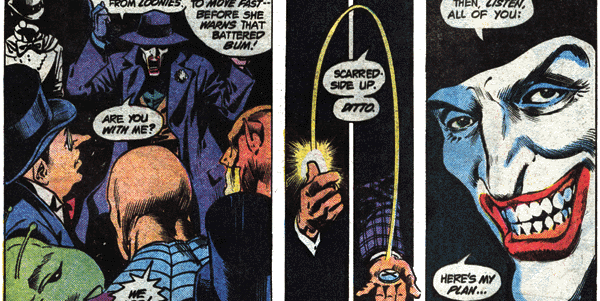
Written by Gerry Conway, illustrated by Don Newton and Alfredo Alcala. The anniversary issue celebrating Batman€™s 500th appearance in Detective Comics features €œAll My Enemies Against Me€. If you couldn€™t guess from the title, all of Batman€™s foes are called together by the Joker (of course) to hatch a plan to rid themselves of Batman once and for all. This story predates the modern urge of comics writers to turn every story into a let€™s-parade-every-villain-ever-fest, and it does so in a much more lighthearted way than most modern comics dare. Talia al Ghul, Dick Grayson, and even Jason Todd have big roles here, but despite the large cast the story is cohesive and never feels out-of-control.

45. Night of the Stalker (1974)

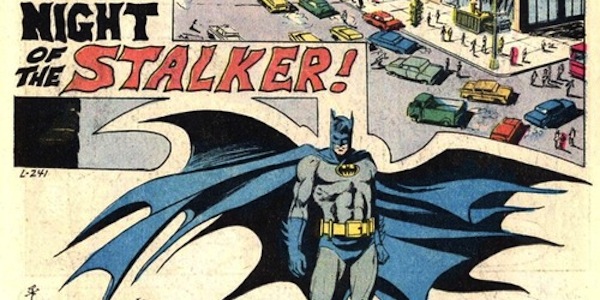
Written and illustrated by various. Detective Comics #439 features "Night of the Stalker", a story that will feel familiar to new readers because of the character groundwork it laid. Batman witnesses a couple murdered in front of their young child, triggering flashbacks to his own childhood trauma and the murder of Thomas and Martha Wayne. If there's one element of the Batman mythos that's been rehashed too many times, it's the fateful murder of Bruce's parents. But "Night of the Stalker" manages to incorporate this event into the story without breaking the overall plot arc. We get a flashback, sure - but we see the effects in the Batman of today, when he returns from a successful night of crime-fighting, removes his cowl and, standing alone in a tower of Wayne Manor, weeps uncontrollably. That ending is one of the most powerfully-written endings to any Bat-book I've read.

44. The Last Arkham (1992)

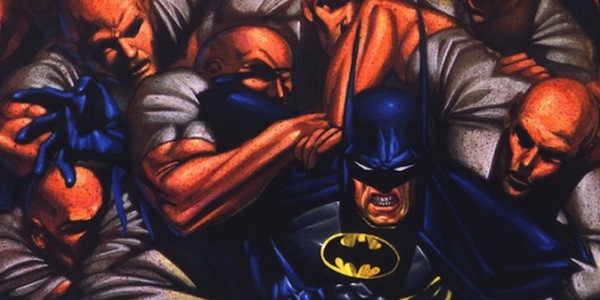
Written by Alan Grant, illustrated by Norm Breyfogle. €œThe Last Arkham€ was the debut story arc of the short-lived Shadow of the Bat series, and it ended up being one of the only worthwhile non-crossover arcs in the entire run. Batman is willingly imprisoned in Arkham Asylum in order to uncover the perpetrator of a string of vicious serial killings. The self-mutilating Victor Zsasz makes his explosive debut in this story, but the warden of the asylum, Jeremiah Arkham, finally gets fleshed out as a character too. The mystery doesn€™t take a whole lot of effort to expose, but there are some great scenes throughout €œThe Last Arkham€ €“ most notably, perhaps, when Jeremiah Arkham locks Batman in a room with his entire rogues gallery.

43. The Laughing Fish (1978)

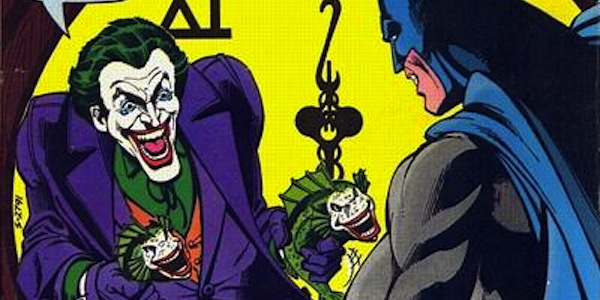
Written by Steve Englehart, illustrated by Marshall Rogers. A classic, humorous Joker tale that was faithfully adapted for an episode of Batman: The Animated Series, "The Laughing Fish" features the most absurd scheme the Clown Prince of Crime ever hatched. When boatloads of smiling fish appear in the Gotham River and, in turn, in all the media in the city, the Joker attempts to copyright the fish in order to collect all of the media royalties. When he's informed that, unfortunately, fish are a natural resource and cannot be copyrighted, he throws a fit and just decides a good ol' killing spree will have to do. Provided your stance on animal rights isn't too stringent, you'll get a kick out of "The Laughing Fish".

42. Dark Knight, Dark City (1990)

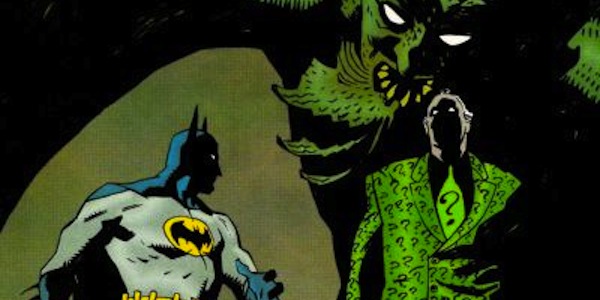
Written by Peter Milligan, illustrated by Kieron Dwyer. It would later be used by Grant Morrison as inspiration for part of his strange and epic Batman run, but when it came out "Dark Knight, Dark City" made few waves. Nonetheless, even without knowledge of Morrison's run, the Milligan/Dwyer arc remind one of the more unique Batman stories out there. Interspersed with journal accounts from an ancient order (basically Ye Olde Gothame Occultists), Batman plays a game of cat-and-mouse with a decidedly more ruthless Riddler than past incarnations displayed. Naturally, these two arcs come to intersect in the present, and Batman is left facing an age-old evil. Parts of this story are really ridiculous, but the way today's evil in Gotham City is given root in a past century is fascinating.

41. Absolution (2003)

Written by J.M. DeMatteis, illustrated by Brian Ashmore. A globe-trotting, decade-spanning story by J.M. DeMatteis sees Batman hunting a bomber of a Wayne Enterprises building and finding, after a ten-year pursuit, that the perpetrator may not be what he expected. Admittedly, the plot is thin and the action is sparse €“ if you€™re looking for ass-kicking, window-smashing Batman, look elsewhere. But if you desire a more philosophical take on the very existence of the Batman, €œAbsolution€ may just click for you. The artwork by Brian Ashmore is fresh and provoking, too, and works well with the more heavy-handed elements of DeMatteis€™s writing.

40. Blind Justice (1989)

Written by Sam Hamm, illustrated by Denys Cowan. Aside from having a name that€™s fun to repeat over and over, Sam Hamm also knows how to write a memorable Batman tale. He had a major hand in writing Tim Burton€™s first Batman movie, and around the same time he came to Detective Comics to celebrate Batman€™s 50th Anniversary. The result is €œBlind Justice€, an absurd and childishly gratifying Batman story concerning a device that can be used to control another human body by remote willpower. Notable for a distinct lack of any famous Batman rogues, €œBlind Justice€ allows the uncowled Bruce Wayne the stage almost as much as the costumed avenger, and by doing so allows a rare look into elements of Bruce€™s haunting past.

39. Whatever Happened To The Caped Crusader? (2009)

Written by Neil Gaiman, illustrated by Andy Kubert. Neil Gaiman provided this eulogy to the Batman when the original run of Detective Comics came to an end in 2009. Inspired in part by Alan Moore's Superman story "Whatever Happened to the Man of Tomorrow?" (1986), Gaiman employs classic characters as they gather for a funeral for the Dark Knight, each retelling their version of how the hero met his demise. This is another atypical Batman tale, featuring little mystery, detective work, action or suspense. Rather, Gaiman provides a thoughtful tribute to the many decades of publication that Batman has enjoyed in Detective Comics, touching on classic tropes by classic writers and artists.

38. Blades (1992)

Written by James Robinson, illustrated by Tim Sale. A great but not-as-famous arc from the original Legends of the Dark Knight series, €œBlades€ features a revamped version of the Batman villain Cavalier. Because the story takes place early in Batman€™s career, continuity junkies posit that this version (an ex-Hollywood stuntman named Hudson Pyle) actually influenced the original villain (Mortimer Drake). In any case, Pyle€™s motives are much more interesting than those of Drake, and he€™s not the only villain around either: Mr. Lime, a serial killer of the elderly of Gotham City, is eluding capture as well. Batman, Lime and the Cavalier spiral ever closer to each other over the course of three short issues, touching, moving along inversions of each other€™s journeys, approaching repercussions and redemption and, yes, engaging in epic sword fights.

37. War On Crime (1999)

Written by Paul Dini, illustrated by Alex Ross. This is not your typical Batman comic. The premier Alex Ross is one of the most talented painters out there, and he uses his gift mainly for incredible illustrations of superhero comics. His most popular book is probably the JLA Elseworlds tale €œKingdom Come€ (1996), but €œWar on Crime€, a simple day and night in the life of Bruce Wayne, features equally stunning art. Superstar writer Paul Dini does his part here, too, providing a mystery with parallels to Bruce€™s own life. Despite being a very unorthodox comic book (if you can even call it that), the story and the visuals work in tandem to merit inclusion of €œWar on Crime€ among the greatest Batman stories ever told.

36. The Diplomat's Son (1988)

Written by Jim Starlin, illustrated by Mark Bright. There are precious few stories featuring the second Robin, Jason Todd, and even at that one might label these stories with an adjective far off from €œprecious€ - he was hardly likeable, as many have said before. But there are certain qualities to his character that Dick Grayson lacked for a long time, namely his being more than a simple extension or appendage of boss Batman. In €œThe Diplomat€™s Son€ (technically just Batman #424, but the follow-up in #425 deals with the same storyline) Jason is the only one present when a young criminal falls to his death from a penthouse balcony. Batman presses Jason for an explanation and the unbridled neophyte Robin shrugs and coolly replies, €œHe slipped. I must have spooked him.€ Like him or not, Jason€™s icy words are as cold to readers as they are to Batman. €œThe Diplomat€™s Son€ acts as grim augury of things to come for Robin II€

35. Batman And The Monster Men (2005-06)

Written and illustrated by Matt Wagner. Writer/Artist Matt Wagner has written his fair share of Batman books between the €œTrinity€ and €œDark Moon Rising€ series and the €œBatman/Grendel€ books, as well as the Legends of the Dark Knight arc €œFaces€, all of which are worth reading. €œBatman and the Monster Men€ is still his best. Set not long after the origin story of Frank Miller€™s €œYear One€, Batman battles Professor Hugo Strange for the first time, dealing with genetically-engineered beings that are nearly beyond comprehension. He€™s still new to the game, Robin-less, Batmobile-less, and on unsure footing with Gordon and the Gotham Police, and Wagner€™s nostalgic art ties into this old-timey Batman feel brilliantly. €œBatman and the Monster Men€ finds itself a worthy successor to €œYear One€, and that€™s a hard act to follow.

34. Duel (1991)

Written by Dennis O'Neil, illustrated by Jim Aparo. Legends of the Dark Knight is such a fantastic series of Batman books that it€™s little wonder the first annual issue manages to make this list, slim as it is in terms of pages and storyline. Much of this book is spent confusing the reader as Batman battles a giant demon, then suddenly finds himself fighting a dragon, then insectoid aliens (yep), and so on and so forth. Is he dreaming? Drugged and hallucinating? Is this even Batman we€™re reading right now? I€™ve heard the ending of this one chalked up as a €œcop-out€, but with a deft twist and a surprise appearance by a major Bat-baddie, €œDuel€ presents a satisfying ending to a hell of a wild ride.

33. War Games (2004-05)

Written and illustrated by various. Gotham gangsters aren't generally on the Okay To Trifle With list, whether we're talking the '40s gangsters of "Nine Lives", Jeph Loeb's Godfather-esque crime families, or the more violent gangs found in "War Games". With the establishment of masked vigilantism and superhumans walking the Earth, it's understandable that the gangs would exercise their theatrical bents, too. Black Mask does just that, taking control of the Gotham underworld when a massive gang war erupts. Stephanie Brown plays a major role here, and the fan-favorite alter-alter-ego of Bruce Wayne, Matches Malone, is a big part of the opening act as well. "War Games" is just what the title suggests, pitting heroes and villains against each other in a deadly chess game in the streets of Gotham.

32. Noël (2011)

Written and illustrated by Lee Bermejo. What happens when Charles Dickens€™s classic tale A Christmas Carol is told within the confines of the DC Universe? Writer/artist Lee Bermejo brings us along to find out with his holiday one-shot €œNoël€. Bermejo is the artist behind 2008€™s excellent €œJoker€, and his hyper-real vision is again applied to every square millimeter of this beautiful book. The story, as you may expect, is a tad predictable. But the art is fascinating, and Bermejo€™s style even recalls the legendary Alex Ross at certain points.

31. Ego (2000)

Written and illustrated by Darwyn Cooke. With such a long publication history to draw upon, the temptation is there for every writer that gets a hold of Bruce Wayne to delve into his psyche and determine, once and for all, what drives the Batman. Obviously, this attempt meets with success, failure, or something in the middle €“ and writer/artist Darwyn Cooke meets success with €œBatman: Ego€. An injured Bruce Wayne is confronted by his own id, fighting to break through and control the Dark Knight with the use of lethal force.

30. Gothic (1990)

Written by Grant Morrison, illustrated by Klaus Janson. Gotham mafia dons are being murdered one by one, and the remaining few have no choice but to turn to their enemy Batman for help. They propose a suspension of all organized crime in the city while Batman hunts the mysterious killer, Mr. Whisper, and Batman begrudgingly agrees. Equal parts M., Faust, and whatever else was rattling around in Morrison's fevered brain at the time, "Gothic" cracks the Top 30 by adding new twists and ancient motivations to the legend of the Dark Knight. Mr. Whisper makes for a hell of a villain in Morrison's hands, too, and no matter how many obscure villains the cantankerous writer cares to resurrect for their day in the modern sun, Whisper is the most effectively terrifying of the bunch.

29. The Secret Of The Waiting Graves (1970)

Written by Dennis O'Neil, illustrated by Neal Adams. The indomitable pairing of writer Dennis O'Neil and artist Neal Adams make this list more than once, first with their 1970 issue "The Secret of the Waiting Graves". Bruce Wayne, on a business trip to Mexico, stumbles upon some strange going-ons in the family graveyard of the associate's estate. This story is a great bridge between the Silver Age and some more modern-seeming comics stories, retaining elements of the former while still holding up to readings several decades after publication. A few plot elements are a bit contrived (like Bruce being in Mexico at all), but "The Secret of the Waiting Graves" is full of action and suspense, and features some incredible art from the legendary Neal Adams.

28. Black And White (1996)

Written and illustrated by various. The history of the Dark Knight in the comic medium is a dark one, and rarely since the Golden Age have we had much opportunity to laugh our heads off while reading Batman. €œBlack and White€ changes that in fresh ways, providing a series of vignettes, each by a different writer and artist, featuring Bruce Wayne and Co. in a collection of fables ranging from the darkly dramatic to the hilariously zany. The highlight is €œA Black and White World€ by Neil Gaiman and Simon Bisley, featuring Batman and the Joker backstage in between scenes from the comic books.

27. Son Of The Demon (1987)

Written by Mike W. Barr, illustrated by Jerry Bingham. Popularized and possibly canonized by Grant Morrison's 2006 rehashing in "Batman & Son", Mike W. Barr's Elseworlds-style tale (or maybe it's officially Elseworlds, I can never tell) "Son of the Demon" tells of a relationship between Bruce and Talia al Ghul, daughter of Batman nemesis Ra's al Ghul. His differences with Ra's obviously come into conflict whilst romancing Talia, and the news that Talia is pregnant only serves to further complicate things. Ra's himself is in fine form here, but the relationship between Bruce and Talia is where the real magic lies. Grant Morrison's Damian Wayne was a divisive character, but it's likely he owes everything to "Son of the Demon".

26. The Cult (1988)

Written by Jim Starlin, illustrated by Bernie Wrightson. Writer Jim Starlin is at his most insane in €œThe Cult€, which pits Batman against a group of religious fanatics led by the charismatic Deacon Blackfire. Batman is subsequently captured and brainwashed by the cult, leading to violent hallucinations and extreme actions that Bruce Wayne would certainly regret. This isn€™t Starlin€™s tightest writing, and parts of the book do feel derivative of Frank Miller €“ but €œThe Cult€ stands on its own two feet well enough, and is likely to be one of the darkest Batman tales you€™ll ever read.

25. No Man's Land (1999)

Written and illustrated by various. The massive megaseries €œNo Man€™s Land€ is set in an isolated Gotham City cordoned off from the rest of the United States following a series of catastrophic disasters, including a plague (in the storyline €œContagion€) and an earthquake (in €œCataclysm€ and €œAftershock€). €œNo Man€™s Land€, which spanned the better part of 1999 and used every Bat-Family series in publication at the time, was one of the most ambitious projects ever undertaken by DC Comics. Understandably, because of its incredible length, there are points at which €œNo Man€™s Land€ really drags €“ but for the most part, this is a story that€™s simultaneously a game-changer and a classic Batman epic.

24. JLA: Tower Of Babel (2000)

Written by Mark Waid, illustrated by Howard Porter. While not technically a Batman title, this may very well be the Justice League story that is the most Batman-centric. When the members of the Justice League are systematically incapacitated by Ra€™s al Ghul, it is revealed that the plans specifying the precise ways to defeat each JLA member were created by one of their own: Batman. Conceived as a failsafe should any members of the League be compromised, the plans worked to devastating effect in the hands of Ra€™s. €œTower of Babel€ was adapted into the animated feature €œJustice League: Doom€, which made some significant changes from the original comic €“ Vandal Savage replaces Ra€™s al Ghul, Cyborg replaces Aquaman and Plastic Man, and the exact methods for defeating each member are altered. However, the point is made clear in each case: Batman€™s knowledge, cunning, and incessant contingency planning make him as powerful as Superman, Wonder Woman, Green Lantern or The Flash, and despite his lack of superpowers he is indeed a superlative hero.

23. The Joker's Five-Way Revenge! (1973)

Written by Dennis O'Neil, illustrated by Neal Adams. Held up as a comic that redefined a major villain for a new era of readers, "The Joker's Five-Way Revenge!" brings the Joker away from campy, tiptoeing mischief-making and into territory more recognizable to most readers today. The murderous roots to which Dennis O'Neil and Neal Adams return the Joker are made clear, with multiple murders as the modus operandi in place of annoying little pranks. But another element that has cemented itself into the character is the interdependence of Batman and the Joker, the inextricable dance that the adversaries will find themselves locked in from this point forward. This was a theme driven home in the last Joker scene of Christopher Nolan's The Dark Knight, with the villain musing on destiny and their unstoppable force/immovable object relationship. This scene, and countless other Batman/Joker scenes in comics and movies, owe a debt of gratitude to "The Joker's Five-Way Revenge!".

22. Under The Hood (2005-06)

Written by Judd Winick, illustrated by Doug Mahnke. When the mysterious Red Hood suddenly appears in Gotham, Bruce Wayne discovers that the criminal knows all there is to know about his Batman alter ego. If you€™re at all familiar with Bat-books, chances are good you already know who€™s operating under the eponymous red hood. I won€™t spoil it just in case, but the secret identity isn€™t the whole point anyway: the story is well-told and it€™s a story worth telling. Red Hood€™s identity irks a lot of diehard fanboys, but there€™s no denying that it wasn€™t just a pointless cameo or a cheap appearance to sell more issues. The story comes first, and it€™s a breakneck, rapid-fire tale with action and drama galore. So don€™t believe all the negative reviews you€™ll find on the internet; €œUnder the Hood€ is a terrific book.

21. Blood Secrets (1989)

Written by Mark Waid and Brian Augustyn, illustrated by Val Semeiks. €œBlood Secrets€ was the storyline for the Annual 2 issue of Detective Comics in 1989, and it€™s a Batman story like no other. The Dark Knight visits an unnamed man (€œYou€™re back,€ are the man€™s first lines, €œYou always come back€) and takes him to a graveyard, narrating a flashback tale along the way. As the story unfolds, the mystery of the unnamed man and of Batman€™s purpose unfolds as well. This little story relies on no major villains, no soggy Gotham City setting, and no cheap twists. €œBlood Secrets€ is a detective story, through and through, and it€™s not one to be missed.

20. Identity Crisis (1990)

Written by Alan Grant, illustrated by Norm Breyfogle. As Batman readers know, the now-famous arc €œA Lonely Place of Dying€ is the official introduction of Tim Drake, the young boy who would become the third to take the mantle of Robin after the untimely death of Robin II, Jason Todd. While that story marks the first appearance of this new character, €œIdentity Crisis€ (not to be confused with the larger DC crossover event of the same title) is as much his origin story as any other arc. When the lives of both Batman and Nightwing are threatened by (Two-Face), Tim has to decide whether to disobey Bruce€™s direct orders or to follow his instincts. Sound corny? Maybe it is. But it€™s as convincing an argument for the necessity of Robin as €œA Lonely Place of Dying€, and it solidifies Tim Drake into a pantheon of heroes that until then had seemed all but set in stone.

19. The Man Who Laughs (2005)

Written by Ed Brubaker, illustrated by Doug Mahnke. Batman€™s first encounter with his ultimate nemesis: Joker. The villain€™s first crimes in Gotham city are brutal, with warehouses full of smiling corpses and plots to poison the entire Gotham water supply (you thought Nolan and Goyer came up with that one, did you?) alongside televised threats. There€™s a method to the madness, as they say €“ and that€™s rarely so clear in the case of the Joker as it is in €œThe Man Who Laughs€. There is a fine line drawn between chaos and structure, spontaneity and planning, and the Joker teeters on that line with destructive and murderous results.

18. Prey (1990-91)

Written by Doug Moench, illustrated by Paul Gulacy and Terry Austin. Another early tale from the original Legends of the Dark Knight series - the first handful of arcs are all great and deserve the recent reprintings they've received, and "Prey" is no exception. Featuring one of the best Professor Hugo Strange stories ever written, the character is taken to a whole new level of self-interest and egomania. There are plenty of villains that are obsessed with their respective heroes, but Hugo Strange's obsession with Batman is both logical and completely mental. Many have complained about the slow pace of "Prey", but this is the kind of story that needs to take its time, burn slowly, really ingrain these elements of madness into the villain. It's the care taken with the characterization of Strange - alongside the awesomely jarring panels of the bald Professor dressed up as Batman - that makes "Prey" so compelling.

17. The Origin Of The Batman (1948)

Written by Bill Finger, illustrated by Bob Kane. "Have you ever wondered why Bruce Wayne, a society blue-blood, chose the dangerous career of the Batman? Here is the answer€the inside story of a boy who made a grim vow€" So beings the original origin story of Batman, drawn by Bob Kane and written by his uncredited Batman co-creator Bill Finger. After years of training, Bruce Wayne finally tracks down Joe Chill, the man who murdered his parents. All of the traditional origin story elements are present here, but the best part is the way in which Chill meets his demise: having learned the identity of the Dark Knight, Chill runs to his posse and proclaims himself the reason for the existence of Batman. The crooks promptly shoot him for creating the force that would foil so many of their dastardly plans. I would've probably made Chill tell me Batman's identity first, but I suppose racketeering cronies just don't think of these things.

16. Dark Victory (1999-2000)

Written by Jeph Loeb, illustrated by Tim Sale. Jeph Loeb and Tim Sale follow their groundbreaking story €œThe Long Halloween€ with €œDark Victory€, a similarly-structured murder mystery that also serves as origin story for Dick Grayson€™s Robin. Initially, Sale was hesitant to agree to the project, as he felt his dark and moody Batman would be compromised by the inclusion of a little kid in neon green tights. His hesitation is certainly understandable, but Loeb managed to convince him that Robin was necessary to the story and necessary to the Bat-myth as a whole. Thankfully, Sale came around. Make no mistake: €œDark Victory€ is can€™t miss, classic Batman, and the only reason it doesn€™t fall higher on the list is because of the the inevitable derivations from its older brother €œThe Long Halloween€.

15. Gotham By Gaslight (1989)

Written by Brian Augustyn, illustrated by Mike Mignola The alternative-Batman story that all but spawned the entire Elseworlds imprint, "Gotham by Gaslight" remains one of the finest tales of its kind to this day. Reimagined in the Gotham of the 1890s, a steampunk-styled Batman must protect his city when a threatening stranger arrives from abroad: Jack the Ripper. Rarely does an Elseworlds tale feel so necessary. The Victorian Era aesthetic fits the world of the Dark Knight even more perfectly than the '40s noir stylings of "Nine Lives", and Mike Mignola's soggy cityscape is mesmerizing. The plot is simple and doesn't even attempt to do anything revolutionary, but "Gotham by Gaslight" will endure for years to come.

14. Strange Apparitions (1977-78)

Written by Steve Englehart and Len Wein, illustrated by Marshall Rogers and Walt Simonson. Originally published in Detective Comics #469-479, the arc now known as "Strange Apparitions" has since been collected and reissued in a single volume by DC. "Strange Apparitions" features a large cast of characters and serves as the official introduction for a number of characters who would become mainstays of the Batman universe - among them Silver St. Cloud, mob boss Rupert Thorne, and the radioactive villain Doctor Phosphorous. But the return of Professor Hugo Strange, one of Batman's earliest and coolest rogues, provides most of the drama in this collection. Throw in the Joker for good measure (of course) and you've got a hectic but well-paced adventure story, and one of the best ever written.

13. Venom (1991)

Written by Dennis O'Neil, illustrated by Russell Braun. When Batman fails to safe the life of a young girl, he resorts to a strength-enhancing designer drug to increase his crimefighting effectiveness. Sound like a bad idea? The drug takes an addictive hold on Bruce Wayne, causing him to need more and more and also causing his methods to be increasingly violent. The drug known as Venom would come into play again in the Batman continuity with the later introduction of Bane, whose tubes feed the drug directly into his bulging veins, but the use here is less of a gimmick and more of a plot point. Batman's strength is not often questioned, and when it is we usually get the standard "his REAL superpower is his MIND!" explanation. "Venom" doesn't skirt that issue entirely, but it does place more significance on the personal understanding on Bruce's part of what it means to be one man in the war on crime. There is something about the experience of being Batman, about swinging through Gotham to rescue someone, about knowing the fight being fought is the right thing to do, that merits the existence of the Bat at all. Otherwise, as Bruce discovers while fighting through the drug-fog of Venom, he's really just a man on a rope.

12. Tales Of The Demon (1971-72)

Written by Dennis O'Neil, illustrated by Neal Adams. Ra's al Ghul rose in popularity outside the comic book community due to Liam Neeson's portrayal of him in Christopher Nolan's Batman Begins, and one of Batman's best rogues finally got his onscreen due. "Tales of the Demon", a fairly recent DC collected edition, gathers a dozen of Dennis O'Neil's original Ra's stories from the '70s, the best of which are drawn by Neal Adams. The whole collection is great, which is why I've included the whole edition here. Now, although many major character elements did make it into the Neeson portrayal, Ra's's('s's) immortality didn't find much application in Nolan's realistic trilogy. The Lazarus Pit and its supernatural qualities are an important part of these stories and an important part of the larger Batman universe, and in bestowing long life upon Ra's they make him into one of Batman's most dangerous foes. Also, the shirtless sword fight between Batman and Ra's in 197's "_____" approaches Return of the King levels of epicness.

11. Red Rain (1991)

Written by Doug Moench, illustrated by Kelley Jones. Again, there are plenty of Elseworlds tales featuring alternative, otherworldly takes on the Dark Knight. €œBatman & Dracula: Red Rain€ is without a doubt one of the finest, and worth seeking out if you haven€™t read it already. When written out in this fashion, the plot sounds quite simple: Dracula comes to Gotham, Batman voluntarily becomes a vampire to protect his city, and a battle royale ensues. But €œRed Rain€ seems to pride itself on unpredictability, and as an Elseworlds tale can afford to take the Caped Crusader into dark corners without having to worry about getting him back out again by the end of the story. Elseworlds or not, this is one of the finest Batman stories out there.

10. Hush (2002-03)

Written by Jeph Loeb, illustrated by Jim Lee. Most everyone who has read the Batman stories written by the legendary Jeph Loeb €“ with €œThe Long Halloween€ being arguably his best €“ seems to think that €œHush€, his later effort with artist Jim Lee, falls a bit short. But a mediocre Jeph Loeb book still makes for a hell of a comic, and €œHush€ is deserving of a spot amongst the Top 10 greatest Batman stories ever told. Loeb has a penchant for rolling out as many rogues from Batman€™s famous gallery as he can manage, and admittedly the effect is much more contrived here than in €œThe Long Halloween€. But €œHush€ does what €œDark Victory€, the direct sequel to €œHalloween€, fails to do: it escapes the shadow of the original book, very clearly forges a new path as a book unto itself, giving us new characters and new surprises along the way. The titular villain and his connection to Bruce Wayne is where the real magic lies. Say what you want about Loeb stuffing the entire rogues gallery into his books €“ his real talent is in creation, not recycling, and many Batman writers today seem too afraid to make up new villains. The villain Hush is a breath of fresh air, but he also will stand the test of time and be included in future non-Loeb Batman books (he already has). The artwork in €œHush€ deserves mention, too, as Jim Lee is one of the finest, most thorough comic book artists working today.

9. A Death In The Family (1988-89)

Written by Jim Starlin, illustrated by Jim Aparo. One of the most famous story arcs in Batman history is "A Death in the Family", the story that killed off Jason Todd, the second Robin. Jason Todd was never a fan favorite, but that fact didn't make his death any less shocking. The story arc opened with an argument between Bruce and Jason before moving on to Jason's quest to find his mother. The Joker, of course, captures the young Boy Wonder, brutally beating him with a crowbar and then setting the fuse on a bomb. At this point, DC pulled what some label purely as a publicity stunt: they set up a 900 hotline and had readers vote on whether Robin should live or die. Votes were cast and the bomb went off, and a part of the Batman mythology everyone thought was untouchable was blown to smithereens. "A Death in the Family" quickly became one of the most iconic arcs in Batman comic history, and the Bat himself considered the death of Robin II to be his greatest failure. Like him or hate him, Jason Todd's death resonated in the DC Universe for years to come.

8. Arkham Asylum: A Serious House On Serious Earth (1989)

Written by Grant Morrison, illustrated by Dave McKean. Not unlike Jason Todd, writer Grant Morrison seems to be either loved or despised by comic book readers. He produced a strange and epic run on Batman before the New 52 kicked off, but his earlier work is much more accessible to the casual reader. His 1989 book "Arkham Asylum: A Serious House on Serious Earth" is his best, and never before has the madness and terror of the famed Asylum been captured so completely. Dave McKean's brilliantly moody paintings lend much to this, but Morrison is the one in the driver's seat. A quick excerpt from his introduction to the 15th Anniversary edition can articulate the effect of the book better than I could hope to:
"The intention was to create something that was more like a piece of music or an experimental film than a typical adventure comic book. I wanted to approach Batman from the point of view of the dreamlike, emotional and irrational hemisphere, as a response to the very literal, 'realistic', 'left brain' treatment of superheroes which was in vogue at the time, in the wake of "The Dark Knight Returns", "Watchmen", and others."
So don't expect anything but the unexpected when you pick up "Arkham Asylum". Sweet dreams!

7. A Lonely Place Of Dying (1989)

Written by Marv Wolfman, illustrated by George Perez and Jim Aparo. After the death of Jason Todd, the second Robin, few readers felt the need to have yet another young lad take up the mantle of The Boy Wonder €“ and no one felt more strongly about it than Bruce Wayne himself, having counted the death of his second protégé as his greatest failure. And yet, in 1989€™s €œA Lonely Place of Dying€, a convincing argument is made for the necessity of the young sidekick. Young Tim Drake differs from his predecessors in an important way: he actively seeks the mantle of Robin and sees a need for the hero in Batman€™s war on crime, rather than stumbling into the role by accident. €œA Lonely Place of Dying€ is self-aware in that the argument for or against another Robin extends beyond the fourth wall. The arc has been collected into a single volume, but if you're the type to hunt down the individual issues then you may already know that the letters to the editor at the end of each issue are nearly as entertaining as the story itself. People are viciously adamant that there should not be another Robin, they practically cry into an envelope and send it to DC, and not all of them come around by the end of the arc. After the 900-number stunt during "A Death in the Family", it's refreshing to see DC stand by their choices and bring a new character into the fold despite protest. And with the gift of hindsight, we now know how integral Tim Drake is to the DC Universe as a whole.

6. Shaman (1989-90)

Written by Dennis O'Neil, illustrated by Ed Hannigan. DC launched the Legends of the Dark Knight series in 1989, which proved to be a very popular year for the Caped Crusader. The series was to be a standalone publication, not necessarily linked to the continuities followed by Detective Comics and Batman, and was to feature a constantly-rotating roster of writers and artists. The first arc is "Shaman", written by the legendary Dennis O'Neil and drawn by Ed Hannigan (my last name!), and it set the bar high for an incredible series to come. A pseudo-origin story that neither negates nor is contingent upon Frank Miller's "Year One", "Shaman" opens with a younger Bruce Wayne training with a famed bounty hunter in the Alaskan wilderness. Disaster strikes, as disaster is won't to do when Bruce Wayne happens to be around, and Bruce's life is ultimately saved by a Native American shaman wearing the mask of a giant bat. These events are crucial to a case in Gotham years later, and the way O'Neil links everything further cements his status as one of the greatest writers ever to work on Batman. The first handful of arcs in Legends of the Dark Knight are all excellent, and most have made this list already - but "Shaman" is still the best.

5. The Killing Joke (1988)

Written by Alan Moore, illustrated by Brian Bolland. As mentioned in a previous article, Alan Moore's seminal Joker origin story "The Killing Joke" contains some of the darkest comic book moments imaginable. This is the reason why the Joker is to be feared above all else - whatever tales redefined his murderous character (like "Joker's Five-Way Revenge") or depicted his most basic schemes (like "The Man Who Laughs") take a backseat to "The Killing Joke". The story is split between a flashback-style origin of the Clown Prince of Crime - who was once a young standup comedian, disfigured and forever transformed into the Joker - and an in-continuity game of cat-and-mouse between Joker and Batman. Joker's brutality knows no bounds, and by the end of the book he has captured and tortured Commissioner Gordon, forcing him to watch the ostensible death of his daughter Barbara (the former Batgirl). This was right before "A Death in the Family", which concerned the killing of Jason Todd at the hands of the Joker, and between them the Bat-Family hardly survives thanks to the laughing murderer. "The Killing Joke" is an unsettling, dream-haunting read, but it's a must for any fan of Batman.

4. The Long Halloween (1996-97)

Written by Jeph Loeb, illustrated by Tim Sale. The World's Greatest Detective gets his greatest mystery, the case of the serial killer known only as "Holiday". Jeph Loeb and Tim Sale structure "The Long Halloween" over the course of one year, with each issue featuring a single murder on a single holiday in a single month. The Holiday Killer is responsible for all of them, and everyone in Gotham - Batman, the cops, the gangsters and the supervillains - wants the killer stopped. Christopher Nolan drew heavily upon "The Long Halloween" to bring the Batman/Commissioner Gordon/Harvey Dent relationship to the screen in The Dark Knight. While the murder mystery is the main drive of the story, it is also a backdrop to the souring of that threefold relationship, the transformation of Harvey Dent into the villain Two-Face, and the loneliness felt by all three main characters. Few comic books approach the level of literary tragedy achieved by "The Long Halloween", and while Jeph Loeb has had a long career writing amazing stories for both DC and Marvel, this remains his finest work. And as mentioned in the earlier Loeb entry for "Hush" (#10), the writer's greatest power is in his ability to create something that feels fresh. Most of these characters have been around for decades, but Loeb creates many never-before-seen Gothamites that feel organic alongside the established ones. Really, the established ones feel fresh too - the chief example being The Calendar Man, whose name would suggest the level of excitement his crimes had brought prior to Loeb getting ahold of him. In "The Long Halloween" the Calendar Man - and every other character - feels like a newborn, and as soon as you've read the Dark Knight's greatest mystery you'll want to turn it over and read it again.

3. Year One (1987)

Written by Frank Miller, illustrated by David Mazzuchelli. I refuse to subscribe to the specious notion that everything there is to say about a book like "Year One" has already been said. If anything, "Year One" has endured as one of the greatest Batman stories ever told precisely because of its ability to stand up to repeated readings and deeper analysis. The revamped origin story has topped many a Best of Bats list since publication in 1987, and rightfully so. I daresay any of the Top 3 on this list could have easily garnered the coveted #1 placement. Aside from featuring a grand total of zero villains from Batman's rogues gallery (besides a young Selina Kyle, if you count that), "Year One" is also unique in that it focuses as much on James Gordon as it does on Bruce Wayne. Both men arrive in Gotham around the same time and find the city to be a wasteland of corruption and vice. Bruce expects this, of course - it's what he's been training for. And with that training he should feel ready to begin his war on crime, and yet something is missing. The "Batman as a symbol" motif that was popularized by Nolan's Batman Begins was used to greatest effect in this comic. Gordon, on the other hand, finds out the hard way that Gotham City can be Hell on Earth. He is just as determined as Bruce to fight back, but is forced to do so through different channels. One of the best moments, though, comes when Gordon stands up to a corrupt former-Green Beret cop twice his size and effectively beats the hell out of him. Not only has Gordon never been as much of a badass, but Frank Miller uses the scene to compare and contrast the lengths to which Bruce and Gordon - and any man in such a city - must go to for any kind of justice. "Year One" was adapted into an animated feature that's pretty faithful to the original book, featuring Bryan Cranston as the voice of Gordon. But Miller doesn't waste a single word throughout the book, and anything that was trimmed off for the movie is noticeably missing once you've read the comic. As far as origin stories go, Batman has the best tale out of any hero in the comic book medium thanks to "Year One".

2. The Dark Knight Returns (1986)

Written by Frank Miller, illustrated by Frank Miller and Klaus Janson. Frank Miller beat everyone to the punch in a span of two years: he wrote the first Batman story and he wrote the last Batman story. "Year One" was actually written after "The Dark Knight Returns", and one could guess that the superb writing in the latter played a large role in making the former so memorable. "Returns" features an aging Bruce Wayne who has been retired from crimefighting for ten years. Dark forces conspire in Gotham and prompt his resurrection, and the legend of the Batman enters a new era. This one has it all. A new threat in Gotham that seems too large to overcome? Check. New characters and gadgets? Check. Awesome appearances by regular baddies like Two-Face and Joker? Check and check. All of these instances are mainstays of any classic Batman tale, but Miller just seems to do them more justice here. "The Dark Knight Returns" earns its place, though, by straying from the traditional Batman formulas. Some elements have even led the book to be classed as an Elseworlds tale, and while it's not technically true it easily could be, as "Returns" is very definitely out-of-continuity. Who does Batman battle in the climax of the story? Not Joker, not Two-Face or any other rogue, not the leader of the Mutant Gang that provided the catalyst for Batman's return - no, he battles Superman, the Man of Steel himself, and if you think you know who wins you should think again. That scene alone makes "The Dark Knight Returns" worth reading, and it will likely provide Zack Snyder source material for the upcoming, as-of-yet-untitled Batman vs. Superman film. But the rest of the book is just as brilliantly crafted. In terms of standalone, graphic novel-length comics "The Dark Knight Returns" is one of the greatest ever written, Batman or otherwise.

1. Knightfall (1993-94)

Written and illustrated by various. It seems sacrilege to bump Frank Miller out of the top spot, but the epic Batman Family event that is "Knightfall" achieves a level of greatness no other Batman title has managed before or since. The three-part KnightSaga - "Knightfall", "Knightquest", and "KnightsEnd" - spanned a calendar year and multiple titles including Detective Comics, Batman, Legends of the Dark Knight, Shadow of the Bat, Catwoman, Robin, and more. The entire saga is sometimes known by the title of Part One, "Knightfall", and it is indeed the entire saga that places first on this list. The story is known to many: Venom-juiced Bane frees all of the inmates from Arkham Asylum in order to exhaust Batman, and when the Dark Knight has nothing left in the tank Bane breaks his back. Completely incapacitated, Bruce passes the mantle of Batman on to Jean-Paul Valley, formerly the crimefighter known as Azrael. Valley slowly loses his sanity and soon shows no qualms about killing his enemies, and before long Bruce must rise to reclaim the cape and cowl from his former apprentice. Is the entire "Knightfall" saga a flawless Batman tale like "Year One" or "The Dark Knight Returns"? Of course not. The middle chapter drags for large portions, some characters turn out to be not nearly as badass as they were in the beginning, and the changes in writer/artist teams can be jarring if you're reading the collected versions. But "Knightfall" reaches heights and depths that no Miller book could - most importantly the in-continuity destruction of the main character. This saga ran around the same time as the "The Death of Superman" arc elsewhere in the DC Universe, and both managed to change the status-quo and examine new territory with old characters. But "Knightfall" was perhaps written with deeper intent than "The Death of Superman" or any other Batman tale. Writer Dennis O'Neil maintained in his introduction to his novelization of the saga that examining Batman against more "ruthless" protagonists who were willing to kill their opponents was a main reason for the writing of "Knightfall". Would readers prefer a Batman more akin to James Bond or the Terminator? Would Batman be more effective without his aversion to killing? Sure, these questions were at the forefront when Jean-Paul Valley became the Batman, but the main question that "Knightfall" asked is the same question that "Year One", "The Dark Knight Returns", "The Long Halloween" and other great Batman books ask: What makes Batman Batman? "Knightfall" remains the greatest megaseries ever produced under the Batman banner, and its influence is apparent in such works as Nolan's The Dark Knight Rises. The original promotions for "Knightfall" say, quite simply, that Batman is going where he has never gone before. It's true. Over an incredibly long history, Batman has been a part of hundreds of classic stories. Did your favorite make the list? Which Batman comics do you think are over- or underrated? Let us know in the comments below!

In this post: 
Batman
 
Posted On: 
Contributor

Matt is a writer and musician living in Boston. Read his film reviews at http://motionstatereview.wordpress.com.