8 Amazing Ways Stan Lee Changed Comics Forever
Excelsior, to the real-life hero of Marvel Comics.

Stan Lee, everyone's beloved generalissimo, passed away on Monday at the age of 95. He leaves behind a seismic legacy, having revolutionised the comics industry and, in no small way, having influenced popular culture as a whole in doing so.
Lee's influence is impossible to overstate, with Marvel today boasting a reach that spans the globe, and is recognisable in a variety of different mediums. The Marvel Cinematic Universe, although very much the brainchild of Kevin Feige, owes its very existence to the works of Lee, Jack Kirby, Steve Ditko and those other visionaries of the Marvel bullpen era.
Although this may already go without saying, Lee impacted thousands of individuals throughout his life, most of whom he'll have never met. Simply put, comic books - and countless people too, for that matter - would not be what they are today without Lee's presence, so great and positive were the changes he affected during his decades-long involvement with Marvel.
So, in celebration of Lee's life, let's take a look at just eight of the amazing ways he changed comics - and comics readers - forever.
8. He Created The World's Most Famous Superheroes

Stan Lee gave birth to dozens of comic book characters over the years, and in doing so ended up providing the definitive image of the Marvel Universe. Lee did not, of course, do this alone. Together with figures like Jack Kirby, Steve Ditko, John Romita and John Buscema, a veritable modern Marvel was created, with the Fantastic Four, Spider-Man, the X-Men, Avengers and countless others all coming into existence during this period.
Lee’s influence on these respective creations was certainly varied, but he still wrote dozens of issues on each of these respective characters, and would thus conjure the blueprint and platform all subsequent Marvel writers would use when jumping into the world of the Marvel Universe.
To call these characters immortal would only go some way in doing justice to their permanence, but it’s about the best we can do. These heroes and villains have brought so much joy into the lives of kids and adults alike for decades, and Lee was at the forefront of all of it.
The Marvel dynasty owes its success to a great many people, but Lee fostered its success with characters who were both fantastical and yet somehow completely relatable at the same time. A revolutionary approach, for a revolutionary company.
7. Reflecting The World Outside Our Window

Prior to the creation of characters like Spider-Man, the X-Men and Iron Man, comic books weren't overly fond of rooting themselves in reality. The Second World War had of course seen the likes of Captain America, Superman and Batman rally the troops by fighting the Axis in their own comics, but typically (and especially so, in DC's case), comics were a place for escape - they told stories of men who could leap tall buildings in single bounds, and crazed clownish killers fending off against a man who chose the avatar of a bat to instil fear in his enemies.
All of these creations were by no means insignificant, but there came a point where Marvel divested from that approach, and it came during Lee's tenure at the company. A new mantra was adopted; now, stories wouldn't just entertain, they'd "reflect the world outside your window" - an approach that was exemplified with the introduction of characters like Peter Parker, Tony Stark, and a group known as the Uncanny X-Men.
Peter Parker wasn't a man from beyond the stars, or a billionaire who found solace in bat-infested caves - he was a young teenager struggling to survive; likewise, Tony Stark was a character born straight from the Cold War zeitgeist - a hero moulded from the military industrial complex - and the mutants from Marvel's X-Men where an allegory for the Civil Rights Movement, with Professor X an MLK-esque figure, and his counterpart Magneto embodying the more radical tendencies of Malcolm X.
This approach would inform all of Marvel's stories going forward - DC's too come the 1970s - and Lee was at the front of all of it.
6. He Was The First Comic Book Celebrity

In an industry now rife with personalities, it might be difficult to comprehend Stan Lee's celebrity. He was effectively the face of Marvel Comics from the mid-seventies onwards, and interacted with Marvel's readership to such a degree that he ended up attaining celebrity status, even as other writers were taking the reigns on all of his books.
Lee narrated cartoons, appeared on news reports, and toured the country giving lectures at college campuses after assuming responsibility as publisher in 1972. He had what would become the first of many live action cameos in 1989's Trial of the Incredible Hulk, and has recorded several more that audiences are yet to see.
Point being, there are dozens of creators who have gained celebrity status from working in comics, but Lee was the first, and managed to maintain and increase a level of prominence few in the industry could possibly match.
5. Stan's Soapbox
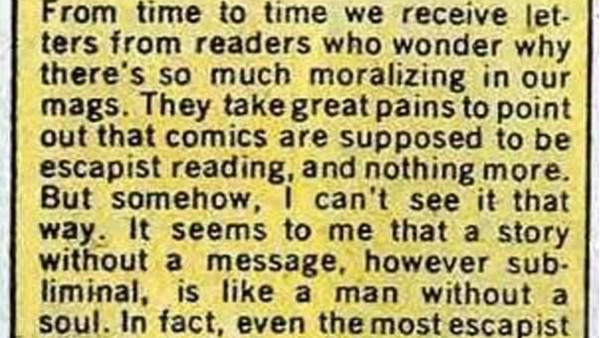
"It seems to me that a story without a message, however subliminal, is like a man without a soul."
This was just one of the many brilliant quotes found with Stan's Soapbox column, which began in 1967 and ended in 1980. Lee was replying to readers who were railing against Marvel's continued commitment to rooting their stories in the real world and taking on genuine issues (sound familiar?), and did so with enough authority and class that it should have been the final word on the subject. Should have.
Letters pages are sadly no longer a recurring feature of comics, but during its 13-year run, Stan's Soapbox opened up a dialogue with readers and offered a valuable insight into how Lee's own beliefs shaped the House of Ideas, with the writer taking the time to rally against racism on multiple occasions, as well as calls for Marvel to shy away from the real world in its comics.
Lee's enthusiasm, energy and rationale are displayed in full view in these exchanges, and they're well worth tracking down for those yet to encounter them.
4. He Created A Genuine Community
Stan Lee may not have been responsible for every achievement Marvel had to its name by the time he stopped writing full-time, but he did have a hand in some of the more imperceptible changes that happened to the industry during his time writing and afterwards too.
Lee was determined to foster a community amongst the Marvel fandom, and referred to his readers as 'True Believers', led by himself, the generalissimo in chief. Signing off every message with his trademark "excelsior!" catchphrase, Lee endeared himself almost instantly and a genuine fandom began to emerge.
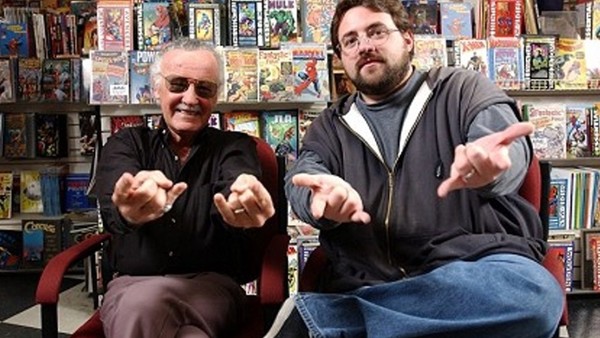
Lee gave plenty of interviews before his death, but one of his best came in Stan Lee's Mutants, Monsters & Marvels, which had Kevin Smith asking all the questions. One in particular stood out on Monday, as Lee outlined his desire to make Marvel feel like a family, more so than just a hobby in which people would invest.
"I tried to make the readers feel they're more than just casual readers. That we're all part of a family, we're all part of an inner-group. We're having fun and the outside world isn't aware of it."
It's the perfect summation of what it feels like to be involved in the comics community (at least, its positive elements), and Lee understood that right from the very get-go.
3. He Gave A Voice To The Unheard

Of course, in order to address Marvel's approach to reflecting the world outside our windows, we have to talk about the kind of characters they chose to spotlight.
Peter Parker was just a high school geek who was bullied - an outsider, by any other name. The X-Men, born into a system of oppression simply because they were considered 'different', were also outsiders, and resonated with those who felt as though they too never really fit in.
The characters Lee created alongside Kirby, Ditko and Bill Everett resonated with people the world over for a whole host of different reasons, but the fact that most were flawed, relatable individuals who felt as though they didn't belong empowered so many readers who felt they didn't have a voice.
By spotlighting these kinds of characters, Lee genuinely helped a great many people, as do the writers and artists of Marvel today.
2. The Cameo King

Alfred Hitchcock may have once been considered the king of cameos, but today, it's Lee who owns the title. He lent his voice and likeness to dozens of films, TV shows, video games and comic books, which - somewhat ironically - gave him a persona that could have quite happily existed in a comic book itself.
Starting with 1989's Trial of the Incredible Hulk, Lee would go onto appear in no less than 37 movies, and countless other projects animated or otherwise. He became the face of Marvel for generations, inducting new fans into the mythos with memorable narrations in the nineties Spider-Man cartoon, NeverSoft's Spider-Man video game, and even recently in Traveller's Tales' LEGO Marvel titles.
He was a man completely synonymous with his creations, but one who was also a constant presence in the decades following his departure from the writer's room. Everyone remembers when they first heard Lee's voice, and with so many appearances to his name, it's doubtful anyone will come close to his record of cameos anytime soon.
1. He Co-Created The Most Influential Comic Book Mythos Of All Time

Say what you will about the Marvel/DC rivalry, or whichever universe you prefer, there's no denying the influence Marvel Comics has exerted since the 1960s, or the role Stan Lee played changing how people thought about funny books.
Today, Marvel's presence can be felt pretty much everywhere. It's a monolithic company, whose creations captivate audiences and readers in a variety of different mediums, and it was all made possible by the group that rocked the company almost 60 years ago, which consisted of Jack Kirby (1917-1994), Steve Ditko (1927-2018), and of course, Stan Lee himself - to say nothing of the dozens of other individuals who would go on to influence Marvel in the years following.
It might be cliché to say to say that Lee's passing 'marks the end of an era', or even that he was 'a larger-than-life' character, but, in this instance, both statements ring true. He affected so much in the industry and remained its biggest champion throughout his entire life.
We are all, in our own ways, his True Believers. 'Nuff said.
If you have any tributes you'd like to leave regarding Stan Lee, please feel free to leave them in the comments below.