8 DC Characters Shamelessly Ripped-Off From Marvel
When it comes to borrowing ideas, the Big Two are just as bad as each other...

Although Marvel pretty much have DC beat when it comes to shameless rip-offs, the House of Ideas' biggest rival aren't exactly immune to criticism either.
A veritable troff of DC characters boast a whole bunch of similarities with their Marvel counterparts, and while DC aren't as bad in this respect (to speak nothing of the fact that there have, in all seriousness, been good Marvel rip-offs over the years), there are still a few noteworthy DC characters to have emerged from some dubious creative processes, to say the least.
Villains, heroes and more have all taken inspiration from across the comics aisle, borrowing everything from powers, personality traits, looks and more to level the playing field when it comes to the 'who ripped off who' game, and therein lies the rub.
Neither company has a leg to stand on in this instance as, wherever you look, the similarities are blatant, and while plenty of these 'copies' have largely gone on to define themselves over the years, there's no getting away from those comparisons.
Marvel may get a bad rap for their rip-offs, but if you look closely - or just at all - DC are just as culpable.
8. Atomic Skull Looks Just Like Ghost Rider
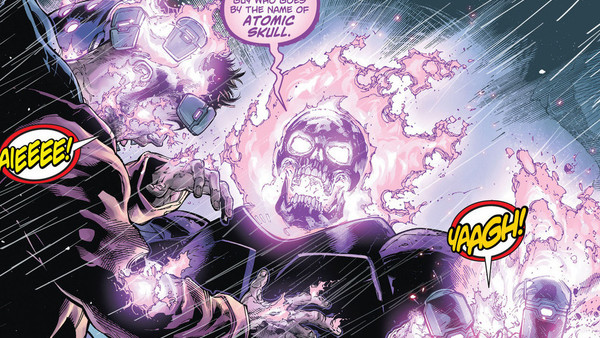
Flaming skull? Check. Hilarious name? Also check. Renowned pop-culture status? Not really, but Atomic Skull was destined to walk in Ghost Rider's shadow regardless of his flashy look.
Created by Roger Stern and Bob McLoeb in 1991, the Joseph Martin version of the Atomic Skull is visually striking and goofy all at once, borrowing Johnny Blaze's flame-ridden motif with a villainous edge to compliment it. They're very different personality-wise, but there's a reason why that design looks just a little iffy, having arrived some twenty years after the original Rider debuted in 1972's Marvel Spotlight #5.
The Skull has made a few appearances in animation over the years, and has even featured in the comics as recently as 2016 in Phil Jimenez and Matt Santorelli's Superwoman series for DC Rebirth.
That aside, he's most definitely not the Ghost Rider we all know and love, and could probably due with a redesign to avoid more comparisons going forward.
7. Bumblebee Has The Same Powers As The Wasp

First thing's first: Bumblebee is brilliant. Far and away one of the best Teen Titans out there, Karen Breecher-Duncan has always been a firm fan-favourite, and one of the most compelling teenage prodigies of the DC Universe at that.
That said, there are some blatant comparisons to be made between Bumblebee and, of course, the Wasp - Marvel's very own insect-themed superhero with a black and yellow motif. Introduced in 1963, Janet van Dyne's appearance predates that of Karen's by some margin (a whole thirteen years in fact), and given that they share pretty much the same abilities, those 'rip-off' accusations aren't without merit.
Both are brilliant characters though, and again, Bumblebee is very much her own character. Sure, they share the same abilities - and the same outfit - but there's more than enough room for both.
There's also the fact that she's been a member of Doom Patrol, which might just be the best comic book team out there. We'll give this one to Karen.
6. Guardian Is Another Patriot With A Shield
Captain America is far and away the most important and iconic hero of the Second World War. Created by Joe Simon and Jack Kirby in 1941 for Timely Comics, Steve Rogers would develop into a pivotal figure in the Marvel Universe, and an icon of the genre more generally too.
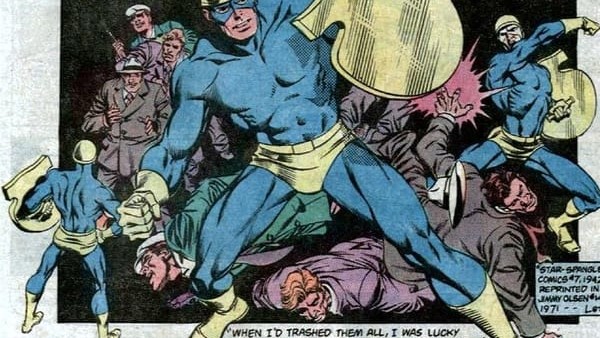
Things could've been different though. Just a year after Cap made had made his first attempt at punching Hitler, Simon and Kirby had left for National Comics (later to be named DC Comics). With their arrival came the creation of Guardian, a blatant analogue to their original Cap concept.
Going by the name Jim Harper, Guardian was a police officer by day and a vigilante by night, pursuing the criminals that the long arm of the law had failed to apprehend. He rode around in something called the Whiz Wagon, and commanded the respect of The Newsboy Legion, both concepts that somehow failed to usurp the Quinjet and the Avengers in terms of popularity, somewhat bizarrely.
Guardian has since gone on to appear in a whole host of comics, TV series and more, with different characters under the mantle. He might pale in comparison to the star-spangled man with a plan, but - as far as rip-offs go - he's a pretty innocuous one.
5. Killer Croc Is Just Like The Lizard

While Killer Croc has cemented his place in Batman's rogues gallery with a series of stellar appearances ("...I threw a rock at him!"), the Dark Knight's scaly adversary isn't entirely original, or perhaps as compelling as another reptilian villain from the medium.
Doctor Curt Connors - AKA the Lizard - made his comics debut in 1963's Amazing Spider-Man #6, and proceeded to become one of the character's most iconic and tragic adversaries in doing so. Killer Croc, on the other hand, made his first appearance in 1983 as a largely physical threat for Batman to deal with. While he's since blossomed into something a little bit more than that, conforming more to the horror genre than your average everyday brute, those visual comparisons to the Lizard are difficult to ignore.
Plus, there's also the fact that there's just a whole lot more to Curt Connors than Croc himself. The Lizard, prior to and immediately after his transformation, plays a pivotal role in the development of Peter Parker's transformation into Spider-Man. Croc, on the other hand, often acts as a menace and little else when pitted against Batman, lacking the depth to compete with the Caped Crusader's most revered adversaries, critically speaking.
There's a great deal to separate the pair, but if we were to play favourites with our reptiles, the Lizard would win each time.
4. Rocket Red Was DC's Answer To Iron Man
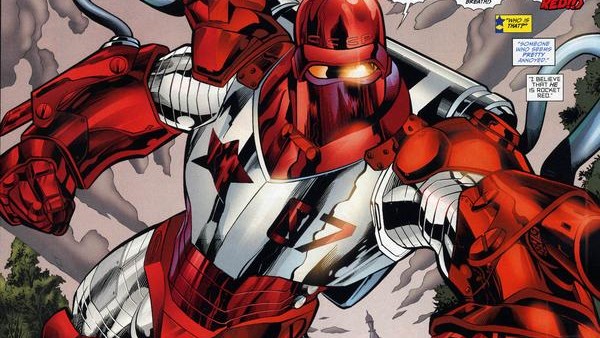
Although comparisons between Rocket Red and Iron Man aren't all that prevalent, owing to the fact that, y'know, the Rockets derive from the USSR, there's a lot visually and politically to connect the pair.
Introduced in 1987 by Steve Englehart and Joe Staton, the Rockets formed a part of the Rocket Red Brigade, a Russian defence force outfitted with a state of the art battlesuit not all that dissimilar to Iron Man's own. They featured intermittently over the years, appearing primarily in Justice League, but they didn't catch on as much as DC would've perhaps hoped.
Undoubtedly the most interesting thing about the group, however, is their political dynamic. Formerly a part of the USSR, the Brigade fracture and diverge on different paths, ideologically disparate and irreconcilably opposed to the other. Given the original Iron Man was created within that Cold War context, the focus of the group's political debate is very interesting, and no doubt a tacit allusion to that very dynamic.
Rocket Red will never manage to compete with Iron Man in terms of popularity, but as far as armoured heroes go, he's certainly not the worst.
3. Aquaman Arrived After Namor, But Is Still More Popular
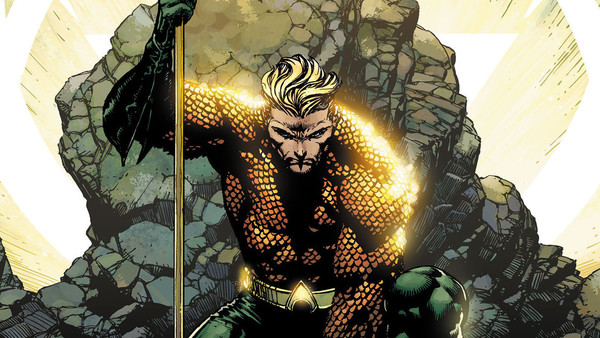
Although people might like to think that Aquaman was the first aquatic superhero out there, he's not all that original, really. In actual fact, it was Marvel's speedo-wearing Atlantean, Namor, who first kicked off the water-based super heroics in 1939.
A wartime compatriot of Captain America and the original Human Torch, Namor first appeared in the pages of Motion Picture Funnies, going on to command a presence in Marvel's wartime books and then as a key figure within the mutants when the X-Men began to peak in popularity. He's a pivotal character in the Marvel Universe, but one that was somewhat beaten to the punch when it came to reaching the public by his DC counterpart, who arrived with a green and gold hue in 1941.
King Arthur Curry has subsequently gone on to become one of the most famous (and infamous) comic book characters of all time, relentlessly mocked for his powers as much as he is for his ever changing design. That's a little unfair, especially since the character has benefitted from renewed attention from writers these last few decades, but there's no denying that he's emerged for the better because of his cult status.
Namor, on the other hand, is yet to get any sort of mainstream recognition, while Aquaman is gearing up for a second live action appearance with his own solo film. Tough luck, Sub-Mariner.
2. Imperiex Is Basically Galactus

Anyone who's anyone knows that Galactus is the cosmic bad guy. Created by Stan Lee and Jack Kirby early on in their tenure on Fantastic Four, the big bad purple giant has terrorised the galaxy for as long as Marvel has had its cosmic elements. DC, not exactly lacking in that area, must've been a little jealous too, as Imperiex - introduced in 2000 by Jeph Loeb and Ian Churchill - is pretty much their own version of the character.
The concept of lifting a cosmic template for another character isn't exactly alien to the industry; Marvel blatantly ripped-off Darkseid during the creation of Thanos. It's just that, as far as rip-offs do go, Imperiex just isn't all that interesting - a hangover of the medium's most notorious decade as much as he is a very forgettable character.
There are certainly better Superman villains out there, and it's not as though DC suffer a dearth of quality in that area, cosmic or otherwise. A bizarre addition, on the whole.
1. Red Hood's Anti-Heroics Mirrored Bucky's

Controversial opinion time: Jason Todd was much better off dead.
While there's no denying the merits of the 2011 animated 'Under the Red Hood' feature film, Judd Winick's original text chronicling Todd's return to the land of the living wasn't nearly as good. The fact it arrived the very same year that Bucky Barnes - Captain America's wartime sidekick - returned from the grave, probably didn't make things any easier, as series writer Ed Brubaker was in the midst of his character defining run on the hero.
And while there was plenty to separate the stories at the time, with Todd lacking the amnesia that typified the Winter Soldier's early days, the success of Brubaker's story provoked DC to persist with Todd for the future, turning him into an anti-hero along the lines of Bucky and positioning him right alongside the Bat-family in the wake of the New 52.
There's plenty to separate the two characters, particularly in relation to their respective careers as sidekicks, but one can't help but get the feeling their concurrent resurgence felt a little more than coincidental.
Bucky's still better though.
Are there any other Marvel characters you feel DC pilfered? Be sure to let us know in the comments below!