The Best Justice League Movie Everyone Missed
So... why did Warner Bros. pull the plug on Gods and Monsters?

Marvel may rule the skies as far as live action is concerned, but ever since Batman: The Animated Series first aired in 1992, everyone knows how DC has managed to own the medium of animation.
The brainchild of Bruce Timm, Eric Radomski, Paul Dini, Alan Burnett and later Dwayne McDuffie, the DC Animated Universe defined the Distinguished Competition's universe for an entire generation of fans, with shows like Static Shock and Justice League echoing BTAS' commitment to blending light and dark together effortlessly to impart a mature - albeit kid-friendly - impression of DC Comics. All boasted a sizeable influence in granting that perception, but visually speaking, DC animation owes it all to Timm.
Since the decline of the DCAU, however, Timm's influence on Warner Animation has slowly waned. The studio's decision to switch to 'Animated Original Movies' necessitated a change in art-style, and Timm - synonymous with those earlier shows and films - decided to step down as a supervising producer with the release of The Dark Knight Returns.
Fortunately you can't keep a good creator down, and he returned to WB just a year later, announcing plans for three principle projects. One was an adaptation of Alan Moore and Brian Bolland's The Killing Joke, the second would become Batman and Harley Quinn, but the other - an Elseworlds-esque tale revolving around a completely new Trinity - sounded the more promising of the trio.
Dubbed Justice League: Gods and Monsters, Timm's vision would depart from the traditional League to tell a brand new story about a new version of DC's Trinity. It would be violent, depart from the established canon, and feature whole new designs of Superman, Batman and Wonder Woman. Naturally such a big departure would also present a riskier prospect for WB to contemplate, and though they pursued the idea to its natural conclusion - releasing a film in 2015 - it underperformed, which led to a planned sequel and spin-off series being scrapped.
Timm has since gone on to helm further forays into the DCAU with Batman and Harley Quinn, and Justice League vs. the Fatal Five, but it's still the case that Gods and Monsters is something of an overlooked gem amongst DC's animated films. It's bold, daring, and exemplifies why fans love that corner of DC so much, but with its web-series now offline and the film itself rarely a topic of conversation, it's perhaps little surprise that the film is somewhat underrated.
4. How Gods And Monsters Came To Be
Justice League: Gods and Monsters isn't like any other DC film, and that's a good thing. According to Timm (via Screen Rant), the project span out from discussions with Sam Webster. Webster had apparently wanted a new Justice League cartoon, with the only stipulation being that it was "fresh and different."
Timm elaborates:
"So I started thinking, “OK, fresh and different. What can we do differently with Justice League?” [...] It made me start thinking about the Silver Age Flash and Green Lantern, when they brought them back from… they were completely different than their Golden Age versions of those characters. They basically kept the name and the gimmick and threw everything else out [...] I thought that would be really exciting to do that same level of reboot with Batman, Superman, and Wonder Woman, who are the most untouchable characters of the DC universe."
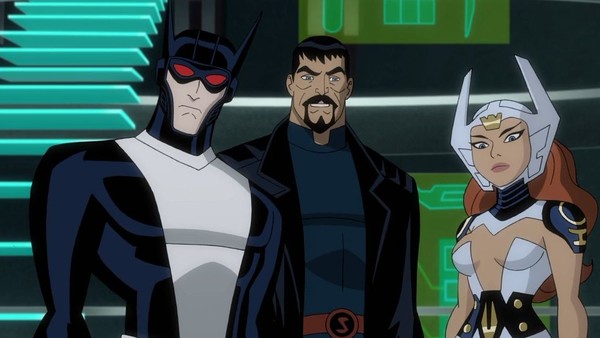
Out of this rationale came entirely new versions of the DC Trinity. Superman (Benjamin Bratt) was reimagined as the son of Zod, and was raised by a Mexican family; Batman wasn't a wealthy socialite, but instead the scientist Kirk Langstrom (Michael C. Hall). Meanwhile, Wonder Woman (Tamara Taylor) became a New God from New Genesis - although to disclose the twist with that character would be to ruin one of the best sequences in the film itself.
With these new versions came brand-new redesigns, each bearing the hallmarks of Timm's indelible style. The Dark Knight, in this universe Kirk Langstrom, boasts a mad-scientist-esque twist on the classic Batsuit design, while Superman's coat and jacket denotes his father's military past. Best of all, though, is Wonder Woman, who ends up taking on the aesthetic of Jack Kirby's Fourth World but with the added bonus of Timm's cartoonish flair.
It imparts a unique and memorable version of DC's Trinity, and while Timm would go on to inspire three more DC films, Gods and Monsters is by far his most unique offering to date.
3. It Completely Reinvents The DC Universe

Although Gods and Monsters is very much one of the more distinctive interpretations of the DC Universe, it also conforms to a long-running tradition within DC's works - that of the alternate-earth story. Said tales were later rebranded under the Elseworlds banner, with the likes of Kingdom Come and Superman: Red Son two of the most notable examples.
As Timm said before, this tradition of reinventing DC's characters stretched back all the way to the Silver Age. But there have always been certain absolutes: Batman will always be Bruce Wayne, or an analogue of that original version; Superman will always hail from the planet Krypton as the son of Jor-El, and Wonder Woman will always reside with the Amazons on Themyscira. The settings and personalities might change, but it's very rare that the person assuming the mantle will bear no relation to the original concept, which is why Gods and Monsters is so interesting.
Set in an undesignated alternate Earth (that in itself is a travesty), Gods and Monsters brings fans the DC Universe as they've never seen it before. Superman is brought up by Mexican migrants, and that - together with his lineage - motivates him to be a different kind of hero than what most fans are used to. He uses lethal force, is skeptical of the government, and though he believes in the principles of truth and justice, he possesses an authoritarian streak that his biological father would've been proud of.
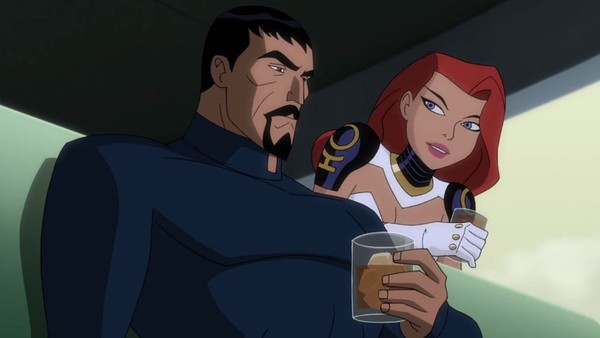
Just as Timm options an interesting Superman, he does the same with Batman. The Dark Knight of this reality is actually the Man-Bat of countless others, except here, Kirk Langstrom becomes a vampire instead. He kills to satiate his bloodlust, but he's also the most vulnerable of the trinity, with connections going back to his days at university. There's no cave, wealth or loyal sardonic butler - just a thirst for knowledge and blood, put on the straight and narrow by Superman, who inducts him into the League.
Then there's Bekka, the new Wonder Woman. The twist here is so inventive that it really can't be spoiled, but the way Timm and director Sam Liu manage to tie it into the history of the New Gods is so fascinating, and leaves Wonder Woman as the most fascinating character in the entire film.
The new trio were introduced via several animated shorts uploaded to the now defunct Machinima YouTube channel, with Batman's even showcasing the character fending off against this universe's Harley. However, when Machinima shut its doors it also pulled the plug on all the content it had been hosting, including the web-series that pre-empted the release of the full Gods and Monsters film.
Fortunately, the context provided in that series isn't essential. All you need to know about Gods and Monsters is that it presents a radically different version of the DC Universe, and that it weaves a tragic and compelling mystery in the process. The less you know, really, the better.
2. It's Dark... But In A Good Way
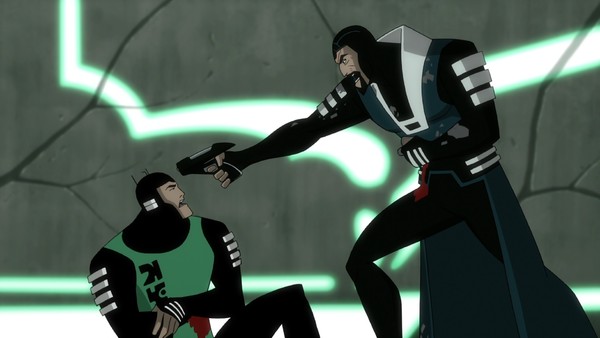
Unfortunately, one of the best things about the film may also have contributed to why it underperformed financially. Not only does it not present a traditional version of the League - itself quite the risk - it's also extremely dark. In fact, this is probably one of the most violent animated releases to have featured DC's characters, and that kind of maturity ebbs into the film's atmosphere.
It's not for everyone, and though DC's Animated Original Movies are no stranger to violence, there's an added visceral quality to Gods and Monsters that distinguishes it from the competition. It won't be for everyone, and it's likely even why the film failed to resonate quite as broadly as its predecessors, but the way the film deploys darkness is masterful.
It isn't there merely to shock, nor is it present to add edge to a concept that didn't need much of it to begin with, like in the DCEU. It's very much its own thing, and ends up living up to the title perfectly.
Gods and Monsters' maturity also ends up strengthening the relationships between the film's characters. Whether it be Kirk's past with his fellow alumni at his old university, or Bekka's unspoken romance with Steve Trevor, the film is unquestionably adult. By the time blades are unsheathed and the bullets start flying, each lead has managed to endear themselves to the audience emphatically. To do so in such a short amount of time - just over an hour - illustrates its strengths perfectly.
1. What Happened To Gods And Monsters?
As was previously mentioned, Gods and Monsters was initially conceived as a whole new Justice League cartoon. When Timm realised that the premise was too 'out-there' for younger viewers, it became a direct-to-video production. That didn't stop WB from drawing up plans for further forays into that world though, with Gods and Monsters Chronicles - the aforementioned web-shorts released on Machinima - set to be the first of many to come.
The idea was for there to be a whole other season of shorts, with WB and Machinima having even announced as much back in 2015. However, as director Sam Liu revealed in April 2016, there had been no movement on further episodes by that point. Three years and a dead YouTube channel later, and the chance of there ever being a second season of Chronicles is pretty much next-to-none.
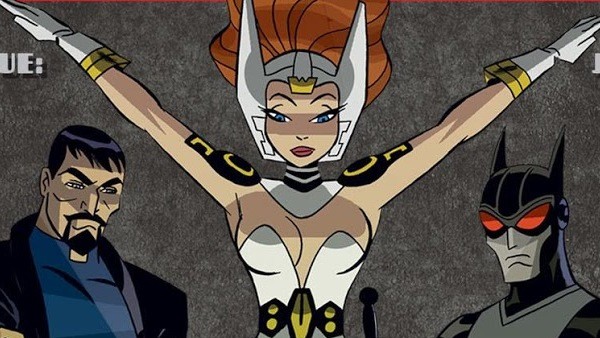
It's a huge shame, as Timm had already started expanding upon the universe in various tie-in media. DC published several one-shot comics in 2015, with Timm joined by writer J. M. DeMatteis, but no further comics based on the film have released in the years since. Compounding this tragedy even further is the fact that Timm unveiled his designs for several new characters who would've appeared in a potential sequel, with a Martian Manhunter-like Green Lantern, Steel and Mary Marvel all seemingly next in line to make their debuts.
Unfortunately, it just looks as though WB are reluctant to take another punt at the mythos. The film grossed $2.7 million in sales, but most other animated DC films tend to earn around an average of $5 million. Needless to say, it's clear as to why they haven't returned to the concept, although that doesn't make it any less frustrating.
Thankfully, however, it's not all doom and gloom. Those who grew up on Timm's older works have been treated to two different works centred around the old DCAU, including Batman and Harley Quinn and more recently Justice League vs. the Fatal Five. With talk of a #JLReunion increasing with every week, there's still a chance we can get more Gods and Monsters-esque stories in the future - just not ones set within the alternate Earth Timm conceptualised back in 2015.