10 Actors Who Conducted Insane Research For Iconic Movie Roles
There's more to acting than memorising lines.

Given that acting is all about becoming another person - so well, in fact, that your goal is to convince audiences that you really are them time and time again - it's no wonder that there are several schools of thought with regards to how one might approach such a complicated task. Whereas some actors choose to simply turn up on the set of their latest movie, take a deep breath and immerse themselves in their characters on a whim, there are others actors who find it's much easier to immerse themselves into a role if they go utterly insane.
This occurs in the research stages, of course, when an actor has signed on to star in a movie and is given a few months before shooting begins. For some, this period might be used to see friends and family, party, relax, or regret signing on to do anything, though for other, more seriously-inclined performers, this build-up is considered to be the most important part of the entire process.
Just as in the case of a novelist, good writing always goes back to the research. But how far is too far?
Here are 10 actors who conducted some seriously insane levels of research prior to starring in some of their most iconic movie roles...
10. Adrien Brody - The Pianist (2002)

Adrien Brody became the youngest male in Academy Award history when he bagged an Oscar for Best Actor at just 29 years old. The movie was The Pianist, directed by the one and only Roman Polanski, and based on a real to life memoir, in which Brody played Holocaust survivor and author Wladyslaw Szpilman.
To hit the emotional cues that such a role demanded, Brody set about creating an existence for himself that would match the sad and lonely soul of the character he was set to play.
So how did he do it, then? Firstly, he gave up his apartment and his car. This, in turn, caused his then-girlfriend to leave him. After withdrawing from society for a length of time in the aftermath of their break-up, Brody became depressed in real life. He proceeded to immerse himself in the role by learning to actually play the piano, 'til he was pretty great at reciting the works of Chopin.
Brody had no phone during this period, and contact with other human beings was minimal, if at all. Today, Brody explains that he chose to do all this in a conscious effort to make himself extremely depressed. It paid off, and you can feel yourself ready to admire the man for his hands-on approach.
Then you remember the millions of dollars and the Oscar, and you don't feel so bad.
9. The Entire Cast - The Seven Samurai (1954)

When it comes to directorial perfectionists, Japanese master Akira Kurosawa was picky enough to make Stanley Kubrick look like a hack - that's to say, he was utterly uncompromising when it came to making his movies as authentic as possible.
Over the length of his long career, that included using real arrows on his cast members in Throne of Blood, setting a castle set on fire with his actors inside it in Ran, and dying an entire water supply black so "the rain looked better" in Rashomon. Woah, right?
One other such instance of Kurosawa's insanity came in the form of the research task that he assigned his cast prior to shooting what is arguably his greatest ever film, The Seven Samurai. To ensure that his actors were well-aquantied ("well-aquantied" is Kurosawa for "expert in") with samurai life, he assigned them all the task of getting into character by means of wearing the outfits on an endlessly loop for three weeks, so that they could "bond" with them. He also mentioned that he wanted them to have that "worn down" look, and that dirt was encouraged. And it worked.
The cast were reported to have bonded spiritually with their characters in unexpected ways over the course of the weeks, and the movie itself went on to become a classic of world cinema. Taxing, to say the least, but we'd certainly prefer to wear a samurai costume for three weeks over being shot with real arrows.
Unfortunately actor Toshiro Mifune, who starred in both Samurai and Throne of Blood, was subjected to both.
8. Marlon Brando - The Men (1950)
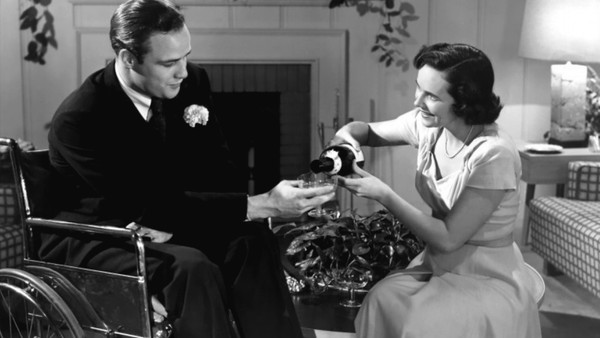
Although Marlon Brando is often considered to be one of the greatest - if not the greatest - actors of all time, his debut flick The Men still remains relatively unknown to mainstream audiences.
The plot, which is set around a WWII veteran who is wounded in combat and struggles to rehabilitate himself, is genuinely affecting in places - this might be, partly, due to the research that Marlon Brando undertook prior to filming: he spent almost a month confined to a ward in an army hospital, using only a wheelchair as a means to get about, whilst he studied the patients.
At the time of shooting, producers on The Men were worried about Brando's idiosyncratic acting style - they thought he mumbled his lines too much, and that audiences wouldn't take to the way Brando didn't seem to "respond" to the other actors on set. This proved to be of little concern, of course, as audiences everywhere would eventually come to embrace Brando's acting chops and naturalistic performance style with gusto.
Though he's undoubtably an actor of great means, Brando's stay at the army hospital here was sure to have helped with all the emotion factors that such a role demanded, and is one of the earliest examples in cinematic history of an actor taking the research process quite so seriously.
7. Viggo Mortensen - Eastern Promises (2007)
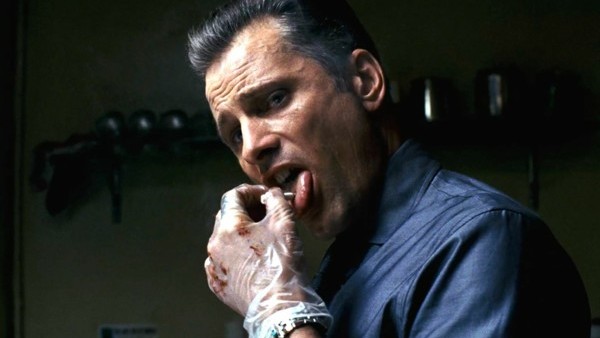
Back when he played Aragorn to perfection in Peter Jackson's The Lord of the Rings trilogy, Viggo Mortensen went all "method" and decided to inhabit the skin of his character for most of the production, which meant learning Aragorn-y skills and taking his sword everywhere with him (and we mean everywhere). Though that in itself is impressive, it wasn't exactly "research," which is precisely what the underrated actor delved into prior to shooting David Cronenberg's excellent crime thriller Eastern Promises. And Viggo is one of the main reasons as to why the movie itself is so good.
Starring as Nikolai Luzhin, a cleaner and driver in the Russian mafia, Mortensen took the prep for his role super seriously - and it's all up there on the screen. To research playing a Russian, he moved to the country for a brief period, and travelled the Urals. There, he immersed himself in Russian life, watched Russian movies and television shows, and even tested his knowledge on the language (he attempted to learn it prior to leaving home, and can speak it fairly fluently now).
He also read books by famous Russian authors, such as Dostoyevsky and Nabokov, and spent weeks researching Russian gang culture with the aid of a professional criminologist. Then there's the subject of the many tattoos Mortensen's character has etched all over his body.
Although the actor opted to use fake tattoos for the movie, he apparently became his character to such an extent that, upon walking into a London-based Russian diner, the entire place fell into silence out of genuine fear. Now that's research.
6. Rooney Mara - The Girl With The Dragon Tattoo (2011)

David Fincher's American remake of Swedish noir flick The Girl With The Dragon Tattoo drew its fair share of criticisms (given that the original is a great film in its own right, so why remake it?), though nobody could argue with Rooney Mara's stunning lead performance, one which saw her completely immersed in the character of hacker/goth chick Lisbeth Salander. It was as sensational as it was provocative, and Mara was rightly acclaimed for her efforts.
So how did she prepare? Got a few fake piercings, slapped on the white make-up and guessed at a Swedish accent, right? Not so! Mara insisted on doing everything exactly right, and started by getting four real piercings in her ears, one of her brow, and one on her nipple (which she's kept, apparently, in case there's a sequel). Then she learnt to skateboard, drive a motorcycle and kickbox, and took courses in computing and dialect training.
It didn't end there. To get even deeper into Lisbeth's psyche, Mara moved to Stockholm (the setting of the movie) for a brief period, and proceeded to live there alone. All of this intricate research amounted in an Oscar nomination for the young actress, though unfortunately she was running against Meryl Streep that year, which means that she might as well have not even bothered to turn up.
Speaking of Meryl Streep...
5. Meryl Streep - Sophie's Choice (1982)
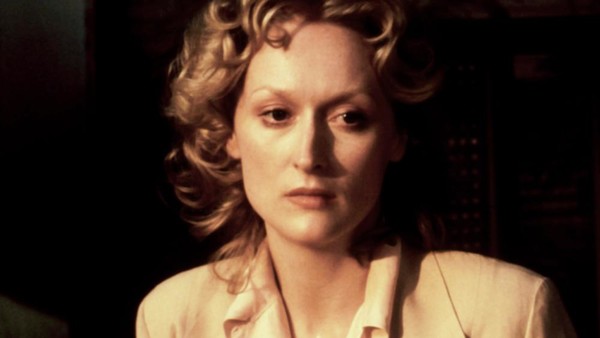
"Meryl Streep is probably the greatest actress of her generation." That's something that we've all been told on at least one occasion, and if there's one movie that might convince a nay-sayer of such a fact, it's Sophie Choice, in which she gives not only her own personal greatest performance, but one of the greatest performances in cinematic history. Full stop.
This, perhaps, goes all the way back to the preparation process, where Streep decided that - to play the role of a Polish immigrant - learning a single language just wasn't good enough. She extended her research period into the realms of madness, and tasked herself with learning how to speak both German and Polish. It didn't stop there. Dedicated to making it as perfect as possible, Streep opted to learn to speak German with a Polish accent too, as to grant her character the highest dose of authenticity possible. In the aftermath, Streep's Polish accent was deemed "perfect" by many, including Polish critics, some of whom called it "masterful" and "uncanny."
So, yes, somehow the incredible actress mastered a foreign accent whilst researching and prepping for her role. How do you say " awesome" without swearing?
4. Robert De Niro - Raging Bull (1980)

Raging Bull is one of many cinematic masterpieces brought to us by American legend Martin Scorsese, and a movie which also happens to feature what is probably Robert De Niro's greatest performance ever.
Based on the true story of heavyweight boxer Jake LaMotta (with all the inherent tragedy spilling out over the screen), De Niro conducted a hell of a lot of time-consuming research to prepare for the role that would eventually grant him an Oscar. Aside from gaining all the necessarily weight, De Niro would spent hours and hours every day training with professional boxing coaches.
To enhance the realism of his relationship with Joe Pesci within the movie, the pair opted to actually moving in with one another, as to reinforce the realistic nature of their on-screen friendship. De Niro didn't stop there: he continued his research by hanging out with LaMotta and his former girlfriend Vikki, as to learn as much as possible about their personalities and complicated history.
Trained by LaMotta, De Niro eventually discovered himself to be a pretty good boxer, and even entered a few fights as a middleweight (of which he won two out of three). LaMotta later said that De Niro had been one of the 20 best middleweight fighters he'd ever trained.
3. Forest Whitaker - The Last King Of Scotland (2006)

The Last King of Scotland, released back in 2006, starred James McAvoy as a young Scottish doctor who becomes the personal physician to Ugandan dictator Idi Amin, as played brilliantly by Forest Whitaker. To prepare for his role as the real life dictator (who once declared himself "the king of Scotland"), Whitaker underwent an extremely thorough and notoriously intricate research process.
He started by learning to play the accordion, which was one of Amin's favourite pastimes, and moved to Uganda to breathe in the atmosphere and politics of the country the movie is set within. There, he met with as many of Amin's relatives, former generals, friends and victims in an attempt to build up a wide and unbiased portrait of the man himself.
Then Whitaker took up learning Swahili (as you do), and spent months mastering Amin's East African accent. He was also reported to have read dozens and dozens on books on Amin.
So what did all this research amount to, then? Sadly, nothing at all. Just kidding: a Best Actor Academy Award, of course - what else?
2. Heath Ledger - The Dark Knight (2008)
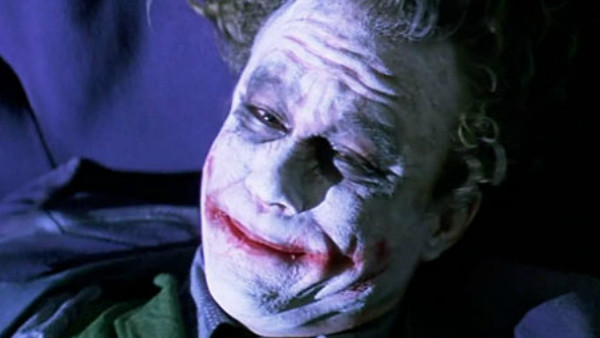
How does one research a role as difficult as that of a fully-fledged psychopath, exactly? Though many actors might opt to, say, check into a mental institution for a few weeks, or read up on famous sociopaths,
Heath Ledger went down a different route entirely when it came to preparing for his Oscar-winning turn as the Joker in Christopher Nolan's The Dark Knight: he went balls to the walls insane in real life. And to be fair, for a character as demented and unhinged as the Joker, that might've actually been the best (and only) option. I mean, the Joker is unlike so many of Hollywood's most famous villains, because he has no real motivation - all he inhabits is a twisted desire to merely watch the world burn.
Ledger obviously picked up on this fact, because he opted to "research" his role by barricading himself in a hotel room for a month. Seriously. The actor shut himself away and spent a month keeping a diary and experimenting with voices. He eventually came to the conclusion that there was no humanity in the Joker, and - given that Christopher Nolan had given him free reign and creative control over the character's mannerisms - emerged with the persona we all know and love today.
Whether or not this research contributed towards Ledger's sad and untimely death just after shooting had commenced is unknown, though an entire month in a hotel room certainly can't have been healthy.
1. Daniel Day-Lewis - His Entire Filmography

Daniel Day-Lewis is probably the most famous "method" actor in the world, and serves as living proof that "immersing yourself in questionable, insane ways" will certainly pay off come awards season. Seriously: the man has won three Best Actor Oscars in just over two decades, more than any other living actor - more than Marlon Brando, Jack Nicholson, Robert De Niro, and all those other good actors people like to list. So where does Day-Lewis conjure up these Academy Award-ready characters, time after time? The answer, my friends, is in the research, which ol' Daniel goes nuts for. And he's been doing the stuff on an extensive basis every since he got into movies.
For The Boxer, Day-Lewis trained for a whopping 18 months with professional fist-puncher Barry Mcguigan (he later said that the actor could've easily been a professional boxer). Before hoping into bed with Martin Scorsese for period flick The Age of Innocence, Daniel Day-Lewis checked into a hotel under his character's name, and spent months wandering around with a top hat and cane. It gets insaner. Before filming began on In The Name of the Father (in which Day-Lewis plays a convict), the actor decided that he should get locked up in solitary confinement in an abandoned prison. He also asked that the crew throw water and abuse him for the duration of filming, 'cause method.
Working with Scorsese again, Day-Lewis took up lessons as an apprentice butcher, as to play the cold-blooded Bill The Butcher in Gangs of New York (that's a role with real "meat"). Perhaps most impressive of all, though, is the research which the actor undertook prior to filming The Last of the Mohicans.
As to get fully acquainted with the lifestyle of his character, Day-Lewis spent months living alone in the wilderness, learning to do wilderness-y things. He adapted to survive by hunting for every one of his meals (even during filming), and when he returned from livin' like Ray Mears, the man had somehow taught himself how to build a fully-fledged canoe.
Then there's the Oscar movies: My Left Foot (he pretended to be cerebral palsy victim Christy Brown for the entire length of production), There Will Be Blood (he pretended to be Daniel Planview for the entire length of production), and Lincoln (he pretend to be the President for the entire length of production), all of which involved Day-Lewis immersing himself with fifty times the dedication that, say, Nicolas Cage seems to put into doing anything nowadays. What does this all mean, then? That Daniel Day-Lewis has managed to not only become the most respected actor of his generation, but has also managed to live a number of different lives through his movies characters.
Which is to say, he's making the rest of us all look like serious underachievers.