10 Best James Bond Movies Of All Time
The ten best movies featuring the misogynistic, Martini-swilling super-spy.

It's been 56 years since Dr. No first introduced cinema-goers to James Bond, author (and former OSS agent) Ian Fleming's incredibly English secret agent. At this point, there have been 23 official Bond movies made since 1962, with six different actors playing 007 through six different decades.
Obviously it's difficult to maintain consistency over five decades years, and not every Bond film has been totally successful. 007's is a strange franchise in that it goes through periods of apparently immense cultural importance as well as periods where it seems like the character's day is done, and through those times the series has been responsible for as many dire moments as great ones.
Thankfully, the Bond franchise's best movies more than make up for the weaker ones. It's the longest-running movie series for a reason, and the reason is that every Die Another Day or A View To A Kill urges producers to learn from mistakes, follow them up with a hit and bring fans back to the franchise.
With such a strong legacy, let's take a look back over the franchise and rank the super-spy's finest outings? Here are the ten greatest James Bond movies of all time.
10. The Spy Who Loved Me

The Spy Who Loved Me is basically the only Bond film you need to see to understand the Austin Powers movies. All the components that are so crucial to getting the Powers in-jokes are there: the OTT (and obviously staged) action, the clumsy, arch protagonist, the bawdy humour, the relentless snogging and, perhaps most importantly of all, the winking one-liners.
In The Spy Who Loved Me, as in Austin Powers, women fall instantly in love with the hero no matter how he's wronged them, the villains are cartoonishly evil, the secret lairs are bafflingly over-sized and the double entendres are one step away from basically doubling as porn dialogue. The Spy Who Loved Me was, essentially, the best parody of a Bond film until Mike Myers came along.
It's one of those Bond films, then, that lives or dies on the viewer's tolerance to 'Bond-ness'. To some, like TV's Alan Partridge, the fact that The Spy Who Loved Me so embraces the ridiculousness of Bond and runs with it is what makes it such a classic entry.
9. You Only Live Twice
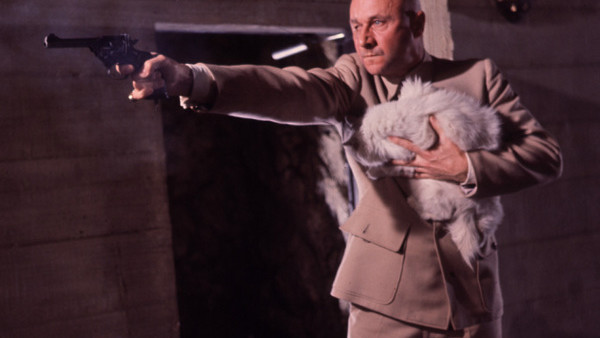
By the time You Only Live Twice came around, James Bond had become huge - what you get here is the most expensive-looking Bond film of the Connery era (pre-2001: A Space Odyssey space effects that still hold up included). Dodgy attitudes to race aside (the plot requires Sean Connery to don 'yellowface' in order to blend in in '60s Japan), You Only Live Twice is absurdly entertaining, the first Bond film to go from spy thriller to all-out action movie.
It all builds to that insane climax, set inside the !*$% volcano lair of Donald Pleasance's hammy Blofeld, in which SPECTRE forces and gun-wielding ninjas (!) fight to the death. It's one of the great Bond finales, so big that subsequent movies have always had the unenviable task of trying to top it.
You Only Live Twice succeeds as a surprisingly modern blockbuster, with the film's excitement factor taking priority over any of that storyline mumbo jumbo (it has something to do with Blofeld stealing spaceships...). It's a loss for fans of Connery, who appears to be phoning it in a tad, but a real high point for fans of action cinema.
8. For Your Eyes Only

Killing off Ernst Stavro Blofeld, the corny Bond villain of old, in the opening credits of For Your Eyes Only almost feels like a statement of intent (it wasn't - it was actually a dig at the fact that Bond producers had lost the rights to the character): doing away with much of the series' hamminess For Your Eyes Only gets back to basics with a murky tale of Cold War espionage.
Roger Moore is still awful as Bond, obviously, but the film around him is more early Connery than Moonraker (For Yours Eyes Only's predecessor, and arguably the franchise's nadir). Which is to say it's a more grounded kind of Bond film, wherein it actually feels like there's some weight to 007's actions.
The plot revolves around the reclamation of a simple MacGuffin - the ATAC machine, wanted by both British and Soviet intelligence - and Bond's single-minded determination to get it. Herein lies one of the most undersung Bond movie climaxes: knowing he must either hand the ATAC over to the Soviets or destroy it, Bond chooses to smash the priceless machine. 007's Soviet rival simply smiles and walks away, recognition that this espionage business is to both men just a game.
7. Goldfinger

Goldfinger is iconic, yes, but the best Bond film ever, as so many would have you think? Not quite. It's the point where the series wilfully forges ahead into a realm of silliness, leaving any subtlety behind for a taste of excess.
But oh, what excess. This is the movie where the obligatory expendable Bond girl suffers death by paint, where the villain is so obsessed with gold he intends to nuke Fort Knox in order to increase the value of his own supply, where the henchman crushes golf balls and wears a hat that doubles as a throwing weapon, and where the female love interest is literally named Pussy Galore.
The budget appears noticeably limited in places (the Fort Knox-set finale that should appear much grander than it does), but elsewhere the film is well-orchestrated and almost gleefully tongue-in-cheek, and it's so packed with iconic moments that the entire film feels like a touchstone for every Bond movie made since. Sean Connery, too, is in fine fettle, electrocuting goons and ejecting supervillains from aeroplanes as though he hasn't got a care in the world.
6. On Her Majesty's Secret Service

It's a favourite of Steven Soderbergh and Christopher Nolan's (the film's an obvious influence on Inception) and it's now generally well-regarded by fans, but at the time of its release, On Her Majesty's Secret Service didn't go down so well. Critics and audiences of 1969 weren't open to seeing Bond get all reflective and sad, nor were they yet used to the idea of multiple actors taking on the role.
Time has been kind to the film, however; as Soderbergh has written, Secret Service is "beautiful in a way none of the other Bond films are". It's a cool, quintessentially '60s movie, shot with visual panache by director Peter R. Hunt, who brings well-staged action, a creepy oddball villain (Telly Savalas!) and potentially the greatest Bond girl of all time in Diana Rigg. Oh, and the most unfairly derided Bond actor ever.
George Lazenby, who performed many of Bond's stunts himself, lends a raw physicality to Bond that wouldn't resurface until Daniel Craig took the role on decades later. Despite the commonly held notion that Lazenby is the worst Bond ever, he's more accurately on a par with Dalton (and better than Roger Moore - that goes without saying) - in that final scene alone, Lazenby does more emotional heavy lifting than any Bond actor did until the Craig era.
5. Licence To Kill
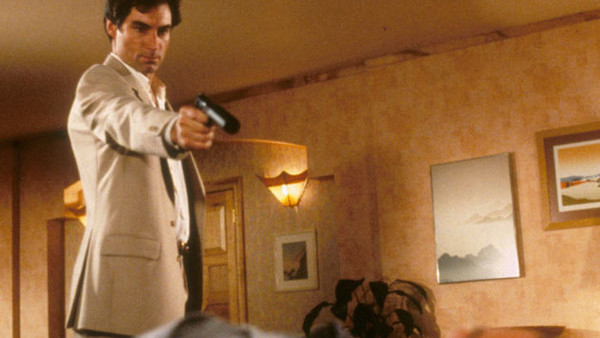
Originally considered to be an unfortunate blip, Licence To Kill grossed low, alienated fans and forced producers to bunker down and re-evaluate what Bond was all about. But the film's status as an outcast is part of what makes it so fascinating, and part of why it's such a great movie: this is less a 007 movie than a revenge thriller drawing on more uncompromising pictures.
It's a harsh movie, easily Bond's most violent hour, and it feels all the more so because John Glen - a five-time Bond director also responsible for Octopussy and A View To A Kill - is still approaching the material as entertainment. It's uncertain why: Bond allies are tortured, the plot sees Bond go on a rampage against a drug cartel and goons are disposed of via fire, cocaine shredder and head exploding pressure chamber.
This darkness is at times off-putting, but the lead is admirably game. Timothy Dalton never made much sense playing a traditional James Bond, but here - in the one and only Bond film tailored to him as an actor - Dalton brings a callous ferocity to 007 that nobody, Daniel Craig included, has managed (or dared?) to tap into since.
4. Casino Royale
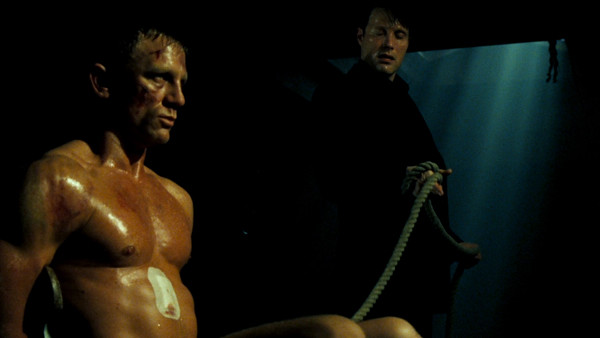
Casino Royale was, arguably, the first Bond film that non-Bond fans could truly enjoy. With the misogyny, eye-rolling humour and general wackiness ditched in favour of a Bourne-like realism, Casino Royale made an effort to scrap the Bond template and start all over.
Casino Royale was the second time Martin Campbell revived the James Bond series (the first being with GoldenEye), and the director - in recognition of how overblown the films had become - grounded the secret agent back in reality. Well, as close to reality as James Bond can get - Casino Royale still involves mad spectacle and ends with a battle in a building sinking into Venetian waters.
With the emphasis on character, the newly cast Daniel Craig puts in his finest 007 performance as a tortured brute of a secret agent, but Eva Green more than matches him as one of the all-time great Bond girls. Not that she really qualifies as one - Vesper Lynd is so well-written and brought to life with such vivacity by Green that she makes a match for Bond like no other there's been.
3. GoldenEye

Looking back, GoldenEye is a Bond movie with surprising depth - it's the first Bond movie set after the Cold War's end, and the first to truly consider whether Bond is a man out of time. This would later be explored further in Skyfall, but GoldenEye manages to find the sweet spot between thoughtful self-analysis and "screw it, how about some superlative action sequences?".
GoldenEye's beats are some of the best, with the tank chase, the explosive finale and that opening scene - perhaps Bond's best ever - all serving as series highlights. Director Martin Campbell also shows off an eye for location, with post-Soviet Russia a cruel concrete ruin of the former USSR and Cuba a lush, eerie paradise; his handling of actors, too, is impeccable (Izabella Scorupco's Bond girl and Famke Janssen's villain feel unique, as opposed to being just types).
Throw in an evocative, brassy industrial score, and some emotional weight in the form of Sean Bean's former 00 agent turned against Bond, and you have easily the best 007 outing of the Brosnan era. None of Brosnan's subsequent Bond movies even came close, which seems like a waste of an actor so well-suited to the part, but at least there'll always be this stonking effort to look back on.
2. Skyfall
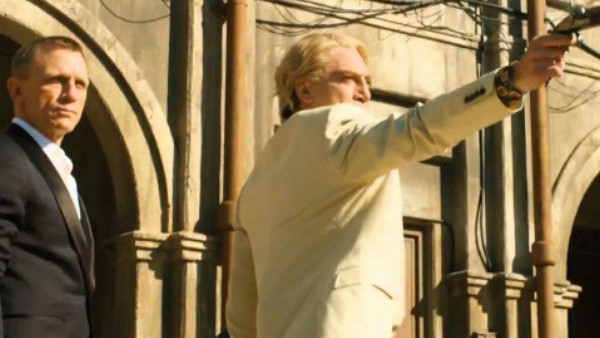
Under the helmsmanship of Sam Mendes, Skyfall is perfectly pitched somewhere between the realism of Craig-era Bond, the cool bombast of the old 007 stories, and the introspection of a Mendes movie. Then it throws in shuddering action and a gonzo villain in Javier Bardem, and you have what some reasonably refer to as the greatest James Bond movie ever made.
Numerous superlatives can be thrown at Skyfall: it has the best cast (Bardem, Ben Whishaw, Albert Finney and Ralph Fiennes join the returning Craig and Judi Dench), the best cinematography (Roger Deakins does some of his finest work here), and the best single-take monologue ("Now, they only eat rat..."). As the 50th anniversary movie, it delivers as the sum of half a century of 007, and then some.
Though it doesn't quite top Casino Royale for soul-searching angst - there are too many great set-pieces going on for all that - Skyfall is unique in that it makes reference to a noticably older Bond. Here, Bond is fallible, broken down and less effective than he once was. That doesn't stop him winning in the end, but no other Bond movie makes you question the longevity of 007 quite like Skyfall.
1. From Russia With Love

Before Goldfinger set the template for what everyone expected the James Bond movie to be, 007 was still finding his feet. And if the franchise had followed the example of From Russia With Love instead, audiences would have been looking a different kind of movie altogether, one of leanness, intelligence and stark, uncluttered cool.
Arguably the finest Bond - that'd be Connery - gives arguably his finest Bond performance, while his nemesis is probably the greatest the Brit spy has ever faced: Robert Shaw's sociopathic Soviet agent, Red Grant. Their duel is rare - aboard a train carrying them from Istanbul to Trieste, Grant tentatively stalks Bond then sits him down to dinner, where each try to crack the other's facade before they lock into the series' single greatest fight scene.
From Russia With Love is almost the antithesis of Bond: it's low on gadgets, high on brutality (Bond beating a woman for information here seems less like misogyny, more like a product of Bond's success-by-any-means philosophy) and it centres on a low-key plot that actually forces the viewer to engage. It may not often feel like 'true Bond', but it's a truly great movie all the same.
Do you agree with our top ten picks? Let us know in the comments below.