10 Facts Everyone Always Gets Wrong About Star Wars
Not even true from a certain point of view.
Everyone knows Star Wars. Sure, there's those who pride themselves in having never watched one of the biggest movie franchises of all time, but everyone still knows it. Lightsabers, space battles, having a bad feeling about many things; it's sewn into the very fabric of popular culture, providing one of the first cases of a movie series that straddled intense geek fandom and mainstream appeal.
It's been over thirty-five years since George Lucas' space fantasy burst onto cinema screens and the galaxy far, far away still feels relevant today. The Force Awakens was the biggest movie of 2015, while the impact of the saga on the general public is tangible; Ewok is never once said in a movie and yet even a passing viewer knows what the teddy bear denizens of Endor are; the internet loathes the Prequels and yet they're as important to Generation Y as the originals were for Gen X.
The Star Wars fandom may be characterised as the "parasitical lowlifes" Ewan McGregor hit out against in a recent interview, but in fact it's far more wide-sweeping than the usual mother's basement dweller. Naturally, with such a big audience with a varying levels of devotion, that gives rise to a few misunderstandings about the series, ten common ones we hope to correct today.
Remember that person who went around telling people it wasn't Dark Vader or Lightsaver? Yeah, this list is pretty much the grown up version of that.
10. Vader Was Always Luke's Father

The Misconception: Darth Vader is Anakin Skywalker. It's one of those twists so ingrained in popular culture that it doesn't need a spoiler warning, like Bruce Willis being dead in The Sixth Sense or Bruce Willis being dead behind the eyes in A Good Day To Die Hard. We've had a whole trilogy of films made just to explain it. And while it may have sparked debate in playgrounds back in 1980, the saga-defining twist was always in George Lucas' mind. Why else would there be so much talk about Anakin pre-reveal? His name translates into Dark Father in Dutch - that alone should give it all away.
The Truth: Vader wasn't Luke's father until the second draft of The Empire Strikes Back. Not the first, but the second; the original story for the first Star Wars sequel didn't have the twist. It was only put in because Lucas thought it would be cool. And that really should be obvious; it retroactively makes Obi-Wan the biggest white liar this side of Corellia.
All through the saga Vader kept being developed and, believe us, he could have turned out very different. A deleted scene from A New Hope sees Luke meet Red Leader, where the two discuss how great a man his father was. This scene is partially reinserted into the Special Edition, but had to feature a massive cut to avoid the contradictory account of Anakin.
As for that oft-quoted Dutch translation, Dark Father becomes Donkere Vader, but the latter is pronounced nothing like (in)vader.
9. The Names Of The Episodes

The Misconception: Beating the rest of Hollywood to it by a couple of decades, Star Wars enabled itself to make sequels without having to come up with increasingly hokey names (see Beneath, Escape From, Conquest Of and Battle For The Planet Of The Apes). The Episode structure is one of the series' defining traits, essential to its homaging of the Flash Gordon serials. And before we got the prequels that was a major source of confusion for those not familiar with the series; why did it start halfway through? Ah, the simpler days.
The Truth: Most film fans will know that A New Hope was originally just released as Star Wars (Fox thought audiences wouldn't get why there wasn't an Episode I, II and III), with its crawl only updated when it was rereleased in 1980 (and thus too much of a hit to matter). But to highlight that distracts from the fact that the names of the other Original Trilogy films were also changed. When they were first released Episode V and VI were known as just The Empire Strikes Back and Return Of The Jedi respectively - no mention of Star Wars or an episode title.
Their crawls had the usual rigmarole, but all marketing and merchandise just used the subtitle (look at the vintage posters). Even when the films were re-released for the Special Editions they were marketed under their subtitles - it's only in recent years that Star Wars Episode IV, V and IV has become a mainstay for the originals.
8. The Prequels Were Just Made Up

The Misconception: In case this is your first day on the internet, on the whole people don't like the Star Wars Prequels. We don't really agree, but as the comments of that article show, it's a pretty strongly held belief. The general feeling is that while Lucas obviously cared enough to commit ten years of his life making three massive movies, he was really more concerned with keeping the finances paying dividends, with the creativity that once defined the saga replaced with ideas that best lent themselves to action figures. Oh, that and making things rhyme.
The Truth: Some elements of the prequels (Jar Jar, Samuel L. Jackson's stunt casting, the things that stole from contemporary movies) clearly come from being made over a decade after the originals ended, but that doesn't mean the prequels were made up on the fly. In fact, the general ideas - how the Emperor rose to power, the droids journey (including C-3PO being built by a child) - all come from Lucas' early plans for the wider saga written in the immediate aftermath of Star Wars' phenomenal release.
Heck, even Midichlorians were first conceived of then. For a real taste of what Lucas had planned all along, check out this run down of the biggest things he knew back in 1977. They may not be people's favourite movies, but there's no escaping the prequels were, in part, in the spirit of the originals.
7. Luke And Leia Were Always Meant To Be Siblings
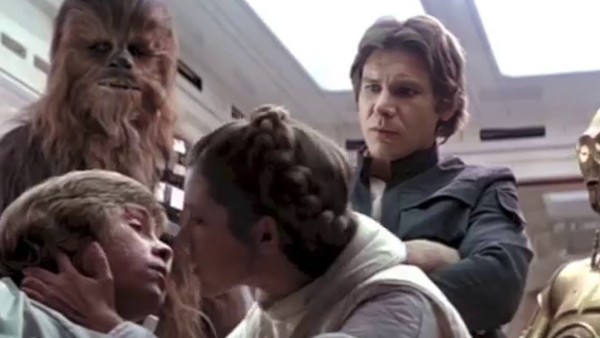
The Misconception: What's the most awkward Star Wars moment? Anakin trying to chat up Padmé by talking about sand? Jabba taking Princess Leia as a bikini-clad slave? That bit in Yoda's death scene when his ear bends, betraying that he's a puppet? Close, but no death stick. It has to be when Leia kisses Luke; a bid to annoy Han that ends up being a shocking case of twincest. If we wanted a fun sci-fi with incestuous undertones we'd take Back To The Future thank you very much.
The Truth: This isn't as big a misconception as Vader being their father, with that kiss standing proof positive it wasn't planned (this isn't Game Of Thrones), but after decades of reinforcement it's easy for the general consciousness to forget Leia being a Skywalker was made up last minute. That "other" talked about in Empire was always planned to be Luke's sister, but she wasn't going to be Leia; Jedi would end with Luke going off to find her to help him take on the Emperor in a sequel trilogy.
It was only when Return Of The Jedi became the final entry that things were tied so tightly together. Whether it was because he wanted to wrap the story up in one film rather than a trilogy or because he thought there were enough women in the galaxy, this was scrapped and we got the much more sensible Leia Skywalker Organa Solo.
6. Coruscant Was First In The Phantom Menace

The Misconception: For all the strange additions made to the series' mythology (Jedi wear the same robes as Tatooine farmers, meaning Obi-Wan wasn't hiding that smartly), the prequels did bring some interesting elements. Take Coruscant, the capital of the Republic and home of the Senate. A planet-wide city, it's like L.A. circa 2019 from Blade Runner mixed with Neo-Tokyo also circa 2019 from Akira and provides the backdrop for much of the trilogy's action, starting with The Phantom Menace.
The Truth: Well, for starters, The Phantom Menace wasn't the first time cinema-goers visited the planet; Coruscant first appeared on screen in the Special Edition of Return Of The Jedi during the galaxy wide celebrations before being more prominent in the Prequels. But it had existed long before it was put on film. The notion of a city planet was in some of Lucas' earliest drafts for The Star Wars and kept coming back as the potential homeworld of the Emperor.
The first appearance of Coruscant proper came in Timothy Zahn's Thrawn Trilogy, a landmark Expanded Universe story from the early-nineties, where the New Republic was seen setting up a home on the former-Imperial capital. Other elements brought across from the Expanded Universe into the movies include Twi'lek Jedi Aayla Secura in Episode II and III and Dash Rendar's Outrider leaving Mos Eisley in A New Hope's Special Edition.
5. Han Solo Was Almost Killed Off
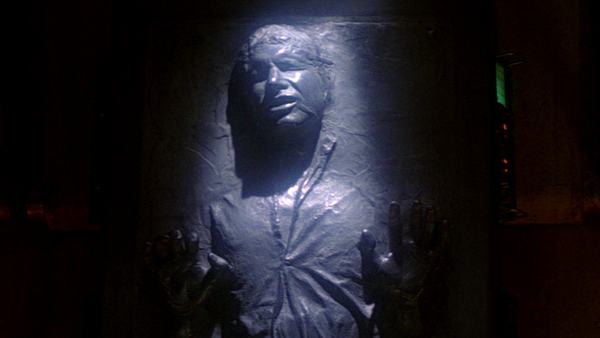
The Misconception: It's one of the most commonly reported "what if's" in Star Wars; back when plotting the story for Return Of The Jedi the prospect of killing off Han Solo came up. He was already in jeopardy after the end of The Empire Strikes Back and the death of one of the central trio would provide added tension to the final chapter; no one was safe. Of course we know that nothing came of this, with Han living to appear in another trilogy, but that shouldn't distract from how close he came to death.
The Truth: Both Harrison Ford and writer Lawrence Kasdan may have been attracted to the idea, but Lucas was having none of it. It was probably born out of a desire to keep the film lighter and keep Solo a marketable character, but whatever the reason he never even entertained the prospect, meaning it was as hypothetical as running up to J.J. Abrams and shouting "bring back Jar Jar." When compared to other alternate possibilities we've already discussed - Lucas was going to have a Sequel Trilogy follow soon after the originals that detail Luke's hunt for his sister and confrontation with the Emperor - this is rather slight both in terms in story and chances of happening.
4. The Expanded Universe Is Illogical

The Misconception: Star Wars has always been more than just a movie franchise. Since the very early days, with Marvel tie-in comics and spin-off novel Splinter Of The Mind's Eye it's been clear there's more to the story than just the movies. In the decades since we've seen the Expanded Universe create a dense mythology for that galaxy far, far away, reaching centuries into the future (on top of the continued adventures of the original cast, we've seen the antics of Luke's descendants) and millennia into the past (thanks to Knights Of The Old Republic and their ilk we know fully the origins of the Sith).
But it's all a bit of silly hokum made to keep fans engaged, turning background extras into big heroes for the sake of it. This appears to be proven by the fact that Lucasfilm announced that anything released before Disney acquired the company (bar The Clone Wars TV series) is considered non-canon.
The Truth: The main reason the conventional Expanded Universe was relegated to Legends status is because it would have been too restrictive for the movie franchise going forward. The post-Return Of The Jedi landscape has been heavily mapped out, with stories detailing Luke's Jedi Academy on Yavin IV, Han and Leia's son becoming a Sith Lord and Chewie dying at the hands of an extra-galactic race; it had become incredibly convoluted.
This is all now essentially an alternate reality, giving filmmakers total freedom with the sequel trilogyaa. That doesn't mean the stuff in the EU is bad, however. The quality varies, but the stories are normally solid Star Wars adventures that really respect the central films. In a way it's a shame that they've now been made irrelevant.
3. He's Anakin Before The Armour

The Misconception: Revenge Of The Sith is the film everyone was waiting for. We'd seen whiney 9-year-old Anakin and whiney 19-year-old Anakin. Now it was time for mass murdering 23-year-old Anakin. And most people came out of the cinemas moaning about how, after providing the crux of the marketing campaign, Darth Vader only appeared for five minutes where he just cried over Padmé. Well worth the 22 year wait.
The Truth: All the complaints about the lack of Vader in the suit really takes away from that the real tragedy with Anakin isn't that he ends up in an evil-looking life support machine (that the Emperor presumably had in production just in case), but that he turns to the dark side. And to that end, Vader is present from halfway through the film (earlier if you believe Obi-Wan in that killing Dooku was the final straw). He's not in the suit but it's clear he's bad and, as implied in various expanded material, the fake limbs and breathing mask, while making him more menacing, actually make him less powerful.
Google "Revenge Of The Sith Darth Vader" and you have to scroll a fair way to find a picture that isn't the suit. You could argue that it's only when he's finally in the armour that Anakin becomes Vader, but we think the point of no return is surely when he slaughters a bunch of children. We're old fashioned like that.
2. The Parsecs Line Makes No Sense

The Misconception: "You can type this s**t, but you can't say it" said Harrison Ford to George Lucas on the set of Star Wars, exasperated at the directors sci-fi mumbo-jumbo dialogue. But while he may have struggled with "Greedo" and "don't get cocky", to fans his most erroneous line is that he "made the Kessel Run in less than twelve parsecs". You see, a parsec is a measure of distance (3.26 light years to be precise), not time, making that line the most nonsensical sentence in the whole saga.
The Truth: Because everything to do with Star Wars is over-thought there's plenty of solutions to this scientific faux pas. Lucas has suggested it was merely Han trying to swindle Luke and Obi-Wan, bamboozling them with complicated words, which really plays into his rogue character. The fourth draft even had evidence of this - Obi-Wan scoffs at the use of the word in this context.
The EU, however, offers an involved, but quite interesting, alternate explanation. The Kessel Run isn't a conventional A to B trade route, but a smugglers hyperlane used to avoid Imperial ships by going close to the Maw, a cluster of black holes. It's conventionally 18 parsecs, but thanks to Han's savvy piloting skills and the Millennium Falcon's fast engine, he's able to go closer to the Maw and thus shorten the distance.
1. The Special Editions Are Just Dumb Changes

The Misconception: There are Star Wars fans out there who quite like the prequels or don't think The Empire Strikes Back is the best movie in the series, but one thing every member of the fan community can agree on is that the Special Editions, as well as the subsequent re-edits of the Original Trilogy for DVD and Blu-Ray, are works of Sith-level evil. Making Greedo shoot at Han before his fiery death, adding in a superfluous scene with Jabba into A New Hope and replacing Sebastian Shaw with Hayden Christensen in Return Of The Jedi, they're full of unwanted changes to the films that George Lucas alleges bring the film's closer to his vision, but really make them a painful watch. Roll on the release of the untampered versions.
The Truth: Put the pitchforks and gaffi sticks away. We're not here to defend the CGI additions or major alterations made in the Special Editions. But we are going to point out one of their most overlooked properties. The Special Editions didn't just tamper with the films, but also touched them up. Although the original special effects were pretty cutting edge, time had meant cracks had begun to show; matte paintings, while gorgeous, didn't stand up to close scrutiny and the rudimentary blue screen effects had led to some odd lapses in depth.
Add on top of this the usual grain that old film accrues and you have a tatty looking print. They're not glaring errors, but they stop the film's looking as good as they should. The Special Editions corrected all of these issues just like the restorations of other classic movies. The problem is they didn't stop there.
What other misconception do people have about Star Wars? Let us know in the comments below.