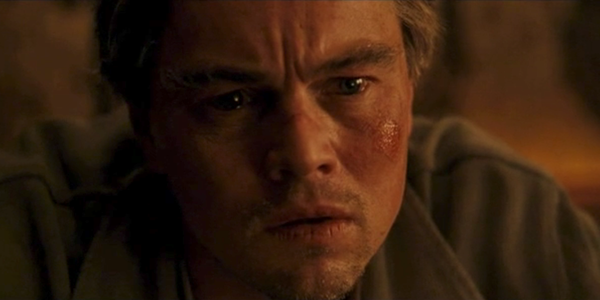
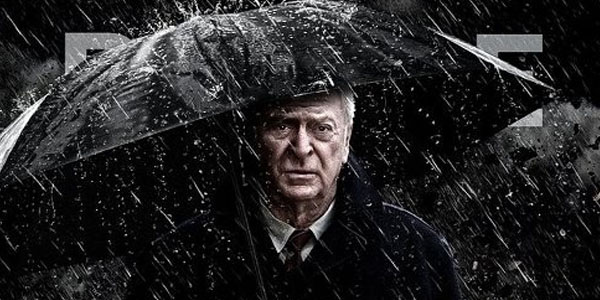
10 Harsh Truths You Don't Want To Admit About Chris Nolan's Movies

You might be angry going into this article but you'll come out of it agreeing with it...
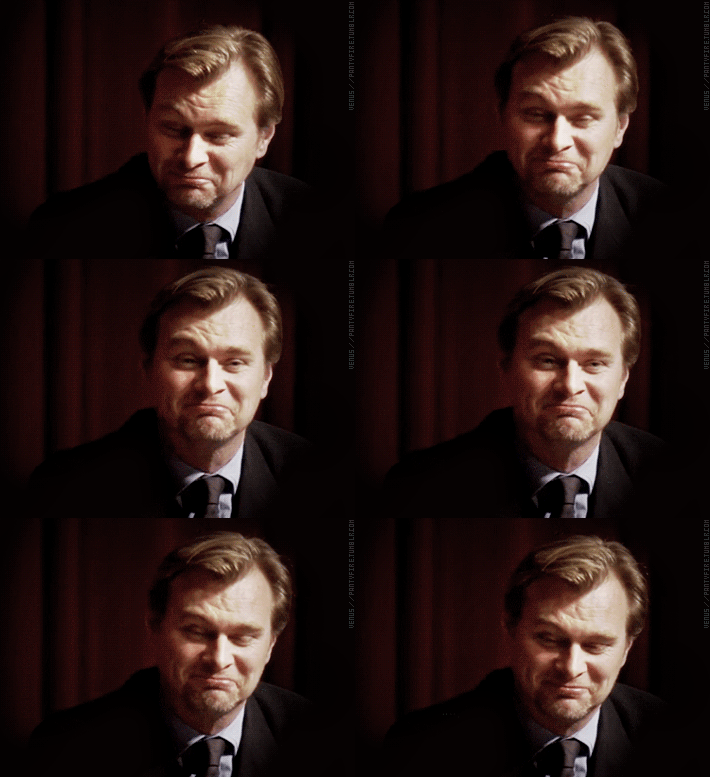
Tumblr Inline Mjds8qvmve1qz4rgp Gif Christopher Nolan is without question one of the most celebrated and talked about filmmakers working in Hollywood today. In just the space of a decade, he went from being an independent filmmaker working on smaller, more intimate dramas, to becoming one of the industry's most reliable and acclaimed directors of big-budget entertainment, making his most prominent mark with his beloved Dark Knight trilogy. Though it's difficult to argue with Nolan's technical skill or ability to viscerally entertain us, there are also a number of truths about his movies that maybe we just don't want to admit. It goes without saying that the majority of these issues stem from the latter portion of Nolan's filmography, where he became more immersed in tentpole filmmaking, and no doubt felt the need to homogenise his work a little more for the sake of mass appeal. It's considerably more difficult to scrutinise the earlier movies of Nolan's career, such as Memento and Insomnia, which with their R-ratings were less-constrained by studio mandate, and therefore felt more like the sort of pure Nolan movie we haven't really seen since. Though Interstellar seems to be walking the same stylistic line as Nolan's last three movies, hopefully it can avoid at least some of their pitfalls and earn Nolan that Best Director Oscar nomination he's long been craving. What do you think of Nolan as a filmmaker? Are we being too harsh? Or did we miss any major flaws in his work? Let us know in the comments!

10. Poor Female Characters
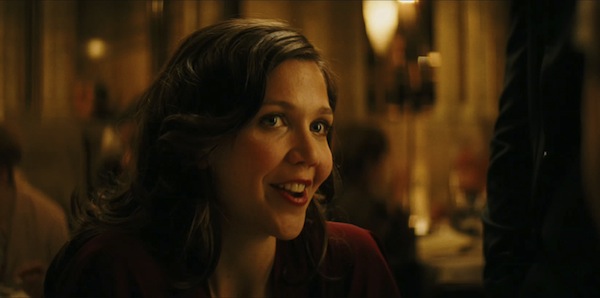
Around the time Inception hit cinemas, an inflammatory article hit the web accusing Nolan of "fridging" a large number of his prominent female characters, meaning that he kills them off in order to give the male protagonist a reason to mope around. The article cites numerous examples in Nolan's movies where this occurs: Memento (Leonard's wife), The Dark Knight (Rachel Dawes), The Prestige (Julia and Sarah) and Inception (Mal), and that's without even mentioning Nolan's first movie, Following, which concludes with the protagonist being framed for the murder of a blonde woman. Then there's characters like Ellen Page's Ariadne from Inception, who is never developed as a fully believable human being, but really just a machine to spout exposition and keep the audience up to speed (but more on that later). Are there interesting, living, breathing female characters in Nolan movies? Sure. Carrie Anne Moss' Natalie (Memento) is complex and curious, Hiliary Swank's Ellie (Insomnia) serves a function even if she's secondary to the male characters, and Anne Hathaway's Catwoman (The Dark Knight Rises) kicks as much a** as Batman does, so there's that. Women just don't seem to be a major concern for Nolan, but rather a tool most of the time to serve a narrative function. Hopefully with brilliant actresses such as Hathaway, Jessica Chastain and Ellen Burstyn starring in Interstellar, Nolan might make a little more effort with them this time.

9. Neutered By PG-13 Rating

With Nolan's ground-breaking work on Batman Begins, he didn't just kick-start a trend of gritty, downcast Hollywood blockbusters, but he also catapulted himself headlong into the elite big-budget filmmaking system, governed largely by the proviso that these movies must be rated PG-13. Now, from a financial perspective, it's difficult to argue with that, but from a pure filmmaking perspective, it's frustrating to see a director who has flourished so well in the R-rated sphere being so continually neutered. That's not to say we'd want coarse language in a Batman movie, but the near-total bloodlessness is distracting to say the least, and Nolan fans have built up a certain thirst to see the director take a break from all of this blockbuster work and return to a lower-budget, more intimate, R-rated movie. Nolan deserves credit for clearly pushing the PG-13 rating to its extreme in The Dark Knight by way of Heath Ledger's savage, vicious Joker, though he's still a far cry away from the very different Nolan style we saw on Memento and Insomnia.

8. Action Doesn't Make Spatial Sense & Is Generically Choreographed

Despite so many of his recent movies revolving around action, Nolan's direction of set-pieces is middling at best. Unquestionably his best action-related work to date is Inception, whereby with the help of editor Lee Smith, he managed to make a surprising amount of sense out of the various events taking place in different dream layers at the same time. Nolan's Dark Knight movies feature at once his most ambitious and troublesome action sequences, usually fantastic ideas for scenes which are hamstrung somewhat by poor spatial reasoning and snappy editing. This article makes a fantastic case for how Nolan doesn't appear to follow much visuo-spatial logic when directing action scenes, instead hoping that quick cuts will mask the peculiar staging he opts for. Then there's the fight choreography, as was a frequently complained about aspect of The Dark Knight Rises: the final fight between Batman and Bane is a crude and unimaginatively-staged fight, and Nolan opts for the most simplistic framing possible, making what should be the most epic moment of the movie curiously "OK" and not much more. Of course, it's still difficult not to get swept up in the spectacle of it all (thanks to some fantastic music in particular), but a director as seemingly intelligent as Nolan should be capable of cleaner, better thought-out action.

7. A Lack Of Heart

One of the most-cited criticisms of Nolan's films (especially his more recent ones) is that they simply lack heart. Despite all of the high-drama that takes place, Nolan struggles to invest us emotionally in what's going on, because while the characters often speak in bombastic, dramatic terms, they're not necessarily always very human or relatable characters. Though Rachel's death in The Dark Knight was a shocking and unexpected moment, the lack of emotional service the movie pays to Bruce's anguish makes it difficult to becoming viscerally involved in his struggle: he simply has to pick up the pieces and move forward to take The Joker down. In Inception, Cobb's quest to get back to his children should have been a deep emotional hook for audiences, yet Nolan barely engages with the idea at all beyond being a narrative concept on which to hang the mind-bending plot and action sequences. Nolan's Interstellar, with its epic narrative encapsulating all of humanity as well as its protagonist's own children, will hopefully signal Nolan's growing maturity as a filmmaker, and he'll engage our heart as much as he tries to our mind.

6. Pseudo-Intellectualism

Speaking of which, Nolan's earlier movies such as Following and Memento demonstrated a ferociously intelligent mind that didn't care to pander to audiences, something that's sadly become an integral part of his material these days. Some might be more polite and say that Nolan is merely adapting his ingenious narrative ideas for a more casual, mainstream audience, while others will say that he's simplified and boiled them down to the point that, to any well-read viewer, they seem piecemeal and condescending. A frequent comment about Nolan's films is that he wants viewers to feel like they're smart: The Joker's various quips about contemporary society are lightly blanketed over the outrageous action and more simplistic comic book storyline in an attempt to make the film seem more thoughtful and intelligent, even if Nolan's engagement with the themes is only surface-deep. The same can be said of Bane in The Dark Knight Rises, who decries the upper classes and urges the oppressed to "take back their city", conveyed in an ultra-simplistic manner that would make even the most naive politics student cringe, even if this does still pass for "complexity" in the current blockbuster dynamic.

5. Characters Don't Behave Realistically

Another major criticism of Nolan's movies is that his characters just don't behave realistically: they act in exaggerated, black-and-white ways simply to heighten the dramatic stakes and make everything seem more important. For example, in Inception, why doesn't Cobb just have Michael Caine's character fly his children out to France? Sure, it would negate the need for Nolan's rather ingenious dream-within-a-dream construct, but basic things like this could be fixed in the scripting stage and make the characters seem more like people and less like automatons spouting dialogue. Tying into the pseudo-intellectualism argument mentioned earlier is the simplistic character psychology: in Batman Begins, Bruce develops his fear of bats from falling into a cave and being attacked by bats, in The Dark Knight Harvey Dent's transition into Two-Face is too fast and should have been given its own movie to fester, and in The Dark Knight Rises Bruce moving to Florence with Selina Kyle seems a) extremely reckless and b) totally out of place with the rest of the movie.

4. Style Over Substance

We as viewers are prepared to let a lot of things go if a movie is directed well enough, and Nolan's films are a testament to this. Take the end of The Dark Knight, which had Batman riding off to go into hiding, with the dramatic dialogue, beautiful cinematography and emotive score making us all feel that this was a profound cinematic moment. In actual fact, Batman would've driven back to the Batcave, parked up, and then simply resumed his life as Bruce Wayne: there wasn't any tremendous hardship about it, but the movie sold this idea to us so well that it became very easy to forget this fact. Then take The Dark Knight Rises, which is imbued with so many bizarre plot points yet is so technically proficient that it's very easy to let go of them: issues such as how Bruce got back to Gotham undetected, how he managed to fix his back with a little exercise and a few punches to the spine, why all of Gotham's cops went underground, and how Bane was able to keep them all alive for so long. Yet, the (mostly) strong acting, vibrant shot selection and bombastic score help us to put these issues to the back of our minds and simply enjoy the visceral experience, because, after all, it's "just a movie", right?

3. Hand-Holding Dialogue

One of the golden maxims of screenwriting is "show, don't tell", meaning that ideas should be demonstrated more through actions than words where possible, a rule Nolan has frequently betrayed throughout his filmography. Nolan himself has confessed that he overwrites his exposition in an effort to ensure he has plenty of choices in the editing room if he gets into trouble, but in Inception, his love for expository dialogue became particularly abundant, and annoying. Rather than give viewers some breathing room to pick things up for themselves, the movie's characters (especially Ellen Page's Ariadne) excitedly ask questions and explain things purely for our benefit, and while to a degree this is needed given the movie's ambitious concept, it is done without an ounce of subtlety, and certainly goes overboard. This ties into the prior notion that Nolan wants audiences to feel like they're smart: by overwhelming them with exposition, there's a greater likelihood that they're going to "get" the movie. Nolan's movies have plenty of show already, but they could probably do with a little less "tell".

2. They're Too Serious & Self-Regarding

In interviews, Nolan comes across as a pretty stern and serious guy, and there's nothing wrong with that, but would it kill him to make his films a little less grimly serious? His dark approach to the Dark Knight trilogy was widely praised, and rightly so, but a little more humour would have certainly gone a long way in lightening the load on audiences. Sure, there are a few light chuckles here and there, but they're mostly corny lines from supporting characters, or unintentionally hilarious moments as a result of Christian Bale's "Bat voice". With their sweeping, operatic themes, the movies take themselves dead-seriously for the most part, which in turn makes them incredibly entertaining to watch, but not as much pure fun as, say, Joss Whedon's The Avengers. That's not to say Whedon's tone would have been appropriate for Nolan's series, but just a greater tonal balance would have made the movies, especially the third one, which is the darkest and longest of the three, less of a dirge to sit through. Think of the tone in the X-Men movies: that's a brilliant mix of danger and fun, in that it still manages to have dramatic meaning but never forgets that it's based on a comic book. We won't expect any different for Interstellar, though.

1. There's Too Much Michael Caine

It's become clear by now that Nolan has his actors that he is partial to, and like any director, will frequently work with them if he's lucky enough to. Michael Caine is Nolan's most frequent collaborator, having starred in all of his last five movies (ever since Batman Begins), and also having filmed his sixth consecutive part for Interstellar. While Caine is a magnificent actor and made for a fantastic Alfred in the Dark Knight trilogy, would it kill Nolan to vary things up a little? Caine can class up pretty much any movie he stars in (except for perhaps Jaws: The Revenge), but the fact that he's pretty much played the paternal mentor character every single time (and appears to be once again in Interstellar) has made his appearances become a tad predictable and tired. What about casting him as a villain instead? Or better yet, picking another old British actor like Ian McKellan, Patrick Stewart, or Anthony Hopkins? Apparently Nolan and Caine consider one another their "good luck charms", so don't expect this fruitful relationship to end any time soon. What's your take on Nolan as a filmmaker? Let us know in the comments!

Contributor
Contributor

Stay at home dad who spends as much time teaching his kids the merits of Martin Scorsese as possible (against the missus' wishes). General video game, TV and film nut. Occasional sports fan. Full time loon.