10 More Movies With Seriously Insane Details You Didn't Notice
The things people do for Oscars.

Whether a movie is great art or bad rubbish, it's tough to deny the absurd amount of time and effort that goes into completing any film.
But sometimes making a solid effort and calling it a day just isn't enough, and filmmakers or cast members might feel compelled to go the extra mile - whether the production really demands it or not.
That's certainly the case with these 10 films, all of which boast a mind-boggling level of attention-to-detail, created with enormous effort and patience despite flying over the heads of most everyone watching.
From production crews pulling off an epic feat the hard way, to insanely punishing method acting, intricate visual symbolism and everything in-between, these movies all went the extra mile to create a lived-in style, story or performance, whether you noticed it or not.
Was it worth all that toil? Did the film benefit from it in any way? Whatever the answer to these questions, the sheer dedication on display walks a fine line between laudable commitment and concerning insanity...
10. A Real Freeway Was Built For The Car Chase - The Matrix Reloaded

Whatever you made of The Matrix Reloaded, nobody who's seen the highly-anticipated sequel will ever forget the utterly ludicrous mid-film car chase, in which Morpheus (Laurence Fishburne) and Trinity (Carrie-Anne Moss) attempt to escape across the ultra-dangerous freeway with the Keymaker (Randall Duk Kim) in tow.
Looking at the scene, which is obviously awash in CGI, nobody could be blamed for assuming that it was simply filmed on a series of green-screen sound-stages which were then blended together through the wonders of modern VFX technology.
But no - the Wachowskis did a lot of it the hard way.
The filmmakers convinced Warner Bros. to stump up an insane $2.5 million to build an actual 1.5-mile long freeway at a disused naval base in Alameda, California, naturally giving the production an enormous amount of space to conduct their business undisturbed.
Despite the obvious abundance of CGI imagery in the scene, hundreds of cars were demolished for real, including 300 given to the Wachowskis for free by General Motors.
And while the technical brilliance of the final scene speaks for itself, if you were left wondering about the environmental impact of such a crazy undertaking, the directors ensured that 97% of the materials used to build the freeway were recycled (and for humanitarian causes where possible).
9. The Symbol For Death Is Hidden Throughout The Movie - The Departed

Martin Scorsese's The Departed is an outstanding crime thriller for many reasons, but there's one clever aspect hiding in plain sight that you've probably never noticed.
Throughout the film, the legendary director includes visual references to the letter "X", commonly a symbol of death, to seemingly foreshadow the demise of numerous characters - most of all protagonists Billy Costigan (Leonardo DiCaprio) and Colin Sullivan (Matt Damon).
The letter appears in countless window frames, carpets and even elevators just as characters are about to buy the farm, and has been assumed to be a reference to Howard Hawks' 1932 gangster classic Scarface, which utilised the very same motif.
And now, try to watch the movie without having your attention diverted every time you see an X.
8. John Bennett's Wish Was Scientifically Accurate - Ted
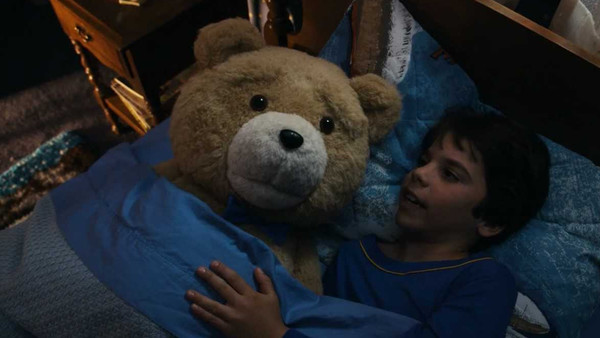
You'd be forgiven for assuming that Seth MacFarlane put zero thought into the scientific mechanics of a young boy wishing for his teddy bear to come to life on a starry night in 1985 - but dammit, he actually did.
During a recent appearance on Joe Rogan's podcast, astrophysicist Neil deGrasse Tyson discussed how he drew attention to a significant scientific error in James Cameron's Titanic, where Rose's (Kate Winslet) view of the night sky was inaccurate relative to the date and sinking location of the Titanic.
Cameron corrected the mistake on the 2012 re-issue after Tyson sent him an image of the accurate star alignment, but the publicity of this correction had a most unexpected side effect.
It prompted Seth MacFarlane to consult Tyson during post-production on Ted, ensuring that the brief shot of the 1985 Boston night sky at the start of the movie was celestially accurate.
Needless to say, the fact that a movie about a talking teddy bear nailed a scientific fact that a $200 million James Cameron tentpole did not has amused Tyson ever since.
7. Live Ammunition Was Fired At The Cast - Come & See

Elem Klimov's masterful 1985 Soviet war drama is one of the most searing and unshakably haunting films of its genre ever made, and one that enhanced its harrowing subject matter with a similarly torturous shoot.
It's of course no secret that Hollywood uses prop guns with blank ammunition to stage shootouts, but Klimov made the undeniably irresponsible decision to use live ammunition during the film's relentless coverage of Nazi slaughter.
Aleksey Kravchenko, who plays the film's teenage Belarusian protagonist Flyora, has spoken in interviews of bullets whizzing just 4 inches (10 centimeters) above his head during filming, something Klimov himself also confirmed.
The resulting film is certainly a jaw-droppingly bleak and almost unbearably lived-in depiction of the Nazi German occupation of Belarus, and perhaps explains how the young Kravchenko could so convincingly play a picture of fear throughout Klimov's masterpiece.
As for the ethics of putting your cast in very tangible mortal danger, though? That's obviously indefensible.
6. The Turtles Are The Same Ones From The First Rocky - Creed II
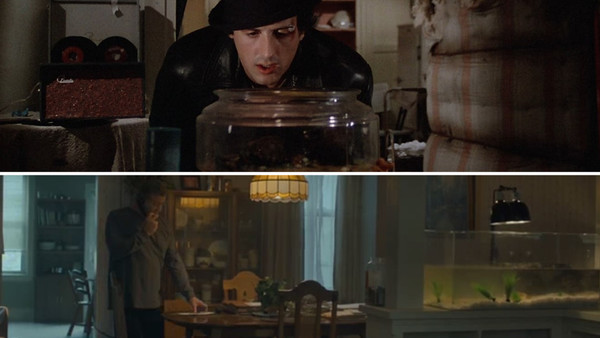
If you've seen the original Rocky more than a few times, you'll probably remember that he ends up buying a pair of pet turtles, Cuff and Link.
And if you kept your eyes peeled while watching Creed II last year, you may have even noticed that Rocky (Sylvester Stallone) still appears to have the very same turtles in his apartment.
But what's more surprising is that, indeed, these really are the same turtles in both movies, which are now around 45 years old, as confirmed by Sly on Instagram last year.
The turtles aren't in fact owned by Stallone as rumoured, but he was able to borrow them back from the pet store which originally hired them out for Rocky back in 1976, lending a most unexpected piece of continuity between the bookending franchise films.
Fascinatingly, turtles have famously long lifespans of up to around 80 years, so there's a very real possibility that at least one of the pair could end up outliving the 72-year-old actor himself.
5. Jamie Foxx Glued His Eyes Shut To Play Ray Charles - Ray

Jamie Foxx won just about every major acting award going for his sublime performance as rhythm and blues icon Ray Charles in 2004's drama Ray, including the Academy Award for Best Actor.
But Foxx had to resort to drastic measures to convincingly play the blind musician, namely having his eyes glued shut at the suggestion of director Taylor Hackford.
Foxx had to have his eyes sealed with silicone underneath prosthetic eyelids for up to 14 hours per day, which he has since likened to being buried alive.
The end result is magnificent, of course, but as it turns out, convincingly playing a blind person is a lot more physically and psychologically taxing than you might at first suspect.
4. Sigourney Weaver Pulled Off The "Impossible" Basketball Shot For Real - Alien Resurrection

You probably remember the scene from Alien: Resurrection where, after talking to her fellow crew members, the Ripley (Sigourney Weaver) clone throws a basketball backwards without looking and manages to successfully sink it in the basket.
Considering the way the shot is framed, where the basketball disappears out of view for a second before falling through the net, it seems like a pretty basic filmmaking bait-and-switch - a stage hand catches Weaver's ball out of frame, and another ball is dropped through the net from above. Simple, right?
Except, despite the framing completely failing to make the most of this, the basket was indeed sunk entirely practically by Weaver, with no assistance from stage hands, in-camera trickery or even visual effects.
As the story goes, Weaver trained for three weeks with a basketball coach, and even though director Jean-Pierre Jeunet wanted to simply drop the basketball in from above, he blocked out hours of his schedule for Weaver, who insisted on trying to complete the shot herself.
After countless failed attempts, Jeunet gave Weaver one last try, and miraculously, she pulled it off, much to the shock of co-star Ron Perlman, who immediately broke character and nearly blew the take.
Thankfully some clever editing managed to keep the money shot in tact while cutting just before Perlman excitedly shouted "Oh my god!"
Despite Jeunet rightly noting that audiences would assume the basket was faked due to the framing, Weaver insisted he keep it in the film as it was, and has since called it one of the best moments of her life (after getting married and giving birth to her daughter, of course).
It's just a shame Jeunet didn't think to frame the shot further back, which would've afforded decidedly less doubt - and a lot more awe - over that incredible basket.
3. The FBI Confirmed The Federal Reserve Heist Was Possible - Die Hard With A Vengeance

There's no denying that Die Hard with a Vengeance is a thoroughly silly yet ludicrously entertaining film.
The action-thriller is centered around a daring heist in which villain Simon Gruber (Jeremy Irons) and his men pose as a fake repair crew to break into the Federal Reserve Bank of New York and steal $140 million in gold bullion.
The slick convenience of Gruber's plan might seem absurd, and yet screenwriter Jonathan Hensleigh confessed that he received a call from the FBI when the script was being vetted by New York authorities.
He said that the FBI were unsettled by his knowledge of the Federal Reserve's vaults' proximity to the subway, and also the logistics of the aqueduct tunnel featured extensively in the set-piece.
As for the source of Hensleigh's knowledge? He had to explain to the FBI that the Federal Reserve themselves let him visit the bowels of the building, and that he read about additional information in a New York Times Sunday supplement.
Despite Hensleigh's nervousness at being interrogated, he ultimately said he felt pride when the FBI not only confirmed that the plan in the movie was quite possible, but that they had also consequently organised a meeting to improve the Federal Reserve's security. Wow.
2. There's A Secret Alien Invasion Subplot - Searching
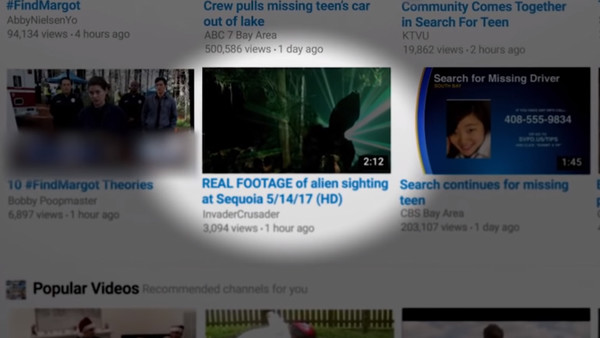
Last year's hit techno-thriller Searching was warmly embraced by critics and audiences for how effectively it manipulated the new "shared screen" filmmaking style for ends both intense and unexpectedly emotional.
And though the film's plot largely revolves around David Kim (John Cho) searching for his missing daughter Margot (Michelle La), there's actually a whole other, far more outlandish plot unfolding in plain sight.
The sheer number of visual details on-screen at any one time makes Searching a fantastic film for obsessives to pore over, and in addition to tons of Easter eggs and even some blatant hints about the film's later plot twists, there's the sly inclusion of a subplot involving...aliens.
In almost every single one of the movie's scenes, the filmmakers included at least one reference to an ongoing alien invasion situation, through comments, news articles and social media posts briefly visible during David's quest to locate his daughter.
The film's co-writer and producer, Sev Ohanian, even provided io9 with a comprehensive breakdown of how the secret subplot was planned during production, and noted his surprise that audiences began to pick up on it on the movie's very first day of release.
The alien invasion scenario may ultimately just be a long-form gag, but given the insane amount of editing and graphical manipulation that went into creating even the simplest scenes in the movie, it's an extremely impressive effort indeed.
1. Stanley Kubrick Insisted On Specific Prop Colours...For A Black & White Movie - Dr. Strangelove

Anyone who knows anything about Stanley Kubrick will attest to the iconic filmmaker's demanding, even dictatorial reputation.
And while it's well-noted that he effectively caused Shelley Duvall to suffer a mental breakdown on The Shining and generally infuriated actors with his preference for countless takes of seemingly menial moments, you probably don't know about his totally excessive attention-to-detail on his 1964 war satire classic Dr. Strangelove.
The famous War Room set is most memorably distinguished by a gigantic table around which American military officials discuss the prospect of bombing Russia (at considerable risk to their own citizens, no less).
And despite the film being shot in black-and-white, Kubrick had extremely particular designs on how the table should look, namely lighting it from above and covering it with green baize so that it should resemble a classic poker table.
The idea was for Kubrick to sell the notion that these officials were effectively gambling with the lives of ordinary people, and yet, the idea was lost on everyone watching because that green baize simply looked like any regular, boring table top in monochrome.
In Kubrick's slight defense, he claimed the choice was more for the actors than the audience, to remind them of the scene's surreal allegory, even if it feels like a rather drastic feat of production design for how few people ever actually got to see it in colour.