8 Classic Monster Movies You Never Knew Were Reboots
They weren't always as ground-breaking as you might suspect...

In a pop culture landscape that constantly updates its avatars of terror -- at last count it's "haunted social media accounts" -- everyone still seems to know who the original monsters are. They're the ones that get reduced to adorable caricatures for Halloween specials, the ones that wind up on postage stamps, and the ones that became plastic model kits. They're the Classic Monsters, capital "c", capital "m", a timeless pantheon of dark gods who were so compelling that they sprang to life fully formed, and became enduring archetypes of the screen. Subsequent attempts to re-imagine these bogeys is normally considered tantamount to reinventing the wheel; why bother, since the remake will never live up to the original?
That's all fine and dandy, except that many of these beloved "original" versions of monster movies were, in fact, derivative. Yes, in many cases, the most iconic versions of famous screen terrors were really especially effective remakes of earlier films. This list examines a handful of famously pioneering monster films that were, in modern parlance, reboots. After reading this list, if nothing else, you'll surely think twice before bemoaning the next big-budget horror remake.
8. Young Frankenstein (1974)

Obviously Young Frankenstein is not the original Frankenstein film: that's not actually the point here.
It's obviously an inspired spoof of the Universal horror cycle in general and of the Frankenstein films in particular, of which Mel Brooks was clearly a devoted fan. When he made this hilarious tribute to them in the 1970's, he went as far as searching out the original, then-40-year-old electrical apparatuses made by Kenneth Strickfaden to line Colin Clive's laboratory.
Despite lampooning the entire Universal canon, Young Frankenstein is actually a comedic remake of 1939's Son Of Frankenstein. Both feature sober, mustachioed descendants of the infamous monster-maker returning to claim an inheritance only to become seduced by mad science. It also offered the first ever hunchbacked Ygor, memorably played by Bela Lugosi. In 1931's Frankenstein and its immediate sequel, the doctor was aided by men called "Fritz" and "Karl." Even Kenneth Mars' Inspector Kemp, with his thick German accent and improbably British name, was inspired by Lionel Atwill's equally baffling, RP-spouting Teuton, Inspector Krogh.
So, how is it that Young Frankenstein has become better known than the film it parodies? To put things bluntly, it IS better, and while both films are funny, only one was trying to be.
7. King Kong (1933)

King Kong is often hailed as the first film of its kind, the prototypical fantasy epic, but that's not quite true. The film's special effects director, Willis O'Brien, made basically the same film in 1925, eight years before beginning work on his most famous creation.
The plot of the Lost World is virtually identical to Kong's: a charismatic explorer arranges an expedition to an undiscovered land where antediluvian beasts still thrive. Despite being accosted by some of the monsters and being endangered by the battles of others, he and his crew master this world, bringing one of its monsters to a modern city in chains. There, the creature escapes and lays waste to the world of men. The later film adds only one major element, but it's a crucial one: a monster that the audience can identify with.
Unlike the dinosaurs in either movie, Kong is an expressive beast, brimming with personality. When the dinosaurs in the Lost World fought, we were interested but not invested. When Kong battles them, it's different. He's almost human in his shape and in his motivations, and we need his help to protect Fay Wray from less anthropomorphic beasts.
It's why you cry when Kong breathes his last, and why nearly a century later, King Kong holds up, while Lost World is merely a curiosity for film buffs.
6. The Thing (1982)
461325John Carpenter's science fiction masterpiece was a remake of 1951's Thing From Another World. Unlike many of the examples on this list, both versions of the film are comparable in quality, if incredibly different from each other.
The original version is an excellent, tautly-paced monster film. The film does not revel in showing off the Thing, only partially because the early 1950's are not known for their chilling monster design. Instead, the tension is ratcheted up by having the Thing kill characters offscreen, leaving their bodies for others to find. Near the end, we see that it's Gunsmoke's James Arness dressed up as a vampire space carrot, but they kept him in the shadows and the film ended on a wonderfully paranoid note (KEEP WATCHING THE SKIES).
But the reason that Carpenter's version has supplanted it in the poplar imagination has everything to do with how he presents the title creature. His Thing isn't just scary because it wants to eat you. It inspires real terror because it is so utterly alien in both its design and motivations. We never even get to see what it looked like before it began assimilating Earth creatures, but we do get to see it when it mimics them flawlessly.
So yes, keep watching the skies, but keep watching everyone else too.
5. Gojira (1954)

A giant, heretofore unknown dinosaur is awakened by irresponsible atomic testing and ravages several seaside towns without being seen before finally making landfall in a major city. The military is powerless to stop him, and only a brilliant scientist is able to devise a secret weapon powerful enough to kill the creature. Kaiju fans will recognize that as the plot of the original 1954 Gojira, but it's also the plot of the Beast From 20,000 Fathoms, released a year earlier.
Gojira's producer, Tomoyuki Tanaka, claims that he originally envisioned Gojira as a giant octopus, but come on. Gojira is exactly what you'd come up with if you wanted to copy the Beast as closely as possible but only had enough money for a man in a suit.
But that's not to say that the Japanese version was a pale imitation. No, Gojira was a new kind of giant monster film. It didn't simply use radiation to explain the existence of a beast of city-smashing size and disposition. It was a somber meditation on the price of atomic weapons, made by and for the only people on Earth who had paid that price firsthand. It depicted a monster that was less rampaging animal and more vengeful god.
The Beast is neat and all, but he didn't get two dozen sequels.
4. Dr. Jekyll and Mr. Hyde (1931)

Frederic March won a Best Actor Oscar for his performance in the 1931 version of the R.L. Stevenson novella, an extreme rarity for horror films; it wouldn't happen again until Anthony Hopkins won for Silence of the Lambs. The March version is a classic, a fit companion for the early Universal horrors despite being made at Paramount by a director of musicals. It was also the eighth (!) adaptation of the book to be filmed.
The first, from 1908, is lost, but appears to have been basically a filmed stage play. The next two films have survived to the present day, but they are short subjects of little note.
1920 would be a true banner year for the story, as no less than three separate versions were released: an undisputed classic starring John Barrymore, a mostly forgotten "it was all a dream" cop-out from Louis B. Mayer, and a tantalizing German version called Der Januskopf. This film, directed by Nosferatu's F.W. Murnau and starring Conrad Veidt of Caligari fame, is tragically lost.
Astonishingly enough, the 1925 version was a parody of the Jekyll-Hyde sub-genre, starring Stan Laurel as both Dr. Pickle and Mr. Pryde. Yes, not only did seven men play the dual roles of Jekyll and Hyde before March won his Oscar, but Stan Laurel beat Mel Brooks to the horror parody punch by five decades.
3. The Wolf Man (1941)

Many fans assume that werewolves made their first foray into feature films in 1941's the Wolf Man, famously with Lon Chaney, jr. in the title role. Although Chaney's Larry Talbot character was the werewolf who'd take part in the monster rally films of the 1940's, he wasnt the first lycanthrope to headline a film.
That honor goes to Henry Hull's Wilfred Glendon in 1935's Werewolf of London. However, most cinematic werewolf tropes originated with the 1941 film, and this story of a Victorian scientist with a savage alter ego feels more like a Jekyll and Hyde offering.
Werewolf of London offers a number of its own werewolf tropes that were never adopted by other films, including an herbal cure for lycanthropy, a Tibetan origin for the affliction, and a mostly hairless monster. Reportedly, Henry Hull wasn't keen on obscuring his face with grotesque make-up, and so he goes about his rampages looking like an ill-tempered Elvis. Among other idiosyncrasies, the film has the titular werewolf have the presence of mind to put on his hat and cloak before stalking the streets, and at one point he is beaten into unconsciousness by a regular dude.
In many ways, the Wolf Man became a classic simply by improving on this film; most notably, Lon Chaney gamely sat through four hours of hair application a day to sport the makeup rejected by Hull.
2. Dracula (1931)
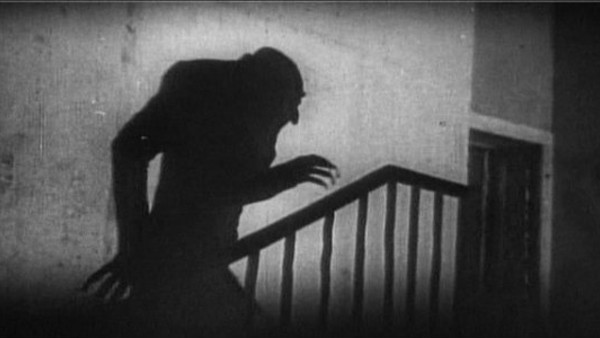
A lot of ink has been spilled over the decades about who cinema's greatest Dracula was. Those on Team Bela often tout their man as the original Count Dracula, which is both true and false.
Yes, Bela Lugosi was the star of the first licensed film adaptation of Dracula, and before that, he played the role on Broadway. However, the 1922 German film Nosferatu is, in fact, the first Dracula film. They called Count Dracula "Graf Orlok" and moved the action from London to Wisborg, but it was pretty blatant. The Stoker estate sued over it, won, and all copies were supposed to have been destroyed. Luckily, a single print survived, and we can still enjoy this early masterpiece of horror today. But that settles it, right, Nosferatu's Max Schreck was the first Dracula, case closed?
Yes and no. An even earlier film, Dracula's Death, is the first screen version of the vampire legend. The film is now lost, but we know from plot synopses that the story hinges on whether or not the protagonist, played by Erik Vanko, is delusional.
We'll seemingly never know who the real original screen Dracula was, but Team Bela should take solace in the fact that no one ever made any muppets resembling Max Schreck or Erik Vanko.
1. Frankenstein (1931)

The 1931 version of Frankenstein is an undisputed classic, and the image of Boris Karloff, his sunken features buried beneath Jack Pierce's cadaverish makeup, is one of the most iconic in all of horror. This version of the Frankenstein Monster has been featured on toys and posters, postage stamps and t-shirts. It's what you think of when you think of "Frankenstein", and it's so ubiquitous that all subsequent interpretations have been either tributes to it or conscious attempts to subvert it. After all, third time's the charm.
Yes, by the time that Boris Karloff strapped on his platform boots, the Frankenstein Monster had already been portrayed twice onscreen. The first version dates all the way back to 1910, and was produced by none other than Thomas Edison (!). In this bizarre film, which runs only 12 minutes, the Monster is a kind of personified depression that keeps Frankenstein from having a healthy relationship with his wife.
The second version -- Life Without Soul -- was made in 1915, and five years later, filmmakers were no more willing to tell a straightforward horror tale. Life Without Soul is a Wizard of Oz-style framed tale, where a modern American doctor falls asleep and dreams the plot of Frankenstein.
Even if the 1931 version didn't contain a masterful performance and iconic visual effects, it would still have told its story without a cop-out ending.