8 Harry Potter Moments That Are So Much Better In The Book
The books are better. "After all this time?" Always.
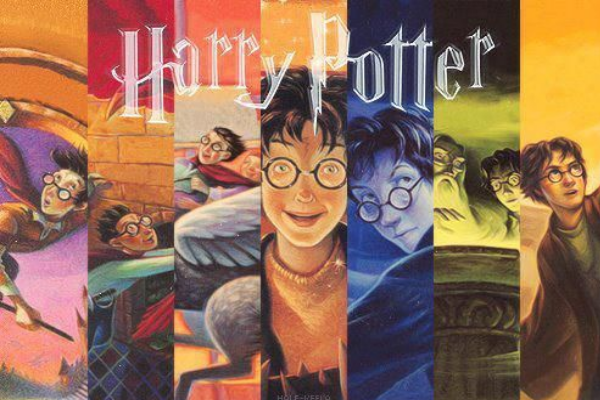
Movie fans have heard it all before. The books are better! The books are better! It probably gets a little bit tiring after a while, but there's a reason book-lovers are so vocally passionate about their favourite stories.
I could spend hours listing reasons here, from things like improved characterisation to deeper, more rewarding plots and sub-plots, the list would truly drag on and on. But the truth is, it's tough to completely explain what it is about books that often make them so much more personal, rewarding experiences. My advice to anyone who is sick of hearing about how much better the books are would be this: give reading a shot! You never know, you might actually like it.
That being said, throughout the Harry Potter series there are some very clear examples of times when the books are just better. Film, while a consistently surprising, stunning form of art, is limited by certain constraints and regulations. Take running times, for example. The maximum running time for commercial cinema is about three hours (and even then, that's fairly rare). Now compare that to Harry Potter And The Order Of The Phoenix, which clocks in at seven-hundred and sixty-six pages. The difference is, at times, staggering.
So pop on your robes and travel through the magical world of literature, as I detail some of the key moments from the books that could only ever pale in comparison on-screen.
8. The Quidditch World Cup
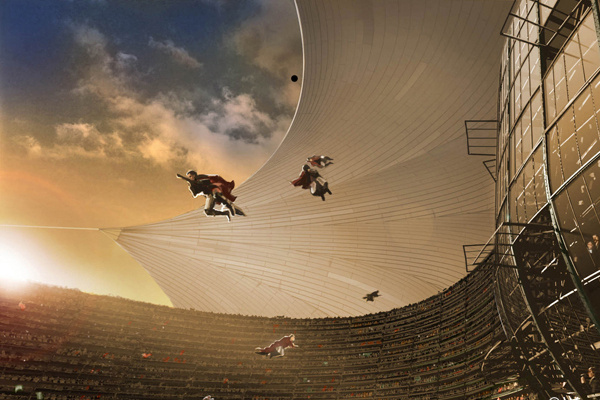
The Goblet Of Fire's portrayal of the Quidditch World Cup was, to be blunt, a huge disappointment. After so much fan excitement, what we actually get is, well... nothing.
The build up is amazing. Seeing an aerial shot of the stadium, thousands of fans shuffling to their seats, the various teams flying onto the pitch (the Irish leprechaun made from fireworks is a particular highlight). It's all set to be an absolutely amazing opener to the film, but then... it's over. Once the snitch is released we see none of the match itself, and we've cut to everyone leaving.
Of course, one of the drawbacks of the films is that it's just not possible to include everything, but come on. It's such a tease, building fans up for something epic and then whisking it all away.
In the book, pages and pages are dedicated to the Quidditch World Cup, with Harry meeting Dobby's friend Winky and a fantastic amount of detail about the match itself, from Krum's amazing playing to Ireland's eventual victory. In the movies, it's mere minutes.
7. The Prophecy
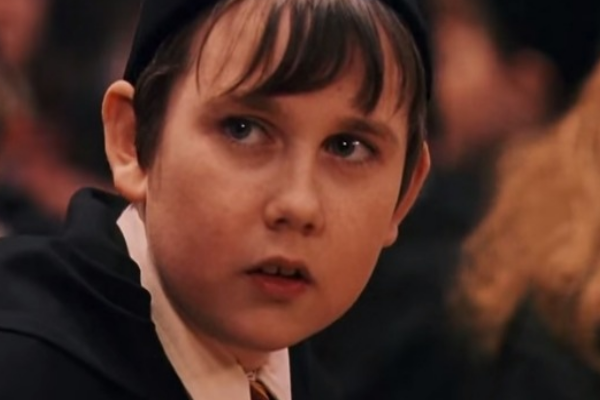
While Neville is well-developed in the films, turning from a sheepish, bumbling kid into a much more courageous individual, what the filmmakers failed to elaborate on is his significance with regards to the prophecy.
In the Order Of The Phoenix book, Dumbledore mentions Neville's potential for significance.
"The odd thing is, Harry," he said softly, "that it may not have meant you at all. Sibyll's prophecy could have applied to two wizard boys, both born at the end of July that year, both of whom had parents in the Order of the Phoenix, both sets of parents having narrowly escaped Voldemort three times. One, of course, was you. The other was Neville Longbottom."
What might this have added to the film? Probably not a whole lot. There simply wouldn't have been enough time to explore the consequences without detracting from the overall story, and there's no way it could have been slipped in with much subtlety. Still, it makes for a much more fascinating read of the prophecy in the books, and makes the reader pause and consider Neville from a vastly different perspective. Just another of the many irreplaceable things about the books.
Had Voldemort chosen Neville, it would be Neville sitting opposite Harry bearing the lightning-shaped scar and the weight of the prophecy... Or would it? Would Neville's mother have died to save him, as Lily had died for Harry? Surely she would... But what if she had been unable to stand between her son and Voldemort? Would there then have been no "Chosen One" at all? An empty seat where Neville now sat and a scarless Harry who would have been kissed good-bye by his own mother, not Ron's?
6. The Yule Ball
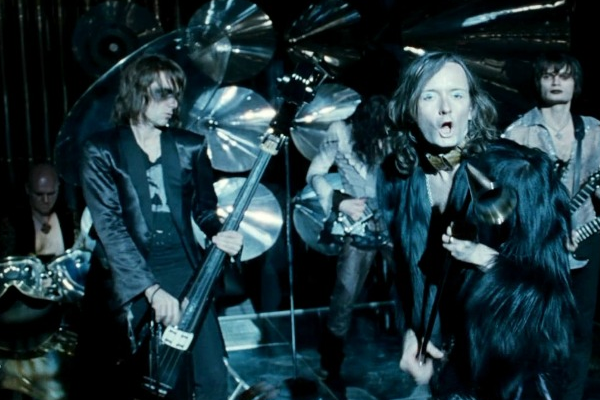
While the Yule Ball was largely portrayed very well in movies (including hypnotizing dancing, Ron's hilarious robes and a brilliantly emotional confrontation between Ron and Hermione) there were certain aspects of the ball that came across as...well...just plain cringe-worthy.
One such moment was the inclusion of the wizard rock band, who looked less magical and more angst-ridden and emo. And that's not to mention the bizarrely self-referential lyrics about Trolls, Hippogriffs and Elves.
Move your body like a hairy troll / Boogie down like a unicorn / Put your hands up in the air like an ogre just don't care
It's way too on the nose, and seeing how these things are supposed to be commonplace in the wizarding world, it begs the question as to why they feel so forced. In the book, the reader is left to imagine a magical ball that's otherworldly in its beauty, not a glammed up Jarvis Cocker whining on a tiny stage.
At least fans were spared from the full version of the song, which was included on the Goblet Of Fire DVD. Don't know what I'm talking about? See how far you make it through the video below...
https://www.youtube.com/watch?v=tl3mrGXZlFk
5. The Consistent Characterization Of Harry And Ron
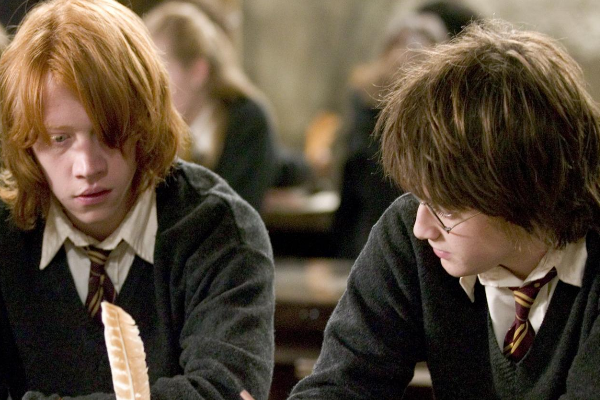
One of the joys of J.K. Rowling's writing is her mastery of gradual character development, gracefully guiding Harry, Ron and Hermione from wide-eyed children to hardened young adults. This is also skilfully mirrored on a narrative level, as the books grow from whimsical children's stories to more mature, sophisticated novels aimed at teenagers and young adults.
J.K. Rowling was quite private about the progress of her writing (though at times later reflected on the process) she disappeared for years at a time, shutting herself away from the real world and focusing on the characters and story. This focus is one of the reason why the books are plotted so well and the characters grow so naturally.
Changing directors between films, however, can produce certain stylistic differences, even when following a set script. This can be seen most clearly in Harry Potter And The Goblet Of Fire,
Whether capitalizing on the height of the 'emo' resurgence (the mid-2000s saw a massive number of young celebrities and bands go through a 'long hair' phase) or merely attempting to force a moody aesthetic, Harry and Ron randomly grew their hair long (along with Fred and George Weasley, to name just a few others) and started wearing baggy jeans and hoodies. After Goblet, these features disappeared entirely, a clear indication that the style was very much of the moment.
It's the kind of anomaly that simply doesn't appear in the books, as they were written with a single, coherent vision. Any dramatic change in appearance or style would have been accompanied with some sort of revelatory description, internal monologue or...at the very least, Hermione would have made fun of them for it.
4. Ginny Weasley
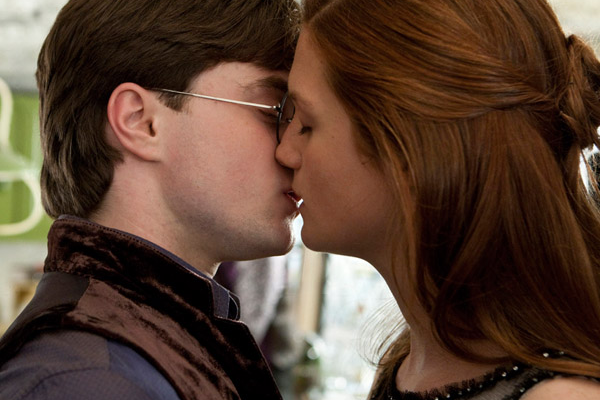
This one is less a moment and more a string of moments over the course of the whole series. In the books, Ginny Weasley is a rather different character and that's putting it lightly.
It's not uncommon for fans of the movies to voice their dislike of Ginny. Why is she the one who gets Harry? She's soppy and whiny and awkward and their entire relationship seems forced, with Ginny gingerly (ha!) staring at Harry so often that even the audience can't help but feel a little bit awkward.
Book-Ginny is so much more. In the books, Ginny has an actual existence outside of Harry, whether she's being an absolute boss at quidditch (she was professional player for the Holyhead Harpies) or helping Neville keep the Dumbledore's Army rebellion very much alive. That's not to mention the fact that her first kiss with Harry had nothing to do with an awkward, cliché, zipping-up of her dress and more to do with the fact she made the autonomous decision to do it.
It really can't be overemphasized how vastly different the two characters are, with one being nothing more than a romantic prop for Harry and the other being a powerful, sophisticated young woman. The destruction of Ginny's character alone is enough to validate any championing of the books over the films.
3. Harry And The Gillyweed
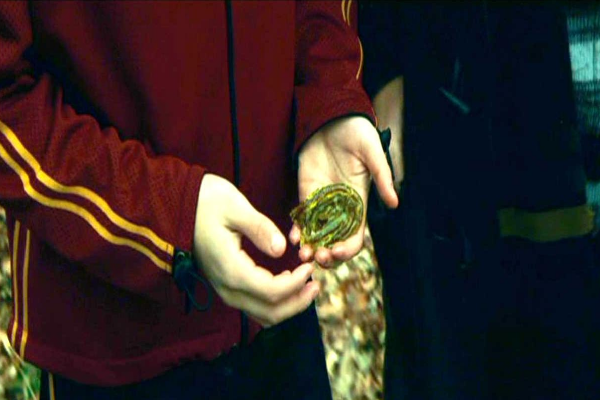
Directed by Mike Newell, Harry Potter And The Goblet Of Fire was a massive critical success, drawing praise for building on the dark tone established in The Prisoner Of Azkaban and raising the stakes considerably through the Triwizard Tournament.
As strong as the film is, it features one scene in particular that was done so much better in the books. The Triwizard Champions' second task is to dive into the Black Lake to retrieve something that has been stolen from them. In the movie, Harry is given Gillyweed by Neville, a consumable that allows him to breath underwater for a long period of time. Harry is then instructed on how to use it by the supposed Mad-Eye Moody. In the books, however, the Gillyweed is given to Harry by Dobby.
Having Dobby show up to give Harry the Gillyweed would have been a nice way of keeping the character relevant, even in a relatively minor way, as he disappears entirely from the movies until he suddenly reappears in The Deathly Hallows Part One. Though largely thought by fans to be an fittingly emotional end to the character, Dobby's death would have been far better served by a more well-developed character, which we don't really see in the films, and could easily have been achieved by sticking more closely to the books.
2. The Ending With The Dursleys
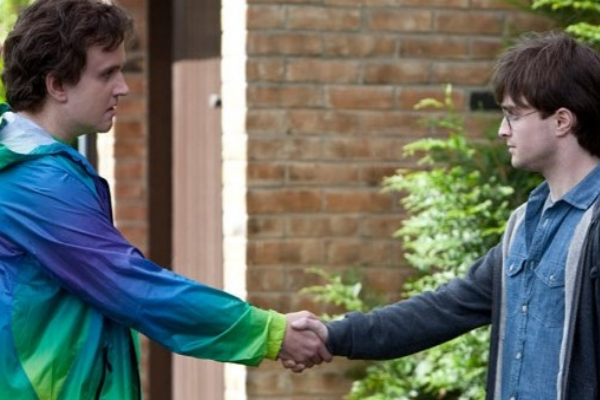
Ah, the Dursleys. It's impossible to forget how much we all hated them, that pompous, sneering family that consistently denied Harry happiness for so many of his defining years.
Watching a scene with the Dursleys was practically a rite of passage at the beginning of the early Harry Potter movies, reminding us of the reality Harry was forced to return to at the end of each school year and the shackles he'd have to break if he wanted back to Hogwarts.
Some of the funniest, most memorable moments in the whole series centre on the Dursleys, like the daring escape in the flying Ford Anglia, or Uncle Vernon's bulbous sister Marge inflating to entirely new heights.
Which makes it an absolute shame that things aren't properly patched up with the family on-screen. In the books, following Harry's saving of Dudley from a Dementor in Order Of The Phoenix, their interaction with Harry makes a subtle shift, though this is largely on the part of Dudley himself.
Initially misinterpreted by Harry as a joke, Dudley leaves tea outside of Harry's room, and then later bids Harry farewell when he leaves the Dursley household for good. But Harry later realises that these lukewarm gestures were actually the equivalent of a fairly emotional expression when coming from a Dursley, and that Dudley really was sorry for how he'd treated Harry.
It's not even like this realisation would have taken very long to include.
1. Countless Tiny Moments
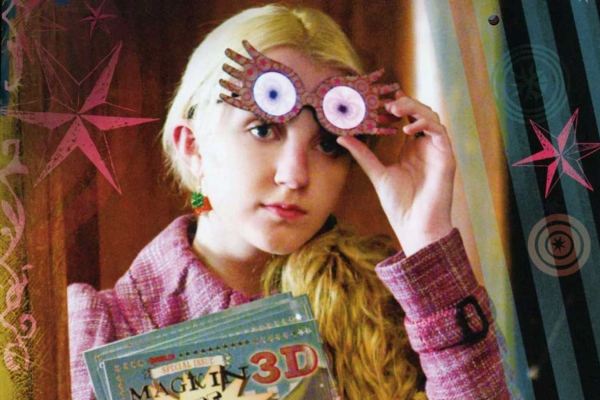
Though fans like to discuss huge plot points omitted by the films, one of the biggest things the films lack are the countless smaller moments and details that it's simply not possible to accommodate through film. Film and literature are two vastly different mediums, and not only is it necessary at times to cut things out, it's also pragmatic, and can lead to a better end product.
That being said, there's a reason the Harry Potter books promote such feverish devotion. The world created by J.K. Rowling is incredibly rich and lived in. One of those smaller details includes the hilarious scene in Harry Potter And The Half-Blood Prince in which Luna Lovegood announces a Quidditch match. In typical Luna fashion, she completely disregards the rules of the match and rambles on about clouds and other trivialities
And what about the other Weasley brothers, Percy, Bill and Charlie, who barely got a mention? Of course there was S.P.E.W. too, and the history of the Marauders.
It's countless smaller moments like this that give the books a massive edge over the films.