Avengers: Infinity War - 13 Previous MCU Scenes It Completely Changed
What's the opposite of foreshadowing?

To say that Avengers: Infinity War changed the MCU completely is a bit of an understatement. Not only did it leave the landscape of the franchise's story in tatters thanks to an incredible cliffhanger, but it also fundamentally changed the tone of the entirely cinematic universe.
We'd been fed on mostly family friendly movies - albeit with dark puncutations now and then - with MCU movies wearing their Disney affiliation mostly loud and proud. And then along came Infinity War and clicked that all away along with half of its cast. And even more specifically, it actually retroactively changes a lot of what came before it. Or at least how you'll react to it now as an informed audience.
Now that the dust has settled, going back to watch the rest of the MCU with the knowledge of what happens in Infinity War changes a hell of a lot. Particularly in terms of your perception of some of those scenes...
13. Rocket's Belonging - Guardians Of The Galaxy Vol 2

Back in Guardians Of The Glaxy Vol 2, Rocket was very much the Guardian who most personified James Gunn's message that the sequel was about how the group would BE a family after the first movie thrust them together as one. He was obstinant, resistant to opening up and secretly terrified because of his past and it took for him to be coaxed into accepting the family by Yondu in the end.
Instead of being a fiercely-committed loner, he began to accept that he could belong, even despite the awful things Yondu identified from his past:
"You can fool yourself and everyone else, but you can't fool me. I know who you are... I know you play like you're the meanest and the hardest but actually you're the most scared of all... I know you steal batteries you don't need and you push away anyone who's willing to put up with you 'cause just a little bit of love reminds you of how big and empty that hole inside you actually is... Just like my own damn parents who sold me, their own little baby, into slavery. I know who you are, boy. Because you're me!"
It was a particularly touching moment, but now that Rocket has seen all of his famiyl wiped out (he'll learn of everyone else's demise after watchng Groot die in his arms), it makes his moment of revelation even more profoundly affecting. He's literally just found what he needed and it's been torn from him once more.
12. Thor's Vision - Avengers: Age Of Ultron

Though the extended version of Thor's vision in the Norn pool only exists on the special features of Avengers: Age Of Ultron, there's something in there that seems to suggest a more precise link to the events of Infinity War.
It's important to remember that Thor's vision relates not only to Asgard's fall but also to Thanos, since he sees the Infinity Stones and is inspired to hunt the missing stones by the vision. Or the anxiety it creates, more specifically. And in the extended version of the scene, when Thor is seemingly possessed in his little paddling pool, he offers up a possibly solution to taking down Thanos.
While he is asked how to take down Ultron by Erik Selvig, his response - "sacrifice" - makes no sense, because that's not what happens in Age Of Ultron's climax. Instead, it seems that Thor's vision is in fact giving him the key to undo Thanos and his fatal snap at the end of Infinity War.
Knowing what we know now about who survives that snap and the specifics of the contracts behind those characters, it definitely feels like this scene is foreshadowing how Avengers 4 will end.
11. Tony Stark's Fears For Peter Parker - Spider-Man: Homecoming

Tony Stark's employment of Spider-Man as a battle nerf in Civil War was careless and massively irresponsible, even for the loosest cannon in the MCU. But he did at least show in Spider-Man: Homecoming that he did have some concerns for Peter Parker's well-being, considering he's a child who shouldn't be anywhere near the "big fights."
Looking at those scenes (albeit all but the tagged on-feeling decision to have him offer Peter an Avengers spot) with the benefit of Infinity War hindsight, Tony feels like he's psychic. Throughout his appearances from Iron Man 3 onwards, Tony has spoke of his fears of the worst happening (the end of the world, alien invasions, that sort of thing) and his concerns for Peter can be added to that.
Unfortunately for Tony, he has got absolutely everything spot on. The world has ended (for half of existence, at least), there has been a huge invasion and Peter Parker has died. It's like Thanos has dialled into his biggest fears and knowing that when you go back to watch Homecoming changes everything about those interactions and Peter's reluctance to accept Tony's concerns.
10. The Vision's Lament - Captain America: Civil War

While it's somewhat annoying that the Russos chose to nerf Vision as a character after Avengers: Age Of Ultron, there's an argument to say that they actually had no choice. They couldn't go into the escalation towards Infinity War with him being basically a god (in terms of his powers), which is what Joss Whedon had chosen to do, because he needed to be under threat.
Cleverly, they chose to weaken Vision partly through self-awareness and introspection. He would become aware of the morbid powers of the Infinity Stone that gave him life and it would cause him a crisis of confidence that would ultimately lead to every decision he makes in Infinity War.
And watching him talk about his fears of the Mind Stone in Civil War is all the more poignant now that we know what the Stone costs him in Infinity War's climax. His hopes to be able to control the Stone, in particular, are just devastating.
9. Red Skull's "Death" - Captain America: The First Avenger

We all knew that there was more to Red Skull's disappearance at the end of Captain America: The First Avenger than was immediately obvious. He wasn't seen to die as much as he was teleported away somewhere mysterious and that meant that fans could (and did) expect to see the long-time favourite villain reappear at some point.
Even then, it felt like he would return fortified and triumphant to fight Captain America again, but the revelation that he was cursed to live as a Guardian of the Soul Stone in Infinity War changed those feeling entirely. To a certain degree, Red Skull's story is a sympathetic one (perversely so, but it's there) as death would probably have been a release for him.
And in more logistical terms for other victims of the stones, you have to now wonder whether they too have simly been trapped somewhere and could be returned. Ronin being the most notable of them, of course.
8. The Other's Threat - The Avengers

It's easy to scoff at The Other in The Avengers and the first Guardians Of The Galaxy (particularly because of the nature of his death in the latter). He's the ultimate bully sidekick who bigs up his "boss" without there being any delivery on the threat for a while.
But when you go back and watch his interactions with Loki in The Avengers, you have to hand it to him: he was absolutely nailed-on in his prediction of what Thanos would do to Loki if he failed him.
“If you fail, if the Tesseract is kept from us, there will be no realm, no barren moon, no crevice where he can't find you. You think you know pain? He will make you long for something as sweet as pain."
There may be defiance in the way he dies in Infinity War, but it's easily the most traumatic death scene in any MCU movie and the fact that he was told all about it years before is pretty chilling when you watch back.
7. The Fake Gauntlet - Thor: Ragnarok

The existence of the fake Gauntlet that first turned up in Thor (as a throwaway Easter Egg) and was subsequently confirmed as a fake in Thor: Ragnarok. must have caused Kevin Feige and the Russos some headaches. And unfortunately for them, Infinity War means their Ragnarok "solution" - as provided by Taika Waititi - didn't make any sense.
Infinity War reveals that Thanos only forced Eitri to forge the Gauntlet relatively recently. If he hadn't Heimdall or Odin would have been aware of the attack on Nidavellir given their powers and someone would have intervened. For it to make sense, it has to have come after Odin was removed and Heimdall was distracted.
With that in mind, how the hell did the fake one exist first? And how did Hela know it was a fake if there was no real one to compare it to. How would Hela even know what the Gauntlet was? And how on Earth did Thanos manage to get Eitri to make a Gauntlet that ACCIDENTALLY looked exactly the same as the fake one?!
It's enough to give you a headache.
6. Iron Man's Limitations - Iron Man

Remember in the first Iron Man movie when Tony Stark seemed to have a death wish while "testing" out the Iron Man armour? He pushed the suit's limitations by flying as high as he could and totally ignoring the warnings from JARVIS that he was going to die thanks to the suit icing over and all major systems breaking.
He still continued, because he's a danger to himself, but the scene inspired an interaction between Stark and his AI that pretty much predicted Infinity War. As Stark complains about the suit's problems with icing at high altitude, JARVIS says "A very astute observation, sir. Perhaps, if you intend to visit other planets, we should improve the exosystems.”
Luckily for Stark (and Peter Parker who he saves in Infinity War), he listened and made allowances in the suit to get to other planets.
5. Hawkeye's Unretirement - Captain America: Civil War

Strictly speaking, Hawkeye has retired from active duty more than once. In the wake of Quicksilver's death, he rethought his Avengers duty (having already expressed concerns because of his family's fears for him) and hung up his bow and arrows. Then he was coerced out of retirement to rescue Scarlet Witch in Civil War and became part of the mission to stop Helmut Zemo.
He then retired again - as established by Infinity War - because of his family once more, taking a deal to go under house arrest for their sake rather than going on the run like Cap, Falcon and Black Widow. But it compromises his character somewhat for him not to respond when the world is invaded.
Hawkeye is the kind of character who will put his duties as a hero above his own concerns, as already established, and while his family are a paramount concern, there is NO way he'd sit back when he'd already answered the call for a far less serious mission in Civil War. In hindsight, it just looks like he wanted to not be retired when he came back in Civil War because he didn't have the incentive of a government-issued ankle tag.
4. "The End Game" - Avengers: Age Of Ultron

When Doctor Strange seemingly betrayed Tony Stark (at least in his eyes) and gave up the Time Stone rather than allowing Thanos to kill Stark, he was devastated. You could tell from his reaction that he thought Strange should have allowed him to die for the greater good.
But the reality is that Strange was working for the greater good, even knowing it would mean his own "death." And Stark should have been more forgiving, because all Strange does is echo his own thinking.
Tony has always been an end goal thinker since Age Of Ultron (well, before that really), willing to make sacrifices on behalf of his Avengers team (like giving up their freedoms in Civil War) because it's better in the long run than the alternative. He operates a few steps ahead and doesn't care for immediate repurcussions as much.
And crucially, Stark has previously used the exact same terminology Strange used in Infinity War. Back in Age Of Ultron, when confronted by the other Avengers for creating Ultron, his justification sounds all sorts of bells to anyone who's seen Infinity War:
"A hostile alien army came charging in through a hole in space… we're standing 300 feet below it. We're the Avengers. We can bust arms dealers all the live-long day, but… that up there? That's the end game. How were you guys planning on beating that?"
Knowing what we know now, there's great irony in those words - and in Stark's immediate reaction. He should have been able to see what Strange's justification was, because, in all honesty, he would have done the same were he faced with the same decision.
3. Thor's Powers - Thor: Ragnarok

In Thor: Ragnarok, one of the key narrative concerns was Thor's unspoken search for "worthiness." He might have been able to wield Mjolnir, but his status had become defined by the weapon, rather than by himself and when it was removed by Hela's destruction of Mjolnir, he suffered a crisis.
He was shorn of his hair as further exaggeration of the Samson allegory and rendered mostly powerless. But then, of course, he realised that the Special Stuff was in him all along, thanks to a vision of his father, and that his powers could be summoned without Mjolnir, which changed the game entirely and made him even more powerful.
But then, because that would be way too devastating to Thanos' own terrifying power, the Russos undid all of that in Infinity War and made it so that Thor once more needed a weapon. That's basically the quickest retcon in MCU history (and there have been a lot of them).
2. Banner's Control - The Avengers
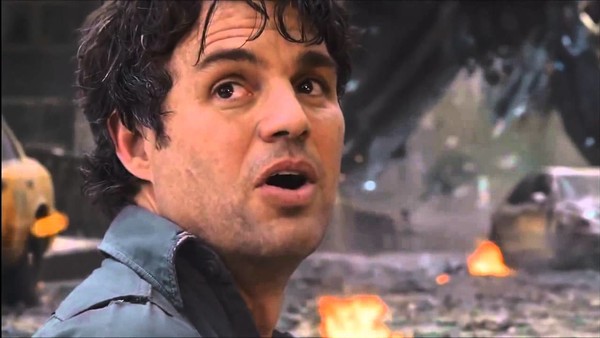
For all of Tony Stark's development as a character and Loki's various evolutions, the character who has changed the most in the MCU is Bruce Banner. And going back to watch The Avengers now that we've seen Infinity War - and Banner's Hulk crisis - you really get a sense of how far he's come.
Back in that movie, Banner was a picture of restraint, shurgging off Tony Stark's attempts to provoke him and being able to pretend to get angry with Black Widow without actually Hulking out. Ultimately, he then reveals that he's "always angry" and can turn Hulk on like a flicked switch.
Now we know that Hulk didn't appreciate being "used" by Banner when there were big threats to deal with, his casual ability to change looks almost flippant. It makes Hulk's issues with being used look even more justified.
1. Gamora's Rap Sheet - Guardians Of The Galaxy
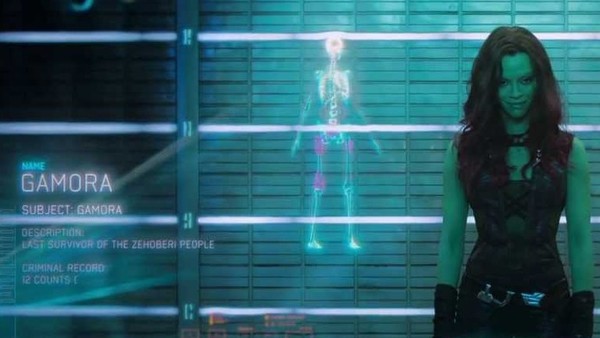
The biggest retcon that Infinity War sneaked in came in the redevelopment of Gamora's backstory. When she's introduced in Guardians Of The Galaxy, her rap sheet says that she is the last survivor of her species. It pretty much defines her as a character as she's filled with rage at the monster who did it - Thanos.
But now, after Infinity War, we know that that simply isn't true. And it's not merely a matter of suggesting that she was duped into thinking it - the Nova Corps' records state that she's the last survivor - instead, it seems that the Russos simply decided to change history.
Arguably, having half of her people wiped out is even more tragic, so it's not the worst change, but it's just one of those oversights that ends up being annoying.
Are you excited for Avengers 4? Share your reactions below in the comments thread.