Christopher Nolan's Interstellar: 10 Things You Need To Know

nolan-interstellar

Now that Steven Spielberg has decided to pass on another one of his "proposed" projects, our man Christopher Nolan has swooped in to take Interstellar out of the master's hands. And given that his brother, Jonathan Nolan, was already set to work on the screenplay, we're potentially staring right into the beginnings of yet another Nolan family extravaganza - and you'll be pleased to recall that it was these talented siblings that brought both Memento and The Dark Knight to the big screen. The basic idea (if there is such a thing) behind Interstellar reportedly concerns "a group of scientists who travel through a wormhole into another dimension," which, if you ask us, sounds like something perfectly suited for Christopher Nolan's aesthetic stylings. And for Nolan fans, the prospect of having the Inception director on board for some seriously hard sci-fi is sure to get them extremely excited. If you thought that movie's increasingly multi-layered, dream-based and puzzle-like narrative was confusing, wait 'til you get a load of this one. With that in mind, gear up your Inception horns and get visualising the trailer in your head: here's 10 things you need to know about Interstellar...

10. Kip Thorne

Kip Thorne

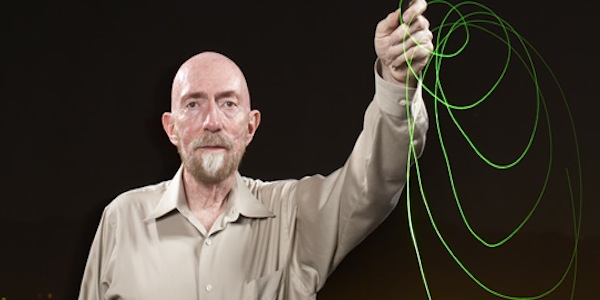
Interstellar, for those who don't know, is based on the work of real-life physicist Kip Thorne, whose contributions to the fields of gravitational physics and astrophysics are basically unparalleled - the 71-year-old is credited as having trained an entire generation of scientists, just in case you're looking for an example to prove he's worth of all the fuss. Thorne's reputation amongst the public increased soon after he was asked to take a look at the time-travel aspects in the 1985 novel Contact by its author, Karl Sagan. Writing them off immediately, he got to work on Wormholes, Time Machines and the Weak Energy Condition, a scientific paper that found an unlikely audience in science-fiction fans. His theory was that wormholes might potentially be used as a means of time travel...

9. Wormholes

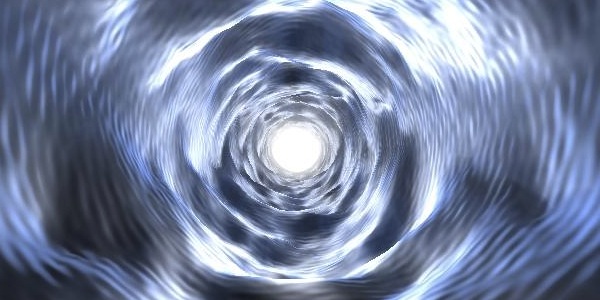
wormhole If you've ever overheard anybody talking about Stephen Hawking or, more likely, seen Donnie Darko, you'll already have a vague notion of what a wormhole is. And Interstellar is all about wormholes, so even having an inch of knowledge on these mind-boggling space portals is sure to help you navigate what promises to be a very complicated movie. Wormholes are otherwise known as "Einstein-Rosen Bridges," and are "theoretical shortcuts through space." The basic premise of a wormhole denotes that you could potentially use it to travel huge distances instantly. Think of it like the teleporter from The Fly - you go into one pod and come out of another. Except hopefully without any bizarre DNA mix-ups.

8. Time Travel

Time-Travel Let's complicate things some more, shall we? And this is where the idea for the actual movie comes in, because there's a whole bunch of science-fiction movies concepts laying wait in Thorne's concept alone. And that wormhole-based concept of his takes ideas from Einstein's "theory of relativity" (you've heard of it at least, right?) and something called the "twins paradox." In the most basic terms possible, the twins paradox denotes that a man travelling the universe at the speed of light for a short time would return to Earth to find that thousands of years have gone by. Thorne wrote an article called "Is Time Travel Allowed" that went into far more detail, but it basically wondered: if a man takes one end of a wormhole in his ship, can he create a time machine?

7. Parallel Dimensions

spacetimecontinuum

Parallel dimensions have been a staple of science-fiction movie since... well, Back to the Future, Part II, we guess (and we'll argue the plausibility of that movie's time travel aspects from dusk 'til dawn). But filmmakers have oft-been wondering about the inherent dangers associated with time travel. Questions like: "What would happen if I met myself?" or "What would happen if I went back in time and shot my father?" (if you're, like, insane) have been explored a whole bunch of times in movies already. And it turns out that scientists like thinking about these prospects too. Kip Thorne doesn't think time travel is possible under the laws of physics, though some scientists do believe that - should somebody mess with the time line in such obvious ways - there wouldn't be any repercussions on the "regular time line," and that other "parallel time lines" (dimensions, if you will) would be created instead, generating the idea that a potentially infinite number of these things could exist at once with no noticeable effect on the others.

6. "Interstellar"

2001_a_space_odyssey_movie_image__3_

Oh, yeah, the title. Just like "Inception" was a real word - albeit one that you'd never used in a normal conversation circa 2010 - "interstellar" actually means something too. And put in the simplest terms possible, it's "manned or unmanned travel between stars." To explain it anymore than that would be to start talking about things like "anti-matter rockets" and "beamed propulsion," and we have no idea what those things are (though they sound freakin' cool). But that basic description alone is enough to generate a buzz amongst sci-fi fans, given the huge 2001: A Space Odyssey-like scope that such a definition implies. How far will Nolan's film delve? Would he be insane to go as far as Kubrick's revolutionary movie did back in the '68? Probably. Should he do it anyway? Oh, definitely.

5. Spielberg Started Work On The Project Back In 2006

All the way back in 2006, when films like The Dark Knight and Inception were still just ideas moving around in Christopher Nolan's head, the world's favourite director, Steven Spielberg, announced that he would direct a movie about "a group of explorers who travel through a worm hole and into another dimension," one based on a treatment written by Kip Thorne and producer Linda Obst. The film was proposed back then to be "scientifically accurate." Now that the esteemed filmmaker has officially left the project (he eventually cited it as ill-suited to his taste), we're still wondering just exactly how it might've turned out with Spielberg at the helm, though we somehow can't help but feel as though Nolan is simply better suited to the project. No word yet whether Spielberg will stay on in a producing role, but fingers crossed he sticks around.

4. Jonathan Nolan

Jonathan-Nolan Jonathan Nolan - who has written some of the most popular films of the last decade - got on board with Interstellar at some point in 2007, where he suggested that Thorne and Obst transform their neat concept into a "narrative screenplay," giving rise to the possibility that Spielberg's original vision was something else entirely (and something we'll no longer have a chance to see). Nolan also suggested that they factor in a "time travel concept," something that the time-travel obsessed Thorne welcomed with open arms. Paramount hired Nolan and several scientists from esteemed institute Caltech on the basis of forming a workshop. So although you can imagine that this thing is going to take the form of an exciting adventure odyssey, it's also going to be extremely scientific: the best of both worlds, then.

3. Kip Thorne As... Kip Thorne?

10838_Kip_Thorne Though there's currently no news as to who might star in Interstellar, a bizarre turn of events has led to sci-fi fans championing their own hero Kip Thorne as a potential candidate. "People say I should, but I don't know," he said. "I don't really care one way or the other." We're somewhat against the casting of Thorne, simply because he's not an actor, and wouldn't it just be really, really strange if Kip Thorne starred as Kip Thorne in a movie about Kip Thorne? Saying that, we absolutely wouldn't be against a nice little cameo. Playing a "key note speaker" or something at the beginning, yeah? That's what happens in these kind of films, right?

2. Christopher Nolan Will Incorporate His Own Ideas

nolan Talk about re-writes. Now that Christopher Nolan has signed on to work alongside his brother, it's been announced that the Dark Knight Rises director is keen to factor in some of his own ideas. And he's rumoured to have an "original concept" brewing, one which might gel nicely with the material that's already been established, and one which he describes as "a heroic interstellar voyage to the farthest borders of our scientific understanding." Low-concept, then. Though we simply can't imagine how this project might make room for even more ideas, we're certainly eager to understand what Nolan's original concept is. Just how different the final project ends up from the ideas that have held this thing t together since 2006... we'll just have to wait and see.

1. Interstellar

christopher-nolan-interstellar

So where does that leave us? Christopher Nolan was rumoured to have officially signed on to the project but a week ago, and there's no doubt that he's perfectly suited to something like this. Knowing that he can handle a movie made of twisty, complicated ideas (Inception, hello?), it's likely there's no other director working today who could make this project appealing to both sci-fi nerds and mass audiences alike. And giving that Nolan character's are usually found talking in long, pseudo-philosophical statements, it will definitely be nice to have them saying actual science this time around. Combine all that with the tricky concept of wormholes, alternative dimensions and time travel, throw in a blaring Hans Zimmer score, cast Joseph Gordon-Levitt as the lead, and you've got all the basic ingredients for Christopher Nolan's latest sci-fi epic Interstellar. Well, we made up the last two, but c'mon, it's gonna happen. Like this article? Excited for Interstellar? Do you think Nolan can handle it? Let us know in the comments section below.

Contributor

All-round pop culture obsessive.