Oscar-winning films may sometimes get sequels (The Godfather's even repeated the original's success by bagging Best Picture), but no Academy Award scooping movie has had quite the franchise longevity as Rocky. At first a small boxing drama written by then up-and-comer Sylvester Stallone, it ballooned into one of the most prolific action series of the eighties, carving out its own niche in pop culture with a slew of catchy songs and an ever-increasing number of training montages. The series has varied wildly in quality, with the critical and commercial success of the original leading to a slew of increasingly messy sequels (and, moving into the 21st Century, back again), but what's maintained through all the head-pummelling and birthday-wishing robots is the character of Rocky. The fighter with a heart of gold, but far less saccharine than that sounds, he developed across the movies, good and bad, to become one of cinema's greatest icons. With the Italian Stallion back in cinemas with Creed, which follows Adonis Creed, son of original Heavyweight champ Apollo, what better time than now to look back over the greatest boxing franchise ever (because there's so many?) and rank the movies from street-punching worst to step-running best.
7. Rocky V
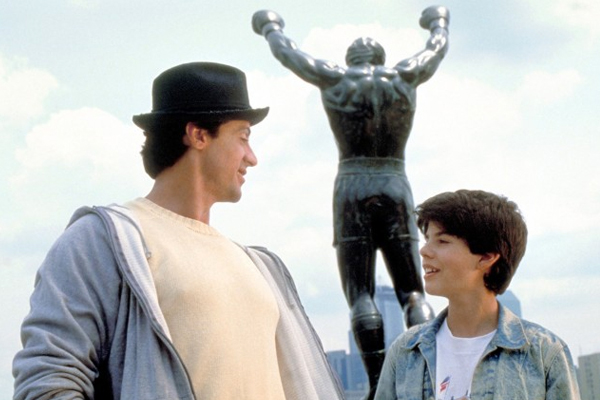
About half an hour in Rocky V, Rocky, his son and Paulie are walking along a dingy Philadelphia street when one local resident excitedly gets his attention. "Rocky, remember me, I'm Bubba's mother. You used to use his head for a punching bag," she beams, to which our hero, who thus far in the series has been a beacon of humanitarianism, replies "Yeah, he had a good head." Wait a minute... did you just make Rocky Balboa a bully? That moment pretty much sums up how misjudged what was then intended as the final movie is. It's an oblivious, luggerheaded tarnishing of the Rocky legacy so bad even die-hard fans rarely admit it exists. Inexplicably directed by the original movie's John G. Avildsen, Rocky V attempts some sort of narrative symmetry, with Rocky and Adrian going bankrupt and forced to return to the Philadelphia slums, and while it's nice to see the series try and mix the status quo up a bit after three movies following the same formula, hearkening back to the Oscar winning original only really highlights how inept the handling is here. Everything about the film just doesn't work: a vicious fighting promoter enacting in a scheme that an eighties action villain would find too contrived; Rocky Jr. (now called Robert) getting picked on by the most cartoon-y bullies this side of Cool Cat; Rocky forsaking his son for some violent thug off the streets because we need to have a climactic street brawl (which is a travesty of an ending by itself). Avoid (like the two subsequent movies have done).
6. Rocky IV
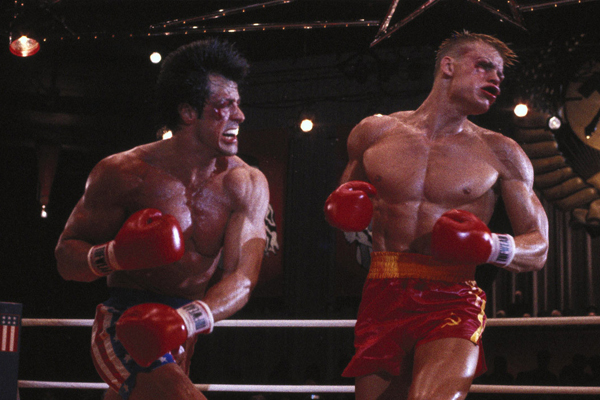
Now we've done Creed, the obvious Rocky character needing a spin-off is the "HappyBirthdayPaulie" robot from Rocky IV. Good God he is hilarious, a ridiculous idea that shouldn't work but has just the right amount of screen time in an already pretty ridiculous movie that it does. The scene where a stunned Apollo tries to get back on his train of thought after it interrupts a key conversation is unashamed comedy gold. Not all the eighties cheese works though. This is the political one, where Stallone got rid of any subtly in what he felt Rocky represented; he's the all-American hero, so obviously needs to go up against a symbol of USSR might, in this case Dolph Ludgren's Ivan Drago. There's some interesting stuff done with these two characters - Drago seems at first bewildered by the spectacle of boxing and by the end of the fight the duo's allegiances cease to matter - but it's so overshadowed by the Cold War paranoia that, by today's standards, it's irritating. Some people seem to let the silliness of all that carry the film, but trying to quell the nostalgia, as a film this just doesn't work. The first half hour, with Creed's urge to fight again leading to his death, is actually quite good (and has retroactively given more weight), but what follows is nothing more than an endless stream of training montages (with the only good one being No Easy Way Out) and a tensionless final fight that only lets Rocky win because he needs to (and, heck, even that's mostly told in montage).
5. Rocky III
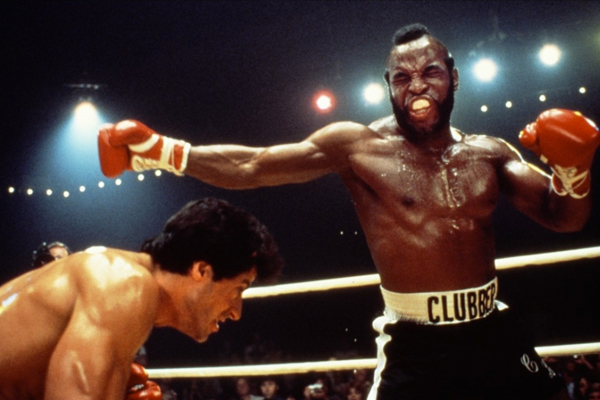
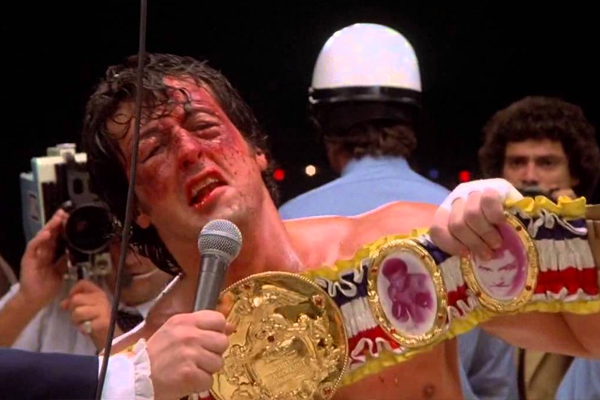
The plot of Rocky III feels like the natural continuation of Mr. Balboa's story - he's now Heavyweight Champion Of The World and now must deal with the fame and pressures of that, leading to a lack of focus, mollycoddled management and a conflict with a superior upstart - but as a film it's lacking the personality of the originals. Rocky becomes more sanitised as a character and the presence of Philadelphia is muted, with the sunny beaches of California not offered up much of an alternative. What Rocky III is, then, is the point where Rocky begins to feel less like Rocky, both in terms of character and as a franchise. It ticks all the requisite formula boxes (even adding to them, introducing the idea of a fight at the end of the first act, something that no doubt pleases the action fans but greatly limits the opportunity for any serious character development) yet never feels that unique. There are moments that're great (gotta love Mr T as Clubber Lang and having Creed become the trainer is genius), but the plot dives about, with Micky's motivations darting about faster than Apollo Creed in the ring before his untimely death, and the second act debate over whether or not Rocky gets increasingly convoluted as Stallone tries to not just copy and paste what was said previously.
4. Rocky II
Rocky II comes from a time where sequels were nothing more than narrative continuations of the original that existed to allow an pre-VHS audience hungry to relive their favourite movies. And, shocker, the first sequel is thus an epilogue-cum-remake of the original - we open with Rocky dealing with his newfound fame before the call of the ring draws him back for a rematch with Apollo Creed. Directed by Stallone, and thus seeing him begin to steer the franchise towards his own, personal goals, it's serviceable alongside the likes of Jaws 2 and the later Planet Of The Apes sequels, but doesn't come close to the original. It does have an understanding of the character of Rocky - he's a well-meaning, community-minded Philadelphian - and really gets into that spirit, but you can already see Stallone begining to reallign him as some great American hero; the classic montage sequence now has Balboa flanked by hundreds of screaming children for no clear reason. Ultimately though, it is effective - the final fight is beat-for-beat identical to the original (in terms of punches and musical notes), but the built-up emotional involvement and that score mean it's hard not to get excited. "YO ADRIAN!"
3. Rocky Balboa
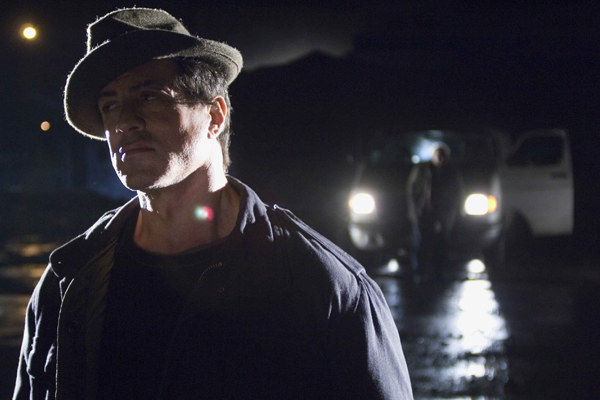
Rocky Balboa was a risky prospect - revisiting the franchise sixteen years on could just seem like an attempt to cash-in - but Stallone's clear passion for the project smashes through the scepticism. Rocky VI was a touching exploration of the past, overriding the mess of Rocky V and giving the franchise a satisfying conclusion (or now, with Creed, next step). There's bits that honour each previous movie - the character development across the first four comes to its natural conclusion and there's a nice use of the eighties filmmaking style that punctuated the later sequels (lots of slow motion and fades) - but what Balboa gets right is its focus on what made the original so great. The story is subtle, character-driven and, crucially, isn't just about boxing (oh, the final fight with current champ Mason Dixon is great, but it's not just an empty action scene); like the first movie, this is not about winning, it's about some trickier questions of self-worth. Stallone pours himself into the film, using the character of Rocky to explore pressing concerns of age and relevance against a familiar backdrop. It's not a question of if Rocky is great. He is great, we all know that. It's about him wanting to be great again. And he (and the franchise) is.
2. Creed
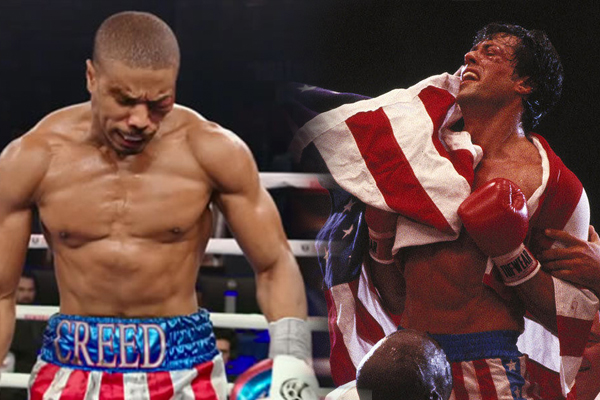
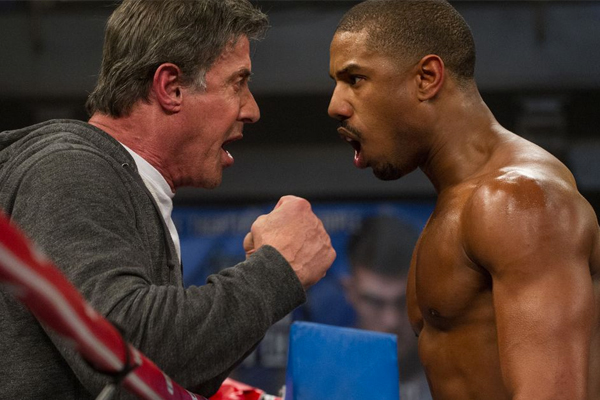
Now this is what I'm talking about. It may have taken the better part of forty years, but we finally have a Rocky sequel that unquestionably lives up to the legend of the original. The emotional driving force behind Creed is the issue of legacy - Michael B. Jordan's Adonis (Apollo's illegitimate son) is reluctant to admit his parentage out of both a fear it will overshadow him and a desire to define himself. It's new ground for the series, something that is wonderfully reflected in the fabric of the movie; although certainly forging out on its own, starting a new franchise that will hopefully have slightly more consistency than what preceded it, Creed is at its heart still very much a Rocky movie, something it handles delicately. The weight of Rocky's journey over the previous decades - his relationship with Apollo and the changing face of boxing - inform every facet of the movie, adding real historical depth; you can certainly appreciate Creed coming into the world cold (almost like Adonis himself is trying to), but knowing the full backstory makes for a stronger, more emotive experience. And, of course, we are still following a familiar narrative formula, although Ryan Coogler advances it more than any film previously, bringing new character shades and filmmaking styles to make something reverentially fresh. It's hard not to make some comparisons with Star Wars: The Force Awakens - this is the seventh entry in a strong nostalgia property that sees the original cast passing the torch while also dealing with its own past - although I'd actually say that Creed does it better; compared to the fun-but-not-quite-Empire Episode VII, this one is almost as good as the original.
1. Rocky
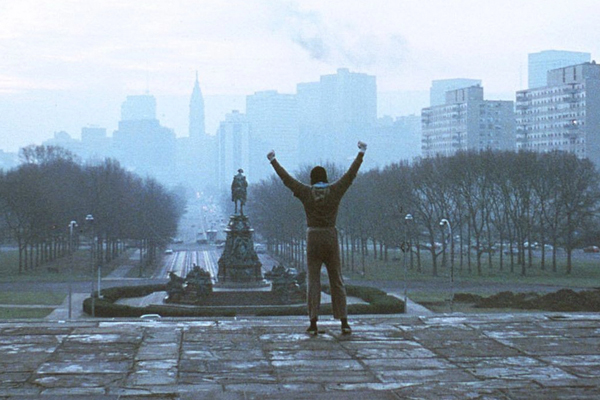
The big thing that most of the Rocky sequels forgot is that Rocky isn't really a boxing movie; it's a drama about a working man trying to prove himself, romantically and personally. We begin and end on a fight and the scene everyone remembers is that awesome training montage, sure, but much of the film's runtime is concerned with Rocky's relationships with those around him; love interest Adrian, trainer Micky, friend Paulie. And that's what really makes the film excel. Totally unlike the popular view of his as an actor, Sylvester Stallone delivers an emotive, measured performance as Rocky, a nice guy struggling to find worth and driven by more than just money to enter into these self-destructive clashes. The sequels would never forget the man behind the gloves, but they still became a little too enamoured with the fighting over the motives behind it. Rocky's fights are great, but the bigger point is that they're a means to an end. The final beat of the movie sees Rocky lose the title bout to the reigning champion (the antithesis of a classic sports film), but his personal journey has reached a point where that really doesn't matter (heck, with the theme blaring out you may not even notice Creed's victory). No, the fight is all about him proving he can go the distance and sealing his relationship with Adrian. It's one of the greatest endings in movie history and caps off a damn-near brilliant movie. How would you rank the Rocky films? Share your list down in the comments.