10 Reasons Why The Scarface Remake Shouldn't Happen

Some movies should just never be touched...
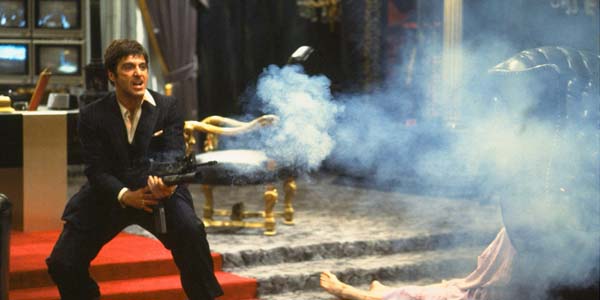
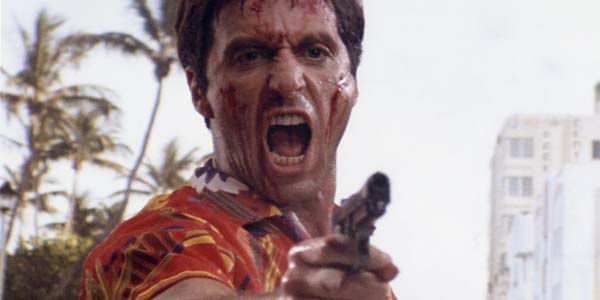
Even with the lukewarm box office of Robocop, the Hollywood remake machine shows no signs of slowing down. Having butchered Paul Verhoeven's original with a decidedly tepid update, executives have now turned their attention to another iconic 1980s film: Scarface. News surfaced three weeks ago that Universal Pictures have hired Chilean director Pablo Larraín (No) to direct an updated version with a Mexican lead, working from a script from Donnie Brasco writer Paul Attanasio. At first glance, you might not have grounds to be worried. The line-up of talent involved is pretty good, particularly if you add in Marc Shmuger, the award-winning producer of Wikileaks documentary We Still Secrets. Making Tony a Mexican is an interesting idea, particularly if the film sticks to the news article's claim that he will be bicultural and bilingual. And the much-loved Brian De Palma film is in itself a remake, so what's the harm in doing it again? These are all good arguments, but there are still a great many reasons why this shouldn't happen. Neither the 1932 original or the 1983 remake are by any means perfect, but they are a great deal more interesting and adventurous than this is ever likely to be. Here are just ten of the reasons why a remake of Scarface would be a very bad idea...

10. The Story Is Too Well-Worn

Quentin Tarantino once described gangster films as parodies of the American Dream, the idea that anyone can come to America and make something of themselves without fear of persecution. This idea is satirised successfully in the Howard Hawks film and to a certain extent in De Palma's film, but in 2014 this kind of story has been done to death, both in its straight form and subversively. You can dress this story up in any trappings you like, just as you set Sherlock Holmes or Shakespeare in almost any place and time period. But while the idea still appeals or resonates in American culture, it has been portrayed and deconstructed so many times on film that no-one helming a new Scarface can bring anything interesting to it. Structuring the story as a satire of American paranoia about immigration may be a way forward, but simply leaning on an old fable isn't going to cut it anymore.

9. The Politics Could Be Handled Clumsily

When De Palma's version was released, it drew criticism from the Cuban-American community about the way in which it depicted Cuban immigrants. Tony Montana and his associated are all portrayed as impulsive, chauvinistic, materialistic criminals who love getting their guns off and threatening people. The outcry was such that De Palma and his producer Martin Bregman were forced to insert a disclaimer at the start of the film, stating that it was not meant to be representative of any particular race or community. Any new adaptation of Scarface would run into similar problems. It's all very well Hollywood trying to woo the Hispanic community by making the protagonist a bilingual immigrant, but if all the Mexican characters are portrayed as gangsters, it won't take long for the word 'racism' to hit the headlines and the film could die before it reaches cinemas. And that's not to mention the complex politics of immigration and the war on drugs; if De Palma struggled with it, it's fair to assume that a new version will too.

8. The Female Characters (Or Lack Thereof)

Like many mob or gangster films, the women in Scarface don't really do much. Michelle Pfeiffer and Mary Elizabeth Mastrantonio are both very capable actors, and De Palma's film was largely responsible for launching the former's career. But aside from her outburst in the restaurant, Elvira Hancock is just a trophy wife, and Gina Montana contributes very little to the plot aside from wounding Tony before the big shoot-out. Crucially, they feel less like fully-rounded characters and more like events or obstacles that the male characters have to deal with. It's tempting to think that in 2014 we have moved on from this, but barely a week goes by without a story about the paucity of decent female characters in Hollywood films. Sure, not every filmmaker is as openly misogynistic as Michael Bay, but there's precious little to suggest that any new version of Scarface would address this issue. Hollywood may not apply the Bechdel test as rigidly as Sweden does, but they should certainly think twice before writing in more empty female characters.

7. The Violence Isn't Shocking Anymore
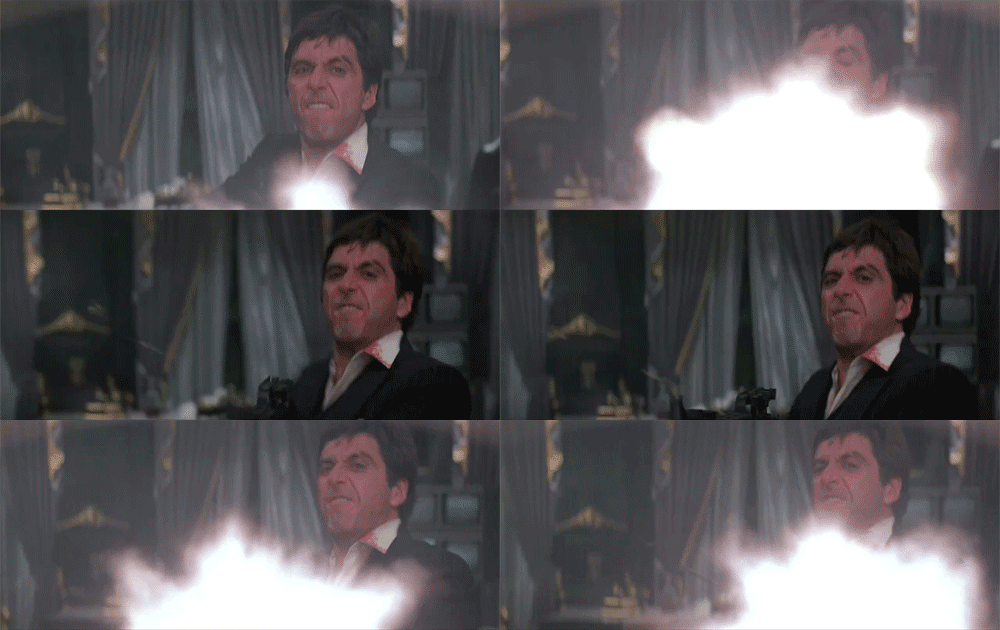
Both versions of Scarface had a tough time with the censors because of their violence. Hawks' version was delayed for a year as cuts were made to it, and even upon its release a dozen states refused to screen it. Likewise De Palma had to submit the film to the MPAA five times before they eventually downgraded it from a X to an R rating. The common link, however, is that these films were violent in a time where most mainstream cinema was not - and that's just not the case any more. Whether you look at comic book movies, action blockbusters, crime thrillers or horror movies, there isn't much of our mainstream cinema which doesn't have some kind of violent aspect, regardless of whether it's played straight or for laughs. Whether or not that's a bad thing in itself is a whole other discussion, but the point in this instance is that no new version of Scarface can claim to be shocking. For a generation that's grown up with 'torture porn' and Irreversible, simply gunning down hundreds of people isn't enough to horrify us - sad as that may seem.

6. We're Too Used To Excess

When The Wolf of Wall Street was released, there were plenty of discussions about the levels of excess being depicted on screen, whether in the sex, the drug-taking or just the general devil-may-care indulgence of Jordan Belford's lifestyle. In all honestly, having read reviews and seen the trailers, it's hard to see what all the fuss is about. There's nothing in Belford's actions that we haven't seen before in something like American Psycho; excepting the odd burst of anger against politicians and bankers, we're just as desensitised to wealth as we are to violence. Any new version of Scarface therefore faces a conundrum. If it goes out of its way to be outré, indulgent, crazy and over-the-top - particularly if its marketing sells it on how shocking it is - it will probably feel as tame and safe as anything else in the post-Saw era. The alternative is toning down its wealth and excess, which could make its story have less in terms of stakes. Which brings us on very nicely to my next point...

5. It Would Have To Be R-rated - And That's Pointless

I spoke about this is some detail when I weighed up the pros and cons of remaking Showgirls last year. The argument goes something this: part of the worth of Showgirls was just how nasty and mean-spirited it was. It earned its NC-17 rating in America because it depicted Las Vegas in the most graphic and seedy way you could without being straight-up pornography. Remaking it with a R rating would require sanitising said seediness, defeating the purpose of the story and its style. The same argument applieds to Scarface, which as I mentioned barely received an R rating on first release. Thanks to Showgirls, no film given the NC-17 rating stands any real chance of box office success, and so it would have to be either made with an R rating in mind or (more likely) be cut for that rating. This would make it feel like the filmmakers were holding back (or being held back), defeating the tone and the purpose of the story. In short, you'd end up with the gangster equivalent of Burlesque, and that's not a good way to go.

4. It Wouldn't Be Subversive Enough

During the premiere of De Palma's film, Martin Scorsese leaned across to supporting actor Steven Bauer and said: "You guys are great €“ but be prepared, because they're going to hate it in Hollywood... because it's about them." Both versions of Scarface have a subversive quality to them; they both parody the American Dream, they both show a foreign gangster beating Americans at their own game, and they both offer different ideas over how gangster stories are meant to be told. There's no way that the new Scarface could achieve this. Hollywood gangster films have become increasingly generic since the days of Goodfellas and Casino, and most modern offerings like Gangster Squad care more about the trappings than actually having something to say. Even in the hands of a quality director like Larrain, there's no guarantee that the film wouldn't reinforce our notions of what a gangster film is rather than challenging it.

3. The Director Wouldn't Have Control

During the production of the Robocop remake, Fernando Meirelles (director of the brilliant City of God) received a number of distressed phone calls from its director, José Padilha. If Meirelles is to be believed, Padilha said he was having "the worst experience of his life", that "for every ten ideas I have, nine are cut", and that "I have never suffered so much and I don't want to do it again." Of course, fights between studios and directors are nothing new, with Robocop being long delayed when Darren Aronofsky quarreled with producers over his vision for the remake. But it does raise an important point about modern Hollywood, in which a director never really gets to have his or her way. No Hollywood studio would allow a director, new or experienced, to make a film with the same freedom that Hawks or De Palma enjoyed; Attanasio's script will be re-written by a committee, and there will be no final cut privilege. The remake will probably end up as a hollow studio project: tolerable if we're lucky, but most likely a complete mess.

2. No-One Can Replace Al Pacino

However many awful films he's made in the past few years (Jack and Jill, Righteous Kill, 88 Minutes), there are still very few actors with the raw and burning charisma of Al Pacino. His performance in Scarface still divides audiences: it's powerful and operatic but also over-the-top and borderline ridiculous. In many ways it's the performance that separates his earlier, more refined work with his later films in which he has been increasingly paid to turn up and shout. Whatever your opinion of his performance, it's a very hard act to follow. Pacino himself had a hard act to follow in Paul Muni, but by then he was an established star who knew how to work the camera. Casting a relative unknown would be too tall an order if the part requires the same amount of presence, and while there are no shortage of Hispanic actors out there, few have the star power to be cast as the lead in a big-budget Hollywood film. Even if the new Scarface won't be named Tony Montana, chances are that he'll always be in Pacino's shadow.

1. Scarface Is A Product Of Its Time

One thing that has characterised recent remakes is their unwillingness to depart from the originals. The remake of Carrie still has the pig-blood sequence in it, the remake of Robocop has jokes about the 1980s in it, and so on. In the same way, any remake of Scarface will succeed or fail based upon its ability to depart from De Palma's vision. Any attempt at imitation would be disastrous, but based on Hollywood's track record, that is exactly what we'd be getting. Scarface is as much a remake of the 1932 film as it is a product of 1980s greed, racial politics, fashions and music. The latter aspect is particularly significant; the soundtrack was composed by electronica pioneer Giorgio Moroder, and the 'Push It To The Limit' montage in some ways set the template for how music videos are structured. No matter how long the 1980s revival lasts, simply apeing the sensibility of De Palma's film will not guarantee either quality or box office success. Under those circumstances, the only thing being pushed to the limit would be our patience. --- What do you think about the remake of Scarface? Have I missed anything out, or got it completely wrong? Drop me a comment below, or visit Mumby at the Movies for my review of Scarface and many, many more...

Contributor
Contributor

Freelance copywriter, film buff, community radio presenter. Former host of The Movie Hour podcast (http://www.lionheartradio.com/ and click 'Interviews'), currently presenting on Phonic FM in Exeter (http://www.phonic.fm/). Other loves include theatre, music and test cricket.