The Fly: 8 Reasons Why Cronenberg's Body Horror Is The Best Remake Of All Time
On its 30th anniversary we're still afraid... we're still very afraid.
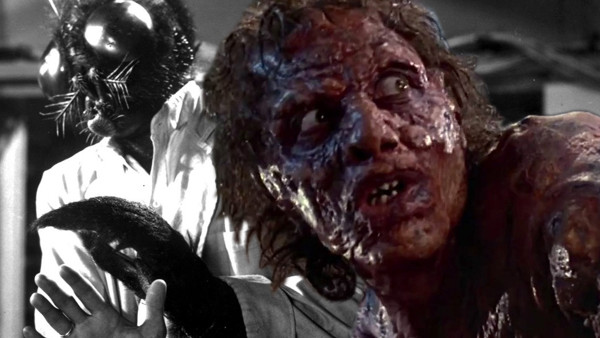
"Be afraid... be very afraid". This simple, evocative quote is deeply engrained in pop culture, words that have gone on to become even more famous than the movie in which they were spoken.
This is one of cinema's biggest travesties as said film is arguably the greatest remake of all time, David Cronenberg's stomach-churning body horror The Fly.
The Canadian filmmaker's take on George Langelaan's vintage tale of terror is a work of powerful metaphor, a masterclass in special effects in an age before CGI was omnipresent, and a tragedy of Greek proportions.
The Fly landed in cinemas exactly 30 years ago, having touched down in the US on 15 August 1986, and to coincide with its landmark anniversary, here are eight reasons why the Jeff Goldblum-fronted masterpiece is the greatest ever movie remake.
8. Cronenberg Put His Unique Stamp On The Fly

Cronenberg's The Fly is only a remake of the 1958 original in the sense that the iPhone 6S is a remake of Alexander Graham Bell's telephone.
If Hollywood insists on continuing its quest to rehash and repackage every film ever made, they should look no further than than the visionary filmmaker's opus for a masterclass in how it should be done.
This was a reimagining from the ground up where Cronenberg put his unique spin on the source material while retaining its essence and paying appropriate homage.
The story follows Seth Brundle (Jeff Goldblum), a brilliant but eccentric scientist who is meddling with groundbreaking teleportation technology. After meeting and falling in love with ambitious reporter Veronica Quaif (Geena Davis), Brundle accidentally crosses genes with a common housefly during a drunken test run of his so-called telepods.
Seth emerges from the pod seeming normal, but what follows is the gradual birth of Brundlefly - a new species which embodies elements of man and insect - and the process is as disquieting as it is disgusting.
Veronica watches on in horror as the man she loves disintegrates before her eyes and insect urges begin governing his mind.
Although the original Fly is an undisputed horror classic (if you can get past that comedic fly head), Cronenberg took the concept of man-insect fusion and created something of greater substance, a multi-layered story that works on so many levels.
7. The Fly Is A Work Of Powerful Metaphor

As horrifying as Seth's metamorphosis is, The Fly is no mere monster movie. The Cronenbergian classic has more hidden depth than the lost catacombs of Egypt.
The movie was intended as a metaphor for the aging process, with Seth's gradual transformation highlighting the fact that time makes hideous monsters of us all. Conversely, Veronica represents anyone who's ever suffered the heartbreak of watching an elderly relative become a shadow of their former self, reaching the point of severe physical decline or losing their faculties.
Although Cronenberg sought to symbolise old age, The Fly works equally well as a metaphor for terminal illness. It's about a man who's stricken by a "disease with a purpose" which accelerates to the point where he must beg his lover for euthanasia.
Those whose lives have been touched by such illnesses are more likely to view Seth's tragic plight from this angle.
As is the case with any great work, however, there are even more ways to intepret The Fly. Another possible metaphor is drug addiction. Seth emerges from his fateful teleportation seemingly normal and it isn't long before the audience is duped into thinking that crossing your genes with a fly might have a bizarre up side.
Before his body parts begin dropping off, Seth exhibits superhuman strength and agility, which soon gives rise to the kind of mania and superiority complex that many drug users experience. Brundle even describes teleportation as a "benign drug". The remainder of the film is the downfall of the addicted, the inevitable consequences that follow the high and the way they impact on the abuser's loved ones.
Proving Cronenberg has always been a master of symbolism, there are visual metaphors scattered throughout The Fly. For instance, it's no coincidence that the telepods from which Brundlefly is born are shaped like wombs.
6. The Fly Is A Tragedy Of Greek Proportions

There's a simple reason why The Fly packs such an emotional punch - it's so easy to picture a world where things go very differently for Seth and Veronica.
Had that fly not found its way into the telepod, Seth would no doubt have won a Noble Prize for his life's work and Ronnie would surely have earned a Pulitzer for her efforts documenting the process.
It was true love between the pair, but nothing kills a romance like watching your partner vomit digestive enzymes onto a donut while his ear falls off.
Although Cronenberg plays an emotional tug of war with the audience throughout, having us lose sympathy for Seth when his mania and aggression kick in, his plight is ultimately a tragic one when we remember the socially awkward yet endearing and handsome Brundle from the beginning of the movie.
5. It's A Stomach-Churning Body Horror

For all of its poignancy and depth, The Fly works equally well as a shocking gore fest when taken at face value. This is body horror at its finest and it's responsible for giving a generation of cinema-going hypochondriacs nightmares that have lasted a lifetime.
There's a palpable sense of creeping horror as Seth starts to transform and a cast-iron stomach will serve you well during the grislier stages of his metamorphosis.
The bathroom nail-pulling scene and the sequence where Brundlefly weaponises his vomit drop against one-time love rival Stathis Borans (John Getz) are nothing short of revolting, and the maggot baby nightmare scarred us for life.
The Fly is filled with powerfully disgusting imagery, but perhaps the most haunting aspect of the film is the thought of what would have emerged from the telepods had a crazed Brundlefly succeeded in forcing Ronnie to partake in his 'cure', which involved using the pods to water down his insect genes with human DNA from a donor.
Fan have long speculated about what would have happened had Stathis not intervened, and if you want this writer's take, the infamous Monkey-Cat deleted scene is a hint at the hideous spectacle we may have been subjected to.
4. Chris Walas's Special Effects Still Hold Up Today

The Fly strikes home as a chilling visual horror thanks to the groundbreaking special effects work from Chris Walas, a man who bagged a much-deserved Academy Award for his contribution to the film.
Hollywood has been overly reliant on CGI since the technique was first mastered, but The Fly is a shining example of what can be achieved through the ways of old.
Every phase of Seth's transformation is still capable of giving off chills thanks to Walas's skills with a makeup kit and the special effects - in some cases at least - still look more convincing than anything modern computer techniques could whip up.
After earning his Oscar for his efforts, Walas stepped up to the director's chair for 1989's sequel The Fly 2, a movie which shares its predecessor's FX brilliance, though that's where the favourable comparisons end.
3. Seth And Veronica's On-Screen Chemistry

The relationship between Seth and Veronica is what keeps The Fly buzzing along and the chemistry they share makes the movie all the more emotive. This is what sets the film apart in a genre rife with trite monster flicks and shallow gore fests. It affects heart as much as it does the stomach.
The reason the spark between our two leads is so bright is no doubt because the pair were a couple in real life. Would the characters have shared the same chemistry had Michael Keaton taken the starring role as planned? It's debatable.
So memorable was Goldblum's performance that many tipped him for a gong at the Oscars that year, but as per usual, horror was overlooked at the 59th Academy Awards (apart from that Best Makeup accolade for
Chris Walas and Stephan Dupuis).
Legendary film critic Gene Siskel put it best when he declared that Goldblum "got stiffed" by the Academy voters that year.
2. The Fly Is Still Relevant As A Cautionary Tale

As well as its ability to shock and symbolise, The Fly holds up well as a cautionary tale for the scientific community, highlighting the pitfalls mankind could plunge into when meddling where they shouldn't.
In a sense, the movie is about a machine turning on its creator - not with the out-and-out malice of Terminator's Skynet, but the cold logic it presents when greeted with two generic patterns was Seth's downfall.
Cronenberg rams this point home at the movie's climax when a mortally-wounded Brundlefly is merged with one of the telepods - as was the case with blood transfusion pioneer
Alexander Bogdanov,
our protagonist's life's work literally kills him.
This scene is alluded to early in the film with a clever piece of foreshadowing when Seth rolls on one of his circuit boards in bed and it becomes embedded in his back, a subtle nod to Brundlefly being merged with his own technology later on.
1. The 'Help Me' Scene Is Still Heartbreaking

If one sequence exemplifies the emotional depth of The Fly, it's the 'Help Me' scene.
Midway through the film, when the mutation has really started to take hold, Veronica visits Seth in his lab, where he has been holing himself up in isolation, and is horrified to discover a twisted, repugnant version of her lover.
Looking deformed and cancerous, Seth walks with the help of canes, spews out digestive enzymes and loses his right ear in front of a traumatised Veronica.
Yet when the stricken scientist pitifully pleads "help me, please help me" - a great homage to the original Fly - Ronnie forces back her revulsion and embraces him. It's one of the most moving things you'll ever see.
Reports suggest that some cinemagoers left the theatre in a nauseated state the first time they witnessed this scene. As Cronenberg himself put it, the fact that the sight of a healthy person embracing a sick person was too much for some highlights where we have gone wrong as a society.
Like this article? What do you think of The Fly? Share your thoughts down in the comments.