10 Final Levels That Almost Ruined Incredible Video Games

They came so excruciatingly close to perfection...

Sadly, there's no such thing as a perfect video game. Almost every single title ever created, no matter how critically-acclaimed, universally-adored or staunchly defended certain classics in the medium are, there's always at least one teething problem that it gains criticism for. Now that's not to say that there's no such thing as a great game either (that would be absurd) but in comparison to other existing titles, all of these listed here should be considered masterpieces of their respective genres - however that doesn't make them immune to criticism. It's a testament to the respect gamers have for each of these titles that fans the world over get so worked up over something that might not be a massive deal objectively, but in retrospect had a certain element been done differently, 'flawless' would still be go-to term to accurately describe them. For some reason there are many examples out of there of otherwise outstanding games that start to show cracks towards their conclusions, some due to something like an extremely disappointing final boss or protracted encounter. But what other reasons are there for a title to have a notably bad ending outside of a bland, boring boss fight? You'll have to read on to find out, but there's more than you may think...


10. Halo 2

How it ended: "Sir, finishing this fight." Those four immortal words left fans of the Halo series foaming at the mouth when they finally reached the climax of Halo 2's campaign mode. After spending what felt like an eon fighting your way to and defeating Tartarus (the brute leader) as the Arbiter, focus was immediately placed back on Spartan 'Master Chief' 117 just as he reached Earth's atmosphere aboard Covenant leader Truth's Forerunner ship. Only, instead of one final mission as the Chief, where many expected to be tasked with the mission of stopping Truth's journey to Earth, Halo 2's narrative ends on a total cliffhanger without so much as a goodbye. Bungie saw fit to leave players hanging in the balance until Halo 3's eventual release in 2007. How it should have ended: Instead of the cheap bailout that was the game's abrupt ending, Bungie should have pushed disc space and included one final mission to wrap events up tidily. Now that everyone knows what happens directly following the events of the second game, there's no reason why Halo 2 couldn't have ended with Master Chief landing on Earth and attempting to stop Truth from activating the Ark. A glimpse of what would happen when the Forerunner structure was activated would have been a far better closing scene than what was eventually decided upon.

9. BioShock

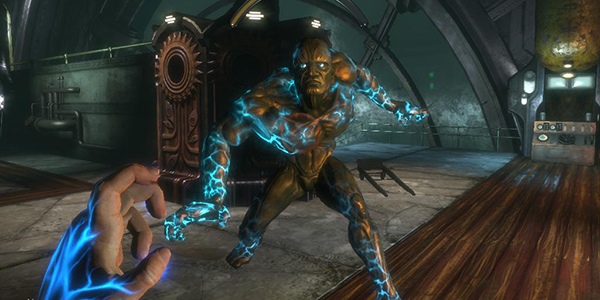
How it ended: One of the greatest games ever made, BioShock pushed the boundaries of narrative in video games, and thoroughly mind-melted every single person that played through it when Atlas revealed his undeniably genius scheme to control Rapture. With such a thought-provoking narrative, themes of misplaced power and existentialism, many believed BioShock's ending was going to be one that was extremely intellectual. Nope. Instead, the game somehow devolved into a generic end-of-game boss battle against a mutated Atlas that essentially overdosed on steroids (Adam) to become the monstrosity you see above. How it should have ended: Instead of the utterly inane boss fight that the game came packaged with, BioShock's creators would have received far less criticism if they had done almost anything else. With that said, a final confrontation with Atlas/Frank Fontaine would have worked much, much better if it had gone down the psychological manipulation route that had already been established prior to the final fight. The fact that your enemy was also your father was a complete missed opportunity to do something special.

8. Deus Ex: Human Revolution

How it ended: After having his body forcibly augmented to save his life after an explosion completely mangles his limbs, Adam Jensen embarks on a mission to rescue his former ex-girlfriend and uncover a worldwide conspiracy spearheaded by giant corporate businesses that deal in cybernetic augmentations and implants. From Detroit to Shanghai, the player infiltrates enemy strongholds, dwells on important moral choices and increasingly becomes concerned about the fate of mankind if they continue to travel down a path that makes them progressively less human. Finally uncovering the horrific truth of what the heads behind the conspiracy wants and having made some intriguing choices, the player's final choice comes entirely down one of three absolutes displayed through the form of pushing a button. How it should have ended: Instead of reducing a decision of worldwide importance to the monotonous action of pushing a button, Eidos Montreal would have been far better suited to making Jensen's final choice feel far more natural. Button-pushing resulting in drastically different choices felt not only far removed from reality, but it also flew right in the face of all the decisions that the player had made beforehand. Actual, physical representations of the consequences of the player's choice would have improved Human Revolutions conclusion tenfold.

7. Uncharted 2

How it ended: A world-spanning adventure to locate a mysterious, powerful artefact, Uncharted 2's gameplay is matched only by its believable characters, their motives and the events that surround them. Yet, for some absurd reason, after a 15-plus hour long journey through some rather exotic locations and oodles of character development for Nathan Drake and his pals, Naughty Dog thought it was a good idea to add a final challenge to the closing hour of the game: blue-skinned guardians that felt totally out of place. Sure, the Uncharted series does dabble in the supernatural at times, but their implementation and actual appearance felt extremely uninspired. How it should have ended: If the guardians needed to stay in, then they should most definitely have been redesigned to make them look more intimidating. A few people painted blue doesn't present much of a threat, and instead how about a puzzle-based final stage in which the artefact Drake and co. are after is protected by a multi-layered barrier that requires the solving of various different head-scratchers? It might have slowed the pace down, but for a series built on collecting and analysing artefacts, having to rely on your wits to succeed sounds far more riveting than shooting nameless blue people in the face.

6. Borderlands

How it ended: Borderlands, a game who's narrative focuses entirely around the opening of a 'vault' that contains vast amounts of treasure for the player to get their hands on instead contained a giant, world-destroying alien that looked like a congealed mass of excrement. Felling the alien promptly makes it pop in a very small downpour of items, sort of fulfilling the promise made at the beginning of the game. If that's the case, why is the ending considered bad? Well for starters, the word vault immediately evokes the image of a giant, colossal room full of neatly sorted items for the player to rummage through to their heart's content. You'd also expect to actually go inside the vault that every character harps on about throughout the entire game. None of that happens: you kill an alien and get an inventory's worth of crud that was worse than what you already had. How it should have ended: Sure, keep the amorphous blob that is The Destroyer in, but when the vault hunters did eventually down the final boss, Gearbox should have let the vault hunters actually enter the vault and collapse in a gibbering mess when the discover a room lined with treasure chests, gun cases and safes. Thankfully, Gearbox made up for their failures with downloadable content for the game and subsequent sequels, but the original game on its own still has its disappointing conclusion in place.

5. Fable III

How it ended: After becoming king of Albion, developing your kingdom and making tough choices on how to govern your lands, Fable III quickly devolves into a generic final level where your sole objective it destroy the darkness that plagues Albion in the form of an ordinary man. Queue a final battle that plays out like any other combat scenario in Fable III's entirety and results in one of the most anticlimactic endings of any video game ever. If you thought Fable II's infamously criticised ending was bad, III's conclusion trumps its dullness by a country mile. How it should have ended: Instead of the anti-climactic fight the hero has with a simple, recoloured basic enemy, Fable III should have ended on a high by culminating in a grandiose final battle to satiate the detractors of Fable II's disappointing ending. In addition, the results of your choices as monarch should have been much more far-reaching and impacting than they were.

4. Crackdown

How it ended: Crackdown wasn't exactly lauded for its story to begin with upon release, but even so, it's final mission was rather anticlimactic all the same. Crackdown's structure was rather simple. As an agent of the world's law enforcers with super powers, your sole mission was to infiltrate three different districts of a metropolitan city and take apart each respective gang's leaders and kingpin to liberate them from rampant crime. You essentially repeated this exact same format three times until the entire city was freed from corruption. By the time that you reach the final set of story missions, you're accustomed to the formulaic structure of the game and assume that something special is going to happen for the concluding chapter. Unfortunately, nothing new happens, and you're forced to kill another group of gang leaders in much the same way as before. How it should have ended: Instead of ending on a rather bland note, Crackdown should have culminated in a final assault on the Agency tower by the combined efforts of the remaining crime gangs. As the 'Agent' you could have scaled the giant skyscraper in a multi-layered mission that saw you ascent from both the inside and outside to reach the tippy-top for a final confrontation.

3. Batman: Arkham Asylum

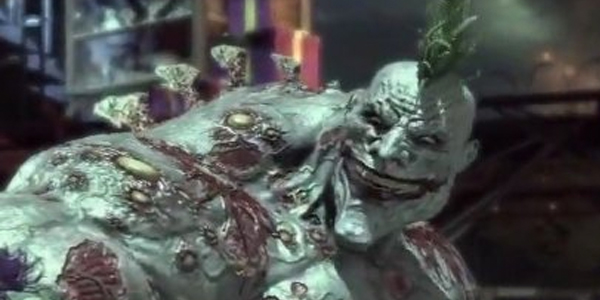
How it ended: Batman and the Joker's relationship has traditionally always been about a battle of wits and intellect between two extremely opposite ideals. Batman fights for justice and order and the Joker the opposite, revelling in chaos and disorder. After defeating some the more dangerous members of his Rogue's Gallery and setting his sights on a final battle with his nemesis, how does Arkham Asylum end? With an extremely generic boss fight with a mutated Joker jacked-up on Titan, a replica of the Venom substance that makes Bane so monstrous. How it should have ended: Arkham Asylum's ending reeked of a developer that was at ends with itself trying to decide how to suitably end their game with a bang. While their decision to have the Titan-enhanced Joker as a final boss was understandable, one can only wish that Rocksteady Studios' had stuck with their guns to the very end and had Batman engage in a non-physical battle with the Joker rather than one of fisticuffs.

2. Fallout 3

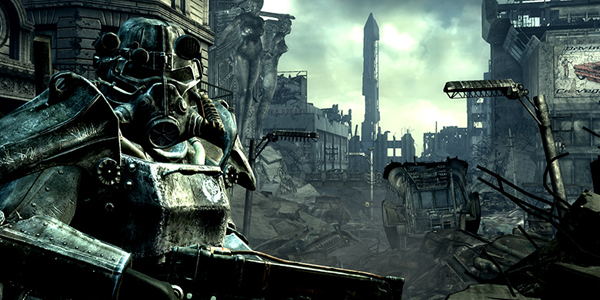
How it ended: For many, Fallout 3 is undoubtedly going to be one of the best games of the last console generation, and if you're wondering just how much adoration the series has garnered since 3's release, you only need to do a quick Google search for the still unannounced Fallout 4 and see the unprecedented level of anticipation the title has. For all the things that Fallout 3 did right with its enormous, open world, extremely detailed character dialogue and multi-layered narrative, the game's ending was, quite simply, awful. Aside from the fact that the conclusion to Fallout 3's narrative was rather anticlimactic, once the final decision was made and the credits had rolled up the screen, you were no longer able to continue on that current save game. How it should have ended: This one's rather simple really. Bethesda should never have barred the player from continuing with their journey across the Capital Wasteland after completing the main storyline. In a game that thrives on letting the player discover huge amounts of optional content on their own, the decision to stop that if the player focussed primarily on the story was bizarre. Thankfully though, subsequent DLC chapters allowed the player to continue their save game post-main story.

1. Middle-Earth: Shadow Of Mordor

How it ended: Talion's family is murdered and he quite rightly wants some revenge. After being fatally wounded himself in the attack on his family, Talion is saved by the spirit of an elf by merging with Talion, with the two of them setting out together to stop the advancing Orc armies led by Sauron and the Black Hand. Shadow Of Mordor was praised for its innovative nemesis system and its equally impressive world, yet for some absurd reason when you reach the finale of the game, SoM's gameplay takes a wrong turn. Facing off against the leaders of Sauron's army and essentially Sauron himself, your final battle quickly devolves into a boring, uninspiring QTE event where your only required to hammer certain buttons in response to an on-screen prompt. How it should have ended: Talion's final assault on Sauron's forces should have played out in much the same way as the rest of the game did. Player's should have been given the option to approach the closing missions of the game with whatever method they wanted to as opposed to being forced down a single linear path. Which game endings left a monumentally sour taste in your mouth? Let us know in the comments!

 
Posted On: 
Contributor
Contributor

Joe is a freelance games journalist who, while not spending every waking minute selling himself to websites around the world, spends his free time writing. Most of it makes no sense, but when it does, he treats each article as if it were his Magnum Opus - with varying results.