10 Greatest Programming Milestones In Gaming History

It's time the people who bring your virtual worlds to life got some recognition.
Video games have been an important part of popular culture for four decades now, as what started off being two lines passing a square-shaped 'ball' back and forth rapidly evolved into something much more. From the nostalgia-inducing pixelated sprites of the 8-bit era to the groundbreaking leap into the third dimension in the 1990s - games have always changed at a breakneck pace. It's almost as if the industry is afraid its audience will grow bored and abandon their hobby if they don't pull something new and awesome out of their metaphorical hat every five years or so. In order to sustain such rapid growth, programming has had to keep up (and sometimes even exceed) the evolution of technology and hardware. After all, there's no point in having the finest car money can buy if there's a drunk chimpanzee at the wheel. Programmers are the mostly invisible folks behind the scenes that bring order to the chaos that is video game development; their expert combination of ones and zeroes bringing the vision of the game designer to life. Without this technological black magic, Mario wouldn't grow when he ate a mushroom - he'd just be a fat Italian plumber with a strange taste in snacks. Without such prowess at their fingertips, games would be nothing more than a blank screen - and it's about time we celebrated all the fantastic concoctions of code that are quite the opposite.

10. Wii Sports

It's weird to think that back in 2006 Wii Sports parties were actually a legitimate thing in many social circles (they were at least easier on the ears than the dreaded Rock Band versions that would follow a year later). The Wii launch title was a huge killer app, reinvigorating Nintendo's popularity and starting the trend of motion control that's only recently starting to show signs of fading. Picking up the Remote, swinging and seeing your motion being (sort of) duplicated on the screen was nothing short of mind-blowing at the time, and while Wii Sports was far from 1:1 motion control, Golf and Tennis had the right balance of having depth in their controls while still being accessible to just about anyone. It's this delicate balance that's the true genius behind the programming of Wii Sports. It wasn't the first game to use motion controls by a long stretch, but it perfectly demonstrated a concept that would define an era in video games.

9. Uncharted 2: Among Thieves - The Train Sequence
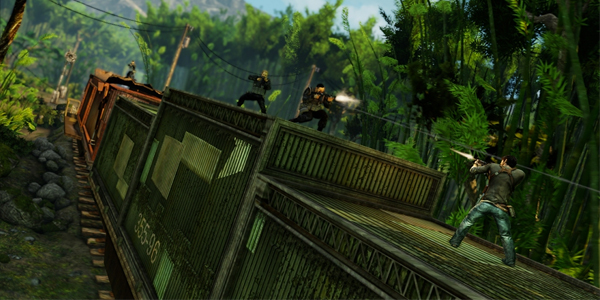
The first Uncharted silenced cynics of the PlayStation 3's power with its fluid animation and physics that made great use of the cell processor's SPE cores. Uncharted 2 was in many ways the perfect follow-up - bigger, better and slightly darker in an awesome Empire Strikes Back kind of way. It somehow managed to look even better than the first, but one sequence in particular demonstrates Naughty Dog's technical wizardry and attention to detail more than anything else - the epic gunfight on top of a moving train. This kind of thing has obviously been done before, but never like this. Unlike in other games where the train is basically static, giving just the illusion that it's speeding through an environment; the train in Uncharted 2 is treated as a tangible object with its own physics. It becomes really impressive when Nate faces a chopper whose pilot has a blatant fetish for the destruction of locomotive-powered vehicles. Carriages get blown apart by missiles, fires rage inside cabins while goons flood in to kill Nate with no regard for their personal safety. And then of course there's the fact that the train courses through a tropical forest and a snowy, mountainous landscape with hardly any visible pop-in. The PS3 was notorious for being a difficult beast to work with, making Naughty Dog's technical masterpieces look less like works of coding genius and more like witchcraft.

8. No Man's Sky

Most developers harness the power of new consoles to push graphics to the next level - improving resolution, anti-aliasing techniques, draw distances, physics and animation to create a more believable world. The insanely ambitious indie studio Hello Games are doing something a bit different with Sony's and Microsoft's new hardware by using their power to seamlessly procedurally generate planets so big that they would take days or even weeks to fully explore. Of course, procedural generation is nothing new (even Worms had it back in 1995), but it has never been done with such a mind-boggling scale. From the incredible draw distance when the player enters a planet's atmosphere to the tiny, unique rocks formations at their feet when they land - No Man's Sky's level of detail is simply astonishing. It isn't even out yet, but regardless of how the actual game turns out the technology on display here is very impressive. A small indie team has created a galaxy so big it could probably fit Rockstar's San Andreas inside it thousands of times. Oh and if that wasn't enough, it also has dinosaurs.

7. Wolfenstein 3D

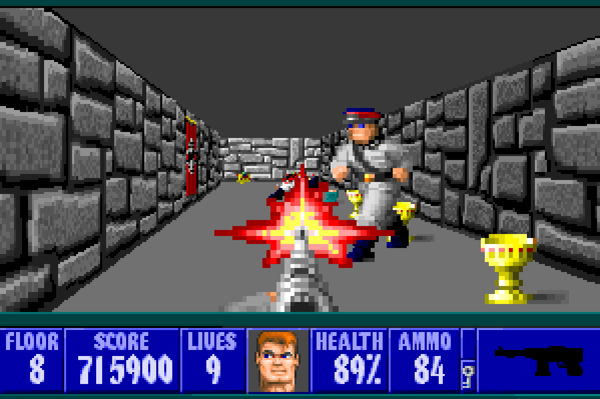
Back in the late 80s and early 90s strives were being made to take games to the third dimension. The problem was that the technology available wasn't powerful enough to render 3D properly, so programmers had to get creative to work around hardware limitations. One of these programmers was John Carmack, who throughout the 90s and 2000s was considered by many to be the Jesus of the programming world. His innovative programming technique called 'ray casting' used scalable sprites to create the pseudo-3D effect seen above. It was so efficient that it could even run on graphical calculators. Wolfenstein 3D was the third game to use this technique, but it had a much more profound impact on the industry than its predecessors. It was the best implementation of the tech so far, and its gory, Nazi-shooting gameplay laid the foundations for Doom, Duke Nukem, Quake and pretty much every other shooter of the decade that followed it.

6. The Legend Of Zelda: Ocarina Of Time
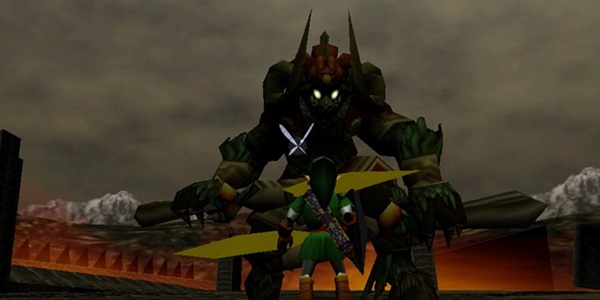
Link's first 3D adventure is a landmark achievement in many ways. It managed to bring Nintendo's long-running Legend Of Zelda series into a new dimension whilst also retaining everything that made it great in the first place. Not only that, but its groundbreaking Z-targeting system (towards and away from enemies) revolutionised controls in 3D games. Just by holding down the Z button players were able to lock the camera onto an enemy, leaving them free to move, dodge and attack without having to worry about it suddenly having a hissy fit. In one fell swoop, Nintendo veteran Shigeru Miyamoto swooped in like an omniscient game designing ninja and solved an issue that the industry had been struggling with for years. Once Ocarina Of Time was released, almost every 3D action game implemented a similar system to Z-targeting. In fact, it's still used in thousands of titles today.

5. Half-Life

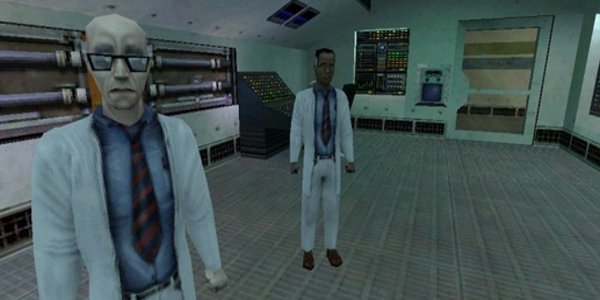
Half-Life proved that shooters could be about more than shooting monsters in the face and hitting them with a crowbar - they could be thoughtful, atmospheric and full of science references that only the nerdiest of nerds would get. Valve's breakout game was way ahead of its time when it came out in 1998. It told its story solely in the first-person without resorting to using cheesy, pre-rendered cut-scenes like so many games of its era. More importantly though, it was the first game to make use of scripted set-pieces that would later become a staple of the FPS genre. Featured advanced physics that allowed the player to pick up everyday objects within the environment and use them to solve puzzles (or to abuse annoying NPCs), Valve's impeccable attention to detail made Gordon Freeman's world feel like a real place. Their sophisticated skeletal animation system and artificial intelligence caused characters in the game to move and behave with a new level of realism that was unlike anything else around at the time.

4. Pac-Man

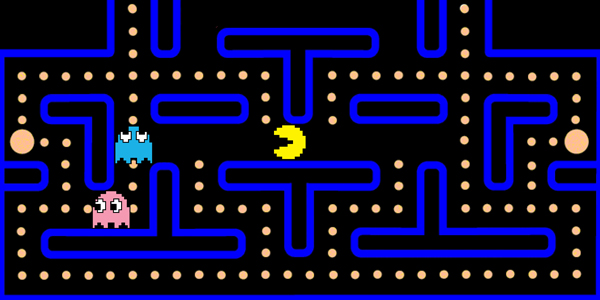
One of the many gaming icons of the 1980s, Pac-Man didn't just invent the maze-chase genre; it pushed artificial intelligence in games to new heights by making every kind of ghost have their own distinctive behavioural pattern. The red ghosts chase after Pac-Man like a fat kid lumbering after an ice cream truck, while the pink ones cunningly plot ambushes. Every colour had its own personality and way of hunting the player down, encouraging strategic thinking while adding some variety to the gameplay. Pac-Man is a game with a huge legacy that spans genres. Video games as a whole benefited greatly from its existence. Its artificial intelligence was nothing short of revolutionary and its unique, stealth and chase-based gameplay would later inspire everything from Metal Gear to Grand Theft Auto.

3. Super Mario 64

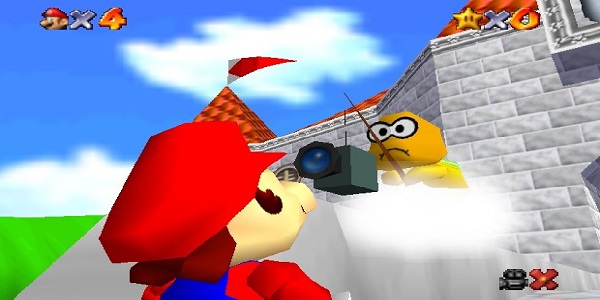
Gaming's jump from 2D to 3D wasn't at all smooth. Early 3D games certainly looked nice (well, at the time anyway) but a lot of them didn't feel right to play. The controls were always clunky due to a lack of analog control and cameras seldom gave the player the viewpoint they needed. Super Mario 64 butt-stomped these design issues into oblivion. The Nintendo 64's analog stick proved to be a vital tool for controlling everyone's favourite moustached plumber - pushing it forwards a little bit would cause Mario to walk, pushing it all the way and he'd run urgently almost as if he was about to suffer an unexpected bowel movement. The camera wasn't perfect, but it was a hell of a lot better than in any other games that were around at the time. By using the four C buttons, players could rotate it to their liking. Suddenly, after playing Super Mario 64 the weird-as-hell design of the Nintendo 64's controller started to make at least a bit of sense. Looking back, it's amazing to see how many things Shigeru Miyamoto and his team got right with their first attempt at a 3D platformer. The physics of controlling Mario were coded to perfection, somehow making the game feel just as wonderful to play as his previous 2D adventures.

2. Grand Theft Auto III

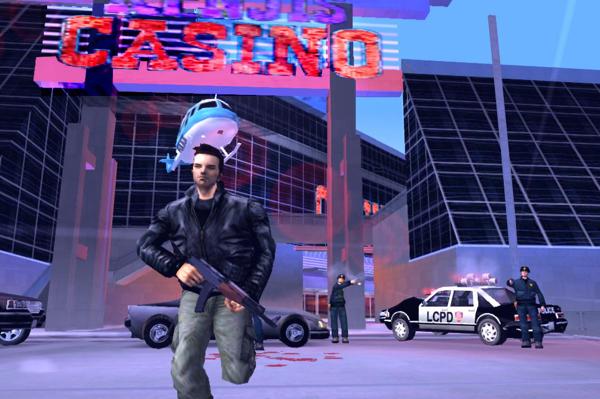
The first two GTA games used a top-down perspective due to hardware limitations, but once Sony's PlayStation 2 released, DMA Design finally had enough processing muscle unleash their true vision for the series; a fully 3D city that could be freely explored by the player with hardly any loading times. This wouldn't be an easy task on any console and the complexity of Sony's new hardware didn't help. Using Criterion's Renderware engine DMA successfully brought Liberty City to life. It had pedestrians on the road and street going about their day, law enforcement, fire engines and ambulances, a day/night cycle, dynamic weather systems and 10 radio stations. Getting the PS2 to run all of this simultaneously was about as easy as getting a cat to conduct an orchestra. In order to maximise performance, the developer's implemented a LOD (level of detail system) that reduced or increased the amount of polygons that made up object within the environment depending on the player's proximity to them. And yet, somehow DMA (now Rockstar North) managed to pull it off, creating a gloriously detailed city that was as much fun to explore as it was to blow up with a variety of firearms.

1. Space Invaders

Space Invaders was a phenomenal technical achievement. Not only did Tomohiro Nishikado design and code the game, but he composed the music, drew the art and built the hardware to run it. Unfortunately though, he couldn't find components that were powerful enough to run the game to his liking, resulting in one of gaming's greatest case of accidental genius. The game's processor was unable to cope when the screen was filled with alien ships, resulting in slow-down and screen tearing. As the player began shooting them out of the sky one by one, performance improved and enemies started to move a little faster. And so Tomohiro inadvertently invented the difficulty curve - the idea that a game should gradually become more difficult the further the player gets. It's a concept that fundamentally changed the rules of game design, so much so that it's hard to think of any game that came out after Space Invaders that doesn't use it. If that wasn't enough, 'Invaders essentially invented the shoot 'em up genre, the concept of a 'high score' and featured artificial intelligence that reacted to the player's movements too. It was also the first to feature background music - a simple four note scale that increased in tempo to emphasise the tension as the alien ships sped up and edged closer to the player. Space Invaders introduced so many new concepts and ideas that it's hard to quantify the overall impact it had on the industry. By releasing a game with performance issues that would be fixed with a patch today, Tomohiro Nishikado changed the way games were made forever. Which games do you think are technically impressive and will remain so when you're old and grey? Sound off in the comments!

In this post: 
gta iii
 
Posted On: 
Contributor
Contributor

When I'm not playing games, I'm probably either writing about them somewhere or singing stupid songs inspired by them. Or eating pizza.