10 Things Resident Evil 7 Must Learn From The Evil Within
Shinji Mikami's latest masterpiece shows exactly where the talent lies.
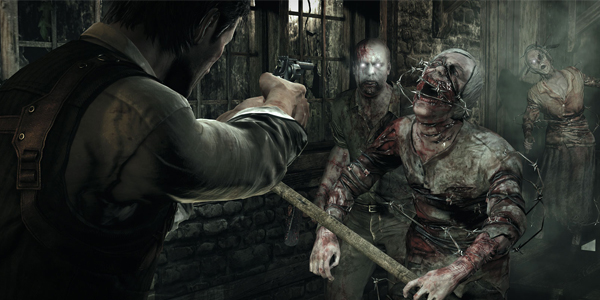
Shinji Mikami is a name you might have heard of, but outside of touting him as the 'man who changed Resident Evil' with part four, he tends to forever be in the shadow of other industry heavyweights such as Metal Gear's Hideo Kojima or Nintendo's Shigeru Miyamoto.
Like some incredibly proficient ninja in the night, Shinji has darted from one franchise to the next, inventing and helping to pioneer awesome game mechanics and artistic direction-changes along the way. The first three Resident Evil games speak for themselves, but it was the potent action-twist that kickstarted a long-stale sense of movement and elevated Resident Evil 4 into greatness territory right off the bat.
Following that, Mikami helped bring to life the incredibly under-played God Hand, 'Gears of War-on-steroids' sci-fi shooter Vanquish, the absolutely ridiculous Shadows of the Damned, and now returning to full-on horror roots; this year's The Evil Within.
It must be said it's a remarkably similar title to that of Resi 4, and although the later titles in that series would veer off alarmingly fast into all-out action territory, Evil Within proves you can do tension-filled horror, expansive set-piece moments and heart-pounding boss fights providing you treat them with the right amount of care and placement.
Resident Evil 7 is no doubt dropping next year, and following a wobbly fifth instalment and a terrible sixth, Capcom are surely taking notice of how many things their once-exclusive golden boy is now doing elsewhere.
10. Ammo Conservation
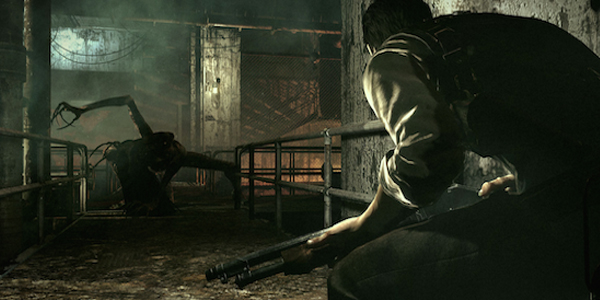
If there's one thing Evil Within will batter you mercilessly with, it's the idea of conserving your ammunition and making every shot count. Through the inclusion - and occasional necessitation - of burning bodies after you've brought them down to avoid a resurrection, if you use that one bullet you had to pop a zombie in the knee, you can torch his corpse as the others stand around it, to engulf the lot in one move.
That's just one technique you'll cook up along the way, as in addition to standard weaponry you'll get multi-faceted 'Agony Crossbow' and a range of crossbow bolts, ranging from electrifying enemies to freezing them solid. Using a Flash Bolt can make a whole group stagger, opening them up to one-hit kills from behind - or you could freeze and shatter them with a Freeze Bolt whose blast radius catches a bunch together.
It's in this experimentation that you'll find new ways to take on the heaps of enemies Evil Within throws at you, and providing you don't miss too many shots and are left running around the battlefield instead of engaging, this approach to combat is actually remarkably refreshing in a landscape where every other title lets you shower the opposition with bullets throughout.
9. Bosses That Take Strategy
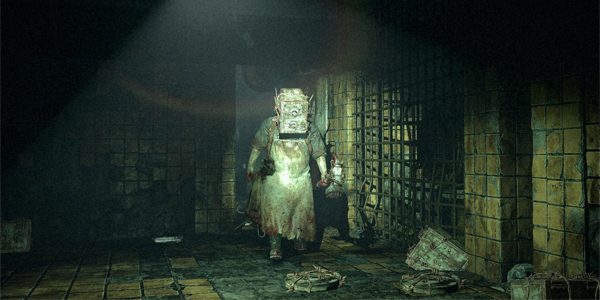
In what's one of the most memorable parts of Evil Within, you'll come up against a hulking demonic zombie-man-dog... thing in an underground car park, and although you still have to take it down, you actually have to employ quite a few stealth tactics to do so. You'll be hiding underneath cars as it patrols past, shooting it from afar before darting into any of two ammunition rooms, and just generally trying to stay out of its way.
Speaking of those ammo rooms, you can duck into either of them to catch your breath, but if the beast sees you enter it'll destroy them one by one, creating a great sense of having to decide exactly how and when to use them as the fight plays out.
Another recurring boss is a multi-armed girl who'll batter your eyes in if she gets the chance, but in figuring out exactly how and when to progress through a series of chambers, you'll actually deal far more damage to her with the environment than you would with your guns. We'll cover the annoyances of having multi-tiered boss fights with no checkpoints later, but this is definitely a step in the right direction.
8. A Real Challenge
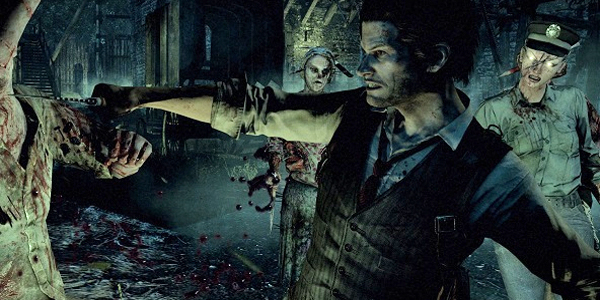
The latter instalments in the main Resident Evil series have come under scrutiny for a great many things, and one that goes hand-in-hand with the increased focus on gunplay and special moves, is the overall feeling of challenge that's all but completely gone.
Showering us with bucketloads of ammunition does nothing to try and establish a threat on the opposing side, and when Resi 6's answer was to also give the zombies guns, it was palm-to-forehead time. Evil Within sadly does feature a few gun-toting enemies in it's last few chapters, but at least neither you or them are taking cover and returning fire Gears of War-style.
Instead thanks to the aforementioned lack of ammunition throughout you'll also very rarely have a full health bar, making for many a stealthy creep through the environment as you grip the pad tighter through every encounter. The best bit is through the use of Claude Debussy's Clare de Lune, a gorgeous piano-based composition that rings out from every safehouse you'll come across.
There's literally nothing that'll give you such a satisfying breath of tension-relief than hearing the distant notes of this piece ring out in the distance, knowing you're momentarily safe again.
7. The Atmosphere
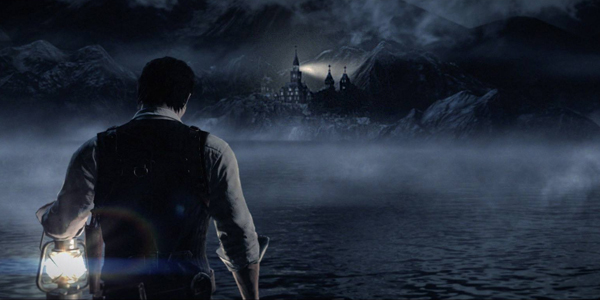
That idea of establishing a gritty atmosphere is quintessential to effective horror - the whole 'you against them' approach is only frightening when you don't know what you're up against and are working to turn the tides in your favour. It's something that's been completely lost when playing as a man whose arms are bigger than his thighs for example, in Resident Evil 5 and 6's Chris Redfield.
The earlier levels of Evil Within play out something like Manhunt's openers did - putting you on the back foot against scores of enemies who will rip you in half if you let them near. You're forced to rely on the shadows, skulk around and lure enemies into the various traps around the land, dispatch them as effectively as possible.
It's in the third chapter that everything starts to slip into place, with you slowly making your way through a seemingly abandoned village where across a lake there shines a spotlight, illuminating the foggy water in a way that's effortlessly classic horror. There's not a single moment like this anywhere in the last few Resident Evil titles, and being that Evil Within's atmosphere is one you'll soak up yourself through exploration alone, it makes for a far more involving and personal experience than the shooting gallery Resident Evil has turned into.
6. A Real Sense Of Progression
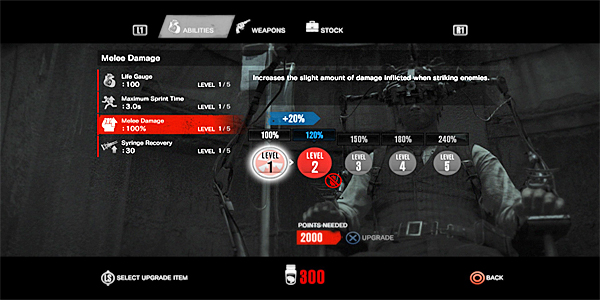
As mentioned before you'll start out Evil Within feeling fairly helpless, in fact chances are you'll get your head sliced off in the opening few minutes attempting to get around the hulking 'Sadist' butcher character before you've taken anyone down.
But what followers from those humble beginnings when your aiming statistic is terrible and you can barely line up a headshot slowly translates into crafting any number of custom bolts for your crossbow, the parts of which you've scavenged by disarming bombs around the level thanks to becoming more confident tackling what might be round the corner.
Some later bosses can't be defeated through environmental means and instead you're left to take them down with your (hopefully souped-up) weapons, and it's here that you'll realise just how far you've come from those furtive few missions where you had a finger poised on the crouch button at all times. That's not to say Evil Within ditches its stealth mechanics altogether, instead quite frequently you'll happen upon an area you'll be able to take apart knife-stab by knife-stab, but it's in the mix of the two that gameplay stays fresh and interesting.
Add in that only near the very end of the game will you gain access to an old Shinji Mikami favourite - or what you unlock after the final credits roll - and the overall feeling that Evil Within's endgame feels drastically different to its beginning is a resoundingly positive one.
5. A Slow-Burn Plot That Works
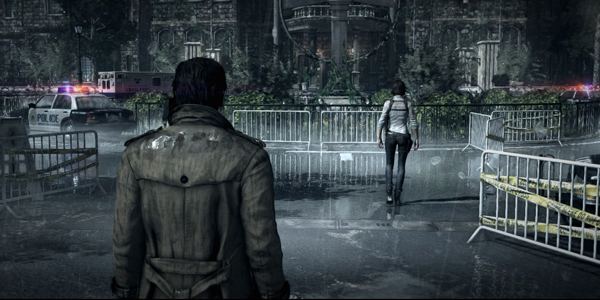
It's going to be up for debate in the forums across the land whether or not Evil Within's slow drip-feed of plot is exactly what you need to traverse the horrors with an inquisitive mind - or that it's reliance on having main-man Sebastien Castellanos fall through the floor to a new area every five minutes overstays its welcome.
Either way, that idea of "What the hell is going on here?" hasn't been done in an effective third-person title for years, and although Evil Within does give most of its big humdingers away at about the three-quarter mark, the additional flavour text that surrounds in-game character diaries, audio diaries and newspaper clippings helps to pad out the potentials for the machinations of the world itself long before they actually appear.
Lastly its clear Shinji Mikami isn't one for writing deeply involving and multi-faceted characters - instead Castellanos is a man upstaged by his own name for the most part, with a supporting team that although they get some memorable time to shine, for the most part don't appear to act like people would in their situation. Although given the game's overarching storyline, it's possible this is intentional.
Still, the point to be made is let the world speak for itself, as although we all loved the live-action cutscenes and dialogue that was hammier than an abattoir in earlier Resident Evils, it's the environment design and narrative drive that needs to stand out just as much as the gameplay.
4. Satisfying Gunplay
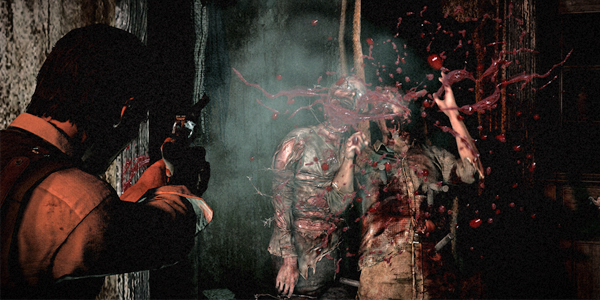
Remember after Resident Evil 4 landed and everyone suddenly started talking about how its shotgun was 'the best in all of gaming'? Well it seems Shinji Mikami was the one who shaved down those barrels himself, as a blast from Evil Within's double-bore kicks like a mule too.
Some were definitely put off by the lower shoulder-cam approach to combat Resi 4 pioneered, but in the following games enemies essentially became bullet-sponges, with the general feel of weaponry lacking that necessary kick to feel like you were repelling the horde with something other than paper bullets.
The major flame that needs to be rekindled in Resident Evil 7 is the idea of each bullet is only fired for the purpose of your own survival, rather than hosing down enemies from across the map with things like barely-effective sub-machine guns.
When you unload two barrels of firepower as a last ditch life-saving attempt at avoiding a revisit to the last checkpoint, it should mean something - and not that it sets up a badly-animated roundhouse kick with zero connection either.
3. Dont Be Afraid Of The Old School
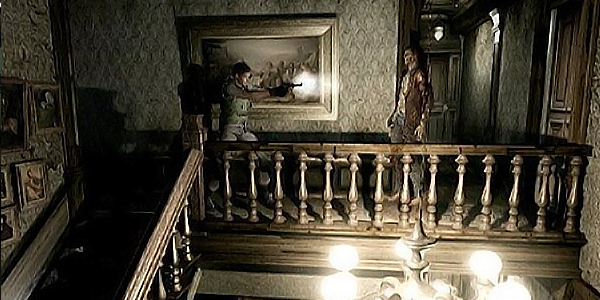
For some reason - we can only assume the rise of Gears of War and Call of Duty - Capcom pretty much ran away from Resident Evil's horror-tinged roots like many of us have from a pack of those open-mouthed dogs.
Instead of continuing Resident Evil 4's twinning of established horror tropes with occasionally overwhelming odds and survivalist gameplay tactics, they chose to up the ammo count, along with the enemies while they were on. It definitely satisfied the action-loving crowd, but you can just as easily make the case that it totally alienated the original fans along the way.
For all intents and purposes, Evil Within feels very much like the Resident Evil 5 Shinji Mikami would have made. Everything from the feel of the shotgun to the exact same animation that plays out should a chainsaw-wielding Ganad... we mean Haunted get their hands on you, is spot on. This is no bad thing, instead it's these core building blocks that allow for more detailed environments and crazier stories to be told, as well as a general sense of progression that rewards exploration and the making of your own set-pieces along the way - something totally missing from modern-day Resi.
2. Death And Checkpoints
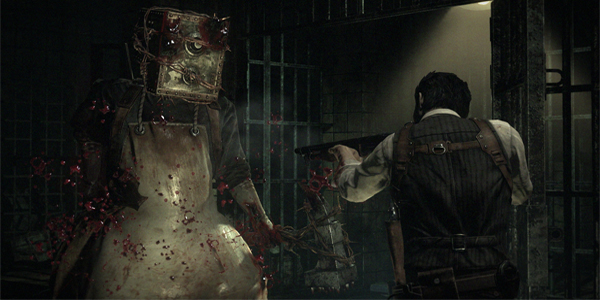
To finish, a couple that are things Capcom need to learn from in terms of what not to do.
Death in video games is starting to become something more of a mechanic than just an annoyance that sets you back. Compare the stark contrast in Dark Souls and Shadow of Mordor, where making the trip back to your corpse yields rewards or actively changes the world around you - to that of Alien: Isolation or The Evil Within, where you're literally just being thrown back hefty chunks of time - the only approach to the challenge being to bash your head against it until you break through.
Trial and error has its place in games - just look at Super Meat Boy, Trials or Shovel Knight - but in these larger, more expansive and explorable titles, scouting a large area and collecting a number of items - maybe even watching a cutscene or two - only to then get torn in half by a boss that makes you do all of it again is just plain annoying.
Much of the checkpointing in Evil Within seems to represent Shinji Mikami treating each meaningful encounter like a 'scene' from a film; you've got things like introductory cutscenes, maybe a corridor-crawl, a start-point on the other side of a load-screen - all things that only serve to get in the way of the flow of the game.
If we must have trial and error in terms of game design on titles like this, at least have the area itself load back up instantly for another go.
1. Boss Monster Designs
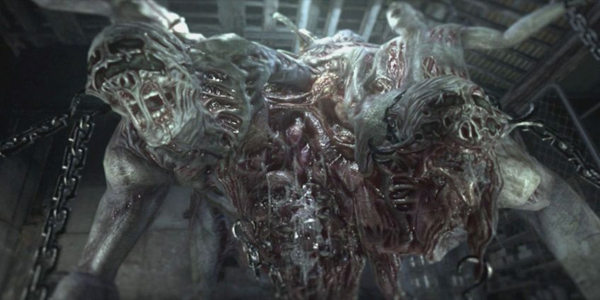
Now we could be wrong with this assumption, but are we not all a bit sick of the whole 'giant amorphous, pulsating gore-blob that occasionally opens to reveal some teeth, and an eye in the middle' approach to enemy design?
Nearly every major antagonistic creature in Resi's 5, 6 and Evil Within all look like half-detonated Thing monsters, which may have worked at one point, but considering how effective in its simplicity just using a demonic woman was in P.T., we think Resi needs a shakeup too.
Obviously psychological horror is more Silent Hill's bag, but when was the last time a Resident Evil title genuinely scared you, or made you wince at what you were fighting? Chances are for most the biggest enemy they felled was part three's Nemesis - who again was a more human creation. Some of the most memorable and chilling fights you'll have in Evil Within are against a string of enemies who are totally invisible apart from a thin hue - leading to items in the environment giving away where they are, or making you scream "It's in here with me!" instead.
Evil Within does give a reason to why its more abhorrent creations look like the overblown hellspawn Shinji and his team clearly intended them to be, instead of Resident Evil's "Here's some messed-up sh*t!" approach, but it stands that upping the gore-factor in 2014 is just not that effective to a majorly desensitised audience who have seen it all before.
What else can Resident Evil 7 take from Evil Within? Did you prefer it to the newer entries in the Evil series? Let us know in the comments!