10 Things You Probably Didn't Know About Resident Evil
Even Wesker doesn't know all of these facts.

Capcom's survival horror series Resident Evil is responsible for making the genre popular, almost single-handedly. It polished and perfected the foundation that 3D horror games had built before it, such as Doctor Hauzer and Alone in the Dark, its release ushered in what many regard as the golden age of survival horror games. Long before Capcom became known for milking its intellectual properties until they are bone dry, they developed a reputation for being perfectionists, they weren't afraid to rebuild from scratch or cancel projects completely. This was the case with many entries in the Resident Evil series, most of which went under countless revisions before the finished product was finally released.
As a result, Capcom have left a ridiculous amount of data on the cutting room floor that we're only just learning about now, due to the sheer amount of prototypes, scrapped designs and cut content for Resident Evil games. Some early Resident Evil concepts have even lead to the creation of entirely different franchises. Alternatively, there are a few details that might have prevented Resident Evil from being the classic that it is now, had events happened differently.
In praise of the once great franchise, here's ten things you probably didn't know about the Resident Evil series.
10. Brad Vickers Easter Egg In Resident Evil 2
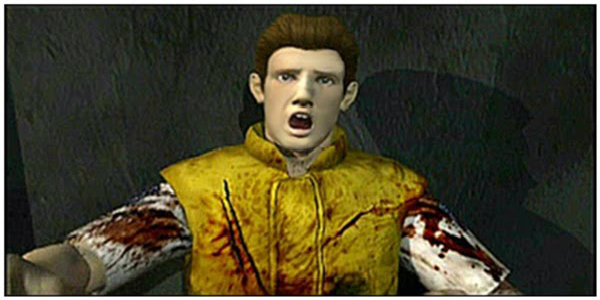
In Resident Evil 1, Chris Redfield and Jill Valentine are saved numerous times by Brad 'Chickenheart' Vickers. While he does abandon his teammates upon seeing the death of Joseph Frost, Brad comes back to aid the player with a rocket launcher, which is essential in defeating Tyrant. Eventually, Brad will rescue the two characters at the very end of the game with his helicopter. However, it's a little known fact that an easter egg causes Brad Vickers to appear again in Resident Evil's second installment.
If a player makes it to the Raccoon City Police Department without picking up any items in scenario A, a familiar looking zombie wearing camo can be seen wandering outside the back of the precinct. This zombie is Brad Vickers, former S.T.A.R.S member and helicopter pilot . Killing Brad Vickers will grant the player a key, giving access to alternate costumes and a secret handgun for Claire. It's later revealed how Brad meets his fate in Resident Evil 3: Nemesis.
Brad's appearance isn't overtly important in the overall plot, but the obscure easter egg helps stitch the three games together and was quite frightening for those who noticed.
9. Original Character Designs
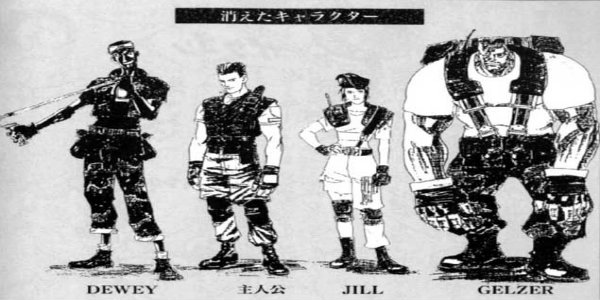
The original design documents for Resident Evil show a cast of characters different to those who appeared in the actual game. In addition to playable characters Chris Redfield and Jill Valentine, were Gelzer, a large hulk of a man with a cybernetic eye, and Dewey, a comic relief character apparently inspired by Eddie Murphy.
These characters were cut early in development, presumably because Capcom wanted to make the franchise more serious as both Gelzer and Dewey seem seem much more comical and animated than the characters who replaced them. It's unknown what exactly their roles would have involved, but it's easy to imply they may have been there to assist the player, much like Rebecca Chambers and Barry Burton.
It's likely these unused designs were repackaged into the Dino Crisis characters Gail (Gelzer) and Rick (Dewey) who resemble the design documents in both look and personality.
8. There Is A Cancelled Game Boy Color Port
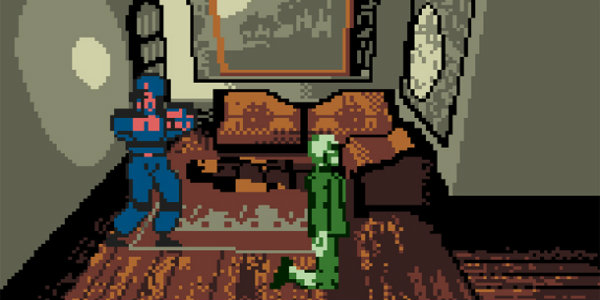
After Capcom's success with Resident Evil 1 in 1996, they made the decision to try and port it to other consoles. One such instance was for the Game Boy Color, which Capcom entrusted to HotGen Studios, a company based in the UK. Soon after the finished product was sent to Capcom, it was rejected and never released. The official statement on behalf of the company claimed that they 'were not confident that the product would have made both consumers and Capcom happy'.
The retro-gaming online community pulled a fundraiser in 2012, after which an anonymous source leaked a prototype copy of the ROM dump publicly. Many have since emulated the game, with most users praising HotGen's work. The game captures the entire mansion of the original game perfectly room for room, while also simplifying the controls and combat for the handheld edition. At the same time, there are obvious reasons why Capcom decided not to release the game, one being that it simply didn't suit the format.
7. Resident Evil 1 Was Conceptualized As A First-Person Shooter
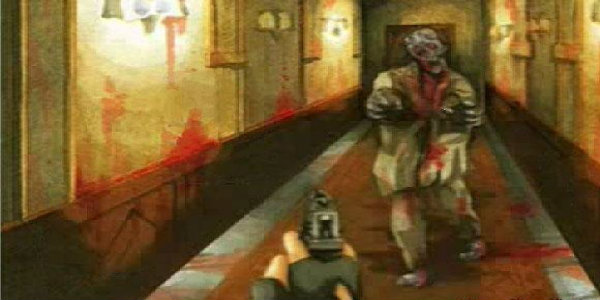
Resident Evil 1 is a game that helped popularize the survival horror genre of gaming in a huge way. With its awkward control scheme, fixed camera angles and lack of resources, it immediately set the guideline of how to control and create a terrifying experience for horror based games. Although when Resident Evil was first being discussed, the third-person perspective hadn't been considered, as the game was originally planned to be a first-person shooter. If this had been the case, the series would have turned out completely differently.
Had the series been a first-person shooter, it's unlikely that the same senses of fear, suspense and anxiety would have been as effective. After all, games like Doom, Left 4 Dead or House of the Dead aren't particularly scary primarily because you see too much. After a few deaths, a player will become familiar with the scares and most of the tension at that point is lost. However, in the original Resident Evil that kind of atmosphere was made due to the awkward controls, perspective and the slow struggle of combat.
Resident Evil 1 director Shinji Mikami said that the reason they didn't go ahead with the FPS approach is because the technology just wasn't good enough, which is when Capcom decided to take a similar approach to Alone in the Dark, after being impressed by the game.
6. The Series Has Several References To The Band Queen
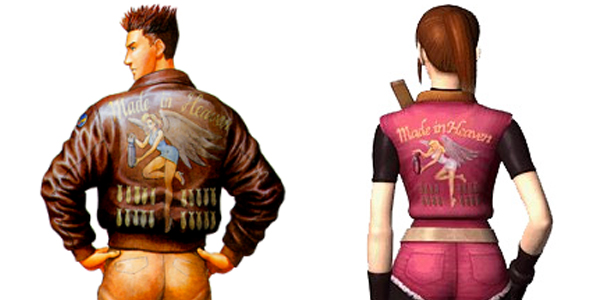
Several homages to the British rock band Queen can be found scattered throughout the games, particularly in reference to their fifteenth and final studio album called Made In Heaven.
Chris Redfield's unlockable costume features the text Made In Heaven on the back of his leather jacket in Resident Evil 1, while in Resident Evil 2 the same can be seen on Claire Redfield in her default attire. In Resident Evil Code: Veronica, Claire's jacket instead reads Let Me Live, which happens to be the title of the third track on the Made In Heaven album. Yet another reference can be found in the form of Billy Coen's tattoo in Resident Evil Zero which reads Mother Love, the fourth track from the same album.
It's been speculated that Coen's tattoo is an allegory referencing the unfortunate passing of Freddy Mercury who died of the AIDS virus, likened Billy Coen's own struggle against the T-Virus. It's more likely that there's simply a few big fans of Queen at Capcom HQ.
5. Resident Evil 3: Nemesis Was Supposed To Be A Spin-Off
After the success of the first two games, Capcom decided to follow up with not one, but two new projects. One was set to be the next installment of the main story-line, while the other game was penned as a spin-off that told the events leading up to Resident Evil 2. Capcom originally wanted Resident Evil 3 on next-gen consoles such as the Dreamcast, while the spin-off known as Resident Evil: Nemesis would ideally be released on the Sony Playstation.
Capcom reportedly had a deal with Sony which meant they had to release three main numbered installments of the series on the Playstation, consequently Resident Evil: Nemesis had to be re-branded as a main entry. This means Resident Evil Code: Veronica was meant to be the next true entry in the franchise, but was altered to spin-off status due to Capcom's contractual obligations with Sony.
This is perhaps why Resident Evil Code: Veronica feels like a big departure from the environments, settings and mechanics used in Resident Evil 2, while Resident Evil 3 is much more comparable.
4. Sengoku Biohazard Became Onimusha
In 1997, Capcom had originally planned to follow Resident Evil 1 or Biohazard as it's known in Japan, with a game titled 'Sengoku Biohazard'. The concept was essentially the original Resident Evil game, but in an oriental style. Capcom's Yoshiki Okamoto described the idea briefly in an interview; 'The battle will take place using a Katana and Shuriken. The house will contain hidden doors behind walls, ceilings that fall down to you, scrolls and ninja magic, and many other ninja techniques'.
Sengoku Biohazard never came to fruition under that name, but Capcom's Onimusha bears an incredible resemblance to the ideas that Okamoto discusses. Those who have played Onimusha will know katanas, ninja magic, scrolls, traps and hidden ceilings all appear in the series and are highly relied upon to reinforce the Asian and oriental themes. It's also worth noting that the finished product is arguably more like Resident Evil than anything Okamoto describes; the fixed camera angle, menu, control scheme, use of supernatural elements, puzzles and narrow environments are all very similar to Resident Evil games that came before it.
Sengoku Biohazard was a ridiculous idea, but ultimately it lead to one of the best franchises to ever launch on the Playstation 2.
3. Resident Evil 1.5 And Resident Evil 2's Changes
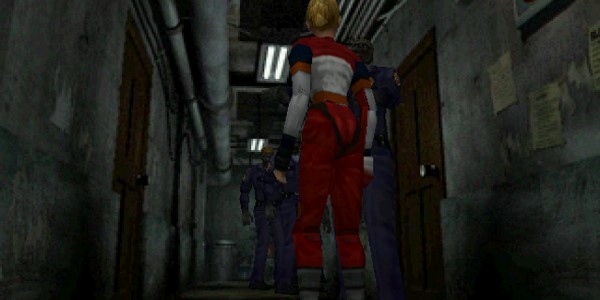
Resident Evil 2 was put into development one month after the original was completed, but the finished product was almost entirely different. Capcom management weren't happy with the finished version of the game, so they decided to rework the entire game from scratch, the earlier version now being referred to as 'Resident Evil 1.5'.
A huge difference was the absence of Claire Redfield - the game originally featured a different female protagonist known as Elza Walker, a student and motorcycle enthusiast. The story was said to be much more conclusive in this version, but writers feared that this didn't allow for additional installments in the series. The game's engine was also heavily modified, character models originally showed signs of physical damage relating to the player's health, and could be modified with collectible gear and equipment which increased defense. The 3D models were rebuilt with more polygons giving them greater detail, but this also meant the game could handle less figures on screen. There's also talk of a fan release of this original version, as apparently some programmers have found a large majority of the prototype's original files.
The huge delay caused by Resident Evil 2's need for remodeling is the reason why Resident Evil: The Director's Cut shipped with a playable demo, it was Capcom's way of apologizing to fans for having to wait.
2. Devil May Cry Was Originally Resident Evil 4

Resident Evil 4 was first released in 2005, but it was actually planned and developed for over five years due to a very troubled production period. The design team behind Resident Evil 4 decided to change the fixed-camera angle of the first three games, in order to make a more action orientated entry in the series that held a faster pace. Hideki Kamiya's focus was on a cool, likable protagonist and on fast and stylish combat. As the game developed, director Shinij Mikami noticed that the game had strayed too far from Resident Evil's survival horror roots.
As a result, Shinji Mikami requested that the designs and engine developed be used for a separate game, which eventually lead to the launch of the Devil May Cry series in 2001. This is ironic considering how the series developed past Resident Evil 4, which now resembles an action game more than traditional survival horror. Regardless of the game's troubled production days, Resident Evil 4 combined the best of both survival horror and action - a success which Capcom hasn't been able to mimic since.
1. Resident Evil Is A Spiritual Successor To Sweet Home
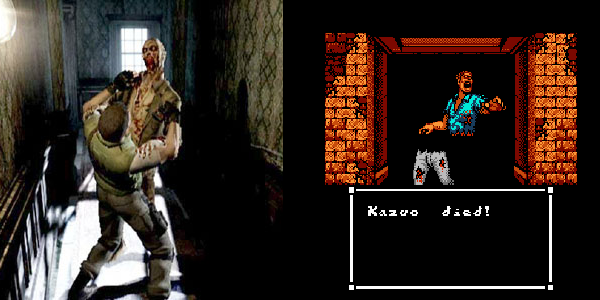
It may surprise you that the Resident Evil series wasn't Capcom's first foray into the world of the supernatural, in 1989, they released Sweet Home for the Nintendo Famicom. Sweet Home is an RPG based on a Japanese movie of the same name, though the game was never released outside of Japan due to explicit content and violence. Players would explore a decrepit, haunted mansion, discover cryptic clues, solve puzzles and encounter creatures such as skeletons or zombies, but the most important task was survival.
While certain aspects were obviously modernized, Resident Evil 1 bares a huge resemblance to Sweet Home in its mechanics, settings and themes. Even the names are similar given that Sweet Home is obviously ironic, as the mansion is haunted. The similarities to Resident Evil are even more abundant when you consider that other supernatural creatures were planned to appear in Resident Evil, but were later removed in early development. The puzzles and exploration elements are particularly evident in Resident Evil, even the iconic door-opening loading sequences first appeared in Sweet Home.
Resident Evil couldn't have been a direct sequel to Sweet Home because of the attached movie rights, nevertheless Resident Evil is clearly inspired by Capcom's past project.