10 Underrated Video Games That Were Way Ahead Of Their Time
If they weren't fully appreciated then, how about now?
More than any other medium, gaming is constantly innovating at a pretty unprecedented pace. Game engines, rendering techniques, detailed character models and simply the stories are told can be 'outdated' within a year or two of release, forcing developers and publishers to forever look to the future - to at least attempt to 'predict' what may or may not catch on, or to kickstart a trend themselves.
For many games, lightning strikes and we tend to associate either said franchise, landmark one-off or the creatives themselves for getting everything just right, but what of those other titles that attempt to line up the stars, only to find no one was looking?
A good handful of the following games were certainly still popular, but they all displayed characteristics, mechanics or features that set them apart from the competition in their respective time, or were aped and innovated on years - sometimes decades - in the future.
Which games completely blew you away by being ahead of the curve, only for the industry to keep thundering on without notice?
10. Kill.Switch
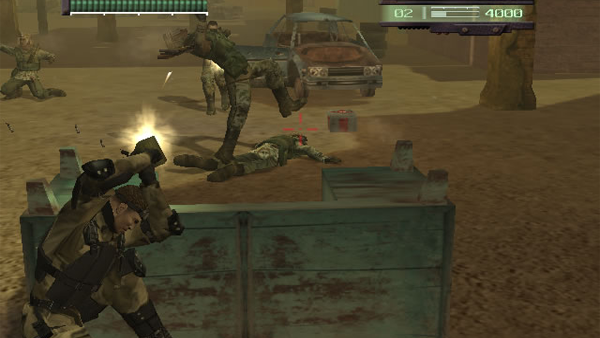
We tend to attribute the whole 'stop n' pop' cover system to Gears of War, but there was one title that showcased this exact trope, back when Marcus Fenix but a glint in Epic Games' eye.
1999's Operation Winback had already laid the groundwork for hugging walls and popping out to blast enemies, but it was Namco's Kill.switch that put its variation of the same cover system front and centre for all to see, whilst also introducing blind-fire - another quintessential ingredient of the 'Gears formula'.
Sadly, despite both games showing remarkable potential - Kill.switch in particular was regarded as being truly innovative for the time - yet its level design and story just couldn't make a lasting impression.
Not to mention, with what appeared to be a 'B-tier' release showing off these features, the industry wasn't ready to embrace it wholeheartedly. That would instead happen with Gears of War and the Xbox in 2006, and the rest remains history.
9. Virtua Fighter

You have to feel somewhat sorry for Sega. Back in 1993 they were bestowed some sort of power from the gaming Gods, as they figured out how to render a full 3D fighting game not soon after Street Fighter II and Mortal Kombat were still being played religiously.
Yes, these character models were primitive as hell, but back then, man, there was nothing like it.
Alas, a year later we'd lay eyes on Tekken, and whilst that level of technical proficiency was never Tekken's claim to fame, it's hard to deny that despite getting there first, Virtua Fighter has played second fiddle to everything from Tekken to Mortal Kombat and even Dead Or Alive ever since.
If only they'd hung back and perfected those character models, maybe it would be another story.
8. Def Jam: Fight For NY
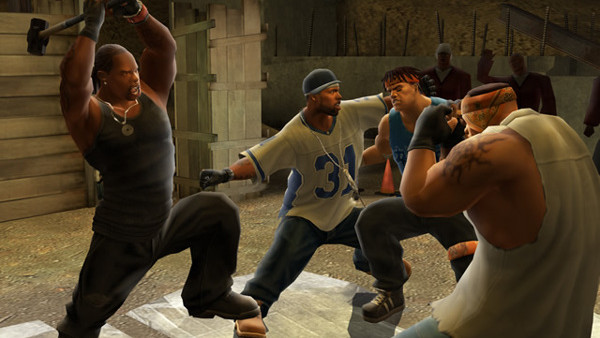
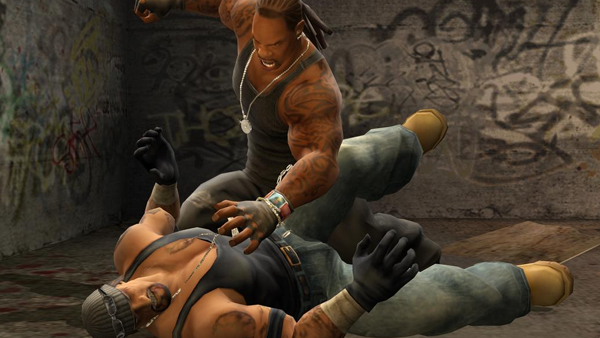
Something of an anomaly, the fantastic De Jam Vendetta sequel turned into more of a straight-up fighter than a wrestling spin-off, resulting in gameplay that was absolutely outstanding, yet couldn't quite find its home.
It didn't help that EA royally killed the franchise stone-dead with Def Jam ICON either, a woeful 'dance to do damage' direction-shift that alienated fans and newcomers alike.
Still, where once it looked as though Fight For New York had proven there could be an entire genre of 3D brawlers where you'd slam opponents' heads of environmental objects and bust out OTT finishers, the passion fans once had completely fell away, and the majority of fighters we get these days are still bolted onto 2D planes.
7. Psi-Ops: The Mindgate Conspiracy

In a literal meeting of the minds, two telekinetically-powered titles were released within months of each other back in 2004. Free Radical's Second Sight took a stealthier approach to occasionally letting you mind-slam a soldier or two off the walls, whereas Midway's Psi-Ops was a physics-based sandbox of unlimited potential.
Years before Steam Greenlight would take off with any number of quirky ideas and just as games were beginning to showcase the radgoll physics-based delights of the Havok Engine, Psi-Ops let you pick up enemies and objects, immolate them, possess them and so much more in between.
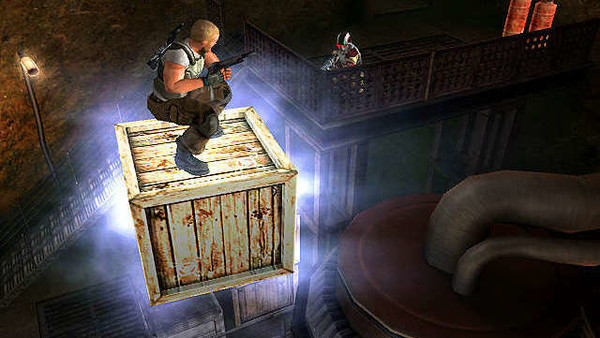
The likes of Dishonored and Just Cause 2 would make their names on treating the A.I. like a plaything, but it was Psi-Ops that managed to build an entire game around manipulating not only your enemies, but chunks of the environment, too.
Exploring the world around you by flying around on a mind-controlled crate? Lobbing a piece of a broken statue at foes like a giant, deadly bowling ball?
That was Psi-Ops, and it's criminal we never saw a sequel.
6. Dark Chronicle

There's something about developers Level-5 that makes them the 'fan's choice' of RPG developer. From Ni no Kuni to Dragon Quest, Yo-Kai Watch to Dark Cloud, their ideas, characters and worlds are exemplary, but you'd never catch someone mention them before Square Enix or Bethesda when asked out of the blue.
Dark Chronicle was the kitchen sink-throwing sequel to PS2 launch title Dark Cloud, a stunning little game that adopted the zeitgeist of cel-shading to colour its gorgeous Studio Ghibli-esque world. Level-5 included a smorgasbord of game mechanics ranging from camera mode to procedurally-generated dungeons, fishing to tactile real-time combat - something Final Fantasy has still not perfected.
Almost a decade prior to Minecraft and 14 years before Dragon Quest Builders, Dark Chronicle also let you assemble a number of parts to custom-build a series of villages and townships, further adding to the seemingly endless list of things to see and do.
When later RPGs would adopt this "Just keep adding minigames!" approach to progression, it's worth remembering that Dark Chronicle did so with the utmost purpose, routing it all through a story and set of main characters that made everything make perfect sense.
5. Fahrenheit/Indigo Prophecy & Heavy Rain

Despite the likes of Gone Home, Firewatch and Everybody's Gone to the Rapture being regarded as narrative envelope-pushers, it's Telltale's The Walking Dead that really takes the cake as revolutionising how direct storytelling can meet with gameplay to form a full experience.
Such critical acclaim always leapfrogs David Cage's contributions to the industry, mainly because thanks to Fahrenheit's godawful back third - where you're tasked with fighting a physical manifestation of the internet... yes really - and Heavy Rain's terrible voice acting, his games never truly broke through to the mainstream.

Still, in terms of artistic expression, Cage was the first guy to recommend players don't actually play his titles more than once, instead he wanted you to "live with your decisions" - rather like Telltale's output.
And, as for quick-time events or on-screen button prompts guiding the occasional contextual animation, Cage's games had them in spades back when Telltale were still working on Sam & Max.
4. Sweet Home

You literally wouldn't have Resident Evil without Sweet Home; it's that simple. Developed by Capcom but helmed by one Tokuro Fujiwara, he would pioneer all sorts of survival horror staples such as item-hoarding, exploration, puzzle-solving, sporadic save states and - of course - a constant state of threat.
When time came for Capcom to enter the 3D realm, Sweet Home became the base point, as Resident Evil was designed to ostensibly be a polygonal version of that initial vision. Capcom even initially made encounters first-person like in Sweet Home, and Resi's Spencer Mansion was directly inspired by the game's location.
Naturally, as time has gone on we tend to look back at Resident Evil as the 'grandaddy' of survival horror - and it's true that Capcom perfected all its initial ideas with that first instalment - but you literally wouldn't have the game or survival horror as a genre, if not for Sweet Home.
3. Shenmue

For the longest time, developers were continually looking into various ways to enhance immersion. And for the record-setting budget of $70 million (the most expensive game ever made at the time), director Yu Suzuki set about crafting an epic tale where everything from stroking cats to picking up fully-rendered pamphlets was interact-able.
This resulted in one of the most revered and culturally-beloved titles of all time - possibly the first ever 'triple-A' game too - but simply because of its interactive elements being so impossible to imitate, it would be years before other titles would devote so much time, effort and money into making an environment feel 'alive'.
The Yakuza series is a fairly close approximation of Sega continuing this design philosophy, and you can look to the likes of L.A. Noire or first-person horror titles to see gameplay mechanics made out of scouring the environment. Still, when people say there's "nothing quite like Shenmue", it comes directly from its most pioneering features being a direct product of what wasn't around at the time.
Considering all the advancements we've made today, what Shenmue III even looks and feels like, I can't even begin to imagine...
2. Metal Gear Solid

Metal Gear is far, far from being an underrated game, but it's easy to forget that underneath all those crazy plotlines and robo-dinosaur boss battles, is a directorial flourish that showed video games can easily rival Hollywood, and then some.
Crafted by auteur Hideo Kojima, he showed how to bring a level of cinematic immersion, storytelling, actually great voice acting performances from memorable characters - all elements that would force the industry's developers to sit up and take notice.
There's barely a story-driven game today that doesn't owe its methods, camera placement/cutscene direction, character presentation or overall feeling of cinematic quality to Metal Gear Solid, and that's something worth remembering.
1. Crysis

The game that saw your measly home computer setup and laughed a hearty laugh.
"You think you can run me... on that?!" it appeared to bellow, as developers Crytek cared not one bit that only a fraction of the populace could see the full potential of what they'd created - they just wanted to make the most graphically impressive game of them all.
To some degree, you can blame Crysis for the obsession many gamers have on frantically buying up the latest graphics cards just to match whatever top specs are out there.
Here was a game that no two people would be able to have the same experience with. It fostered the same sort of "Well, if you tweak this, then that can go higher, but oh- what bout this?" mentality you see with vinyl collectors forever chasing a 'warmer tone', or better setup for that over-the-rainbow 'perfect' listen.
Before The Escapist's Yahtzee Croshaw would label the 'PC Master Race' accordingly, Crysis had already laid the foundations for the aesthetic arms race to come.
--
Which other titles were so far ahead of their time, they never got their due attention? Let us know in the comments!