10 Video Games That Were One Critical Flaw Away From Greatness

So close... and yet so far.
Did you ever have one of those games that you spend more time defending to your friends or online than you actually do celebrating it en masse? The term 'a six-out-of-ten game' has become pretty frequent for reviewers and fans to describe those titles that even though they're relatively enjoyable, just have that one critical flaw that gets in the way of any worthwhile reputation. It's becoming a bigger problem too as the general scale of video game production becomes larger and more complex. So much so that if you were to try and name a handful of titles off the top of your head that were completely polished and bug-free, you might only be coming back with something like The Last of Us. And even that ended up with its fair share of hilarious glitches for certain users, proving that if the mighty Naughty Dog can't get something out the door in one piece, then none of us can. Most gamers like to champion the underdog, finding that special little title that does whatever gameplay mechanic or story beat far more satisfying than its bigger-budget brethren, and for that reason we're not saying the titles here aren't still worth your time. Rather the opposite, these are the ones that showed so much promise throughout or in the lead-up to release - and yet just couldn't tie it all together in a satisfactory manner when all was said and done.

10. L.A. Noire

Critical Flaw: The tonally-sporadic interrogations. Oh L.A. Noire, you had so much promise. By only being published by Rockstar rather than developing, Team Bondi did away with the rebels n' rapscallions tales of GTA to instead try their best to do an extremely serious take on the detective genre - with some truly revolutionary face-mapping technology to boot. The idea was that you'd mount up your evidence in a variety of different locales, before hauling in your suspects and giving them a good grilling - with the realistic facial expressions giving away if they were lying or not. So far, so good. However when it came to your character of Cole Phelps, actually trying to ask a series of questions with any semblance of continuity was impossible. You'd select something like the 'Doubt' prompt if you thought your suspect was telling porkies, only for Cole to leap into action, shouting down your (presumably still innocent) witness - just to then snap back into his original calm demeanour with whatever you chose next. It was incredibly jarring, and in a game where the utmost care had been put into everything else, stuck out like a thumb with a neon 'Sore!" sign sticking out the top. Even worse you could have multiple pieces of evidence that would help prove an allegation Cole just blurted out, but only one particular piece would work with any given line of questioning, leading to what should have been one of the most celebrated parts of the entire experience just being an exercise in frustration.

9. Hitman: Absolution

Critical Flaw: A broken disguise system. When Agent 47 made his return to consoles in what was actually one of the best-looking entries in the entire series, developer IO somehow thought their previously award-winning and fan-pleasing systems needed a bit of a shakeup. Whereas before one of the key gameplay elements - and signature features of what made the Hitman games so enjoyable - was that you could steal the disguise of any character in any level, assuming their role within said level to get closer to your target. In Absolution however, IO made it so that disguises were of a particular 'type' that all the rest in that level would then recognise. So say you try and masquerade as a waiter, all the other waiters in that level would know their once-buddy had been replaced. A good idea on paper, but in practice enemies were becoming suspicious from across entire levels, not to mention the only way around wearing a disguise next to someone of the same 'type' was to hold a button that drained a meter on-screen. Every time that meter expired you were instantly seen again, which took away the whole 'behind enemy lines' nature of slipping through an enemies' ranks undetected that made the previous titles so endlessly replayable.

8. Dead Rising

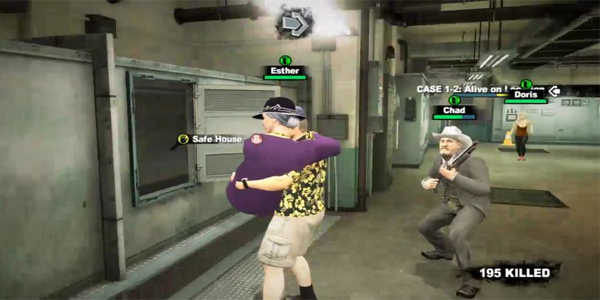
Critical Flaw: Those escort missions. Luckily we' don't see a great many frustrating escort missions in more modern titles - The Evil Within thankfully features a secondary character who'll get stuck in and actually save your skin in a bind - but that wasn't the case for Capcom's other zombie-killer, Dead Rising. It's a neat idea that brings to mind some incredibly tense scenes seen in film where the hero must shepherd a troop of innocent civilians through any number of volatile territories, but here having to micro-manage groups of people with zero control - squad commands ideally - made for a total nightmare as they routinely got latched onto by swathes of walkers at a time. Even worse was the idea that you had to lead them back to an doorway that then led to a load screen, the spotty proximity to which meant your survivors had to be right next to you when you hit the button, or you'd end up leaving them behind. Going back and forward across a blank loading screen and awkwardly positioning any number of survivors in just the right place easily dragged Dead Rising down from the upper echelons of peoples' positive recognition - a position it's been trying to reclaim ever since.

7. Spec-Ops: The Line

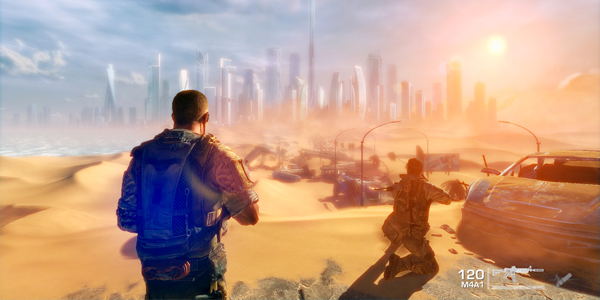
Critical Flaw: The cover system. Spec-Ops is regularly one of those games that makes me explode with glee if it ever gets a mention. The very idea of taking a very minor shooting franchise that was routed in rote gameplay and seen-it-before locales, only to then deliver one of the most progressive and analytical stories of the last few years was a masterstroke. Telling the tale of your thought-to-be hero Martin Walker, his slow descent into madness with an increasingly-primal reaction to the world around him is something people sadly didn't get to see en masse, thanks to a pretty spotty cover system and a general lack of polish around the entire project. The game was definitely serviceable enough, but with a general feel that most people would pick up and instantly think "I'd rather be playing Gears of War", whereas Epic's magnum opus game made the very idea of being in cover something that felt natural and life-saving, in Spec-Ops you'd end up darting from one to the next in an attempt to avoid some very grenade-happy enemies. Sure it kept you on your toes, but when the general feel of shooting was so tried n' tested in the first place, it just ended up holding onto Spec-Ops' ankle as it attempted that leap for true uniqueness.

6. Alpha Protocol

Critical Flaw: The general lack of polish. If you were to ask anyone how a game that twinned the Bourne movies with Mass Effect would turn out, chances are they'd envision Alpha Protocol, which by all accounts should've been one hell of an experience. Here you had prolific RPG-developer Obsidian taking everything we loved about RPGs - customisation, perks, dialogue choices - and bringing it to life by funnelling it through the world of super-spies, letting you pick and choose missions, form alliances with informants and generally choose if you wanted to be a headshot-popping suave-talking Bond, or a close-quarters neck-snapping Jason Bourne. Where did it fall down though? In the execution. Dialogue was spotty at best, character models and environments looked remarkably last-generation, and the overall feeling of controlling your character on-mission was like some cumbersome PC-to-console port. Those who stuck with it discovered a fantastic system of interlocking narratives and a rewarding progression-system, but that was at the cost of having to put up with a lot of bugs along the way that play-testing would've easily solved.

5. Assassin's Creed

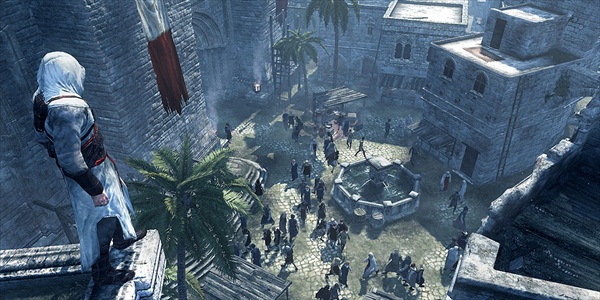
Critical Flaw: The lack of mission-variety. It's actually pretty staggering if you go back to the original Assassin's Creed just how completely different it feels. Where now we've got one uber-protagonist dispensing death in all directions as fast as you can prod the counter button, the first AC was very much preoccupied by making sure you knew you were actually a hidden-bladed assassin instead. Each main mission was exactly that - an assassination - and you'd spend the previous handful of story-related ones gathering intel on your intended target, before attempting to sneak in and take them out without anyone knowing. Whether or not the stealth in the earlier games lived up to this idea is suspect at best, but at least it was trying to at least embody its name. Sadly this was all AC had going for it outside of some fancy visuals and a pretty badass concept in general, as we all ended up doing the exact same handful of missions over and over again. Hearing repeated lines of dialogue and playing out things like saving civilians from some rough-housing guards does little to engage when you know exactly how it's going to play out, and even though the series obviously found some positive reception overall - particularly with part two - this premiere instalment is a bit of a misstep.

4. SSX (2012)

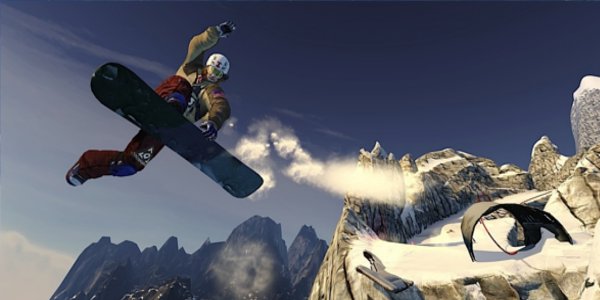
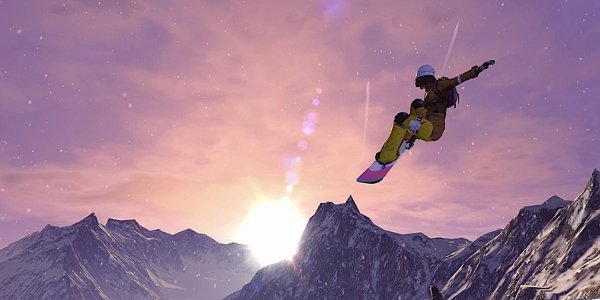
Critical Flaw: Total lack of character. What's the one thing you celebrated above all else in the original SSX trilogy besides the tricks? It's the characters, right? SSX Tricky is rightly remembered as one of the most downright fun games in existence, as by taking the ridiculously over-the-top nature of the first games' tricks and matching those heights with some celebrity voice actors, it gave birth to the likes of the eminently-likeable Eddie, the loud-mouth Moby or the sultry Elise - each one garnering a fanbase of their own. SSX 3 would lose the celebrity voices but keep the characters in general, and even though the heights of Tricky would never be matched again, it was a serviceable entry. However when it came time for 2012's reboot of the franchise, EA annoyingly decided that making all the characters near-identical - with palette-swap costumes rather than anything defining - would be the way to go. Needless to say it not only put long-time fans on the back-foot but made us pretty much do an about-face and run the other way - something that when the shoddy gameplay, lack of real multiplayer and terrible course-design was also a factor, made for one of the most disappointing titles of the year.

3. Borderlands

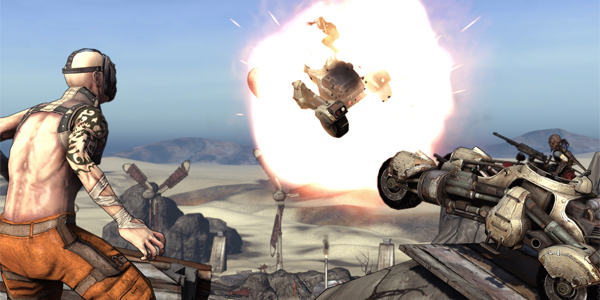
Critical Flaw: The boss fights. Sitting just on the periphery of mass-acceptance and 'everyone-should-play' recommendation, Borderlands saw another surge in popularity thanks to Destiny's many elements that were already done better many years prior, but regardless of the many things it does right, that first game ended up stumbling when it came to the boss fights. Something that often crops up as a point of contention when critics review games is the idea of making a choice that leads to something negative, and then choosing to then mark the game down for allowing it. In the case of Borderlands it's when you're fighting the often-sizeable enemies, that you can then choose to stand in particular places - like say, behind a rock - and said enemies won't be able to hit you. Cheap sure, but even the final boss had this problem, with many players realising there was one pillar-platform they could stand on that wasn't even programmed to be connected by the enemy - allowing for a ridiculously easy kill. Like Saints Row the following two sequels have gone far more down the 'internet'/random humour that ends up turning away as many people as love it, and so it's this original game that usually gets looked back upon as something of a missed opportunity, because everything else is still so proficient and mechanically polished.

2. Mass Effect 3

Critical Flaw: That original ending. Yes, it's Mass Effect 3 again and no, we're never going to forget what an absolute shambles that first wrap-up ending really was. For a series that assumedly prided itself on player choice and somewhat free-wheeling agency with a bustling universe where it truly felt like you were carving your own path, to do away with all of that was incredibly annoying at best, and insanely insulting at worst. You'll rarely find someone who played through ME3 first-time that wasn't disgusted by how phoned-in the final revelations were. When you factor in that essential narrative elements were actually inside the day-one paid DLC, along with the ending's machinations amounting to 'choose one of three cutscenes', this is one of the biggest blights on not just video game narratives, but of any instance of dropping the ball in the history of entertainment media.

1. Deus Ex: Human Revolution

Critical Flaw: Outsourced boss fights. The original Deus Ex still features on many peoples' Best Games of All Time lists - and for good reason too, it's mesh of RPG perk-based stat-progression and an immensely well thought-out sci-fi aesthetic was something that soared, thanks to everyone in the early noughties wanting to replicate anything remotely Matrix-y through anything could get their hands on. For Human Revolution Eidos almost nailed that feeling again too. Providing you could put up with the razor-throated vocal-performance of one Adam Jensen, the vast majority of HR was another brilliantly-fun romp through a highly-detailed and fun-to-explore futurist world. We say 'vast majority' of course, because for some reason the coding on the boss battles was outsourced to another studio, making for one hell of an incongruous feel when going from stealth or action-based gameplay into bosses that may demand the total opposite of your character's playstyle. Some people who specced their character down the stealth route were suddenly all-but doomed when in battles against characters who were designed to be taken head-on, something that Eidos would at least attempt to patch in the later-released Director's Cut of the game, but by this stage it was already too late for most of us. Which games do you still lament got one crucial thing wrong, in an otherwise stellar or promising experience? Let us know in the comments!

 
Posted On: 
Gaming Editor
Gaming Editor

WhatCulture's Head of Gaming.