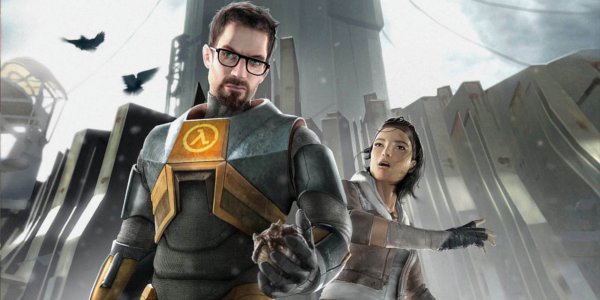
As a kid in elementary school playing Nintendo for countless hours in the 1980s, I never imagined that it would actually happen, but it has: video games have hit the big time.
Gaming and gaming culture have reached a level of public consciousness that is now shared by film, music, and literature. Video games are seemingly everywhere nowadays – on people’s smart phones in hundreds of millions of homes worldwide, on T-shirts, in the media, and even in university classrooms. They’ve been praised, criticized, and analyzed from every angle, and as this relatively young medium of entertainment continues to mature, so does its place in history.
With video games evolving at a dizzying, yet exciting pace, the need to preserve and appreciate gaming’s rich history becomes more and more apparent. An exhibit at the Smithsonian, documentary feature films, and an increasingly large number of books on the subject are solid testaments to gaming’s important role in culture over the last 40 years. Yet when looking at the history of video games on an individual, game-by-game level, there is a key trait that separates them from their peers in the film and music world. Video games, for the most part, don’t age very well.
Movies have generally followed the same formula of creation since their inception – actors acting in front of a camera with a director calling the shots. Music has followed similar suit since the advent of recorded sounds, and books have been collections of words and sentences on paper for thousands of years. Innovations such as computer-generated special effects, word processing software, and digital recording equipment have allowed practitioners of these mediums to add new ingredients to the pot, but at the end of the day, the process of cooking the meal really hasn’t radically changed all that much.
Video games, however, are another story. Video games are a 100% technology-driven medium. Developers of video games can only create within the constraints that the hardware allows them to. With computer technology evolving at a speed so fast that it is actually difficult to comprehend, a game that pushed the limits of what video games can do can actually be outdated within a couple years of its release. It is a sad, but inevitable, reality of our beloved hobby. While old movies, books, and albums are often products of their time from a cultural perspective, old video games have to deal with being products of their time from both a cultural and technological perspective.
Every once in a while, though, something unusual and special happens. A game is created that seems to defy age and transcends its technological limitations into something that is truly timeless. These games strike a unique balance between presentation, gameplay and mechanics that just hits all the right notes, and forms an experience so pure and enjoyable, that it never gets old. These games continue to be played by successive generations of gamers long after their release, as well as continuing to influence the design of modern games. Here are 10 games, in no particular order, that have broken free of the limitations of their medium, and continue to age as gracefully as a nice Bordeaux.
Want to write about the stuff you're passionate about and have your work read by an audience of over 10 million a month? Click here to become a contributor.


15 Comments
Chrono Trigger, what a game.
I never played Chrono Trigger, and I’ve only heard good things about it, but your description of it reminded me of a classic turn-based RPG on the megadrive – Shining Force and Shining Force 2. Brilliant games. Great list.
For me the game that gets better with age is the NES port of TMNT II: The Arcade Game. I just can’t get enough of that game.
Final Fantasy 2 (or 4 whatever you prefer to call it) Had such an amazing story, pulled you right in from start to finish. The scene with the twins (If you played it you know the one) had me grabbing tissues.
Indeed! I think Final Fantasy IV was the first game to truly make me feel sad. The scene you mention, Tellah casting the “Meteo”, the part with Edge’s parents….it is a heart wrenching game, but that’s part of the reason it was so impactful.
A wonderful and varied collection of games! Well-written, too! I especially agree with the inclusion of Final Fantasy IV. I’ve struggled with picking my favorite Final Fantasy, but IV is always in the top 3.
I never finished A Link to the Past because the data on my SNES cartridge got deleted somehow. Man, that was a bad day. I just never had to heart to go back and start again. Maybe it’s finally time.
Thanks for the kind words, Jon. Also, you MUST play A Link to the Past as soon as you can. If you have a Wii or Wii U, it’s just a Virtual Console download away. Well worth your time. Cheers.
See? I appreciate lists like this. It’s getting quite annoying with the lists that basically try to shock people. Oh you enjoy Fallout 3? Well guess what! It’s overrated and it actually sucks because I say so. There needs to be more lists like this that are constructive and positive rather than the plethora of lists I’ve been seeing lately which focus on negativity and cynicism.
Thank you very much, Beaver. Appreciate you reading the article and taking time to comment.
Great list. All it lacks is the brilliance that is Timesplitters 2.
Actually I think that Future Perfect is better in almost every way.
Hello Alex, thanks for reading and for your comment. I’ve yet to play any games in the Timesplitters series, unfortunately. I’ve heard many good things about them from the gaming community. I hope someday Crytek takes a crack at rebooting the series.
Agree with you on Ico, both it and Shadow of the Colossus are two games that will always be good.
A very well written article and one that resonates. Almost each choice mirrors my own, which is surprising, or perhaps I just loved the SNES. I was properly delighted to see your choice of number one after reading each title on the run up. Well played Salvador, a really great selection. Thanks for taking the time to write.
Thanks so much for the kind words, Andrew. It sure is tough to beat the SNES, isn’t it? Despite my belief that right now is probably the best time to be gamer, the 16 bit era really holds a special place in my heart. I loved both the SNES and the Genesis, and I really think the competition between those two giants played a huge part in that era being such a great one for gaming. Thank you for reading, and cheers!