7 Video Game Developer Reputations That Died This Generation
What the hell are Bethesda doing?!
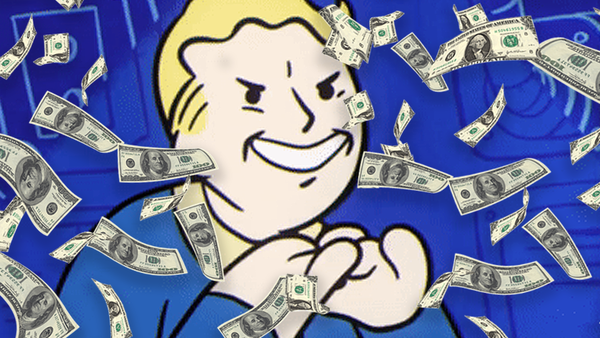
This gaming generation has been one hell of a ride. And I don't mean in the thrill-seeking sense.
Instead I'm talking just as many peaks as troughs, with violent chicanes upending our expectations at the last second.
Yes, we're awash in handfuls of artistic highs past console cycles could only dream of. The likes of God of War, Red Dead Redemption 2 and Zelda: Breath of the Wild are immaculate; real blood, sweat n' tear endeavours that realise a vision shared by only a select number of creatives.
But the downsides? They're almost too many to list.
For every one of these titles that now has a loyal following and positive word of mouth, is an Anthem, an NBA 2K20, a Ghost Recon: Breakpoint, a WWE 2K20 - titles that this far into the generation, should be on the form of their lives.
And yet, the embracement of post-launch patches, day one DLC, "play early" pre-order bonuses and everything in between has resulted in a consumer base that actively expects their day one offering to be terrible.
Playing at midnight? The servers will be overloaded. Looking forward to a story resolution? It's being held back for the Season Pass. Just want to enjoy the same gameplay from last time? A ton of bugs and glitches will get in the way until at least two weeks from now.
This stuff HAS to be fixed for the next generation, or god help an industry trying to spin any of this crap as remotely acceptable.
7. Konami

Going into this generation, Konami were one of the all-time greats.
Holder of everything from Castlevania to Metal Gear Solid, Pro Evolution Soccer to Silent Hill, little did we know just how much they were going to butcher their own properties in the name of profit.
See, Konami realised across this generation that they'd rather focus on the wings of their company that specialise in gambling machines and mobile games. Once 2020's Dragon Collection and Sengoku Collection amassed millions of players and billions of yen in profit, it was off to the races.
Why care about putting anything out with any sense of memorability when you can cash in til the cows come home? Silent Hills was cancelled, Metal Gear Solid 5's closing chapter was left unfinished, and a major falling out with Hideo Kojima himself whipped up a firestorm of sheer hatred for where the company's priorities now lay.
Even worse was the "return" of both MGS and Silent Hill as pachinko machines, after the godawful Metal Gear Survive was so rote and predictable, it failed to chart in the West.
As if enough damage to their brands hasn't already been done, we're now getting Metal Gear Solid 6... but without Kojima.
6. Ubisoft

Opening this cycle with the phrase "The next generation starts here", Ubisoft would become a laughing stock once we got eyes on Watch Dogs and Assassin's Creed Unity. Setting the stage for what was to come, Watch Dogs suffered an immense graphical downgrade between pre-release footage and what we all bought for full price. Assassin's Creed Unity, though? That was something else entirely.
A complete mess of rushed production goals and months of patches to make it stable, the Xbox release saw a bug with the patch itself warp into a 40GB download, replacing the entire game, rather than the affected areas.
That was just the beginning, too. This generation gave us the "Ubisoft Formula" of peppering open worlds with "towers" and fetch quests. They had to take a year off from Assassin's Creed because fan backlash was so strong. Far Cry has now been run into the ground with way too many identikit instalments, and Ghost Recon: Breakpoint released as a microtransaction-filled mess, where even its biggest defenders were disgusted.
Ubisoft might have given us the almighty Rainbow Six: Siege, Mario & Rabbids and a rebooted Assassin's Creed, but looking back? Eeeesh.
5. Bioware

Remember the doctors?
Bioware used to be headed up and spearheaded by medical doctors Ray Muzyka and Greg Zeschuk, forming the studio in 1995 with a handful of others, and blessing us with RPG gold for almost 20 years thereafter.
Baldur's Gate, Dragon Age, Neverwinter Nights, Mass Effect, Jade Empire, Star Wars: Knights of the Old Republic - the vast majority of their output was seismic, establishing genre traits and expectations that thousands of the competition would ape and struggle to keep up with.
Right next to Bethesda, Bioware were THE name in western RPGs, and their legacy still stands.
This generation's output though??
Well, the doctors left in 2012, citing the fact they'd lost their passion for the industry, and leaving the vast majority of the overarching direction to EA going forward, who promptly treated this generation like a testbed for all things anti-consumer.
2012 saw integral Mass Effect 3 character Javik resigned to DLC, Dragon Age: Inquisition was a bizarrely empty-feeling action RPG with repetitive missions and interactions... then it really got ugly.
The promising Shadow Realms was cancelled, Mass Effect Andromeda was a notably, hilariously unfinished game that meme'd itself to death overnight, and Anthem... might end up being the entire company's undoing as a studio with any real agency.
4. DICE

DICE should be regarded as one of the premiere studios in gaming, up there with Naughty Dog and Rockstar as dependable blockbuster maestros you can have faith in.
Only... they're tied to EA, and although most people target the publisher instead of themselves when highlighting problems, it doesn't mean DICE don't get put through the ringer alongside.
By my count, DICE have had three major !*$%-ups across the last few years.
It started with the cross-generation release of Battlefield 4; a game that should've "demonstrated the power of the next generation" - only it was clearly assembled with previous systems across development. Battlefield 4's release was so bad, EA apologised and actively had to abandon the game's bug list, as the next game's development had to begin.
Next up was the cataclysmic Battlefront 2, a tragedy by all accounts on DICE's part, as clearly nobody on the creative side would've wanted loot boxes and "Star Cards" dictating character powers or game balance. No, that was EA's doing, but DICE were attached by proxy.
Their most recent blunder was Battlefield V, a game that got lost in a miasma of historical accuracy, as the game's marketing fell apart, and post-launch content was cancelled.
DICE's position ultimately sucks even more, because clearly they can code some of the most beautiful games we've ever seen.
You just have to imagine a blissful reality where they're not bound to EA forevermore.
3. Blizzard

It was all going so well for Blizzard.
A Hearthstone here, an Overwatch there. They even got millions of MMORPG newbies into the genre with Heroes of the Storm.
Then 2018 happened, and in one fell swoop - literally, one build-up to Blizzcon and a disappointment later - they were irrevocably tied to mobile gaming, and a lack of quality control across the board.
Of course, the biggest cross-continental disaster that at time of writing, is still unfolding, is what I'll call, "the Hong Kong situation".
Now, we're yet to feel the full ramifications of Hong Kong's quest for independence surrounded by a country that wants to change their entire way of life, but Blizzard not allowing a streamer to vouch approval for the movement put them slap-bang in the middle of it.
Coming after notable Hearthstone streamer Wai Chung Ng (known as "Blitzchung") ended a tournament stream by saying "Liberate Hong Kong. Revolution of our age!", Blizzard responded by stripping him of his winnings, and banning him from playing for months.
Naturally, being Blizzard are based primarily and initially out of the U.S., it blew up into a major international incident, as free speech is of course protected in America.
Blizzard would then go on to ban more streamers for siding with Blitzchung's sentiments, only for a swathe of American politicians to pen a letter, "urging" Bobby Kotick and his company to rethink their strategy, considering how it looks on the global stage.
Regardless of all this, we now have a company who were formerly seen as one of the industry's most treasured darlings, peeled away to reveal an entity that puts money above personal rights and values when it matters most.
2. EA

Oh, EA.
If you go back to the 2000s - when the previous generation of consoles were in full swing - EA were actually pretty stellar.
Putting their sizeable amounts of cash where their mouth was, we got everything from strings of awesome James Bond games to The Simpsons Game, the immaculate Burnout sequels, Dead Space, Skate - you name it, they were helping put it together.
Then something happened. One Andrew Wilson came into the fold, and after testing the appeal of loot boxes in the UEFA Football titles of the late 2000s, this generation EA leant into them, HARD.
Becoming a far more aggressive publisher, interfering with developers to the point where things like Mass Effect 3, Anthem and Star Wars Battlefront 2 were saddled with demands that got in the way of their game's visions.
FIFA's Ultimate Team mode was hit hardest of all, but we also had a Dungeon Keeper resurrection where the character himself was asking you to bypass timers by paying. Battlefield 4 was butchered to make a release window, Need for Speed Payback had slot machine unlocks for car parts, and UFC 3 had a microtransaction card system that felt laughable in the wake of what happened with Star Wars.
EA will round out the last 10 years having been voted the Worst Company in America, twice.
1. Bethesda

Imagine going back in time and telling the version of yourself that was experiencing Morrowind, Oblivion, Fallout 3 or Skyrim, that at the close of the century, Bethesda would be one of the most money-hungry developers in the industry.
Because for as painful as it is to acknowledge, Bethesda have truly had a disastrous time of late, and besides Skyrim being unanimously beloved, a pretty naff generation.
As a publisher, they failed to advertise and secure sales for every single game that signed with them. Wolfenstein II and Youngblood, Dishonoured 2, The Evil Within 1 and 2. All failed to land sales-wise, and it's because of the braindead assumption that games don't need to be seen or detailed, until launch.
As a developer, things are even worse.
Besides Fallout 4 feeling like a reheated version of Fallout 3, with the exact same lockpicking minigames, an empty plot and terrible dialogue options, things would only get worse from then on in.
Fallout Shelter was a harmless enough mobile grind-fest, but Elder Scrolls: Blades is a watered down, soulless, on-rails take on an otherwise stellar formula, while Fallout 76 is straight up disastrous at this point.
Besides a launch window that involves false advertising, leading to what amounted to trash bags being given in place of a deluxe rucksack, the game was loaded with server-crashing bugs, and quests that ultimately revolved around fetch quests.
The latest example of pure tone deaf stupidity is Bethesda's decision to charge a monthly fee for things fans had been asking for. Private servers and larger item chests were locked behind this $100 A YEAR fee, but wait, there's more.
Turns out players that gave into this hokum were gifted with... more broken features. The item storechests apparently ate items and deleted them from saves, and NPCs were dead in all directions.
Bethesda used to be this scrappy developer that took massive risks and JUST made it through. We used to love them for the little bugs and glitches, because the bigger picture was glorious and worth championing.
Now? They're a shell of their former self, and a garbage pile of problems has completely obscured what used to be their most loveable qualities.