9 Crippling Problems With The Gaming Industry’s Future

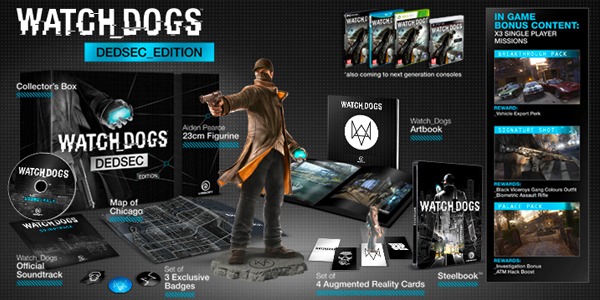
Watch Dogs has 18 separate versions and 5 Collector's Editions, and if that doesn't tell you something about mining love for a game, nothing will.
The modern video games industry is in a constant state of flux, constantly trying to keep up with the demands of gamers, technology, and - increasingly - shareholders. As we step into the seventh generation of consoles, games are becoming more and more complex, more engaging - and a damn-sight more expensive to develop. Near enough every game in development that isn't part of a core franchise is a considerable risk not only for the studio and publisher, but also for those who put up the money to invest their time in it too. With 2013's announcements of the Xbox One and PS4, the eternally-connected world was unusually sceptical about the latest hardware generation, with every single reveal and surprise being met with intense scrutiny and more hatred in the comments section than they (probably) deserved. Yet despite it all, the new systems are selling well and games are starting to trickle through with semi-favourable opinions from critics and gamers alike. As the gaming industry plays it's never-ending game of catchup, concepts of innovation are slowly being stripped away in attempts to recoup costs and satisfy people who aren't necessarily just playing the games. The harsh reality is that modern gaming is big business with enough money floating around during a single game's development to pay Manchester United's wages for several years. In the end, the future of the game industry is in serious risk of collapsing under it's own bloat, and ahead we have 10 of the most crippling problems that could derail everything.

9. 1080p/60fps

Watch Dogs It's would be redundant to point out how vital the technology of the new generation of hardware is to the future of the industry, but as the gaming audience is slowly becoming more savvy when it comes to hardware specifications and statistics, as developers are already having to push the Xbox One and PS4 to their current known limits to try and satisfy one consistent demand from console gamers; the need to have games running at 1080p resolution while running at a buttery smooth 60 frames per second. The last generation of consoles were the first of the HD age and offered varying levels of graphical fidelity with them both supporting up to 1080p, but the ability of the hardware to meet one resolution is all well and good - it's the software you run on it that needs to be able to make use of the tech efficiently to achieve this. 1080p/60fps has long been the holy grail for console developers as most PC gamers have been able to achieve it for a long time with the more up-to-date graphics cards and RAM/processor configurations on the market, however no game in the last generation of consoles managed to hit 1080p and 60fps - the hardware just wasn't able to cope with the demands. Case and point arrives when you look at the fan backlash concerning the upcoming open-world game Watch_Dogs, which developer Ubisoft recently revealed would run at 900p/30fps on the PS4 and at a slightly lower resolution on the Xbox One. Many people decried the developer for all the delays the game has suffered and the perceived failure to live up to the 'next gen experience' that is 1080p/60fps. In many people's eyes, the game is already a failure regardless of what the gameplay is like, how interesting the story is or the fact that Ubisoft have managed to squeeze an enormous open-world game with huge scope onto no less than six different platforms. While there's no doubt that eventually in this generation of home consoles developers will eventually get their head around 1080p/60fps on a consistent basis, it will eventually be superseded by the likes of 4K technology as the demands of gamers increase in-line with affordable technology.

8. Cynical DLC

The idea of adding extra portions onto a game has been in play since modding communities around the world got their hands on DOOM's original source code and went to work creating new levels and new worlds to merrily shoot your way through. Over the years, PC gamers had expansion packs which could add new stories, new maps, new multiplayer components and really, anything a modder could put together. It wasn't until the Xbox 360 came out that downloadable add-on packs actually took off as a viable option for console gamers. In the beginning it was innocent enough; maps, skins, dashboard themes - all reasonably cheap and all fairly inconsequential. Eventually though, publishers started getting greedy and ended up cutting out chunks of games to be sold off later for a premium. There is nothing inherently wrong with downloadable content - in most cases it can enhance a game or increase the longevity of multi-player focused title - however it starts creating a sour feeling when single player games are missing important parts of their story because they are earmarked for sale later on. Or they get labelled as 'Day One DLC' which is much, much worse. Think back to Mass Effect 3; the game starts with Commander Shepard being hauled up in front of an Alliance court martial to determine his punishment for actions before the Reapers land on Earth and cause all manner of chaos. This is the first scene in the game and you certainly aren't in trouble for your heroic actions at the end of Mass Effect 2, so what did you do? Well, you could only find out if you paid for the DAY ONE downloadable story pack 'From Ashes' which filled in the blanks on the sci-fi melodrama's epic story arc. For those who paid £45 for the game on the first day only to then be expected to fork out either £9.99 on PSN (or 800MS points on Xbox Live) to get the complete story, is nigh-on reprehensible. There is a risk that developers will be strong-armed by publishers or investors into leaving finished chunks of triple-A games out of the released package in order to sell them later on - either individually or as part of a season pass - and there is a definite worry that games in the future could be released with chunks missing that would require you to pay up before you can actually finish the game.

7. Pester Power

Much like the controversy around some forms of DLC, some developers have taken on licences that have the whole intention of forcing parents to pump money into the collecting habits of their child, with the main culprits here being Skylanders and Disney: Infinity. If you're not familiar with these games, they are standard third-person adventure games which are brought to life using an NFC "portal" (read: plastic platform) and specially-made statues, the idea being that you buy a pack with the little statue, place it on the portal and unlock specific levels related to that character. The idea in principle is actually pretty cute, blurring the lines between playing with toys and playing games, but the execution is nigh-on theft. Looking at Skylanders specifically; to buy one of the three Skylanders games with three toys and the portal peripheral will run you about £70 - which is pricey but not too bad - but then the additional toys cost up to £9 each on their own and at current count across all three games there are 241 of them. Look at that carefully, two-hundred-and-forty-one figurines at around £9 each; using bloke maths (which is not guaranteed to be 100% accurate) that would run to over two grand to get everything. Disney Infinity is not much cheaper either and it has been proved over the years that this kind of game sells to kids. They're action-packed, brightly-coloured, relatively simple to pick up and then there is the added draw of the collectable toys. Kids go crazy for them and whenever a new entry in the series is released you guarantee that any visit to a game store will have you spotting some beleaguered parent giving in to their kid's will and dropping money on Skylanders/Infinity toys, safe in the knowledge that it won't be the last time either.

6. DRM

Digital Rights Management (or DRM) has been around for some time on the PC as a way to combat the rampant piracy that plagued that platform since the day dot. CD keys or document authentication are deemed insufficient now and disc authentication was cracked with NO-CD patches a LONG time ago, so publishers and developers have tried to keep their work out of the hands of pirates by using varying forms of DRM. The problem is, they can sometimes hamper legitimate players rather than deter the pirates, and then everyone suffers. Some of the most recent attempts at securing PC games have been the most obvious and highly-criticised due to their absolute failure on day one of launch. Of course, we're talking about Diablo 3 and Sim City which were hyped to the point of ridiculousness in the lead up to their launch, and because of their day one problems resulted in a backlash from critics and gamers. Both games require that the player log into a server to connect and authenticate their copy of the game before they can actually play, meaning that you can never play them offline despite both having particularly large single player components. On the first day for both of the games, the servers that were put in place by the developers weren't capable of dealing with the millions of connections that were flying at them and the whole service went down. Players were left with nothing but failed errors while Blizzard and Maxis (respectively) attempted to resolve the issues and get more servers up and running. In the case of both games it took weeks for the developers to get their online connectivity working but by then it was too late; the internet had had its say and many people were turned off both games.

5. Over-Serialisation

As it is in the film industry (and in some cases, the music industry) good titles deserve good sequels. It's a matter of supply and demand; the first game in your new IP is well-loved and received with high scores, meaning demand is now high for essentially more of the same. Most publishers are happy enough to bankroll a sequel for a game that has sold by the truckload because chances are it will sell just as well, if not more than the first game. Developers love to do sequels because it gives them a chance to evolve their IP and maybe even correct some of the things they weren't happy with in the first game. Everybody wins. But like films, games have a shelf life and eventually, people will get sick of constantly churning out the same IP with the same mechanics. Look at Resident Evil, when that came out in 1996 it created an iconic franchise that people adored and the sequel was even better because it expanded the scope of the original with improved production values. Fast forward to 2012 and no one wants to talk about the universally-derided turkey that was Resident Evil 6. Over the course of nine (count 'em, nine!) main games and several spin-off entries, the Resident Evil universe has become a shadow of its former self. If you're not convinced, swing your attention to Call Of Duty; Activision's annual licence to print money. Every November a new entry in the series is released and they sell by the barrel load, yet despite the high sales people are becoming disillusioned with the franchise - as each year the changes are minuscule. In fact if you ask many players, they buy each entry because they enjoy playing online with their friends, which is ironic being inevitably no one will be left playing any previous entry just because of how quickly Activision have a new entry out the door. And that's without mentioning the likes of FIFA or Madden...

4. Metacritic

The press is important to the gaming industry, reviews can make or break a game and some can even consign a game to the bargain bin from it's first week on sale. Think of it; if you were looking forward to a game and your favourite gaming site reviewed and gave it a 4/10, you wouldn't be inclined to buy it would you? Metacritic is becoming an issue for developers in a big way as it is being used more and more as a gauge for success over traditional sales figures. If you don't know, Metacritic is a website which aggregates the reviews for games (as well as Film, TV and music among others) and gives you a handy instant mean result out of 100. The reasons why publishers like Metacritic is simple, the leg-work is done for them and those who sign the cheques can just log on, search for the game and have an instant view of the critical reception it has received. The problem is though, some publishers are using Metacritic to affect developer behaviour and try to guarantee hits. There was a famous incident where Obdsidian lost out on millions in royalty and bonus payments from publisher Bethesda because they had agreed a quality threshold of an 85 on Metacritic for Fallout: New Vegas. The final score came in at 84 and Obsidian were left out to dry because it had been written into their contracts. Publishers want the easy view, they want to know instantly what is happening with their game and what the world's press thinks of it, whereas developers would much rather look down the traditional route of seeing how well it sells before they address the critical reception. The disparity between the two sides is guaranteed to cause some friction in meetings ahead of a game's release, and the effects can be felt in the end product.

3. Press Embargoes

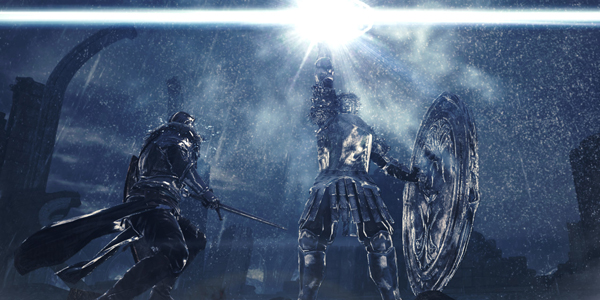
This is actually slightly related to number five in this list but is beginning to become a big issue for gamers and the press as publishers try to keep information about the big name games under wraps for as long as possible ahead of review. It's a phenomenon which is becoming more and more prevalent as websites, YouTubers and even TV shows are winding up on the strong end of a non-disclosure agreement until a certain date has passed. The reason for this has been speculated time and time again but it largely comes down to pre-orders. Big, blockbuster triple-A games need to make a return on their hefty investment and the first two week's sales are crucial to determining if a game will make a return or not. It used to be that reviews would be printed in games magazines up to two months in advance of a game hitting the shelves and if the review was bad, pre-orders were guaranteed to be affected. Even if the game was mildly disappointing or it hadn't lived up to the hype, people would have cancelled orders and the sale would be lost. Fast forward to the internet age and in attempt to stem this loss of sales, publishers are shackling press with NDAs meaning that reviews cannot be published until the day of release. It happened for Dark Souls 2, it happened for GTAV and it's currently happening to Watch_Dogs and a lot of people are becoming suspicious about it. With reviews not coming out until the day of release, if there is an issue with the game or it receives lower scores than it's marketing campaign would suggest it should get, most people's pre-orders would be paid for and in the post and there's nothing gamers could do about it. It's cynical market manipulation at it's worst and it's becoming more and more prevalent across the gaming industry.

2. Digital Pre-Order Bonuses

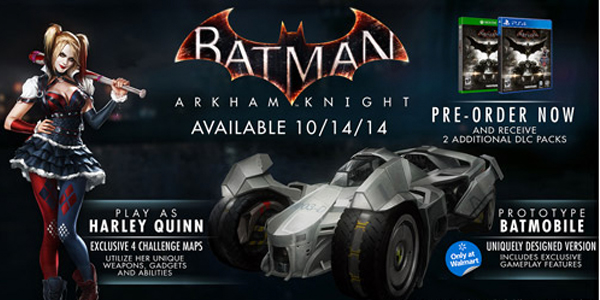
Speak to any major gaming nut and he/she'll tell you that there's nothing better for a gamer than a good collector's edition. The idea of paying that little bit more to get some cool memorabilia, maybe a statue of one of the game characters, an art book or even a world map to hang on your wall - in a lot of cases it's an attractive proposition and can be really worth the money. Some collector's editions of well loved games will only go up in value as time goes on too - especially if their contents are well looked after and in pristine condition. However, these big box editions are becoming rarer in favour of digital pre-order bonuses which allow retailers to offer different packages and publishers to offer incentives to buy a version of the game with very little extra expenditure. These bonuses can take a myriad of forms, from extra maps to early access to unlockable weapons and different character skins, but all of them suffer from one critical flaw; there is nothing tangible to them. There is nothing collectable about having a map pack, and early access to advanced weapons doesn't necessarily make a player a stone cold badass, all it does is give you a perceived sense of exclusivity. When there are multiple different versions of a game available it can make the pill even more bitter to swallow. Take GTA V; when it was released there were three versions, the standard game, a special edition and a collector's edition. The collector's edition contained all sorts of goodies including a hat, branded bag and all kinds of other gear which is perfectly fine for such a thing. The special edition however, contained a map (which came with the special edition), a steelbook case and then in-game bonuses such as the ability to fly a blimp, character-customisation options and character perks - nothing of any tangible trade-able value to justify the increased cost versus the standard edition of the game. Years down the line the collector's edition of Dark Souls 2 (the one with the statue) will be valuable to collectors, the special "Black Armour" edition that was housed in a steelbook will be worth no more than the standard edition of the game, despite it costing more at the point of purchase.

1. Micro-Transactions In Full Price Games

Micro-transactions can be good when they are used correctly, for instance, in free-to-play games. You download the game for free and the developer makes their money back by offering you access to items or upgrades in return for a few pence. Over the last few years the gaming audience has embraced micro-transactions when they are done right, and people don't mind dropping a grand total of a few pounds/dollars over the amount of time they'll play the game. What gamers do mind is when they have paid £45/$60 for a big-budget game and it then that title keeps demanding money from them. Look at Forza 5 on the Xbox One, it was one of the biggest name launch games for the new console and pushes the boundaries in terms of hyper-realistic graphics and racing simulation, but it is swimming with screens that are asking you to pump further funds into the game. For instance, you earn currency in the game which you use to unlock cars just like every other racing game in the last ten years, but below the value of each car there is a 'Token value' which is how much it would cost you in purchasable tokens. It's as if the game is reminding you that you don't have to grind for that Audi RS8 you're lusting over, you can just pay something out of your real bank account and it'll be yours in seconds. Or look at the first major console game to embrace micro-transactions, the much-derided Dead Space 3. EA forced upon developer Visceral the ability to pay for parts to upgrade your weapons. Sure, in the game you could send a little scout bot off to scuttle away and look for upgrade components for you, but it would frequently come up short on certain supplies the game would require to unlock the most powerful upgrades. So unless you wanted to restrict your playthrough to a couple of weapons, there was an inevitability that at some point you might have to pay for something with real money. It didn't stop you finishing the game if you didn't buy any upgrades, but it certainly made some of the latter stages much harder. No one would have batted an eyelid if either of these games were released as free to play and were supported by micro-transactions, or if they were released for reduced prices owing to that expected element, but by attempting to squeeze further money out of peoples' affiliation to a particular franchise, it comes across as far too greedy and off-putting for both fans and newcomers to the games, and the medium itself. What do you guys think? Does something just feel a bit off with gaming at the minute, or are their good sides to some of these points? Let us know in the comments!

In this post: 
Watch Dogs
 
Posted On: 
Contributor
Contributor

I am a man of many interests. I am a passionate gamer, running my own YouTube channel (The Gadget Addicts) showing off the best of modern gaming in the form of Let's Play videos. I am an ardent musician, having been a guitarist for the past 13 years. I am also a massive geek, I adore science fiction and fantasy films and TV shows and am trying to work up the courage to start writing a novel. If I can ever think of a good story to tell... I live with my wife in the North East of England and own a belligerent little black cat.