Assassin’s Creed: Rogue - 10 Features To Make It Better Than Unity
The long-rumoured AC: Comet has officially become Rogue - but how can Ubisoft keep it relevant alongside the next gen offering?

After months and months of speculation, Ubisoft finally confirmed that what thousands of us thought was going to be titled Assassin's Creed: Comet, is actually Rogue. Featuring Irishman Patrick Shay Cormac, a very intense, moody trailer was released showing him taking out an Assassin, before stating that he "follows own creed."
It's about time Ubisoft took their established mythos and did something different with it, and turning the rules the assassins live by on their heads, opens up some fantastic gameplay possibilities. It seems from what's been shown so far, Cormac is the rogue in question as he seems to be siding with the Templars in this fight - although you can bet he's going to be taking everyone on come the game's end.
With annualised sequels running the franchise into the ground, we were all but done until Black Flag arrived with its pirate-themed boat n' blades gameplay. "Fine, just one more, then we're done" we collectively groaned, taking part in more of the same animations and missions for the sixth time in the main series' canon (eighth if you count spin-offs Liberation and Freedom Cry). Every time we assure ourselves that after this year, unless Ubisoft could bring out something spectacular, it's time to put the series to bed.
In a move that's dividing gamers yet again, the French development team has decided that instead of getting away from the complaints of annual games, they'd double-down; giving us two new titles this year. Initially it was a one-way trip back to Groansville, but what if the decision to split the series up more was so they can innovate with one, and stick to their guns with the other?
As Rogue is confirmed as a single player-only experience, what do you want to see from a title that's essentially an Assassin's Creed spin-off?
10. Assassin Vs. Assassin Battles
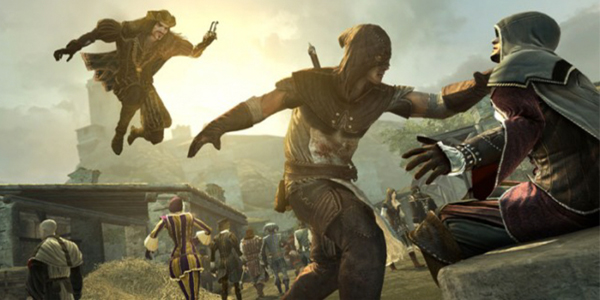
Remember the final level of Metal Gear Solid 4, when you were trying in vein to take on a whole bunch of acrobatic death-dealing ninjas as a withered Old Snake? The core problem with that game's level was that there was no way to properly go toe-to-toe with your enemies. If you were spotted, you were surrounded, and short of blasting your way through it was mostly game over.
That idea of taking on a whole bunch of acrobatic enemies is something that AC is yet to dabble in though, as aside from some guards ardently pursuing you across the rooftops there's not been a really badass one-on-one fight with another assassin - let alone a bunch of them.
As we'll detail later on, the AC games are in desperate need of a combat overhaul, but for the most part the high-speed showdowns in the games can easily go from ground to rooftop at the drop of a hat, mostly being handled fairly well. That being said, the majority of guards don't put up much of a challenge when you're one button away from instant-killing them, so if we're actually playing as the bad guy this time round why not break into a compound to take on a whole host of hidden blade-wielding assassins? It could be fantastic.
9. Actual Planned Assassinations
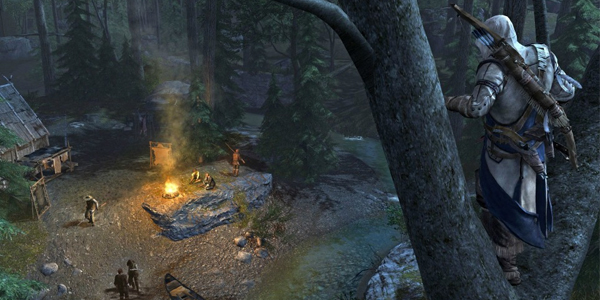
Following on from the previous point of tackling a heavily fortified stronghold, one of the things people remember so fondly about the original game is that idea of actually planning out your assassinations, Hitman-style.
That notion of studying guard patterns, obtaining information on shift-changes and a number of enemies is something the series has left by the wayside, as by part three even the development videos were stating our latest protagonist could pretty much take anyone on like a walking hooded death machine.
It's something that carried through to Black Flag too, and even the gameplay footage of Unity confirms this; if you want to sprint through levels, dispatching guards at a pace to get to the next set-piece, you can. However where's the challenge? When was the last time we actually approached a large structure, packed to the brim with enemies, and had to think our way in?
As new man Patrick seems to be a man who lives by his own rules and has had to adapt to survive fleeing the assassin's order, so why not create a stealth system that actually works? Let us scope out exactly how to take down any number of high-value targets, and let's keep the blades hidden until the very last minute.
8. A Memorable Hero

Although the early stages of Assassin's Creed III gave us a fantastic motive for Connor to exact his revenge, as the game progressed his drive and ambition seemed to fade away - eventually going up in smoke in the awful final levels.
Not since Ezio Auditore da Firenze (you have to say his full name every time) has their been a hero we actually enjoyed embodying for the entirety of the game, anxiously wanting to see how they're going to fare in certain situations. One of the coolest things about last year's Black Flag was that you were playing as a good-for-nothing pirate whose only tie to the Order was a stolen Assassin's uniform. However it quickly became apparent that Edward Kenway controlled in the exact same way as all the previous heroes who had been through years of training, so this entire aspect of his character was a bit pointless.
If Ubi can give us someone who's broken away from the Creed and had to establish his own way of using their tools and techniques to get by, we should see things like how he's adapted to the hidden blade to become more effective, or how he's combined any number of traversal techniques to get around faster, not falling back on anything we've done a million times before.
7. An Impactful, Focussed Story
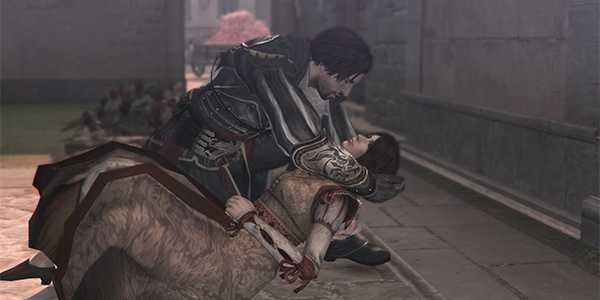
Alongside confirming that the game would only be seeing the light of day on the last generation of consoles, it's also going to be single player only.
To be honest though did you ever really enjoy the multiplayer to the point of putting hours and hours into it? A great idea in concept, for the most part the idea of hiding in crowds to stab your foes every 20 minutes isn't something that's necessary to the original AC experience.
We've already covered how it'd be great to see some fleshed out assassination missions with multiple tiers to getting the final kill, but it's not enough to just paint a target on a far-off character - we need drive, motive and a sense of weight to what's happening. In addition to exploring exactly why Shay Cormac has turned his back on an Order that has for the most part been enamoured by every other hero in the series apart from Edward Kenway, Rogue should take the time to give us some key villains to eventually take down.
Many of us remember the original game's Al Mualim as he acted as both teacher and final boss while fewer remember part two's Rodrigo Borgia (mostly because he was eclipsed by that game's crazy otherworldly ending), but nobody remembers the enemies from part three or Black Flag. The series has got to the point where we just go through the motions for the sake of another jumping assassination or hidden blade neck-stab, but with Unity pushing forward by creating epic scale battles, Rogue can reign things in and give us a real reason to take the fight back to the Assassins or Templars.
6. Consequences To Your Actions In A Dynamic World
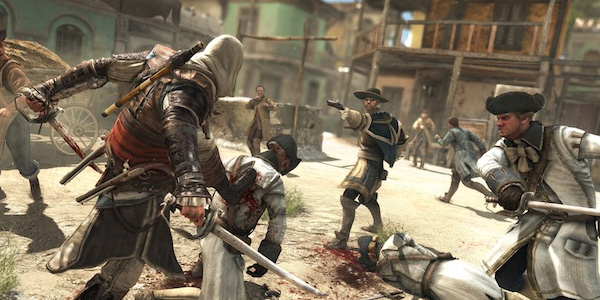
One of the benefits of devoting an entire team to a single player experience is that idea of it being fleshed out in every single way - hopefully with no graphical glitches or bugs this time, but with it being Ubisoft you'd better not hold your breath.
As Middle-earth: Shadow of Mordor has taken the basic AC template and ran with it, there are also a few things Rogue could take in return - the main one being a system of consequence in-game. One of the things Ubi are keen to push in the preamble for each title is the idea that 'your actions influence the world around you'. It was something they tried to push again with Watch Dogs, but aside from tinkering with a few billboards to show Breaking Bad quotes, there wasn't a whole lot of 'influencing' going on.
As Shadow has a constantly-evolving world that dynamically changes with each person of power killed, so to should Rogue implement something similar. To be fair, we're taking on the entire Assassin Order, as well as probably the Templars too at some point, and getting their shouldn't just be as easy as stabbing your way through waves and waves of guards.
Say you plan to take out a character who has influence in a particular area, after doing so the men who were following him are maybe not present in another, making your life far easier. If the story itself is very dialogue-heavy, perhaps taking out one of the key players in what would be a future event alters everything completely.
The Creed games have essentially been carbon-copies of each other up to this point, and with even Unity looking like more of the same, surely one of the new titles has to do something different?
5. A Unique Location
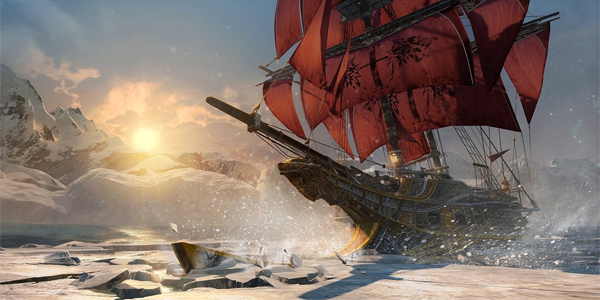
There's not a whole lot to go off being that all we've got is a CG trailer, but the location that finally reveals itself after all the voiceover and darkness, is that of the North Atlantic (or so we're told).
Many will remember that initial thrill of traversing the wilderness of AC III as Connor, breathing in the new animations and movement speeds that came with darting up and down trees, rather than buildings. Sadly that game completely wasted this humungous area, setting the vast majority of meaningful missions in the cities and villages of the world instead.
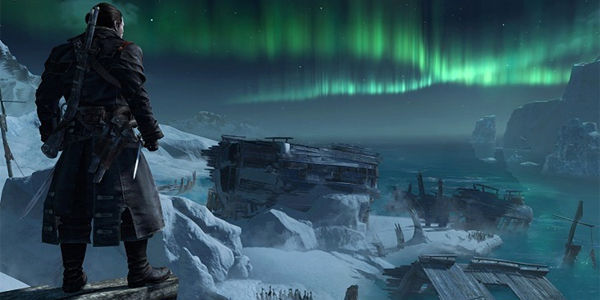
As has been confirmed, Rogue will take place just off the Irish coast in the North Atlantic, as well as taking the action to New York and the Appalachian River Valley (a bunch of mountains in North America). Whilst it'll be nice to just take in these incredible locales, something we'd much rather see implemented is another extension of the animation from AC III and Black Flag. If we're able to take off up the side of cliff faces and icebergs to hide from patrols, before going all Sam Fisher on them and pulling them under the ice, it'd inject some much-needed variety to the proceedings.
4. A Completely Different Feel
3. Expand The Mythos In A Meaningful Way
2. New Animation System
1. A Worthwhile Present Day Element
