Assassin's Creed: Unity - 10 Major Recurring Issues It Must Fix

After seven years of annual releases, it's about time Ubisoft fixed some long-standing issues.
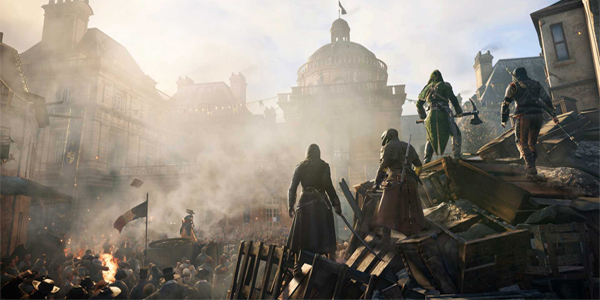
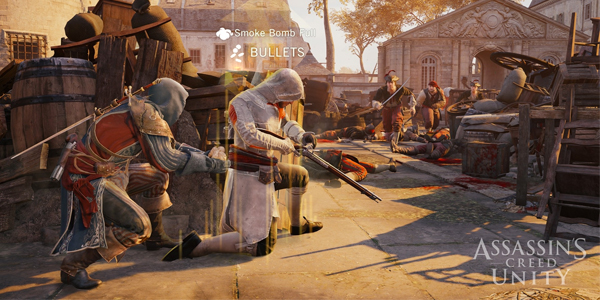
We're just over two weeks from the release of this year's Assassin's Creed, and not content with releasing one a year in 2014 current-gen owners are getting the French Revolution-styled Unity, where last-gen's exclusive is titled Rogue. Little is know about the overarching story in Unity, whereas with Rogue we've seen the very idea of a renegade Assassin turning his back on The Order for the sake of butchering other Assassins - a pretty neat and unique concept. Still Rogue remains a palette-swap for the most part, looking near-identical to last year's AC: Black Flag in terms of animation, feel and general gameplay. Instead all eyes are on Unity - with it's near-five year-long development time and new gameplay engine built from the ground up - to finally iterate on a gameplay formula that has remained largely unchanged in almost eight years. There's a been a great focus put on the new cooperative play element that'll let you and three friends team up to infiltrate any given scenario - sort of like Brotherhood's Assassin-summoning mechanic, but with real people. Now that's all well and good, but knowing how people play online you're about as likely to get through a mission without someone running off by themselves, standing still from a disconnect or going on a stab-happy spree as Microsoft are to make the Kinect a system-seller. The coop stuff is a nice gimmick for people who insist on playing any multiplayer component shoehorned into their games, but longtime fans of the series are looking to Unity to deliver a worthwhile single-player experience in amongst that hefty production budget.

10. No More Tailing Missions

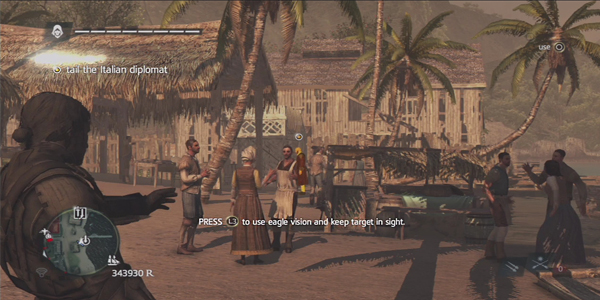
How the auto-fail tailing missions ever made it through programming to then be okayed by multiple play-testers is beyond us. In many older games the majority of us cut out teeth on instant-fail sequences that were only in place due to limitations of the technology of the time, but it's well-known now just how terrible these missions are. When we're having to awkwardly amble after a slowly-moving informant, only to do it again if they spot us it's just a simple reminder of how outdated this sort of thing has become. Although it took a little digging with a Google-engraved spade, it seems AC: Unity is going to have an 'Adaptive Mission Mechanic' - although it's only been described by one outlet rather than something Ubi are showcasing with every demo. For our money if you can confirm that we'll never have to restart entire sections due to 'losing sight of the target' or darting off a ledge due to the controls, we'll fork over some cash for that streamlined experience right now. The 'AMM' as it's so-named reportedly makes for mission goals that change depending on what you do, so if you do get spotted by said informant, you're then free to just chase them down. If you fail that too, then it's down to you to locate the means of finding them again - we assume most likely through other informants, but it'll hopefully be more in-depth than that. Here's hoping this gamer-rage inducing gameplay mechanic has been ditched altogether.

9. Accurate Collision Detection

Speaking of reasons why you'll fail any number of escort and tail missions, almost every single player of any AC game can attest to watching their protagonist deftly himself off any number off rooftops, piers or ledges in any direction other than the one you want. It's all down to Ubisoft's mapping of making any sort of forward motion dependant on just holding both the forward direction and a sprint button - which might be good on paper in a Peter Molyneaux over-simplified sort of way, but in practice it's led to characters having suicidal tendencies when they should really be trying to stop any number of murderers or important figures. With any luck the new engine Ubisoft have built for Unity has a greater distinction of environmental objects which when twinned with a refined detection of exactly where you're pointing the stick, could ensure the chase missions they're adamant about including are close to tolerable. Although speaking of chase missions...

8. Make The Chase Missions Enjoyable

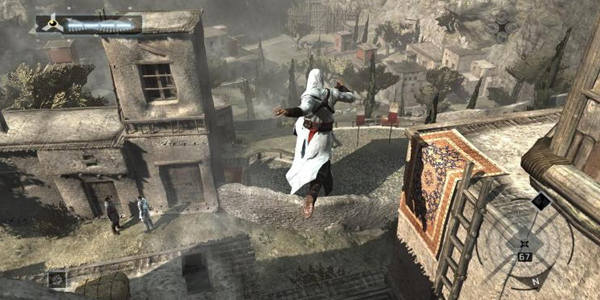
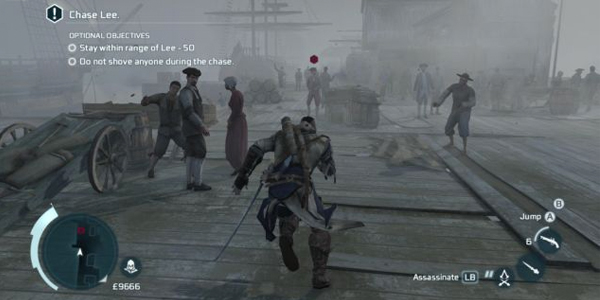
This is another age-old mission-type that needs to either be completely refined or taken out altogether. It was the sort of thing that looked pretty slick back when the first game was being showcased in teaser trailers and the like. Darting around old world architecture was unique enough, and the idea of keeping up with your fleeing prey from above before diving in for a hearty neck-stab kill was a great system-selling gameplay mechanic. The problem in subsequent releases was Ubi's insistence on throwing all manner of objects in your way for the sake of 'building' on the experience. Having your target dart round any number of corners, the camera focus on said target at the expense of what's right in front of you, tell you you're falling behind, or just not knowing where you're supposed to be going all combined into making them a living hell. Add in the fact that all we're essentially doing is holding the same sprint buttons as before and there's no enjoyment to be had from 'tracking someone down' any more than when they introduced the glowing Almanec pages in AC III that would float away whenever you were near. This is the perfect example of something that's emblematic of the series as a whole - taking gameplay elements and structures that were never meant to be strung out for this long, and pulling at them until they fray. It's time to replace the core thread, or do away with it altogether.

7. Actual Reliance On Stealth

During AC III's development there was a particular dev-diary that - over footage of Connor taking on multiple guards with his tomahawk before grabbing another to deflect oncoming bullets - mentioned that "the guards are really no match for ." This prompted a great many comments afterwards as to where in the name of a hotdog-selling Santa Claus the series was heading, as it surely wasn't in the direction of the first game's idea of building information towards targets before taking them out. Naturally part three then went on to be the series' stinkiest turkey (okay, enough with the Xmas-themed jibes - probably) with only a handful of fans sticking by it as having anything worth celebrating. That led to Black Flag reintroducing stealth in a slightly bigger fashion, adding wall-kills and a guard-tracking HUD that actually meant you could finally work your way through an encampment without getting skewered in the process. However, when your protagonist is a dual-sword and gun-wielding pirate with zero Assassin training or discipline, you were still free to take enemies on head-first, cutting a swathe through troops both on-land and in your souped-up cannon-sweating pirate ship. Not exactly establishing anything close to a 'style of play' there, Ubisoft.

6. Lose The Gimmicks

Revelations had tower-defence mini-games, part three had the completely pointless Homestead missions, and Black Flag had naval combat - although that was mostly there because the team had obviously designed the ship-to-ship destruction stuff for part three's small amount of side-missions, and were damned if they weren't going to get their money's worth. It's not that the naval combat was actually categorically bad or anything - quite the opposite, Black Flag was very enjoyable indeed - but when you were stealing ships, plundering gold and harpooning whales out on the big blue, did any part of it feel like an Assassin's Creed game? Occasionally when a powerful developer has a malleable franchise in their hands, they'll twist and contort it to fit any old gameplay design idea. Although what's been piped into this franchise over the years is fun and serviceable enough - minus the tower-defence tosh - it detracts from the overall 'feel' of a tense, historically-accurate and most importantly stealth-focussed adventure. Ubisoft need to take bring over more mechanics from last year's Splinter Cell: Blacklist, as regardless of a slightly spotty story, that had some of the best stealth-based gameplay in years.

5. Multiple Approaches To Levels - A Return To Assassinations
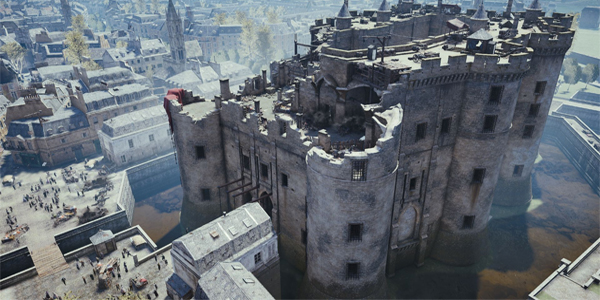
Some of the most enjoyable parts of any mission within the newer AC games are when you're just given a location, to which within there'll be a target (or numerous) that needs to be taken care of - and the game leaves it up to you as to how to make your approach. Many will scout out our target's walking route and stealthily creep into a hay bale, waiting for just the right moment to drag them in alongside - whilst others will perch atop a gigantic structure before falling multiple stories in one big blur of wind-ruffled robes and hidden blades for the kill. Either way it was up to you, and was one of only a handful of moments in the newer more action-focussed titles where you really felt like an assassin. Speaking of which, when was the last time you actually assassinated a guy in AC, versus just butchering them in front of their friends or taking them down amongst another gargantuan crowd-fight? Sure the first title was flawed insomuch as it was repetitive, but the core feeling of building up your resources and knowledge of an area before launching an actual assassination has rarely been repeated. With Unity giving us the projectile-style Phantom Blade that means you can make it look as though someone's been stabbed up-close from afar (if that makes sense), it opens up some Hitman: Blood Money-style opportunities for misdirection and kills that can be masked as accidents instead.

4. Increased Gadget Dependency For Takedowns
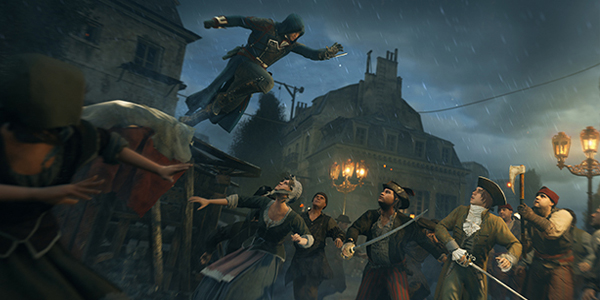
Does anybody actually use all the gadgets they give us in each game? When Revelations' big innovation was a bomb-crafting system they were really starting to show their lack of forward-movement, but when you add in things like the Rope Darts, Snares and Trip Mines from AC III onwards, it starts to reflect on how stale the core mission design is that there's no greater impetus to actually use them. It was with subsequent entries in the series after the first where we saw Ubisoft start to give their guards classes such as 'Captain' or 'Elite' which would require different combat tactics to take down. However rather than make you really think about how to dent some armour with a specific type of bomb or attack, it mainly came down to hitting a different button to avoid an attack before retaliating. Main story antagonists or landmark villains also need a shake-up, as Monolith's Shadow of Mordor has proved when you give event the smallest enemies specific kill-specifications, we'll seek them out so we're better prepared for the fight at hand. In that game, there's nothing better than scouting out your enemies biggest weaknesses and using them against him, and so to in AC there should be enemies who you can't even go for the kill on unless you're using a specific item, have done a particular mission in the lead-up or set up a certain kill-condition - or all three.

3. A Story Journal

If there's one thing sorely missing from all the big-budget bluster and bells n' whistles, it's a really solid, enjoyable and pace-filled story to go alongside the relatively solid gameplay. Part of the reason we think Ubisoft are yet to write a really gripping narrative is they want to leave the general pace of progression slow enough so you'll check out the rest of the world as well - as going off on any number of quests only serves to distract you from whatever the main thread is. Let's have a Skyrim-style quest log then, preferably with re-watchable cutscenes and a dialogue tracker - it's easily something they should implement into the Animus so we can recover our footing when it comes to where we're heading next. At the minute aside from Ezio's initial endgame revelations really giving us the chills there's not been anything to write home about, and for all the effort Ubisoft put into their cutscenes, historically-accurate architecture and era-appropriate voice acting - it's all lost if we can barely keep track.

2. Weighty Climbing Mechanics

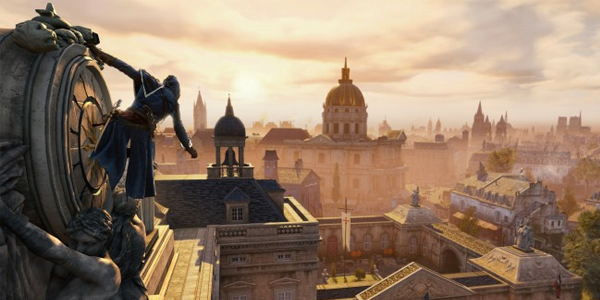
Something that goes hand-in-hand with the naff traversal system deployed by just holding a couple of buttons is waiting for the animations to play out when you want nothing more than to high-tail it out of there. We've all been caught out and in need of a quick getaway only for our assassin to clamber slowly up the side of a building, elegantly placing his feet on the sides of window frames and the like, rather than scrabbling up as fast as possible. If Ubisoft put the actual speed of the animations in direct link to some button presses, with a much more weighty and momentum-based feel behind everything, it would mean that you could dart up the sides of buildings at great speed - providing you can nail the timing on each push. It would give a great learning curve to the overall experience, and separate proficient players from the beginners, hopefully removing the annoyance of being stuck whereby of being pelted with stones and objects meant a plunge back down to ground. With a new climbing system in place for Unity, we can only hope the actual 'feel' of getting up and away from danger is far more tactile than before.

1. Lose The Craziness Of The Present Day Stuff
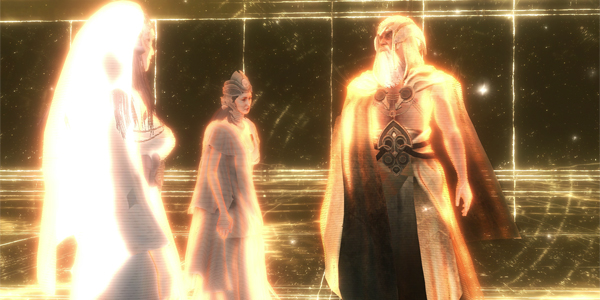
There's a very good reason we've seen sweet eff-all of both Unity and Rogue's present-day setting - Ubisoft royally wrote themselves into a corner with the ludicrousness of earth-destroying meteors that needed to be stopped, along with possessed main characters killing others for a laugh. The self-referential "Hey you're working at Ubisoft!"-angle of Black Flag was - depending on your opinion - a catch-all get-out-of-jail-free genius move that freed the team back up to do whatever they wanted, or a last-ditch attempt to have something modern-day related in that game's storyline. Either way, with the Desmond stuff totally wrapped up and the series' focus revoking back to its historical setting, we're all but done with actually wanting to spend time anywhere else. The present day plots was a great hook back when the idea of both the Animus and the intentions of the people around you were a mystery, but through crowbarring in a 'save the world by discovering humanity's origins'-arc, it's completely crippled any baseline seriousness needed to make the historical parts actually work. At this point it's far better to just call it quits and either show a cutscene of a modern-day assassin (or templar) using the Animus to find a specific item's past burial site and leave it at that - anything else at this point is just too much. What do you want to see fixed in the new game? Let us know in the comments!

Gaming Editor
Gaming Editor

WhatCulture's Head of Gaming.