Fallout 4: 10 Things It Must Learn From Mass Effect

It's not just Elder Scrolls that can teach Fallout 4 a thing or ten...
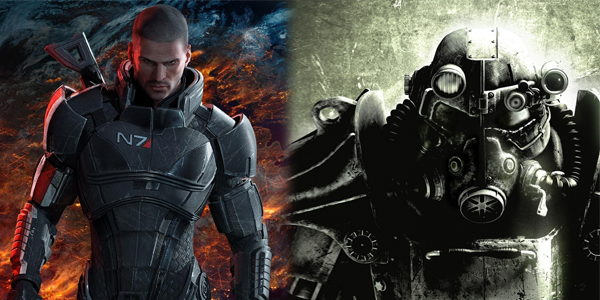
Fallout: New Vegas is now four years old, and speculation is always rife that an announcement on Fallout 4 may be just around the corner, so it's definitely worth taking a look at some of the existing games that could have a really positive influence on Bethesda's next title. You may have already seen '10 lessons Fallout 4 must learn from Skyrim' earlier this year, but it's time to start looking outside of Bethesda's own wheelhouse at some of the other games they'll be wanting to take inspiration from. While the final gambits of its closing instalment may have soured many fans on Bioware's 'Mass Effect' series, there's surely no denying that it has still been one of the biggest hitters in the Action/RPG stakes in the last decade. From it's more traditional RPG aspect in the first title, through to the fast-paced cover shooting action of the second two instalments, there are a ton of different elements that Bethesda would be wise to draw inspiration from for their next Fallout title. So, without further delay, it's time to consider the ways in which the space-hopping adventures of Commander Shepard and his companions could shape the struggle for survival of Bethesda's next wasteland wanderer. Be warned; spoilers for the past, present and future of both series' will follow...

10. A Friend Is For Life, Not Just For Questing
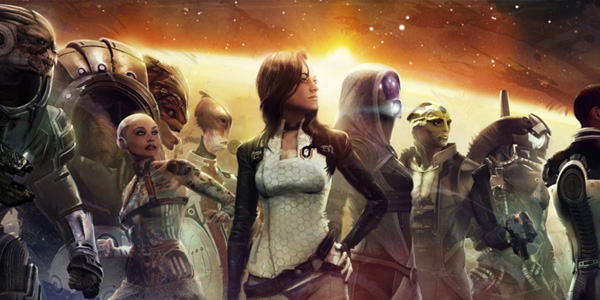
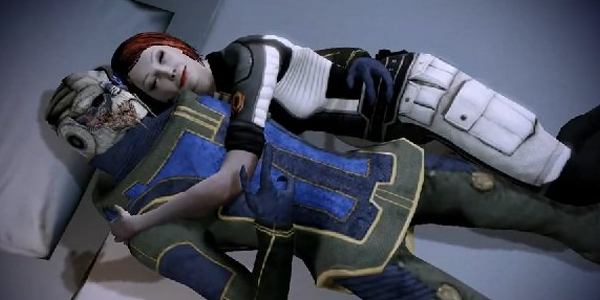
One of the more enjoyable elements of Commander Shepard's adventures was the way players were able to sculpt their team of faithful companions to suit their playstyle and the direction of the story. While Fallout has allowed players to travel with temporary companions at various points in the games, the obvious importance of relationship-building with fellow survivors has never been fully capitalised on. In Mass Effect, however, maintaining balanced relationships with a group of close companions is actually vital to successfully navigating the events of the game. Your actions as Shepard have a direct impact on which of your crew members will survive the final showdown, and the game does a good enough job to make it feel like an actual failure if you let a friend die. Players can have certain companions killed in action but still continue with the story with no way to restore them; that's a lot of pressure on a gamer! But it's a major positive of the Mass Effect games; your actions feel important and the lives of your friends depend on your making the right calls and the right times. Put this into the desperate dystopia of a Fallout game and players will be immersed in a truly dramatic experience. In the series so far it's been easy to act selfishly and focus on your own character's survival at all costs, but adding a cast of longstanding companions to the mix may just fill players with enough guilt to make them think twice about their actions...

9. Love Is In The Air

On the subject of companions, Fallout out could also take inspiration from the opportunities that Mass Effect has given its players to strike up romances. In Mass Effect, players have a number of various romantic conquests they can pursue amongst the group of crew members they amass during the game. Choosing one over the other of these can dramatically alter the events of the game and, of course, rewarded players with some saucy pixel-on-pixel cut scenes. The idea of romance in a post-nuclear wasteland may not be top of most survivors' list of priorities, but it is actually an important point to consider. You have to assume that humanity wants to recover from the nuclear disaster and return itself to a former age of glory, and there comes a point where repopulating the earth with good workers - or maybe just cannon fodder - is vital. In this regard, running a few romantic threads through the main story of Fallout 4 could reward players with some brighter prospects for the future once the events of the main story have played out. The idea that we are leaving our characters with some fleeting hope in a landscape of despair would be quite the resolution to our 40 hour toil. Plus giving gamers the chance to argue over the respective merits of a few more love interests can hardly be a bad thing...

8. A Place To Call Your Own

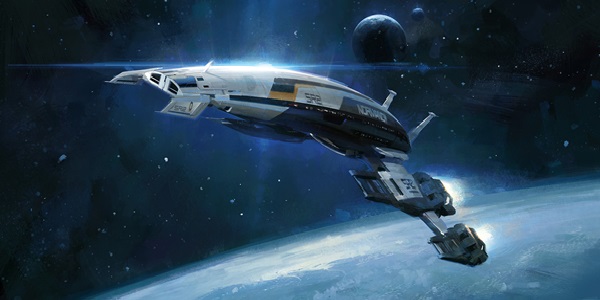
Commander Shepard's ship 'The Normandy', aside from looking supremely badass, served as the perfect hub for monitoring one's progress with their quests, inventories and companions. In Fallout, having a place to be proud of - a place to call home - would provide players with much more of a welcome respite from the toils of the wasteland. It's true players can earn themselves a few accommodations through events in the game, but they are always simple, lonely places. Mass Effect's Normandy is a large, multi-roomed ship with quarters for all of your companions to take comfort in. Offering players some sort of defendable barracks, or vault, to house their companions and offer them safe-haven would be the perfect set-up for helping players build up a crew of allies. Players would be given a somewhat autonomous authority to approve or deny safety to any number of strays and could improve their standing and reputation across the wasteland. The Normandy also serves as the player's method of travel between worlds but it's unlikely this would be particularly feasible in the type of map prior Fallout games have based themselves in - although there is a solution for that aspect as well...

7. Variety Is The Spice Of Life

While the haunting, dusty wastelands of Bethesda's existing Fallout titles have presented the devastation of a post-nuclear world perfectly, it would be good to start to see some variety in the type of locations they let us explore. Where Fallout: New Vegas focused on a sizeable but samey region of the Mojave desert, it would perhaps be nice to see the next map made up of a cluster of smaller locations rather than just one big one. While the Normandy was Shepard's safe-haven from the horrors of war in Mass Effect, it was also his means with which to travel the galaxy and take the fight to the enemy. If players were granted a hub for their operations in one area of the map, with an available caravan for transport to various regions, then a segregated map with varying regions would work perfectly. Now, it is obvious that there's never going to be that much variety in a dusty, post-nuclear wasteland, but the foundations can vary. It would be a refreshing change to travel between a region of forest with it's thickest oaks blasted clean of their leaves and a dying, cratered coast. Adding varied flora and fauna, with different strategy options for traversing these various regions would keep the game as fresh as can be expected from a dying, grey world.

6. The Blank Canvas Protagonist

Though Fallout and Elder Scrolls titles always allow players to sculpt their protagonist within the games, this is still something that would stand to improve with just a little extra refinement. In the most recent Fallout titles players were able to alter their appearance and brief history, but with little more than the karma system to affect this after the game had begun. Mass Effect follows a similar introduction to this, but manages to build on it all a lot better as the game progresses. Various actions and choices that players will have made with their versions of Commander Shepard throughout the game all gradually culminated in influencing what endings they got once the story finished. These actions also determined what relationships and alliances stood strong and which, if any, were cast by the wayside. Fallout could include fluidity like this a lot better in its next title; in both of these series' the protagonist is clearly the most influential person and so it makes sense that the world around them would react more strongly to their actions. Fallout 3 admittedly saw some reaction to players' actions, such as their decision for how to deal with Megaton, but the fallout (pun not intended) was ultimately fleeting and isolated to just certain regions in the game. Fallout 4 should see players have more impact on their characters throughout the game, which would in turn make the world feel more responsive to their actions.

5. Wasteland Nomads

While talking characters, it would be an interesting opportunity to allow for players to import them through their games like how players have throughout the Mass Effect trilogy. This is perhaps a more long-term improvement for the series, since it may currently be difficult to port characters across the generation gap, but it is certainly still worth sewing the seeds as the series progresses. Offering players the chance to utilise the same player throughout the trilogy of games allowed for a feeling of clarity than ran through the entire story. It also left the fallout from decisions made tie together more fluidly, leaving no feeling of disparity between the choices players have previously made and the events that actually unfold in following titles. Starting a fresh character at each turn in Mass Effect made the games feel a little jarring, and the conversations that are recalled by characters were not always those players will have experienced in their playthroughs. This is not an improvement that will have much major effect on Fallout 4, but it is definitely one that is worth putting into place for the future of the title on the current generation of consoles. Allowing players to play through numerous stories within the dystopian world of the Fallout series would bring a sense of infinite and never-ending struggle going forward.

4. Let Players Shape Their Own Wasteland

In Mass Effect 3, players were offered a simple three-way choice of game modes that would alter the way the story played out for them. The three options shifted the heaviest focus of the game between being story-driven with balanced combat and RPG elements, or being far heavier in favour of action or customisation by choosing one of the other two. At the initial choice these options seem as though they will offer negligible differences, but in truth they really did alter the experience that players were afforded. Opting to stick with the RPG heritage of the first title, or lean more heavily on the latter action elements allowed players to stick within their comfort zone, or even step out of it in equal measure. Fallout is a game that splits its emphasis similarly between customisable role-playing and heavy combat, and could also benefit from allowing players to tailor their experience to lean in one direction or the other. The story choice could obviously offer the chance to leave Fallout's experience as the developers intended, but offering players the chance to influence their own adventure would add longevity to the title. If only for a second playthrough, players may experience a more bloodthirsty wasteland or forge their adventure through careful collection of resources and experience.

3. Minds Over Muscle

With the exception of choosing between melee and ranged weaponry, there was little in the way of variety to the way players could defend themselves in the wasteland. In Mass Effect, however, players chose their class to determine what type of combat they would be most adept at at the beginning of the game and would became more and more handy as the story progressed. The current experience and perks system in Fallout allowed players the chance to increase their potency with a few different weapon types, but this still left a large reliance on the basics. While the enhanced combat in Mass Effect was based on military enhancements, it would be possible to implement something loosely similar within the confines of a Fallout game. Radiated powers or perhaps even nuclear stimulants could bestow unlikely but useful upgrades upon characters and give them just that little bit extra clout in their fight for survival. Mass Effect's 'Adept' class focused on augmentations and non weapon-based powers to implement something like the traditional wizard class that would appear in RPGs. Playing on nuclear mutations could bring this into the Fallout series, and could even build upon it a little by making the effectiveness and even safety of the augmentations a little unpredictable by nature. Unleashing a power once may clear out a room of bad guys for you, but trying the same trick moments later could prove impotent. Luck plays a large role in the wasteland, after all.

2. A Shared Struggle - Try Some Simple Multiplayer

Woah now. Slow down a little, guys; put the pitchforks down. This isn't to go full scale 'Elder Scrolls Online'-style multiplayer here, but something far more simple and contained. It's become almost commonplace now that virtually every franchise has included some sort of multiplayer modes into their once solely single player games. Mass Effect brought in simple deathmatch style multiplayer games that allowed players to hone their own skills, as well as gather single player resources for their ships and armouries within the single player game. Following a similar set-up, multiplayer in Fallout could see players form alliances and carry out raids on camps of fellow survivors in an attempt to gather extra precious resources and to strengthen their own standing and reputation in a struggle to control the wasteland. Survival would remain the ultimate goal, but the key here would be sabotage over self-preservation. Clearly not everyone is going to get on board with a seemingly superfluous multiplayer addition, but if it were made to be of use to players' single player campaigns then it could just be worthwhile. After all, doesn't the thought of tearing through another survivor's camp and pillaging all of their bottle caps and water just embody the spirit of survival? No? Can't we all just get along? That's loser talk!

1. Don't Botch The Ending

Of course; what lesson could be more important for the developers of Fallout to learn from Mass Effect than the one we all pray its own developers have will have learned for their own fourth instalment? Mass Effect 3 was a brilliant game, right up until the final few moments and scenes. From that point on, almost the entire back catalogue of epic moments and memorable companions was forgotten in a storm of fan outrage and internet backlash. Developers Bioware seemed torn; they wanted their ending to be realistic and grim but also wanted to find a way to make everything work out for their players and their Shepards. The result was a confused and just bizarre mess of outlandish theories and disappointing cop-outs. Not yet enough of a disaster, the developers then decided it would be a good idea to release additional endings as DLC and basically admit that they dropped the ball the first time around. In this world it's one thing to make a mistake in the first place, but to so sheepishly admit defeat was an even worse folly. Mass Effect's shining example of how to botch the ending of a perfectly incredible action-RPG series is one that should NEVER BE FOLLOWED by anyone ever. It will forever stand as the lesson to be learnt by all game developers, that even the strongest and most-beloved franchises can see their reputation left scarred by a shoddy ending. It may seem unreasonable to suggest it has such a huge impact, but it's already happened, and every fan with a franchise held dear prays it won't happen to their own ever again. #PrayforFallout. What does Mass Effect do better than Fallout, that you'd love to see transfer across? Let us know in the comments!

Contributor
Contributor

Gareth is 28 years old and lives in Cardiff. Interests include film, TV and an unhealthy amount of Spider-Man comics and Killers songs. Expect constant references to the latter two at all times. Follow on twitter @GJCartwright.