Mass Effect 4: Andromeda - 10 Lessons It Must Learn From The Witcher 3

What could a sci-fi space cadet learn from a sullen white-haired swordsman?

Spaceships and ghost ships, Centurion Assault Troopers and Nilfgaardian cavalry, assault rifles and swords. At first, it looks like these things have nothing in common, but look closer and you'll see that they all belong in two of the greatest RPG series of all time - Mass Effect and The Witcher. While on the face of things, Mass Effect and The Witcher couldn't be any more different (sci-fi vs. fantasy and all that), both games have very similar goals in the kind of experience they aim to deliver to the player. Both are dialogue-heavy games that expertly offer players a sense of freedom in their worlds. They let us explore planets, make meaningful choices with big consequences, and develop our characters' skills in ways that perfectly fit the image of the character we're trying to create. They both follow the classic western RPG formula, and have played significant roles in evolving the genre. Until now, The Witcher series has undoubtedly owed some of its qualities to the Mass Effect. But now it's time for it to return the favour, as the Wild Hunt has raised the watermark for RPG standards, and a highly-anticipated game like Mass Effect Andromeda will be expected to hit that watermark. With Mass Effect Andromeda set to come out next year, and with The Witcher 3 having just revolutionised the genre in arguably the biggest way since the original Mass Effect, it's a fitting time to ask what the upcoming space-faring adventure can learn from the current king of the genre.

10. Bring In Some Awesome Melee Combat

Mass Effect has traditionally been about the shooty-blasty bang-bang stuff, and that the best way to kick ass in the series up to this point has been to keep your distance and let your bullets and energy blasts do the work for you (aside from the occasional gun-butt to the face). But given that Andromeda conveniently takes place in a whole new galaxy to previous Mass Effect games, why not take this fresh start as an opportunity to introduce some solid melee mechanics? I'm obviously not talking about light-sabers, but photon axes, chainswords, gauntlets supercharged with... some kind of made-up futuristic as-yet-undiscovered energy source? The gunplay will still be there, of course, but this would add a whole new dimension to the combat. Whatever the choice of weapons, the combat mechanics should follow Geralt's in The Witcher 3, based on dodging, timing and counter-attacks. Combat in The Witcher 3 is a solid balance of cinematic and strategic, and would look and feel amazing with all the sparks, lighting and effects of futuristic weapons. It'd be a much better option than the somewhat detached melee combat of BioWare's own Dragon Age: Inquisition.

9. Tougher, Less Certain Dialogue Choices

Gamers owe a lot to Mass Effect for the improvements its made to meaningful dialogue choices in RPGs. Players had to choose their words carefully, make knee-jerk decisions under pressure, and never make throwaway comments, because it could all have implications later in the game. Despite that, The Witcher 3 has come along and in some ways (though not all) bested the ME dialogue system. Many decisions in Mass Effect 3 felt dualistic, with important decisions entailing a response that was either 'Paragon' or 'Renegade' - good or evil, essentially. These options would also be colour blue or red respectively, so it was always very clear what to say to align yourself one way or the other. The things you say, and the responses you get, shouldn't be as planned or predictable. There were plenty of times in The Witcher 3 where the thing I said didn't have the desired effect, resulting in a failed quest or me having to cleave someone's torso in two (they left me no choice). Such an element of unpredictability is no bad thing, making you choose your words more wisely rather than have the game point you towards things to say. Mass Effect Andromeda needs to add an element of The Witcher 3's volatility to its dialogue system, as it'll give extra gravitas to players' decision-making that just isn't there with ME 3's user-friendly, colour-coded system (pictured).

8. More Alternate Endings

If, in the time between reading the above headline and this sentence you've gone to the shed, grabbed a pitchfork, and are now motioning angrily up and down in preparation for me talking about the Mass Effect 3 ending scandal, then I'm sorry to say that you've wasted your time. The ME3 ending happened, it's over, move on. It was a bold move to include 8 alternate endings in a game, but only one of them be a happy one. It was profound, if dissatisfying, of the game to say that sometimes our actions are just inconsequential - no matter how heroic we are. But the whole 'shock ending' thing been done now, so let's go in the full-on opposite (and more progressive) Witcher 3 direction. There are an impressive 36 possible conclusions to Geralt's adventure, each of which feels like a meaningful consequence of the decisions you make throughout the game. Some people complained that the Witcher 3 didn't make the connection between certain decisions and certain endings clear enough, but as I outlined in point 9, a degree of nebulousness heightens the gravity of each little choice you make. The idea that seemingly small decisions can have a momentous effect on the game's ending is a great trait of The Witcher 3, and Andromeda could certainly beam a page out of its book.

7. An Explorable World That Doesn't Feel 'Zoned'
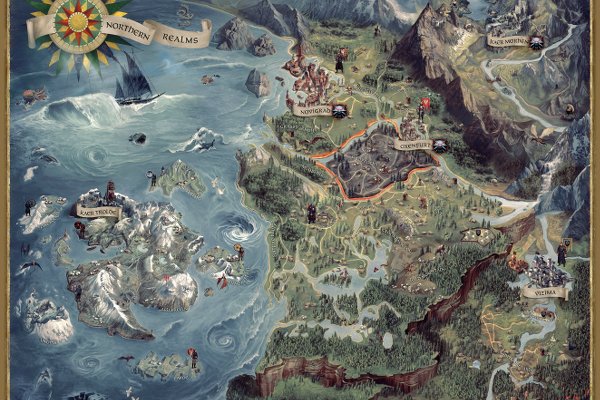
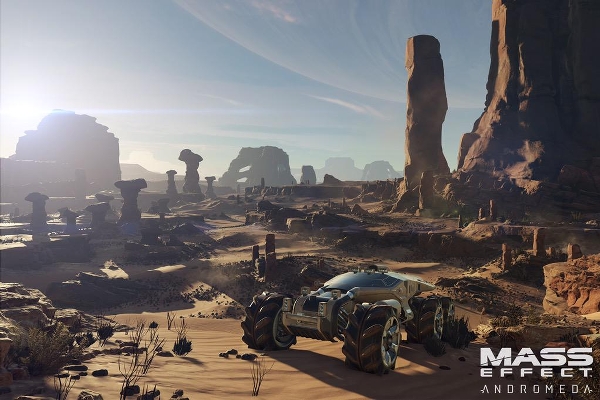
The idea of large zone-hubs was popularised by the Mass Effect series, and since then has slowly grown to replace the giant single mega-zone approach of Skyrim and RPGs before it. For a while, it wasn't clear whether the multi-hub approach was superior to the seamless single world, but The Witcher 3 finally put that argument to rest (at least until game tech gets advanced enough to offer us a seamless world of its size). Without a map, you could easily get lost in its vast swathes of forests and mountain ranges, and that's a huge testament to the game's scale. Being a few years older, Mass Effect 3's multi-zone world (or galaxy, as the case may be) is far more rudimentary and looks decidedly on-rails by comparison. While it's probably a bit too much to ask to create rich, distinctive zones for every planet in the Andromeda galaxy, the game could certainly learn from The Witcher 3 in making its areas feel a bit less zone-like. This would entail cutting down on the linear, directed paths pointing you towards specific areas, and more rolling terrain that you can climb up and admire 360-degree views of strange planetscapes. The areas you explore in Andromeda should feel like they've been formed through millions of years of geological morphing and shifting, not just giant square slices of generic terrain that feel like developer-created playpens.

6. Make Environments Living, Breathing Places
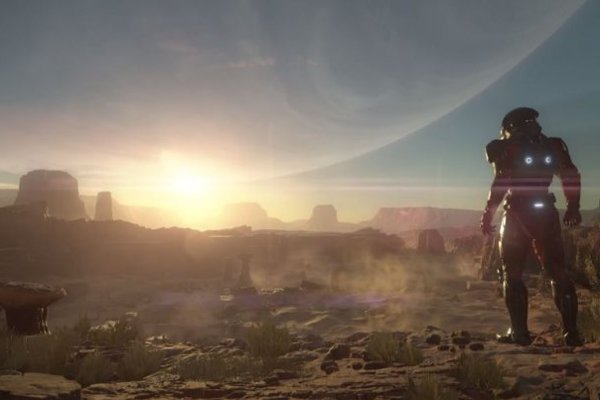
So now that we've given the Andromeda Galaxy the same design philosophy as The Witcher 3's Continent, let's pack it out with some life. While Mass Effect's cities were well designed environments with plenty of people to interact with, just about any outside area was a barren wasteland. Are there no villages in the future? No people travelling driving around between towns, wandering around in the wilderness, or gathering round shrines to pray to some druidic gods? While The Witcher 3 made you feel like an individual in a world that lives on independently of your existence, Mass Effect 3 felt like everyone in the galaxy was simply waiting around for you to interact with them. Andromeda needs to raise the Mass Effect series' game by adding more character to its galaxy. The Witcher 3 makes the player curious to explore every corner of its mysterious, beautiful world. You'll be sailing along a lake, then spot a strange, gnarled tree in the distance and head off to see what's going on there. You'll stumble upon villages inhabited only by children, well-hidden caves with bizarre inhabitants, and even - on extremely rare occasions - a ghost ship sailing across the sky. You end up wandering around the game just to see what surprises it'll throw your way. Andromeda needs to infuse its galaxy with a similar sense of wonderment, rather than make everything feel like a utility to your mission. Planets should be more than just resource mines, and people should be more than quest-givers.

5. Emergent, Random Events

Why is it that in the future everyone is just so ice-cold and composed? Where are the poor people running up to you and desperately needing your help to take out some bandits, or the scenes of bloody murder that you stumble upon, leading you on exciting and unexpected quest-lines? Until now, the Mass Effect galaxy hasn't thrown up events that force you to respond quickly and send you off on unexpected tangents. This vast majority of quests tie into the main story, or the backstory of one of the main characters, and it all just felt too organised and formulaic. For this to happen effectively, Andromeda will also need to turn outdoor environments into more than just barren planets, populating them with NPCs, and in turn opportunities for intra-planetary exploration and interesting chance encounters.

4. Don't Be Tight With DLC

It's scary to look at the snowballing amount of DLC released for each successive game in the Mass Effect trilogy. Where the first game had just two bits of downloadable content, Mass Effect 2 had a ton of it, then Mass Effect 3 after that had-- what's bigger and worse than a ton-- a shit-ton. By that I don't just mean there was a lot of it, but a lot of crap that it didn't seem to much to ask EA to give away for free. Compare that to The Witcher 3's 16 pieces of free DLC that were released since the game came out in May. Sure, some of it was trash (such as Triss' alternative costume which made her look like a dorky LARPer), but there were also some solid quests in there, some costumes and armour that actually looked awesome and, of course, a talking pig. Hearts of Stone was the first piece of paid DLC for The Witcher 3, but EA could certainly learn a thing or two about value for money here. Rather than serve up emaciated little bits of DLC in dribs and drabs, CD Projekt RED offered a solid 10-plus hour experience in Hearts of Stone, with an awesome main quest, tons of side-quests and new characters, and a new romance option for Geralt, all for under $10. Mass Effect Andromeda's DLC should take the form of an expansion rather than piecemeal fan-bait that constantly leaves gamers unsatisfied and needing more.

3. Make Sex For Sex's Sake Okay

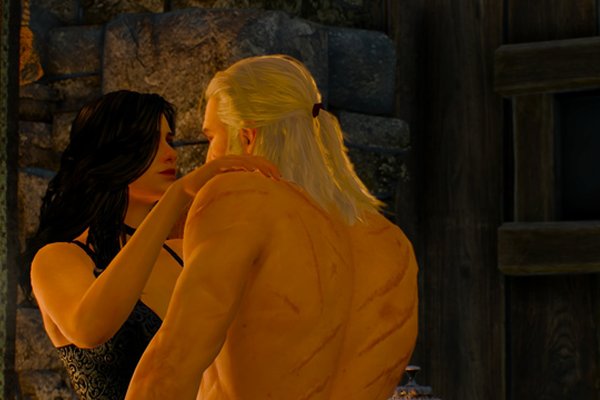
Sex is still a contentious issue in games, and it's fair to say that the medium's still some way off depicting the down-and-dirty in a way that doesn't force a few sniggers from your nose, or mouth, or wherever it is that sniggers come from... throat, maybe? Mass Effect and The Witcher are so far the industry leaders when it comes to sex, showing it in a way that isn't too cringey, if still a little earnest. But their approaches are completely different. While Mass Effect is all about making the right dialogue decisions and building up a relationship over a long period of time (or just skipping the bits where they talk about themselves so you can get to pulling down their space-pants quicker), The Witcher 3 was always more to-the-point, with women happily jumping into bed with Geralt after he completes quests for them, or seemingly on a complete whim. Some prudish commentators may think that The Witcher 3 is too cavalier towards sex, but this is the 21st century. Carefree hedonistic sex is fine, and it doesn't always need to be attainable only through a Victorian-style courting process. Learn a thing or two from Geralt's Guide to Sex, EA, and throw a bit of it into Andromeda.

2. Memorable, Challenging Boss Battles

The Witcher 3 not only had a solid crew of 'big bosses' in the Wild Hunt generals, but it also did a great job of turning seemingly ordinary encounters in the wilderness into riveting mini-boss battles. Any encounter with a Griffin is memorable, the Ice Giant battle is epic, and sticking it to Madman Lugos is incredibly satisfying. It feels like each boss fight - even a random one in the wild - is its own story that you'll happily tell the grandkids about years down the line. In Mass Effect, most boss encounters just feel like pretty generic third-person shootouts. They may look spectacular, but mechanically they're rinse-and-repeat. Maybe if Mass Effect Andromeda incorporates some of the melee mechanics I outlined above, it'll open up the possibility of more diverse boss encounters. An open world with more opportunities for exploration and random encounters would also be a great way to throw in unexpected random boss battles, rather than the heavily scripted ones that we see in the Mass Effect series.

1. More Environmental Storytelling

The Witcher 3 is set in an easily identifiable post-war world. Villagers have been displaced from their homes, battlefields remain strewn with corpses, and rebels hang from trees as a warning to others who may be flirting with seditious ideas. Even though you visit some stunning locations in the game, the whole land is pervaded by a sense of loss and tragedy. Mass Effect Andromeda will be filled with a diverse number of planets and environs for you to visit, and it's not likely that all of them will be unified by a single overarching mood like The Witcher 3. But if Andromeda's areas are to feel like actual places rather than as generic spaceports or dead planets, then it needs to be filled with the little visual details that make Wild Hunt so immersive. Walking around The Witcher 3 for half an hour, you get a feel for the land very quickly. Andromeda needs to recreate the same feeling with the planets you get to visit. Has a planet been ravaged by war? Is it a place where one race is treated worse than another? What kind of political system is it governed by? All these things should be hinted at simply by walking around, rather than having to read diary entries or listen to audio logs (which have their place too, of course). Let us know what you'd like to see carry over in the comments, and please create an account if you'd like to write for the site!

Contributor
Contributor

Gamer, Researcher of strange things. I'm a writer-editor hybrid whose writings on video games, technology and movies can be found across the internet. I've even ventured into the realm of current affairs on occasion but, unable to face reality, have retreated into expatiating on things on screens instead.