The Order: 1886 - 10 Reasons It's A Huge Disappointment

Sony's first big title for 2015 isn't the system-seller it needs to be.
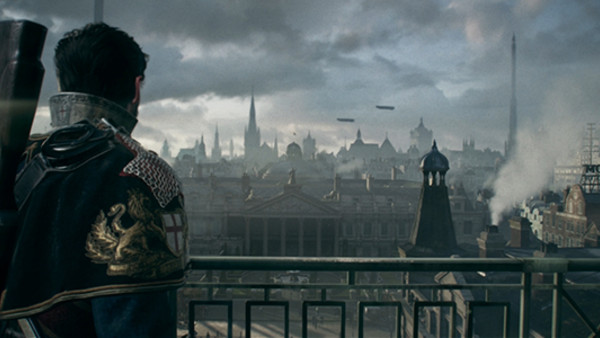
Sadly, thanks to sporadic coverage on their part and a pendulum swing of expectation versus any footage that contained the much-needed X-factor necessary to make this a system seller, Sony's PS4-exclusive The Order: 1886 is the latest in a long line of titles that are serviceable enough, but fall down altogether when it comes to offering something worthwhile only possible on next-gen hardware. Now just to be clear, this isn't an article intended to pull apart and bash Read at Dawn's first big console debut - there's already signs it's going to divide the masses regardless - rather it's to highlight the things that immediately get in the way of your enjoyment, somewhat completely hampering what should easily have been a dead cert system seller. From ancient game mechanics that should've been left in the last generation to an overall feel reminiscent of a title destined to gain infamy as a rental only, what's emerged is something that although it looks absolutely gorgeous and has a killer premise - a secretive bunch of warrior knights slaying werewolves in the London Underground, anyone? - just doesn't stick the landing. Instead this is an experience you'll want to like (and maybe love given the steampunk-esque visuals and propensity for sporadically intense combat) only to be torn down at every opportunity.

10. It's Extremely Short

You can always make the argument for quality over quantity - such was the reply from a Ready at Dawn team member when defending the game against what was revealed to be a five hour campaign run last week. However, when the way your game is elongated is through a forced sense of progression - i.e. you must walk through certain levels - it feels like unnecessary padding to a genre that otherwise thrives on forward momentum. Another huge no-no is the labelling of cutscenes as 'Chapters'; something that wouldn't be egregious in itself, but when you've just been through an entire level set upon a gigantic blimp packed with enemies and a gorgeous cloud-scraping scale, labelling both that and the following expository scene as full chapters feels more like you're being told the game has a considered length as opposed to feeling it.

9. It Doesn't Know What It Wants To Be

If there's one thing years of Resident Evil's bigger forays into action-focussed gaming should've taught any developer, it's that slow, procedural horror doesn't mix whatsoever with a more cerebral Gears of War-style gameplay. After a very laboured and ponderous opening prison section you'll then trudge through a series of brown and grey locales, picking up the occasional item just for the sake of turning it over L.A. Noire style - assumedly to piece together what's happening with the world around you. The first hour or two of 1886 doesn't pick things up either, instead you'll spend them wondering just who exactly who you are and what The Order actually stand for - other than being a semi-religiously tinged take on the Knights of the Round Table complete with some supernatural healing juice and an arsenal of weapons designed by Nikola Tesla. At no point does the balance get righted between the character-focussed intro and the interesting alternate take on history surrounding you. The problem, is that none of this is documented or matters through any interaction you have with other characters, so when the cutscene stops just so you can move high-res versions of everything from new guns to a piece of fruit, it cements the notion that the graphics are the only thing truly worth taking away.

8. Quick-Time Events Date It Immediately

God of War's take on cinematic action was a big game-changer that thoroughly shook the industry at its core back in 2005 - however from then on in you'll be hard-pressed to find something that actually used them well, rather than just doing the standard 'bash the button to open the door' mechanic every time. In 1886 it's very much the same thing and more - much more - the whole thing is littered with them. You'll get prompts mid-cutscene to start basic animations like when hero Galahad needs to turn, hammer away like a gibbon to open a chest or kill a guy, or have to line up a cursor to a point on the screen to dodge an attack or strike. You can tell Ready At Dawn really didn't want to break the immersion of you being 'in the game', but having button prompts for everything makes much of the placement of these feels tacked on and unnecessary, eliciting more groans than cheers when it comes to having to laboriously bash away for a couple of minutes just to 'simulate' something like moving heavy rubble or dragging a soldier to safety.

7. The Pacing Early On Kills It

There's a certain subset of gamers who are completely comfortable with a game 'not getting going' until a good 30-odd hours in - to be honest some of the best titles are slow-burns - but for The Order thanks to its mix of survival horror corridor-crawling and lumbering walking animations, you'll be pushing the stick forward with all your might just willing something, anything to happen. That's not to say there aren't some great moments - Galahad breaking away from his crew to take the fight to the enemy whilst in a fit of rage is a particular highlight - but unlike the silver screen wonders The Order is trying to emulate with its bordered look, these don't feel like they've amounted from anything beforehand, instead making you wish the rest of the game had this much intensity and engagement.

6. Stealth Sections Feel Misplaced

Do you remember after Metal Gear Solid landed, and all of a sudden you started seeing if you could play other titles in the same way? Awkwardly shuffling your way around many a level gave way to realising enemies within upcoming rooms only 'activated' when you went in, meaning any game half-functioned as a 'stealth' title if you so wished. Come 1886 and it's much the same - except now your goal is to fumble through areas and not get caught, all without a map or any idea of where guards might be, a one-shot-kill 'You've been detected!' game-over awaiting round every corner. Sound fun? It isn't, and when even the kill prompts are timed button-presses that also result in a quick restart, it does very little to convince you you're playing as a demon-slaying badass, and more someone who's trying to sneak into work late whilst nursing a bad hangover.

5. The Cinematic Borders Will Get You Killed

Right off the bat thousands of potential consumers were completely put off The Order thanks to the fact it employed some Evil Within-style black borders across its entire runtime - even in the menus. It's safe to say that when the vast majority of gamers have plumped down hard-earned cash to buy a TV the size of a dinner table, and don't then want their view scuppered by unnecessarily intrusive black rectangles. For Evil Within it essentially worked pretty well, giving the game a cinematic feel that at key points really made the level design pop and played into the cinematic conventions of a horror game. For The Order though, and the fact that in every firefight you need to take cover to avoid being cut to ribbons, there's always a feeling that you're fighting the camera just as much as the enemies to keep track of what's going on. It's definitely something that's going to divide people much like the ongoing DLC debate around Evolve, but in its execution at no point does Order really feel like it needed this restrictive view for the sake of anything other than some better looking render models.

4. The Best Weapons Are Underused

If you've watched the pre-release footage for the game you'll know one Nikola Tesla is essentially the Q to your team of Bonds, creating all manner of weapons and items to outfit you all that didn't exist at the time. It's a great idea, and plays into that 'What if they could?' aspect Assassin's Creed soared with through Leonardo Da Vinci's inventions. However, whereas in the pre-release footage there was gameplay showing a electric bolt-throwing concoction that reduced enemies to paste alongside the much-touted Thermite Rifle, these are essentially one-clip-and-you're-done frivolities that very rarely make an appearance. With the lack of a multiplayer it means you only get your hands on the tastiest of weapons at key points in the story, and unlike Gears of War where everything from the Boltok Pistol to the Torque Bow had enough identity and a kick big enough to win the Superbowl, Order's most accessible are seen-it-before iterations on very old formulas.

3. You Can Easily Break The Combat

A huge problem with many reviewers, is they'll opt to play a game a certain way - popping headshots across the latest Splinter Cell for example - only to complain the game itself didn't 'force' them to do anything else. That's always seemed like a flat-out bad criticism, as if some options are open to you in-game, why wouldn't you want to try them all out? In The Order it's the opposite. You'll be taught early on that you can take cover, blind-fire and melee enemies when up-close or at certain angles in relation to corners and ledges, but for some areas of the game they simply don't want you to do so. An early level underground straight-up deactivates the ability to take cover or engage any enemies up close, forcing you to stand exposed just firing and hoping for the best. It's one thing to put a number of options out for the player only to then realise your game is unbalanced when one takes priority, but it's another entirely to ensure the player can't deploy the tactics they've built up without notifying them whatsoever of the restriction.

2. Phenomenal Graphics Make The Tiniest Things Stick Out

File this under nitpicking if you must - and again, not to get away from the fact The Order is easily the most impressively rendered title so far across the board - but with great character models and world assets, comes the responsibility to make sure there aren't any rough edges. Ready At Dawn do a nigh-flawless job throughout, but their otherwise jaw-dropping graphics engine hasn't got shadows and dynamic lighting down-pat as well as something like The Last of Us, leading to jagged edges sticking out amongst an otherwise photo-realistic portrayal of old-school England (minus the werewolves). This isn't to mention that like L.A. Noire, whilst faces animate perfectly, general body and transitional animations (like opening doors, getting in/out of cover etc.) are very mechanical and 'gamey' at times, breaking the illusion that you're playing something that should be 'the next step up' for graphical immersion.

1. It's Very Rough Around The Edges... Of Its Core

Something that assumedly comes from being Ready At Dawn's first attempt at a third-person shooter, there's a number of core genre gripes that seasoned players will pick up immediately. Firstly your action button doubles as your melee and ammo/weapon-grab prompt, leading to an age-old problem where you'll be standing surrounded by things the button could (and should) be able to do, yet you'll only get the prompt for the one nearest to you. Got a rifle with an ammo box on a shelf right in front you'd like to pick up? Tough luck, turns out the enemy you killed dropped something, making that option take priority and forcing you to awkwardly shuffle your way around the level to break the game and allow you to focus on something you actually need. It also seems to commit the cardinal sin of action titles - respawning enemies. Just when you think you've cleared an area of guards/goons, you'll get another refresh of the whole lot providing you haven't adequately moved forward enough to 'trigger' the end of that particular encounter. It's not that it feels lazy or too annoying - the combat is fun enough to maintain blasting dudes away for a good long time - but instead it's something gamers with a few years under their belt will notice immediately, letting you essentially aim at a doorway you know guys will spill out of, tearing them all down at once for as long as you like. How have you found The Order: 1886 so far? Like it or lump it, Sony's first big release of the year isn't the titanic offering it could've been.

Gaming Editor
Gaming Editor

WhatCulture's Head of Gaming.