Where Did It All Go Wrong With Batman: Arkham?
Rocksteady's creation is one of the industry's most lauded... so why isn't it still going?

Batman: Arkham is, in a great many ways, a tremendous achievement in the gaming medium. When Rocksteady's first entry in the four-game-series launched in 2009, boasting a gorgeous combination of metroid-style exploration and classic third-person combat, it proved to be redefining, and rightly went on to launch a franchise of its own.
Today, Batman: Arkham is one of the most recognisable depictions of the Batman mythos, with the series having branched out into film, various merchandise, and even the comics themselves. It's a powerhouse of a brand, but with that in mind, where has it been for the last three years? Not a peep has been heard from Warner Bros. Montreal - the current custodians of the Arkham license - and Rocksteady are widely presumed to be working on a game centred around the Man of Steel himself, Superman.
The simple truth of the matter, however, is that Arkham isn't the darling it once was. Finding consensus amongst the series' fans, who regularly debate the quality of Arkham Origins and Arkham Knight, is nigh-impossible - with the final two instalments of the franchise having courted controversy for a whole host of different reasons. Once you consider the development troubles that have ostensibly blighted WB Games in the development of another Bat-title as well, one does have to ask the question: where did it all go wrong?
With open worlds, behind the scenes changes and a franchise gone AWOL, it's time to discuss how one of gaming's biggest franchises lost all of its momentum.
*SPOILERS FOR ARKHAM ASYLUM, ARKHAM CITY, ARKHAM ORIGINS AND ARKHAM KNIGHT FOLLOW*
5. Where It All Began

Batman: Arkham Asylum was an unexpected hit when it released nine (yes, nine) years ago on the Xbox 360, PlayStation 3 and PC. Utilising the talents of Batman: The Animated Series alumni Kevin Conroy and Mark Hamill as Batman and Joker - as well as writer Paul Dini - the game managed to craft a unique yet familiar version of Gotham and set about making the Dark Knight experience the longest night of his career.
Trapped in Arkham Asylum with most of his Rogues' Gallery, Rocksteady's first Batman game is Die Hard in superhero form. It's also aged like wine, combining aspects of stealth, fighting and exploration into a wonderful concoction today known as the 'Arkham Formula'. It lacks challenge in parts, that much is true, and the climax takes a totally unnecessary turn, but Asylum is still the most solid of all the Arkham games - benefitting from the narrow, more linear approach to storytelling that its successors would later divest.
As a package, Asylum is incomparable. The environments are spectacular, the story intriguing, and the voice acting impressive. It's the ultimate Batman experience, but while its semi-linear nature (as well as its views of the Gotham coastline) would inevitably spark calls for a sequel to aim for a bigger and better locale (a request Rocksteady happily obliged in Arkham City), Asylum benefited from restricting the player's movement. Arkham Island was claustrophobic for a reason, and the 'all in one night' trope helped elevate the tension the environment already possessed. So why was only one of these elements repeated for its sequels, prequels and spin-offs?
Arkham Asylum is far from the only great Arkham game out there, but as Rocksteady re-entered the mythos in 2011, and then 2015, it often felt as though the series was taking one step forward, only to take two back shortly after.
4. The Open-World Of Arkham City

Arkham City is a fine sequel and an even finer game, but as is the case with so many games, films and even comic books, bigger doesn't always mean better.
Pre-release, Arkham City looked to be bringing back all the things players loved most about Asylum; Paul Dini was returning as writer, Conroy and Hamill reprised their roles as Batman and the Joker respectively, and though Arleen Sorkin retired from the Harley Quinn role beforehand, Tara Strong looked to be a fine replacement as the villainess. Throw in Hugo Strange as the apparent main adversary, a plot where Joker is slowly being killed by the drug he consumed at the end of Asylum, and a world twice the size of its predecessor, and City should have been the perfect follow-up to 2009's cult classic.
Only, it wasn't. Not quite.
Arkham City may have improved in pretty much every way in terms of gameplay, offering playable characters aplenty, new gadgets and combat manoeuvres, and twice the amount of content as its predecessor, but it took a narrative hit. The premise of Hugo Strange having uncovered Batman's true identity was completely wasted, a random romance between Bruce Wayne and Talia al Ghul was chucked in halfway through, and while the Joker twist itself was particularly effective (as was the character's unexpected demise), the lasting impression of City's story is one of wasted opportunities.
It's also worth pointing out the rapid escalation of open-world gameplay. Arkham City boasts a larger environment at the expense of Asylum's unique atmosphere, and though both worlds are equally intricate, oozing with character and detail, there is something to be said about how a change of genre impacted Arkham's development.
City is still a wonderful game, and next to Asylum is the next best received entry in the series. But in discerning Arkham's apparent decline, the introduction of the open-world - and those narrative decisions - are important to consider.
3. A Fanbase Divided

When it was announced that the follow-up to Arkham City would be a prequel, not a sequel, and that Rocksteady Studios wouldn't be involved, fans were skeptical. The London-based developers had made Batman their own, and with Warner Bros. eager to capitalise on the brand fully, their baby was shipped off to another studio, where a different kind of Batman title would be made.
That title would eventually become Arkham Origins, one of the last generation's most misunderstood releases and a game few at the time were willing to give a chance. Despite the fact the game boasts the best story in the series, with the script having been developed by Corey May, Ryan Galletta and Dooma Wendschuh, the title debuted to a mixed reception and endured a frosty aftermath, with many unwilling to acknowledge the genuine innovations Montreal brought to the series - the best of which involved a complete overhaul of Detective Mode, which had until that point been utilised as a crutch for players to spot enemies.
By this point, however, cracks in the Arkham Formula were being made more noticeable. While improvements were made to the series' stylistic freeflow combat, with Origins even boasting the best boss battles of the franchise, stealth remained a walk in the park. The entry also drew criticism for its open world, which lacked the detail of its predecessors, and seemed to lack any signs of life at all, actually, with Gotham having been 'evacuated' on Christmas Eve as a freak snowstorm engulfs the city. (This was a trope the series would return to, sans controversy, in Arkham Knight.)
Those issues aside, Origins was unjustifiably railroaded by fans for the fact that A: it wasn't developed by Rocksteady, and B; it was seemingly responsible for delaying the resolution of Arkham City's unresolved plot threads. Yes, it had its flaws (glitches were reported across the board), but the introduction of the Bat-Cave, the genuine attention paid to boss battles and the efforts made to flesh out the world all proved to be invaluable contributions to the series.
In the end, it didn't matter. Arkham's fanbase fractured, and Origins was subsequently (and erroneously) ignored in Virtuos' Return to Arkham remaster. Its follow-up, however, courted a different kind of controversy - that of the narrative variety.
2. A Baffling Change Of Direction
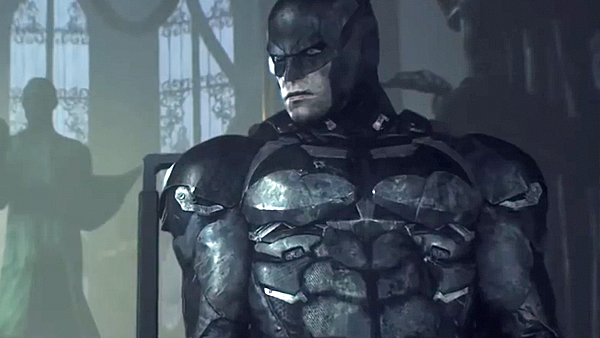
As things currently stand, Batman: Arkham Knight is one of the best received games this side of 2013. It looks and plays unlike any other action title (Batman himself possesses more polygons than the entire island of Arkham!), is bursting with content, and finally gave players the opportunity to roam around Gotham - or, at least a part of Gotham - in the Batmobile. The stage was set, truly, for a masterful conclusion to one of the most beloved trilogies of the decade.
But while there are countless reasons to laud Arkham Knight, including its interesting Return of the Joker/Death in the Family hybrid retelling of Jason Todd's return, the story was bad. Most of the women featured, including Barbara Gordon and Poison Ivy, are chucked in the fridge right off the bat, and the misdirection deployed in the title's marketing came back with a vengeance as the second act commenced.
Throughout AK's pre-release, Rocksteady maintained that the eponymous Arkham Knight - a brand new threat Batman was set to face alongside Scarecrow - was a brand new creation; not Jason Todd, and most certainly not Joker. So, when it transpired that the character in question was the second Boy Wonder, there was something of an anticlimax to the revelation. Not only that, but after reiterating for months that Joker was truly gone (and, to be fair, he was) - going so far as to have the player cremate his corpse during the opening act - it's soon revealed that Bats is infected with some Joker blood, and that he has his own little Myxlplyx-esque version of the Clown Prince to keep him company throughout the story.
The pay off was worth it, but these narrative decisions were only exacerbated further by the fact that many of City's dangling threads were dealt with in an unsatisfying way - the worst culprit being Hush, who only stars in one mission and is subsequently locked away in the GCPD for the rest of the story's duration.
Factor in a tank-like Batmobile, an ending that peddled every Bat-cliche going, another evacuated locale and a backlash surrounding the game's post-release content, and Rocksteady's departure from the Bat-brand was far from the fairytale ending fans had initially hoped.
1. A Giant In Limbo

To blame the series' prolonged absence on Arkham Knight would be disingenuous, however. Knight was a critical darling upon release and wowed in equal measure in terms of sales, and with Rocksteady set to explore a different path of the DC Universe, the blame - if there even is any to be partitioned - lies squarely in Warner Bros. court.
We've known for a long time that Origins' developers are working on something, but what that something is has changed drastically these last five years. First, it was reported that a Suicide Squad spin-off was being fast-tracked, picking up immediately where Origins left off by having the player assume control of Deathstroke in a game that could also be played cooperatively. According to Kotaku's Jason Schreier, the project was binned in 2016 after failing to impress their parent company, with a replacement title having been lined up shortly thereafter.
This newer game was said to have been developed with a Batman Beyond-style premise in mind, as players assumed the role of Bruce Wayne's son Damian, with the Bat-Cycle being used as the primary method of transportation. This too, however, was seemingly cancelled, but Montreal haven't stopped there - five years of frustration be damned.
Now, it looks as though Montreal are working on a genuine sequel to Origins - one that'll expand upon the Court of Owls Easter Eggs and depict the origin of Dick Grayson's Robin. Those hoping for an announcement at any of the industry's yearly events, however, have been left disappointed - and it looks as though it'll be a long time before Arkham reemerges once more.
Just don't make it too long, yeah? There are only so many Arkham-less years we can take.