9 Most Shocking Experiments In Human History
Who wouldn't want a human chimp hybrid?

The 20th century was so full of diabolical experiments it’s a wonder anyone survived.
Science is a great thing. It leads to brilliant advances in technology. It uncovers new truths about the nature of reality. It finds new medicines to cure the sick. But sometimes, just sometimes, it removes the arm of a man and stitches it back on the opposite side just to see if it’s possible.
Governments have been responsible for many atrocious acts. The worst side of a government can be seen in the experiments it conducts in secret. Over time these secrets come out and you look back at them and say, “Wow, people were really devious in the past.” The truth is people haven’t changed much over the centuries. There are high morals and low morals across the board. It makes you wonder what experiments are happening right now that are yet to be revealed.
There are some gruesome things covered in this article, so if you are of the squeamish type, read on with caution.
9. Humanzee

Ilya Ivanovich Ivanov was a trusted and well known Russian and Soviet biologist who first garnered recognition when he successfully used one stallion to fertilize 500 mares via artificial insemination.
In 1910, he gave a presentation at the World Congress of Zoologists in which he described the possibility of creating a human/chimpanzee hybrid using his new technology. News of this found its way to Joseph Stalin. There is a misconception that Stalin ordered Ivanov to create a human/ape hybrid soldier that would be supernaturally strong, feel no pain, and eat anything to keep nourished. The truth is, Stalin wanted to use the experiment to disprove the creation myth and show evolution at work by creating a new species.
At first, Ivanov tried impregnating female chimpanzees using the sperm of human males. The experiment was a failure. After that he switched roles and tried to impregnate a human woman with the sperm of an orangutan.
He managed to find a woman who was willing to carry the hybrid baby but the orangutan died before the experiment could take place.
Due to political changes the experiment came under much criticism and Ivanov was eventually arrested and exiled before he could finish his experiment.
8. Reanimation Of A Severed Dog’s Head
A film of a Russian laboratory experimenting in reanimation surfaced in 1940. The short film is narrated by British scientist, John Haldane, who claims to have been at the lab during the war and witnessed the experiments himself. John Haldane was a well-known science populariser and credible scientist in his own right, and there is little doubt that the video is in any way falsified (well, except for the natural skepticism that comes with something so farfetched).
The video begins with two experiments showing organs working after being removed from the body of a dog. First a heart, attached to tubes, continues to beat. Then a lung can be seen inflating and deflating in a metal pan with pipes attaching the lungs to a machine.
Then we get to the disturbing bit: a decapitated dog’s head attached to a dialysis machine. Oxygenated blood is being pumped into the head keeping it alive. The head still reacts to touch and light as if it were still attached to a body.
The final experiment in the video shows a living dog being drained of all its blood until its heart stops and the animal is pronounced dead. Then the blood is reintroduced to the system and the canine is successfully resuscitated.
7. Nazi Hypothermia

The Nazi’s were struggling with hypothermia. Try as they might, they could not stand the cold, whereas the Russians seemed to have no problem with it. Figuring the Russians had a genetic advantage, the Luftwaffe began experimenting on captured Russian soldiers in Dachau and on the Jewish people contained in Auschwitz.
360 to 400 experiments were carried out on 280 to 300 people, meaning many people were subjected to these terrible experiments more than once.
The experiment was to find out how the body reacted in freezing temperatures and to assess different methods for rewarming the body. Prisoners were left naked in the open air for hours at -6 °C (21 °F). Others were dressed in fighter pilot uniforms and submerged in freezing water.
To try and find the best way to rewarm the bodies some prisoners were thrown into boiling water.
Approximately 100 people died as a result of the experiments.
6. MKUltra
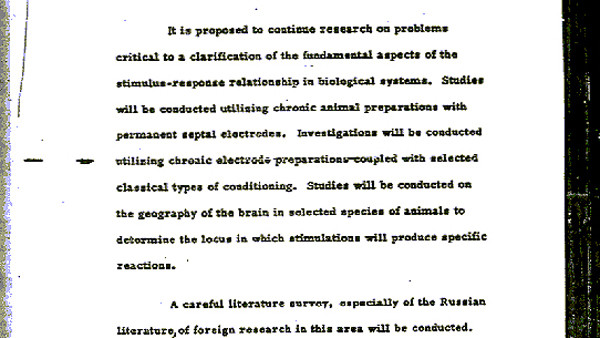
MKUltra was a CIA led mind control program. They set out, in 1953, to find methods through human experimentation to identify and develop drugs and procedures to be used during interrogations to weaken the subject and garner confessions through mind control.
At first the CIA focused on LSD-25 (the psychedelic drug also known as acid). In violation of the Nuremberg Code the CIA experimented with the drug without informed consent. They drugged anyone they could get their hands on. Prostitutes, prisoners, patients in mental institutes, CIA employees, doctors, other government agencies, military personnel, and even unsuspecting members of the general public. One mentally ill patient was given LSD for 174 consecutive days. The goal of these experiments was to find a way to bring out confessions or wipe the subjects mind clean and create “a robot agent”.
Many other drugs were used, including heroin, temazepam, mescaline, psilocybin, cannabis, and alcohol. One experiment that was carried out in a prison had CIA agents inject prisoners in one arm with a barbiturate (a type of anaesthetic used to depress the central nervous system) and with amphetamine into the other. When the prison population began to fall asleep due to the barbiturate they would administer the amphetamine. The prisoners began babbling incoherently but occasionally gave usual answers to questions.
Hypnosis and experiments involving flashing lights and loud music were also experimented with. Little hard evidence is available to know what really happened during these experiments due to the then CIA Director, Richard Helms, ordering that all MKUltra files be destroyed before a proper investigation could be carried out.
5. Tuskegee Syphilis Experiment

An appalling study of the effects of untreated syphilis in African-American men began in Alabama in 1932.
The experiment was carried out by The Public Health Service and the men were promised free medical care for life, burial insurance, and to be fed during the experiment. These promises turned out to be the first of many lies.
622 men took part in the study. Of that number 431 had previously contracted syphilis and 169 did not have the disease. They were told the study would last six months, but it actually lasted 40 years.
After the funding for the experiment was lost, the scientists continued with the study without telling the men that they would never be treated.
Even after the discovery that penicillin was an effective treatment for syphilis, the men were kept sick so the experimenters could see how the illness would progress.
Eventually news of the experiment was leaked to the press in 1972 and the study was ended. During the study 40 wives contracted the disease and 19 children were born with congenital syphilis.
4. Human Head Transplant
Not all shocking experiments are resigned to history. The transplant of a monkey’s head, and the possible transplant of a human head, is science that is happening now.
In 2016, maverick surgeon Sergio Canavero revealed plans to attempt a human head transplant in 2018.
Researchers at Harbin Medical University, China, successfully carried out a head transplant on a monkey. They discovered that if you cool the head to 15 °C before reattaching the blood supply you can avoid brain damage. Canavero himself experimented with severing the spines of mice and then reattaching them with success.
Xiaoping Ren, one of the researchers at Harbin Medical University, claims he and his team have performed experiments on human cadavers in preparation for carrying out the surgery on a living person.
Canavero has since sought funds to perform a head transplant on 31-year-old Russian, Valery Spriridonov, who has a genetic muscle-wasting disease. He even approached Mark Zuckerberg to finance the surgery. It hasn't happened yet.
3. Heartbeat Shooting Squad
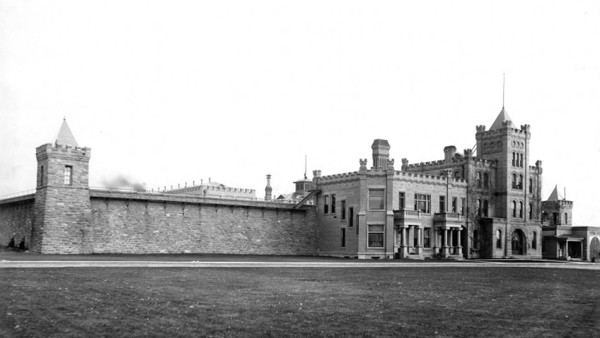
John Deering was facing execution for murder. The prison physician, Dr. Stephen Bosley, figured that since Deering was going to die anyway, science might as well benefit from it. He wanted to find out what the heart goes through during an execution.
He agreed to the experiment and so, on 31 October 1938, John Deering smoked his last cigarette, sat down in a chair, and had a black hood placed over his head. A target was pinned to his chest and electrodes were attached to his wrists.
Deering was calm. From the outside it looked as if none of this was phasing him. The heart monitor said the opposite was true. His heart was beating at 120 beats per minutes (the resting heart rate of a man is between 60 and 100). The sheriff gave the order to fire and Deering’s heartbeat rose to 180 BPM.
The shooting squad pulled their triggers and four bullets ripped into his chest. His heart spasmed for four seconds and then gradually declined. 15.4 seconds after he was shot, John Deering’s heart stopped.
In a statement the following day Dr. Besley said, “He put on a good front. The electrocardiograph film shows his bold demeanour hid the actual emotions pounding within him. He was scared to death."
2. Unit 731

Some of the worst experiments carried out on humans happened in Japan between 1935 and 1945. 3000 men, women, and children (most of whom were Chinese) were subjected to horrific experiments, all of which took place at the Epidemic Prevention and Water Purification Department of the Kwantung Army, also known as Unit 731.
Victims of all ages were subjected to vivisection while still alive. Researchers infected the subjects with diseases and then remove organs to find out how they were affected by the illness. If the patient was dead they thought it would impact the results.
Prisoners were wounded to recreate battle wounds. Limbs were gradually cut off until only a torso and head remained. Arms would be amputated and re-attached on the opposite side of the body. All of these experiments were done without anaesthetic with the victim fully awake.
Captives were taken outside in the freezing cold and various limbs were dipped in water so that they would freeze. To find out if they were frozen enough the limb would be hit with a stick until it made a sound like wood hitting wood. Then the researchers chipped away at the frozen limb and poured water of different temperatures on the inflicted wounds.
Women were raped to force pregnancy so they could test if diseases could pass from mother to child.
Humans were used to test the effects of grenades and flamethrowers. People were left to starve just to see how long it took them to die.
It was one of the vilest ten years in human history.
1. Milgram Experiment
The Milgram Experiment is one of the most famous social experiments of all time. It involved three very basic elements: a man in a lab coat, a man sat at a device that could deliver electric charges, and a man in another room who could be heard screaming when said electric charges were delivered.
The goal of the experiment was to study the conflict between obedience (to authority) and personal conscience to try and get a better understanding of how acts of genocide can occur.
The experiment came just after the trial of Nazi Adolf Eichmann. Milgram posed one simple question, “Could it be that Eichmann and his million accomplices in the Holocaust were just following orders? Could we call them all accomplices?"
Two test subjects were asked to draw lots to determine which of them would be the “teacher” and which would be the “learner”. The draw was fixed so the participant was always the teacher. The other subject was one of Milgram’s colleagues, Mr. Wallace.
The learner (Wallace) was taken into a room and had electrodes attached to him. Then the researcher and the teacher went into another room that contained an electric shock generator.
The learner was given a list of word pairs to remember. The teacher would name a word and the learner had to recall its pair from a list of four possible choices. Every time he made a mistake the teacher had to administer a shock.
There were 30 switches on the generator that went from 15 volts (slight shock) to 450 volts (danger – severe shock). The learner would keep giving wrong answers and the teacher would have to keep administering higher volts of electricity. Each time the screams from the other room would become more and more anguished.
If the teacher refused to continue the experimenter had four phases he could use to convince him to carry on. 1: Please continue. 2: The experiment requires you to continue. 3: It is absolutely essential that you continue. 4: You have no other choice but to continue.
All of the participants continued to 300 volts before refusing and 65% carried on all the way to the lethal 450 volts.
Milgram concluded that, “Ordinary people are likely to follow orders given by an authority figure, even to the extent of killing an innocent human being.”