10 Sad Facts About The Future Of Earth

Spoiler alert: it doesn't look good for us humans. Or anyone else.
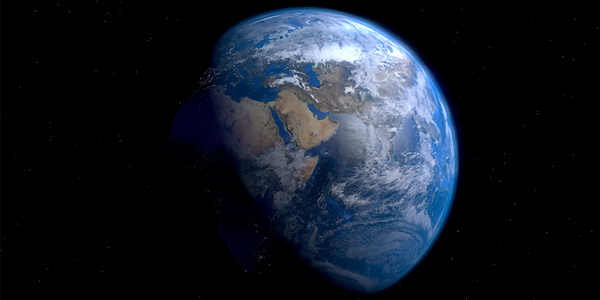
That's great, it starts with an earthquake, birds and snakes, an aeroplane. And Lenny Bruce is not afraid! Because he died a long time ago of an accidental drug overdose. It's the end of the world as we know it, and we feel fine, because whilst our pale blue dot is - sadly - destined to eventually crumble and fall apart, it's not going to happen in our lifetime. Unless there are any immortals in the audience tonight, in which case you might wanna hunker down somewhere safe for the next billion or so years. It's not going to be smooth sailing for you, buddy. Thanks to humanity's use of natural resources, the building effects of global warming, and the general passage of time/circle of life thing our mother Gaia has got going on, things down look all that rosy for the future of Earth. You know all those Roland Emmerich movies about armageddon? No, not Armageddon, that's a Michael Bay film. We mean all the German director's films that involve natural disasters killing thousands upon millions of people. The Day After Tomorrow, 2012, all that jazz. We're reluctant to admit it, but there's actually a kernel of truth to those things. Just a kernel, mind you, not a fully-developed piece of popcorn (which is a common criticism of those films, wahey! High five heard around the world!). For one thing his timing's way off - eventually the Earth is going to get shafted by environmental factors and unavoidable casualties, but it's not going to happen to John Cusack. It's going to happen to whoever's left in, oh, say 50,000 years from now and onwards. And it doesn't look good. These are ten sad facts about the future of Earth.

10. 50,000 Years From Now: New Ice Age
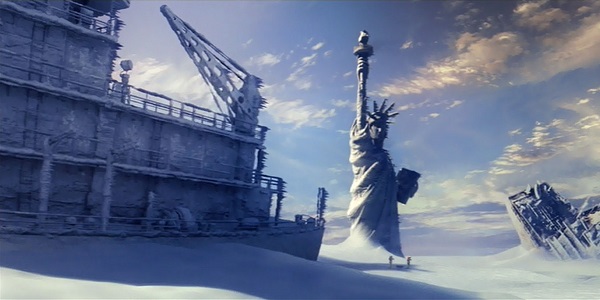
So, let's say that somehow humanity still exists 50,000 years in the future. We've not died out due to lack of resources, or global thermonuclear war, or because there's a new TV talent show in the vein of The Hunger Games. Regardless of how many of us that are left, we're not gonna survive much longer than that. Doesn't matter if there's a plucky bunch of survivors wandering around in an irradiated, post-apocalyptic wasteland or a utopian civilisation where brainbox scientists have managed to solve every ill of the world, we're gonna get screwed over in the end. That's just the way the cookie crumbles. Or the way that the cookie gets perfectly preserved beneath sheets of ice and thawed out centuries later by visiting aliens. Yep, we've got a new ice age on our hands, and there won't be any charmingly goofy sloths or Bill Hicks-pinching saber tooth tigers to lighten things up. Assuming we've not done enough more global warming by this point, we'll slowly slip back into the glacial period, the part of an ice age that marked by colder temperatures and glacier advances. The last one ended about 15,000 years ago, so yeah, it's gonna get hella chilly. So wrap up warm, remaining survivors! Also, don't bother heading to see Niagara Falls, because it would have eroded into Lake Erie and ceased to exist. Why are you sight-seeing in the ice age anyway? Priorities, people!

9. 100,000 Years From Now: Super Volcanoes Melt Everything
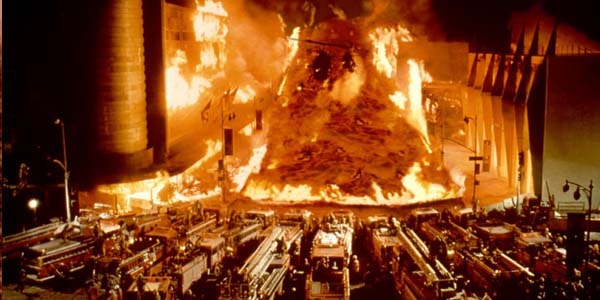
So we have 50,000 years of it being pretty darn frigid outside, by which point folks will probably be wishing for some warmer temperatures (and by "folks" we mean the native North American earthworms who will have migrated up through Canada to escape from the encroaching glaciers, causing a shock to the regional ecosystem. Humans will probably be pretty much done for by then). Be careful what you wish for, though, because scientists predict that by around 100,000 years in the future, Earth will have suffered its first supervolcanic eruption. What makes it so super? Well, said eruption will be large enough to erupt round about 400 km3 of magma. Which is a lot of magma. A lot more magma than we would like to have to deal with, say, in our house or street or life. There are such volcanoes in the mountains of California, but it's been a good 1.1 million years since they erupted. Which means they're just about due a comeback, with some smart people stating that "it's not a question of if - it's a question of when", going on to add that "Super-eruptions are different from other hazards such as earthquakes, tsunamis, storms or floods in that - like the impact of a large asteroid or comet - their environmental effects threaten global civilisation." So yeah, assuming some life had actually managed to make it through the slowly decreasing temperatures that are turning the planet into a popsicle, they will all get fried by a supervolcano. Seems like a pretty conclusive end of the world, right? Nope, we've still got eight more points to go, hot shot. And it's all downhill from here.

8. 500,000 Years From Now: Smashed By A Meteorite
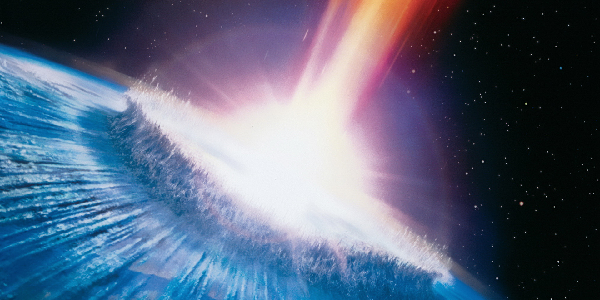
From the way the boffins go on about it, it sounds like a supervolcano eruption is the worst possible thing that could happen to a planet - or at least the one that'll cause the most devastation. Note that they compared it to the sort of damage a stray asteroid or meteorite crashing into the Earth's surface would cause, though; the biggest such impact in modern history was Tunguska event in Russia, which released an explosion of energy about 1,000 times greater than that of the atomic bomb dropped on Hiroshima. That meteorite was estimated to be between 60 and 190 metres in diameter. Scientists reckon that, 500,000 years in the future, the Earth will have been struck by a piece of space debris roughly 1 km in diameter. Assuming it cannot be averted, of course. We actually have a bunch of mooted ideas for how to deal with big hunks of cosmic rock headed right at us. There's the "chuck Bruce Willis and a load of dynamite at it" contingency plan, the theoretical use of gravity tractors (pretty much like the tractor beams the Empire use to net the Millennium Falcon in Star Wars), use of focused solar energy, sticking rockets on the side of the asteroids and blasting them off in another direction and, obviously, nuking them. None of which would be open to us by then because, as we say, humanity will almost certainly be extinct. So instead the Earth will have been struck with something that releases as much force as 1 million of the bombs dropped on Hiroshima. There's not gonna be a whole lot left after that.

7. 2 Million Years From Now: Grand Canyon, Arizona Crater Eroded
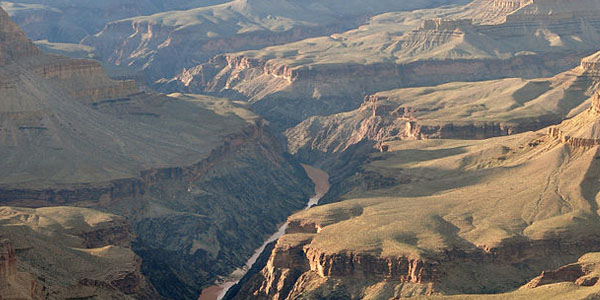
We feel like we're getting a little bogged down in what all this means for people. We're narcissistic like that. We don't like to think about a planet without us on it, even though we've been around for merely a fraction of the Earth's lifespan so far. In terms of the grand scheme of things, we're barely a footnote. We're one of those footnotes off of footnotes that only important papers and David Foster Wallace essays use. We're a tiny indented letter, rather than a number. As such, there'll still be plenty going on with the globe long after we've been wiped off the face of it, and it's still just as sad. Whilst the idea of an empty Earth, untouched by life and existing as a sort of natural wonder, a planet-sized diorama of nice forests, mountains, and landscapes is kinda nice, it's not gonna happen. Assuming that they weren't near the impact site of those meteors, or the supervolcano, and didn't somehow collapse during the new ice age, then two million years from now they would have all just eroded anyway. That's the equivalent of passing away from natural causes after having every kind of cancer concurrently. For example, the Grand Canyon was pretty much created by the erosive action of water flowing down into the Colorado River, so rising snow and ice levels will have broken it down completely. The same fate will have befallen the Arizona meteor crater, the rocky Badlands of the South Dakota desert will have been smoothed off, and why don't we throw in another supervolcanic eruption in there to get rid of any natural beauty of life that may still exist? That's better.

6. 10 Million Years From Now: East Africa Flooded
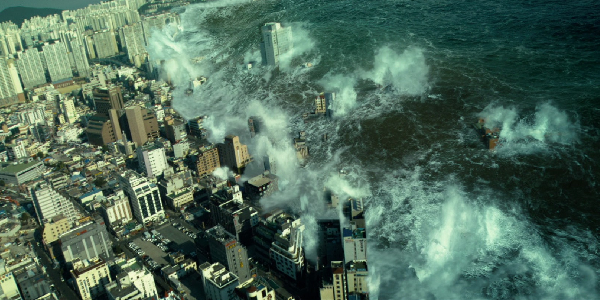
So that's all life and the majority of the environment torn apart thanks to various natural disasters which, to be honest, seem pretty unavoidable, so we don't know what Al Gore was wasting his breath over. Everything's boned, no matter what we do, and we'll all be long dead to even see any of it and compare it to how it looked in Volcano. Or This Is The End. Or Deep Impact. Boy, we sure do like making movies about the end of the world, don't we? Guess that's something to do with the arrogant assumption that the world would wend whilst we're still on it. 10 million years from now and that is far from the case, and besides maybe some of those single-celled organisms we find on the surface of Mars and bacteria and the like, life as a whole would have ceased to exist. What more can the universe possibly do to our poor, battered, lonely planet at this point? Well, the tectonic plates of the East African Rift will have continued to extend that whole time (presuming they didn't get frozen), like the expansion and collapse of the Grand Canyon on a more epic scale. The two plates, the Somali Plate and the Nubian Plate, will eventually completely tear off from each other, causing a new ocean basin to divide the continent of Africa. So yeah, as if all that wasn't enough, now the Earth is literally ripping itself apart, creating new continents and oceans, because it's in the "screw it, who cares, can't get any worse" cycle of its development. The terrible teens of the apocalypse. Or maybe the mid-life crisis. Because the end is very much in sight right now.

5. 80 Million Years From Now: Hawaii Sinks
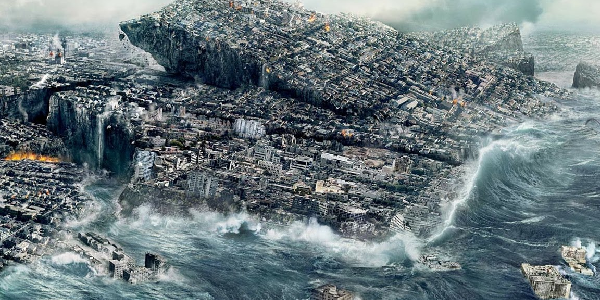
And that's only the half of it. Our planet has slowly changed over time, the broken-up continents of today previously all part of a single landmass called Pangaea. Like, 300 million years ago. And then it began to break apart after about 100 million years, each of its component parts floating away across the oceans before settling and existing as a bunch of different places instead of one huge one in the middle of an enormous sea. We're not going to be getting another Pangaea anytime soon, but about 80 million years in our future the differences as to how the planet looks are going to continue abreast following the splitting of Africa and the formation of a new ocean. Namely, Hawaii is going to sink off the map. Or, more accurately, between the rising tides, volcanoes and ice age, it would already have mostly disappeared beneath the waves, and at this point the Big Island was the only one remaining. The Californian coast would have begun crumbling into the ocean, too, thanks to its sitting on the San Andreas fault. Africa will have continued to sail off from itself and crash into Europe and Asia, closing the Mediterranean Basin and creating a mountain range similar to the Himalayas. Which is good timing, since we'll have just lost the Canadian Rockies and Appalachian Mountains to the same erosion that claimed the Grand Canyon. One positive to all this is it'll be about the time that the Earth will have naturally replenished its fossil fuel reserves! There just won't be anyone - or anywhere - to use them.

4. 500 Million Years From Now: Ozone Layer Destroyed, Mass Extinction
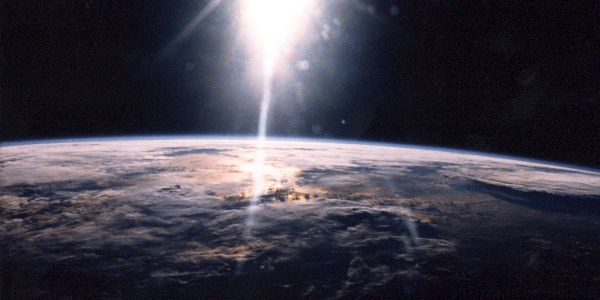
Still, whilst most of the world will have been sinking or otherwise being demolished, there will have been some return to normality during this period. Life will have started returning to the land and the oceans, following all the traumatic devastation caused to the environment previously, and whilst the creatures that roam the planet wouldn't look in any way familiar to us - owing to the slow crawl of evolution and adaptation to a very, very different climate - it's kinda nice to know that, throughout all this strife, life still finds a way. At least it does until the ozone layer finally gives up the ghost, thanks to the effects of global warming, meteors, volcanic ash and the general degradation it experiences over time. That's when everything really goes to pot. This is after we've been struck by another meteorite, a new Pangea-esque supercontinent has formed and since broken apart, and the Moon has been shunted far enough away from the Earth for solar eclipses to no longer be possible. Not that the remaining life would have been staring at it through pin pricks in black card anyway. That's partly because we doubt said creatures will have bothered creating card or sunglasses, partly because in 500 million years' time a gamma ray burst, or massive supernova, will have occurred close enough to Earth to affect the ozone layer and trigger a mass extinction. Well, that's the theory anyway, but it's a ruddy convincing one. And a terrifying one, too.

3. 800 Million Years From Now: Remaining Life Dies Out
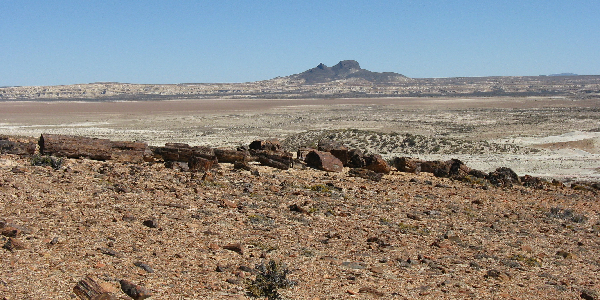
Mass extinction doesn't, of course, mean that absolutely everything is dead. By this point, after the human race has been forgotten as the miniscule spot in history that we are, the Earth has still managed to be populated by some sort of life, which has adapted and evolved through countless dramatic changes in the world around it. It probably deserves a break from all this hardship, eh? Well, if it manages to get through that supernova that eliminates most things left living on the surface of the globe, then they do get to make the most of it for a good 300 million years. It's after that they need to start watching their backs. Because that's the point that carbon dioxide levels fall to the point at which C4 photosynthesis is no longer possible. Thanks to the volcanoes and ozone shenanigans the levels of carbon dioxide have been fluctuating wildly as it is, but it's 800 million years into our future that they're all but snuffed out completely. No if you'll remember your secondary school Science classes, you'll know that carbon dioxide is an important part in plant life existing, as well as an essential part of our atmosphere. Its disappearance not only precludes the continued existence of those few remaining plants, who have clung on for dear life for millennia, but also means that free oxygen and ozone also disappear from the atmosphere, killing off all multicellular life. All of it. 800 million years from now, the only inhabitants of the Earth will be single-celled organisms.

2. 2.3 Billion Years From Now: Earth's Core Freezes
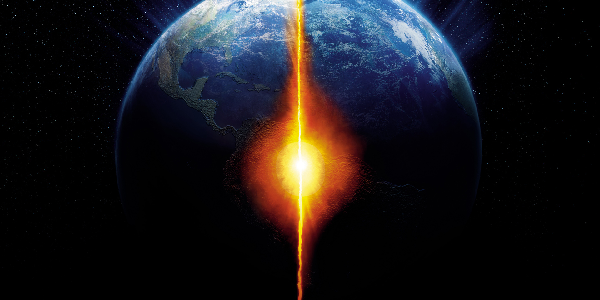
We suppose that's something of a mercy killing considering what happens next, though. Have you ever seen The Core? You really should, it's hilarious. It's about the Earth's core suddenly "stopping", which causes - amongst other things - pigeons to be thrown off and start flying into buildings en masse, tidal waves, earthquakes, and every other natural disaster a special effects house could pull off. Don't worry, though, this was a Hollywood blockbuster, so a team of smart people (including Hilary Swank, Aaron Eckhart and Stanley Tucci) burrow to the centre of the planet and detonate nuclear bombs to get the sucker started up again. It's not the most scientifically accurate of movies. For one thing, the core mucking up would cause far, far more trouble. And by "would" we of course mean "will", since we've been going through the generally agreed upon future the pessimistic/realistic and rational scientists and today think the Earth has in store. 2.3 billion years from now there will be no proper life on the planet, everything will be devastated and eroded and covered in magma and craters and radiation, and generally we're skeptical about whether we wanna go there on holiday any more. To make matters worse - because they can always be worse - this is when the the Earth's outer core freezes, causing the planet's magnetic field to shut down, with charged particles from the Sun consequently decimating what little atmosphere Gaia had left. This is already after the Sun has increased temperatures to the point that most of the water which covers the Earth (there's a lot of it) has evaporated.

1. 7.59 Billion Years From Now: Destroyed By Falling Into The Sun
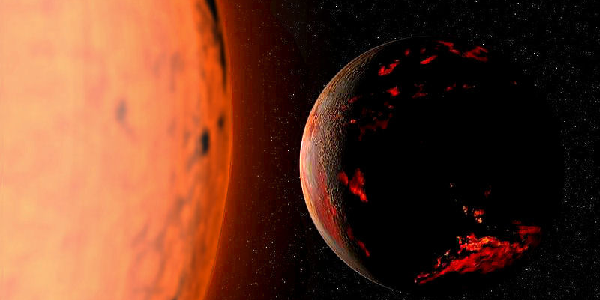
Spoiler alert: the Sun is essentially the Earth's arch nemesis in the story of the planet's final years, the supervillain which will ultimately be responsible for its demise. It's a cruel, tragic irony that the huge burning start which allowed life to flourish on our little celestial body is also the one to snuff it out, which is probably comparable to some old Greek play about a dude killing his kids by accident or something. If Freud didn't have a theory based around a myth, we probably haven't been told it by our therapists. Erm, we mean we haven't heard of it. So here it is, we reach the final curtain, the scientific fact which blows the minds and kickstarts the tear ducts of every child foolish enough to ask too many questions when learning about the solar system at primary school. Nearly 8 billion years from now, most life on the planet will have been expunged by the growing temperatures of the Sun. At this point even the single-celled organisms will have died out, with even the Earth's poles reaching an average temperature of 147°C (for comparison, that's way above boiling point, or round about the heat of a freshly-run bath when you dip your big toe into it). The freezing of the planet's core will have thrown us off balance as it is, and the Moon's increasing distance will make the Earth's tilt chaotic and extreme. Essentially this is around the time the Earth turns into a giant, dead spinning top, floating wildly through the cosmos without a care in the world (or at least anybody to give one). The planet will not appear anything like we know it today, with conditions on the surface having more in common with the Venus of today. Have you ever been to Venus? Of course you haven't, nobody has. Why would you. You'd die. Then, when all seems lost, the Sun will reach the peak of its red giant phase, ballooning to a size 256 times larger than it is today, swallowing up the Earth completely. And we are not afraid! Because we will have died a long time ago.

 
Posted On: 
Contributor
Contributor

Tom Baker is the Comics Editor at WhatCulture! He's heard all the Doctor Who jokes, but not many about Randall and Hopkirk. He also blogs at http://communibearsilostate.wordpress.com/