7 Things You Should Never Say To A Scientist
"Well, it's all just relative isn't it?"

Obviously, there are a lot of things that a scientist doesn't want to hear.
"Your thesis is due", "That flask looks like it's about to blow" and "This paper is behind a paywall" are all doozies, but in the wider world of scientific understanding, there are some things that make the science-minded's blood boil.
For a start, there are lots of scientific concepts that make their way into the real world, getting twisted, poked and misunderstood along the way. Then there are those who do it on purpose to push their own agenda and those who believe everything they say.
If you really want to annoy a scientist tell them that you reckon that vaccines cause lesbianism, climate change is a liberal cover up by people who hate American freedom and evolution means that humans will all one day evolve flat thumbs for better texting.
Be sure to mention that science is just a sort of religion anyway and then tell them that their field isn't a proper science.
Particularly if they're a geologist.
So, whether you want to use this list as a warning or some inspiration, let's take a look at some sure-fire hot buttons for people who love science.
7. Science Is An Act Of Faith Too

There's this idea floating around that science is a system of belief, in the same way as something like Hinduism or believing in fairies. Apart from anything else, science isn't a "thing", a system of beliefs, but a method of enquiry. It's more of a verb than a noun.
The thing is about faith is that it requires you to have total trust and confidence in something, before you have been shown the evidence. Scientists will only put their trust in something after it has been proven, and even then will continue to put their best efforts into disproving it.
Einstein could perhaps be seen as one of the most revered figures in science, and yet all manner of scientists - from astronomers to theoretical physicists - have devoted that last century to trying to prove him wrong.
We feel like science is an act of faith, because we learn "science facts" and other things in the same way, by reading or hearing them, so they feel the same. The difference is that, ask a scientist to prove something and they will, to the best of their (and your) ability. Ask a faith leader to prove something, and they will tell you to have faith.
6. Yeah, But It's Only A Theory

One of the most misunderstood terms in popular science knowledge has to be "theory".
Everybody has seen or heard it used as a stick to beat everybody from evolutionists to climate scientists with, and this is down to the difference between its colloquial and scientific meanings.
In day-to-day life, it's not incorrect to use "theory" to mean "I have a vague hypothesis", but in science, you have to be dead sure before you start throwing the T word around. In a scientific context, a theory is a way of describing demonstrable facts and laws.
For example, Evolution by Natural Selection is a theory. Evolution is the "fact" bit, we know that living things evolve, the "by natural selection" bit is the theory that describes its mechanisms.
The thing is about saying something is just a theory is it makes it sound as though that isn't a big deal.
5. I Don't Really Trust Things That Aren't Natural

Say this with me: Everything. Is. Chemicals.
There's a logical fallacy in a lot of anti-science called the appeal to nature fallacy. It's the belief that if something is "natural" then it is automatically better. You know, how arsenic is better for you than Dr. Pepper (oh wait).
The ideas of "natural" and "synthetic" are slippery blighters. You could argue that "natural" would mean anything that is naturally occurring, and "synthetic" is anything that is made, but even that is fraught with problems. Honey, for example, is not naturally occurring, the bees synthesize it - they even put a little lid on it - yet none of the natural brigade would say it's synthetic.
On the other hand, insulin for diabetics is synthesized using GMO bacteria. That's just a string of hot-button buzzwords and yet the stuff literally saves lives.
4. Well Scientists Think That Quantum Physics Explains The Soul

Even worse than the almost willful misinterpretation of "theory", is the commandeering of scientific concepts to support woo.
Quantum physics is the worst for it. This is largely due to its slightly ethereal public image, with terms like "quantum weirdness", "indeterminacy", "uncertainty" and paradoxes such as Schrodinger's Cat.
There's usually a lot of mileage in the principle of wavefunction collapse, in that the act of observation "determines" the state of quantum particles. People have taken this and run with it, coming up with the various ways humans consciousness can manipulate reality itself. In reality, it has nothing to do with consciousness, the observation could be, and is, made by a detector.
Anyway, regardless of which bit of science you decide to smash together with spiritualism (yes, including "we're all made of star stuff", Sagan would be appalled), don't.
3. Teach The Controversy

This is a gripe that used to be squarely aimed at creationists, specifically the Discovery Institute, but it has extended its boundaries to cover all manner of pseudoscience recently.
The idea of "teaching the controversy", basically originates from a belief that, when teaching children about evolution, we should also include the "problems" that non-scientists (particularly religionists) have with it, and teach it alongside Intelligent Design.
Aside from the fact that the Old Testament is the older source material, and therefore teaching evolution is teaching the controversy, teaching two relatively unrelated fields in the same context is how we get into the "science is an act of faith" mess that we mentioned earlier.
More generally speaking, the idea that "there are two sides to every story" has seeped into discussions of science in general. This ignores the fact that, whether you're talking about vaccines and autism or man-made climate change, the "other sides of the story" have already been considered and found wanting. That's how you science.
2. Not All Scientists Agree About Climate Change
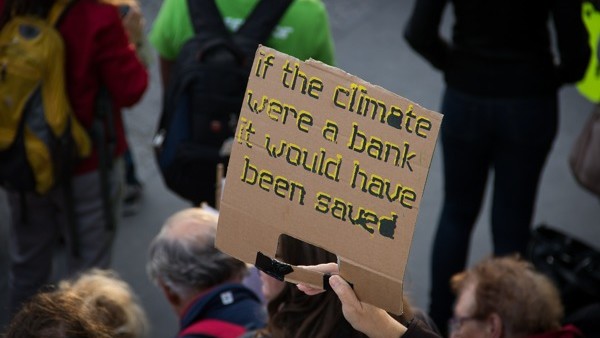
Speaking of controversy and the nonexistence thereof, the climate change consensus is just that: A consensus.
The well known statistic that "97% of experts agree that man-made climate change is real" is, for some reason, not convincing enough (whereas "this one guy reckons vaccines cause autism" is just fine). People tend to think that the figure is wrong or made up or they focus on the 3%.
That 97%, it should be clarified, is amongst experts and not the entire scientific community. A common tactic used by climate change deniers is to include non-experts in their statistics - it would be like getting your barber's opinion on your fillings and then saying your dentist is an idiot. Additionally, a number of the studies that found that climate change is not man made were funded by, surprise surprise, the fossil fuel industry.
The climate change "debate" is an invention of non-scientists and politicians with a vested interest in keeping those fossil fuels burning. Amongst the experts, there is no debate: It's happening, and it's us.
1. Science Doesn't Know Everything

This is another logical fallacy known as God of the Gaps. It relies on the assumption that, because science doesn't know everything, then it doesn't anything.
It's true, science doesn't have all of the answers, but then it doesn't claim to. If anything, the fact that we don't yet know how consciousness arises, or quite how gravity works, is an indication that we should definitely keep sciencing so that we can find out.
Filling the gaps with metaphysical or supernatural explanations just means that we block ourselves from ever filling those gaps in and, what's more, ever building on them. It's like trying to build a brick wall, but occasionally replacing bricks with blocks of jello. The space is technically filled, but it makes the whole structure less reliable.
Do you have a particular pet peeve? Let us know in the comments.
Hey, you, yeah you. Want some more science? Like us on Facebook or follow us on Twitter for plenty more where that came from.