15 Most Incredible Scientific Discoveries Of 2015
Water on Mars, hearts on Pluto, and the "impossible engine". It's been a hell of a year for science.
2015 has been a big year for science. The Wikipedia page for breakthroughs in 2015 alone is nearly 12,000 words long, and contains a roll call of some truly amazing discoveries and breakthroughs that those hardworking scientists made this year. This was the year in which we all got a bit more excited about Mars, came one step closer to Jurassic Park becoming a reality, and came together in support and admiration for an icy little dwarf planet at the edge of our solar system. It seems that, with every new announcement, we get closer and closer to turning science fiction into science fact. What with the leaps in artificial intelligence, space exploration, gene therapy and medical science, it looks like we could be living in the future sooner than we thought. Take a look at our round-up of 15 huge scientific breakthroughs in 2015, and look forwards to an equally mind-boggling 2016.
15. Our Solar System Probably Has At Least Two More Planets

14. Genes Responsible For 200-Year Lifespan Discovered In Whales
The Bowhead whale lives for a remarkably long time, with studies estimating that they can live to at least 211 years old. A Bowhead born in 2015 would be likely to live to 2226 - around the time scientists predict that we will have developed anti-matter powered spaceships. Anyway, a team from the Liverpool Centre for Genomics Research in the UK, set out to discover the secret to their longevity by sequencing their genome. A long-standing mystery in science has been the fact that large whales, with more than 1,000x more cells that humans, should be at much higher risk of developing cancer, and yet they remain amazingly cancer-free. The research into the Bowheads' genome has revealed that they have unique mutations in two of their genes that could be responsible for cancer resistance, age prevention and DNA repair. They have also found that large whales tend to have a much lower metabolic rate than smaller mammals, possibly contributing to their longer lifespans. It is hoped that this research could help us to fight cancer and other age-related diseases, and perhaps even slow the aging process itself.13. 2.8-Million-Year-Old Human Jawbone Discovered

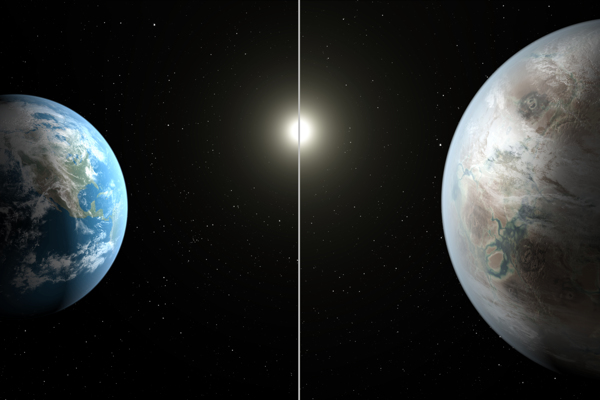
12. Kepler-452b Is Basically Earth 2.0
11. Woolly Mammoth DNA Inserted Into Elephant Cells

10. Scientists Create "Cyborg Flesh"

9. OpenAI
As robots get smarter, people are understandably more and more worried about the robot uprising. Silly as it sounds, it is slowly moving from the realms of sci-fi to reality, and some think that if artificial intelligence ever gains the ability to redesign itself, we're basically screwed. Powerful AI, in the hands of the few is a pretty dangerous thing. This is why Elon Musk, founder of SpaceX and Tesla, launched OpenAI in 2015, an open-source, friendly AI to benefit humanity rather than harm it. OpenAI states that AI "should be an extension of individual human wills and, in the spirit of liberty, as broadly and evenly distributed as possible..." and the hope is that this will help level the playing field a little bit in the face of large corporations such as Facebook and Google. See, not all hugely wealthy business magnates are bad people.8. First New Antibiotic In 30 Years Discovered

7. Fusion Power Breakthrough
Fusion power, if we can nail it, could well solve a great deal of our energy problems. It produces a vast amount of energy and faw less radioactive waste than nuclear fission. To give you a good idea of its potency, nuclear fusion is how the sun produces its energy. The radioactive material from a fusion reactor will only remains dangerous for around 50 years, as opposed to the thousands of years from nuclear fission. The only problem is that fusion is really hard. There is light at the end of the tunnel, however, as a company in Los Angeles claim to have made a major breakthrough in the development of nuclear fusion. The thing is, to produce fusion power, you have to find a way of containing plasma at temperatures of at least 100 million degrees Celsius. This, as you might imagine, would melt any container you put it in, so you have to find a way of working with it without touching it. A privately funded company called Tri Alpha Energy claim to have taken another step towards this, containing superheated hydrogen plasma for a whole five milliseconds. Doesn't sound like much, but this just goes to show that it can be done, which brings us one step closer to clean, affordable energy that doesn't cost the earth in any sense of the word.6. 'Impossible' EM Drive Propulsion

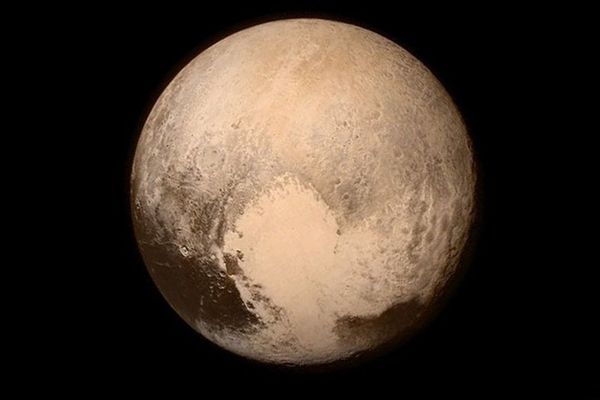
5. Pluto New Horizons Flyby
4. HIV Vaccine
Ever since its outbreak in the 1980s, the letters HIV and AIDS have struck fear into the hearts of many, However, in early 2015, scientists in America reported that a radical new approach to vaccination may be the key to discovering a cure for the disease. Usually, vaccinations work by introducing a weakened form of the pathogen into the body, in order to allow the immune system a chance to learn how to fight it off without the risk of contracting the full blown illness. This means that the next time the body comes into contact with that particular pathogen, it will know how to fight it. However, the HIV vaccine will work a little differently. This vaccination works by altering the DNA itself to fight off the HIV virus. It works by delivering a new section of DNA into healthy muscle cells. Contained within this new DNA are instructions for how to fight off the disease. Although the research is in its early stages, the experts reckon that it will be invaluable in treating people already living with HIV, as well as protecting those who are at risk.3. Ceres Bright Spots

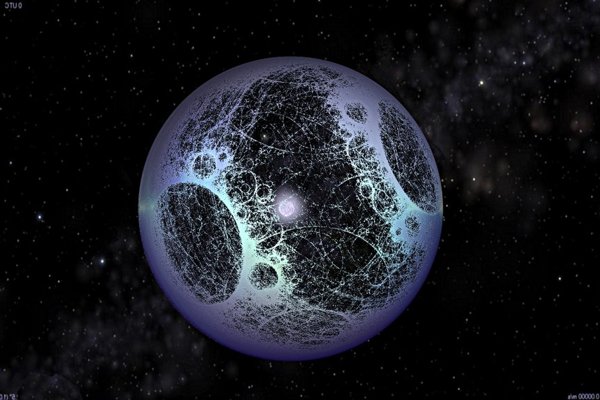
2. The Alien Megastructures That Never Were