10 Famous TV Characters Who Randomly Changed Personalities

Which character arcs left you the most bemused?
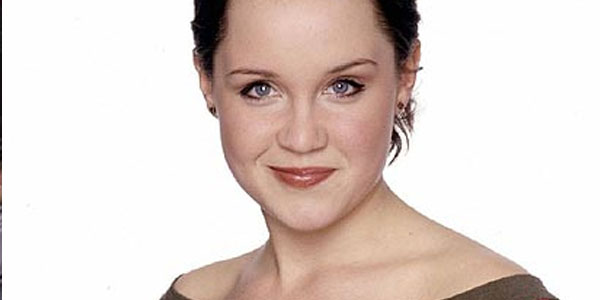
One of the more insignificant characters to appear on British TV, Eastenders introduced Vicki Fowler a few years ago, Sharon's long-lost sister from the States. She had an appalling US accent, so she went on holiday, and came back British. The producers hoped that no one would notice. It was an unfortunate chapter for the show, and one that reaffirmed why soaps aren't considered with much respect. A good character arc is one of the most rewarding aspects of a television series; it's why Walter White is so revered worldwide, and it's the beauty of regeneration in Doctor Who; the gradual transformation of a character is one of the advantages of television over film, as it rewards consistent viewership, and gives us a journey to go on. Rather like the disastrous Vicki though, some characters though seem to change inexplicably overnight, without so much as a bump-to-the-head storyline. Often, there's no mention of an arc, no reference to their development, and no explanation of why a character's suddenly been bumped up a few IQ points, or decided to abandon their morals. Television evolves, we know that, but when shows make nonsensical changes to characters, just so that they can adapt, it can change the show for the worse. Let's take a look at ten big characters who went through random revolutions: which character arcs have left you bemused? Comment below!

10. Neil Sutherland - The Inbetweeners
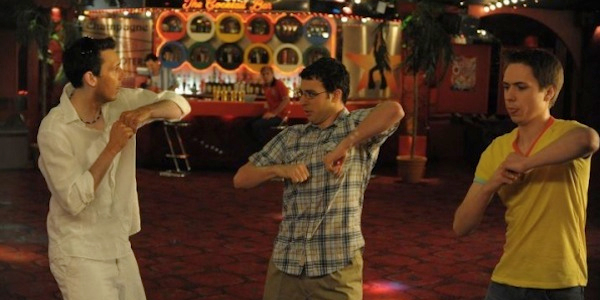
Every comedy group has the not-so-bright one; it's Joey in Friends, and it's Jez in Peep Show, despite the fact there's only two in that particular group. The Inbetweeners writers Iain Morris and Damon Beesley seem to be on a quest to push the boundaries of just how stupid a single character can be, though. In the Inbetweeners, Neil Sutherland started out as a bit slow - losing money on fruit machines, and not always understanding jokes implying his dad was gay - but as the series developed, it turned out that Neil was actually more stupid than anyone could've imagined; in the third series he asked Will if pesto was for humans, and whether Swansea was an animal. There's been no explanation in-show about why Neil's gone from below average intelligence to utterly thick over a two-year A-level course; The Inbetweeners Movie found him fake-tanning his face for seemingly no reason at all, revealing that he stopped believing in God when he realised it was just "dog" spelled backwards. A second Inbetweeners Movie was recently announced; it will be interesting to see just how dumb poor Neil has become in the interim since the last one.

9. Eric Matthews - Boy Meets World

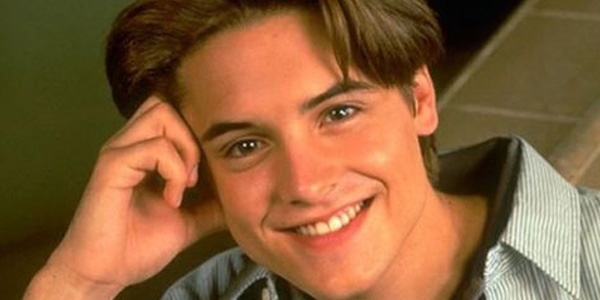
Coming-of-age shows can have such huge character developments; it's hinted in the genre title. 1990's US sitcom Boy Meets World however turned this idea upside down, by devolving one of the lead characters as the show went on simply to turn him into a comic relief. Eric Matthews - elder brother of Cory, the titular Boy of the show - began Boy Meets World as a charming ladies' man, always dating somebody and with a quick turn of wit; in the first season, he spared a whole assembly from finding out the horrors of the real world, lied about failing his driving test and generally came across as intelligent and exciting. He was a stereotypical older brother: so what happened? Eric suddenly became an altogether more ridiculous character; he was the butt of jokes, not bothered about being cool anymore, and in one episode, chose to stalk a girl in a variety of crazy disguises. It seemed like Eric had taken a hit to the head at some point - in one episode, he does knock himself out inside a car; the change did happen soon after that - but some fans have theorised that the show is from Cory's perspective: when Cory was younger, he thought his big brother was cool, but the older he got, the more he saw him for the scatterbrained idiot he actually was.

8. Spock - Star Trek

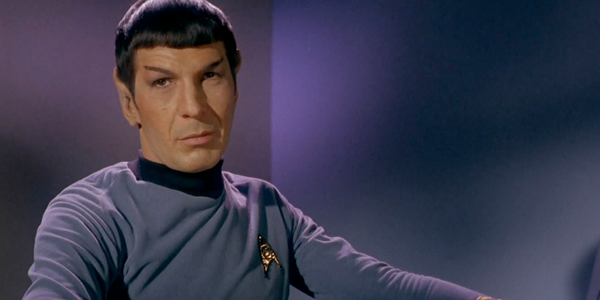
Before the movies came the TV series, and before Zachary Quinto, came the iconic Leonard Nimoy as everyone's favourite Vulcan, Mr Spock. Would Spock still be your favourite Vulcan if he'd never changed from the pilot though? He's probably the only Vulcan you know, but you wouldn't recognise Spock from his early days. The Enterprise is still the same, the quest to boldly go where no man has been is still as strong as ever, but Spock was a hostile, demanding, and actually, quite passionate young man; perhaps the most famously logical character started life as a warm antithesis to Captain Pike (who would be replaced by Captain Kirk later on). Leonard Nimoy would evolve the character as the series progressed, but the initial revolution from emotional crew member to cold, wise alien is one of the most amazing in screen history. When NBC were shown the pilot, they rejected it, and wanted Spock and Majel Barrett's character, Number One (who was Pike's second-in-command) to go. Gene Roddenberry had to fight to keep one of them, choosing Spock, and giving him a lot of the character traits that Number One showed, though he gave Barrett a different role in the show, and eventually married her.

7. Leslie Knope - Parks And Recreation
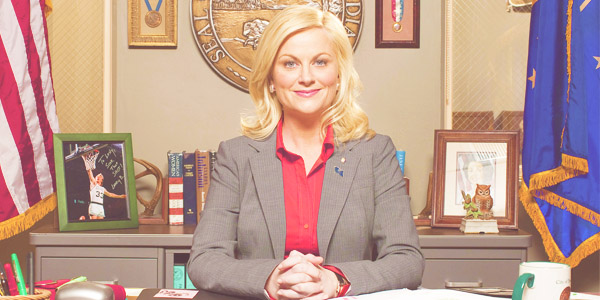
Ricky Gervais will no doubt tell you just how influential The Office (both UK and US) has been on sitcom culture; a laughter track is no longer seen as the must-have and drama is much more closely intertwined with hilarity than it used to be. Some critics argued during the first season of Parks and Recreation though, that lead character Leslie Knope was a rip-off of The US Office's hapless boss, Michael Scott. The writers have claimed that Leslie started off far more ditzy than planned. She wasn't wasn't particularly good at her job as deputy director of the Parks and Recreation Department, and her own exploits would overshadow the rest of the show; there would be minor subplots involving the show's hero Ron Swanson with real potential for comedy gold, that would be sacrificed for Leslie reacting childishly or theatrically to everyday situations. Critics sparked a change in Parks and Recreation though, as from the second season onwards, Leslie's become an awful lot more bearable and a lot more intelligent. These days, the show revolves a lot more around the dynamic between Ron and Leslie. It makes sense, given that Ron's the most exciting character, and it adds a new depth to Leslie; it's a change that needed to happen.

6. Randy Hickey - My Name Is Earl

My Name Is Earl is a show about a man who's learning to become a better person; he believes in karma, and believes that by visiting a list of everyone he's ever wronged and doing something to make up it, unlucky things will stop happening to him. It's understandable that Earl would have a significant character shift over the show's four seasons, but brother Randy also changed dramatically, seemingly for no reason. The pair both start off dislikeable rednecks; Earl is a desperately luckless, selfish and nasty thief with Randy being equally nasty, tough, street-wise and a heavy drinker. As Earl becomes more enlightened with his mission to do good, Randy also changes, but instead of just becoming a nicer person, he becomes more naive and childlike as the series go on. It's hinted by Earl that Randy may be autistic, and as the series progresses, the writers seem to draw more and more on the simple side of his personality, forgetting that he was cleverer and tougher at the start of the show. Randy was never that innocent in the early days of the show though. As My Name Is Earl veered more towards Earl's ex-wife Joy, and her constant scheming, both Randy and Earl became more likeable characters. Earl had a reason to be, but what's Randy's excuse?

5. Gene Hunt - Life On Mars/Ashes To Ashes
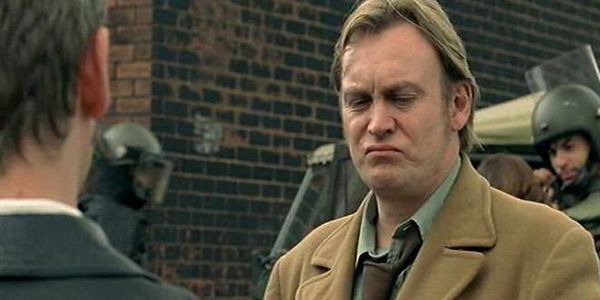
Life On Mars was a huge hit all round. A cop from 2006 is involved in a car accident, wakes up in 1973, and his boss is a gruff, politically incorrect, Mancunian man's man, who doesn't do things by the book. The pair clash on cases, often with hilarious consequences, as Sam Tyler's 21st Century policing techniques are ridiculed by DCI Gene Hunt and his team. When a spin-off was announced, this time starring Keeley Hawes as the time-travelling police officer, expectation was high; the Gene genie had become one of the most adored characters of British television, with his no-nonsense, brash and offensive one-liners having made him the most interesting character for many. Disappointment though was high following the first series of Ashes To Ashes, as the previously fearless Hunt had now become incredibly toned down; he didn't speak his mind anymore, he wasn't as quick-witted, as violent or as condescending, and he seemed to lust after Hawes's character Alex, without actually making a move. Eight years had passed in the show; it was a new decade, he'd divorced his wife and Sam Tyler had left a lasting impression with the Guv, but many were underwhelmed with Ashes to Ashes, and its watered down anti-hero. The final reveal that Hunt was a guardian angel seemed massively out of character from the fag-smoking, heavy-drinking asshole of Life On Mars.

4. Granville - Open All Hours/Still Open All Hours

David Jason had reportedly been angling for a Open All Hours return for years, despite star Ronnie Barker having died 2005. It would be interesting to see if Jason's Granville had inherited the shop, whether the spirit of Arkwright still lived on, and how the business was coping in the 21st Century. Bizarrely though, when that episode came this Christmas just gone, it totally ignored many of the character dynamics that had many the show so successful: the main one being the star of the rebooted show. In the olden days, Granville longed to leave the shop and experience romance; he didn't see the point in his uncle's stinginess, and he knew that there must be more life than selling ginger cake and toilet roll. Come 2013 though, Granville was stingy shop owner, apparently unmarried, and following in Arkwright's footsteps, proclaiming how much he'd taught him about running a business, and flogging anchovies just like his mentor. He resented everything that Arkwright stood for: why did he turn into him? There were hidden layers in the special that never got to be explored. Everything that had happened in the time between then and now was explained in shamelessly expositional dialogue, and there was no mention of who Granville's new apprentice was, why Granville carried on the business, and what made him change so much. If Jason's still hoping for more episodes, maybe the show can elaborate on the lead character's 180 degree personality change; it's one that's still confusing anyone who watched the special.

3. Ross Geller - Friends

Everyone changed in Friends: Joey became more daft, Rachel became less spoilt, Phoebe became more kooky, Chandler became more secure in himself, and Monica became more annoying. But no one changed more than Professor Ross Geller, the man who got divorced three times and ended up with his childhood sweetheart. It's easy to forget that he's a professor though, watching the later series of Friends. He started out as a serious yet submissive man; he had a self-esteem issue, probably brought on his wife leaving him for a woman, but was witty, vastly more intelligent than some of the characters but kind to the other members of the group. As the show went on though, he just became neurotic and ridiculous; the episode when he gets drunk and makes fajitas for Joey and Rachel is a particular highlight of this trait, but his irrationality begins to grow after his ill-fated marriage to Emily. The same extremely logical man, who made a list of whether to choose between Rachel and his then-girlfriend, stayed married to Rachel without her knowing, simply because he loved her: where did your judgement for the future go, Ross? It's more than plausible that Ross went through a huge midlife crisis; much of his craziness could be attributed to going through three bizarre marriages, but why did he suddenly become as wacky as the Joey? He had so much more to lose; this man started off as a respected professor and was later suspended because he got angry over someone eating his sandwich. And we never got a reason why.

2. The Master - Doctor Who

You can't expect everything you liked about a show to survive a 16-year hiatus. When Doctor Who was revived in 2005, it brought new Cybermen from a parallel world (sadly not from Mondas), a no-nonsense Doctor with a sensible haircut and a suitable jacket, and it focussed more on the companion and her family than ever before. If you complained, you were advised to thank your lucky stars Russell T Davies didn't reinvent the protagonist as half-human. The character of the Master though is one of the bizarrest personality crises of any huge television villain ever. Sure, we realise that he can regenerate, but into a stark-raving madman? Suddenly, the Master had always had a drumbeat in his head, something that was never alluded to before. The suave, calculated evil that Roger Delgado so brilliantly laid the foundations of was now replaced by John Simm, dancing to the Scissor Sisters and marrying an Earth girl; his return in 'The End of Time' only signalled a weirder direction, as the Master became bleach-blonde, incessantly hungry, capable of shooting lightning from his palms - why on Gallifrey can he now do that? - and intent on turning the whole human race into his clones, for apparently no other excuse than his own vanity. The Master has much more control over his regenerations than the Doctor ever has; why he'd choose to be more bonkers is beyond anyone, despite how entertaining Simm was in the role. The new look Master might not have impressed Steven Moffat enough to bring him back, but he's certainly influenced Andrew Scott's unhinged Jim Moriarty in Sherlock. One psychopath nemesis per franchise, Mr Moffat?

1. Stewie Griffin - Family Guy

It's hard to believe the continuity that Family Guy creator Seth MacFarlane sometimes invests in the show; four seasons after Peter crashed the Petercopter for example, Lois made a reference to their financial situation, and claimed it was down to the catastrophic flying machine. Likewise, it came out in an interview that Peter had destroyed a children's hospital, and that just because this is a cartoon, it didn't mean people had forgotten. So why exactly has Stewie Griffin turned from a matricidal villain to Brian's camp, child-genius sidekick? In the early days of the show, a Stewie subplot would revolve around plans to kill Lois, as the main action focussed on Peter. Stewie's schemes wouldn't come to anything, and it was often implied that this aside was simply happening in Stewie's imagination; he didn't really interact with anyone else, as he was just a baby. As the show's grown though, Brian and Stewie have been embarking on adventures together, meeting the likes of Vladimir Putin and visiting a plethora of parallel worlds amongst other things. The recurrent gags are are important ever; Stewie has finally killed off Vern and Johnny, bringing more of a close to an aside than his own character development, and Cleveland's bathroom still gets destroyed, even with him gone. The desire to kill Lois hasn't been mentioned for years though, and the references to Stewie's sexuality have gone from mild insinuations to the character enacting full-blown fantasies. Many cite Stewie's "outing" as one of the reasons the show's headed downhill, and some seem to think that maybe Roger from American Dad has influenced Seth MacFarlane's decision to change Stewie. Every character in the series has changed, but he seems to assumed a completely different role within Family Guy; maybe that's all part of his character growing up though.

In this post: 
Friends
 
Posted On: 
Contributor
Contributor

Mark White hasn't written a bio just yet, but if they had... it would appear here.