11 Doctor Who Actors Who Were Nominated For Oscars

Twelve nominations, and only two wins so far. It's a fix.

As long as there are Oscars, there will be a rich association with Doctor Who. Far from being the trashy sci-fi TV show that some cynics might unfairly label it, the show attracts a ridiculous wealth of talent, not just from other small screen productions, but from the stage and silver screen. It seems that appearing as either hero or villain alongside the Timelord (or actually as an incarnation of the lead himself) is a badge of honour for some of the greatest talents Britain has ever produced. With this year's batch of nominations now out, there is some strong representation with both Benedict Cumberbatch and Eddie Redmayne up for the Best Actor award, and though neither have appeared on screen in a Who episode, one has a strong association with the universe (more of which soon), and both will continue to be suggested as potential cast additions. Such is the grand tradition of casting confidently and seek the best acting talent, and not just genre cast-offs and cheap options. But which other actors have stood astride both the world's most famous movie awards and the universe's most celebrated time-travelling Doctor? Strangely enough, it seems that while picking up nominations from the Academy isn't hard for Who veterans, actually winning the awards is an entirely different matter. Did someone say conspiracy?


Honourable Mentions

Arguably the biggest star who almost played both the Doctor and was nominated for an Oscar - becoming the first black actor ever to get a nod for Best Actor - Chiwetel Ejiofor was apparently extremely close to playing the 11th Time Lord before he turned down the role, according to Neil Gaiman shortly after Peter Capaldi was announced. Sir Ben Kingsley - a winner for Gandhi and nominated again in 2003 - allegedly turned down Davros (though he refutes the claim), and Nigel Hawthorne, who was nominated for The Madness Of King George was offered the role of Captain Striker in Who episode Enlightenment but turned it down, before it went to Keith Barron. Other near misses included Bob Hoskins and Ron Moody, who apparently turned down the role of the Doctor in 1969 following the departure of Patrick Troughton and Judi Dench, who was wanted for the first female Doctor in 2003. And of course Oscar veteran Colin Firth apparently lobbied hard for a Doctor Who role in 2011, but so far his desires have been met with brutal rebuffal. It can surely only be a matter of time before he appears as a villain in a Christmas special...

11. John Cleese

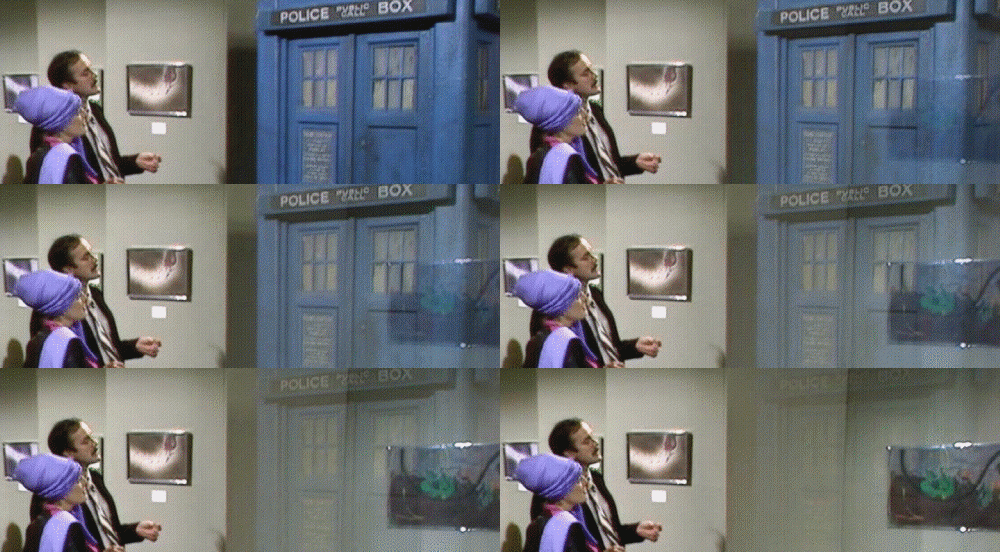
Best Original Screenplay, 1988 The iconic British comedian hasn't actually played a major role in a Doctor Who episode, but thanks to a pre-existing relationship with Douglas Adams, the Python actor was called up for a brief, funny cameo in fourth Doctor serial "City Of Death". Learning that Cleese was working in BBC TV Centre on the day the key scene - which was merely written with "two englishmen" in mind - Adams convinced him, as well as actress Eleanor Bron, to appear in the museum scene. They agreed as long as the cameo wasn't pre-announced, and on the secondary condition that they were billed as "Helen Swanetsky" and "Kim Bread" though the BBC refused that request. Cleese would later reuse the name Kim Bread for other projects. Rather than an acting nod, Cleese was nominated for a best original screenplay for A Fish Called Wanda in 1988, missing out to Rain Man.

10. Sophie Okonedo

Best Supporting Actress, 2004 Having turned a lot of heads for her performance in award-winning British TV show Clocking Off in 2002 (seven years after appearing in the mighty Ace Ventura: When Nature Calls), Okonedo turned back to Hollywood with Aeon Flux, but not before voicing companion Alison Cheney in Doctor Who animated series "Scream Of The Shalka" in 2003. And not content with only having her voice featured, she then returned to the Who universe in 2010 (the same year she was nominated for a BAFTA for Mrs Mandela) to play Liz Ten (Queen Elizabeth X) in "The Beast Below" and again briefly in "The Pandorica Opens". The actress picked up a nomination for her emotionally charged role in Hotel Rwanda in 2004, but lost out to Renee Zellwegger for Cold Mountain.

9. Benedict Cumberbatch

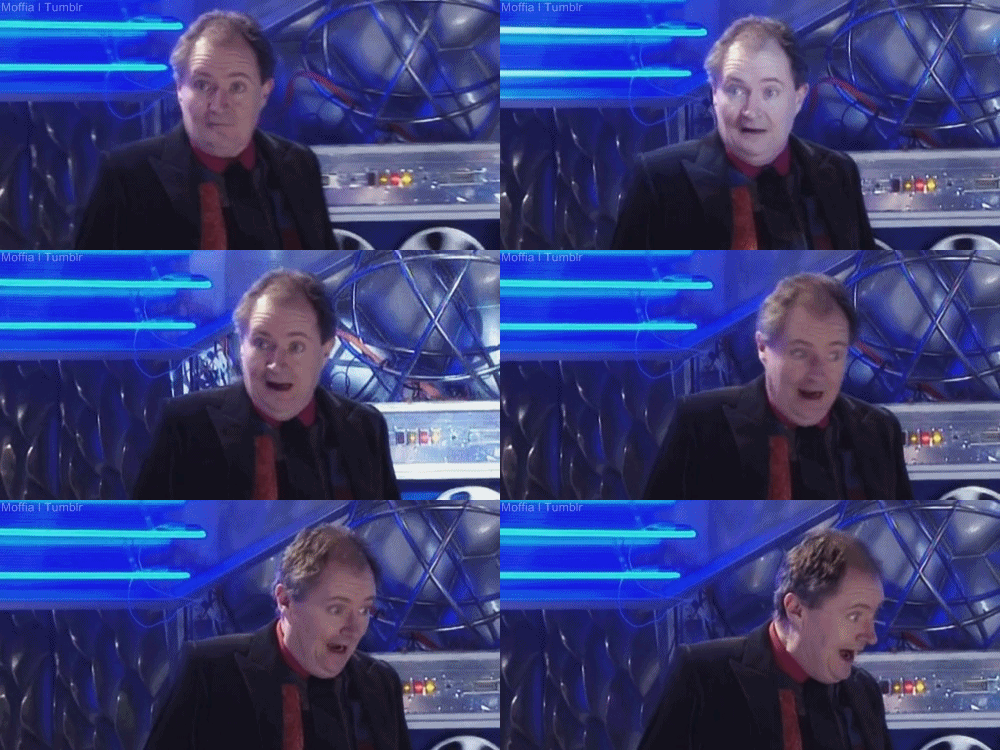
Best Actor, 2014 Despite frequent rumours that he's set to play either a Doctor (he batted away rumours that he had turned down the Eleventh Doctor) or a villain (including a new version of either The Master or The Valeyard), Benedict Cumberbatch has so far resisted the draw of the TV series, but he has played a character in the wider universe before. And it was his velvety, deep vocal notes - the same ones that made him the perfect choice for Peter Jackson's Smaug - that got him the job. In Big Finish audio story "Forty-Five", the distinctively voiced actor played adventurous archeologist Howard Carter, leading his team in the blistering heat of the Egyptian desert to find the lost tomb of Userhat, a servant of the god Amun. Inevitably they found something else entirely, changing the way humanity would consider their own history. Cumberbatch is now the latest Who actor to join the Oscar nominations club, thanks to the not unexpected recognition for his performance as Alan Turing in The Imitation Game.

8. Pauline Collins

Best Actress, 1989 Acclaimed stage, TV and film actress Pauline Collins is one of the few actors who has appeared in Doctor Who twice, like Sophie Okonedo playing a queen as one of her duel roles for the show. First up, she appeared as young Liverpudlian Samantha Briggs in 1969 serial "The Faceless Ones" opposite Second Doctor Patrick Troughton. Sadly only two episodes of the six part serial exist; Collins appeared in five of them. Then almost forty years later, she played Queen Victoria for 2006 episode "Tooth And Claw" opposite David Tennant, and drew inevitably favourable reviews for her performance. She of course picked up a well deserved Oscar nomination for best Actress in 1989 for Shirley Valentine, reprising her stage role, though she missed out to fellow Brit Jessica Tandy for Driving Miss Daisy.

7. John Hurt

Best Actor, 1980 The unmistakable figure of John Hurt caused some serious rumour-spinning in 2013 in the run-up to the Doctor Who 50th anniversary event when his existence was revealed in the finale of "The Name Of The Doctor." The subsequent revelation of his past, and the tragedy of his momentous war decision was a particular high-point of the anniversary celebrations and Hurt sold the performance perfectly. To think he might not have even been invited to play a part in the show had Christopher Eccleston not grumpily turned down the chance to re-appear is now inconceivable, and Hurt has forged his way into Whovian history in a very real, very poignant way. Unthinkably, Hurt's portrayal as Joseph Merrick in The Elephant Man wasn't deemed good enough to turn the Best Actor nomination into a win. But then when your major competition is Robert De Niro in Raging Bull, it's a little hard to argue.

6. Frank Finlay

Best Supporting Actor, 1965 Another face you won't recognise from any Doctor Who serial on screen, Frank Finlay is another - like Benedict Cumberbatch - who merely lent his voice to a Big Finish audio story. At the grand old age of 81, the acclaimed stage actor voiced the old version of Jacob Williams for the 2007 audio release 100, in the section "Bedtime Story" who tells the tale of his meeting with the Doctor and a family curse. Despite the fact that his performance as Iago in John Dexter's stage version of the Shakespearean classic - also starring Laurence Olivier - was widely panned by critics, when he reprised it for Stuart Burge's adaptation for the big screen it attracted high praise and earned a Best Supporting Actor nomination. He eventually lost out to Martin Balsam for A Thousand Clowns.

5. Imelda Staunton

Best Actress, 2004 The decorated veteran stage actress didn't actually have her face featured in Doctor Who (though that's not all that unknown for a show that so heavily uses make-up) and while hers was a vocal performance, it didn't come in an audio release. She lent her voice to The Interface, a computer system at the Two Streams Facility on the planet Apalapucia featured in the episode "The Girl Who Waited", that helped the native population in the face of a deadly plague. In 2004, Staunton was nominated for a Oscar recognising her work in Vera Drake, though she didn't win - this time missing out to Hilary Swank for Million Dollar Baby.

4. Jim Broadbent

Best Supporting Actor, 2001 It might be something of a stretch to suggest that Jim Broadbent is actually a Doctor Who actor, but the fact that his appearance is not canon does not dissuade from the fact that he genuinely played the character of the Doctor. And it is especially pertinent considering how well received his performance was, and how cherished the episode - "The Curse Of Fatal Death" remains. Along with Richard E Grant, Hugh Grant, Joanna Lumley and Rowan Atkinson, Broadbent played the Doctor for the comic short made specifically for Comic Relief in 1999 that saw four incarnations of the character killed off in a serious of unfortunate events, and which is probably the only sci-fi show to feature an alien race who communicate using flatulence alone. Broadbent is one of the few actors to have actually won an Oscar, in 2001 for Iris, beating fellow Who alumnus Sir Ian McKellen to the award.

3. Sir Ian McKellen

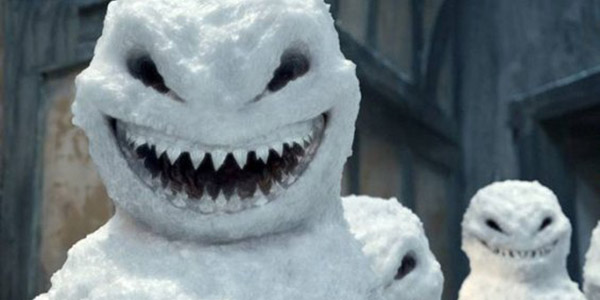
Best Actor, 1998 & Best Supporting Actor 2001 Another actor who didn't actually appear on screen for his role in Doctor Who, McKellen voiced The Great Intelligence, the arch-villain of Christmas special "The Snowmen", taking over from Jack Woolger, who had done the same job in 1968 (following on from Wolfe Morris' 1967 version). It's not hard to see why the classically trained thespian was chosen for the grand manipulator role, as his silky tones perfectly suited the character's agenda. Hopefully at some point soon he will be offered the chance to play another part in the show and actually appear on screen. McKellen has suffered the harsh feel of an Oscar snub twice, first being overlooked when nominated for the excellent Gods And Monsters in 1998 (Roberto Benigni infamously won) and in 2001 to Jim Broadbent despite how iconic his Gandalf performance was (very possibly justifiably, but it was a close run thing).

2. Carey Mulligan

Best Actress, 2009 It's easy to forget that Carey Mulligan is even British these days, considering how convincingly she sells her American accents, but the actress (and sometimes singer) cut her teeth in the same way as so many of her compatriots, in a Doctor Who episode. In 2007, Mulligan starred as Sally Sparrow in Blink, the acclaimed, beloved episode that introduced The Weeping Angels (arguably the best addition to the monsters canon from the modern series), and which was undoubtedly among the best episodes of David Tennant's tenure as the Doctor. The episode attracted numerous awards nominations (and wins) and Mulligan's performance earned her a Constellation Award. She couldn't repeat the win two years later at the Oscars though, as her Best Actress nod for An Education lost out to Sandra Bullock for The Blind Side, amidst some controversy.

1. Peter Capaldi

Best Live Action Short Film, 1995 Before Capaldi appeared in Doctor Who the first time - in 2008 - and even before he was earning himself a reputation as the greatest sweary British character of all time in The Thick Of It, he was setting out in the world of film as a director with Franz Kafka's It's A Wonderful Life, an absurdly comic short about the author's attempt to write The Metamorphosis. The short, which incidentally also starred Whovian actor Richard E Grant, who has played both villain and Doctor (albeit in The Curse Of Fatal Death) for the show, won an Oscar jointly with Peggy Rajski's Trevor, making Capaldi one of the few Who actors to actually win an award at the ceremony. That wasn't his only foray into film directing wither: he also wrote Soft Top, Hard Shoulder, wrote and directed Strictly Sinatra and directed the BBC Four sitcom Getting On, as well as writing A Portrait of Scotland,The Cricklewood Greats, and wrote and directed Born to be King in 2013. Do you think the Who actors have been badly done to at the Oscars? Who deserved to win?

In this post: 
Doctor Who
 
Posted On: 
Contributor
Contributor

WhatCulture's former COO, veteran writer and editor.