15 Worst Episodes Of The Simpsons (And What They Represent)
What Lady Gaga's Simpsons episode says about the show's decline...

The Simpsons has been on the slide for a long, long while. Punching down on it isn’t even fun; it’s agreed by pretty much everyone that it’s a shadow of its former self. There’s too many terrible episodes to even count.
Despite the title, this isn’t so much a definitive worst episodes ever (that’s too subjective anyway) but more a look at fifteen episodes which, more than any other, are emblematic of the downfall.
Not only is it important that these episodes aren’t funny and have terrible narratives (though that’s true across the board), but that they fundamentally represent where, when and why The Simpsons went so wrong.
If you love the characters, go in with low expectations and think of modern episodes as being more of a spin off/reboot of the Golden Era, Season 30 is still watchable, although it does occasionally punch you in the gut for being stupid enough to stick around.
With over 650 episodes, you could easily find 100 stinkers, so there’s a lot of great (or rather, poor) candidates which didn’t make the cut. These though are not only bad episodes, they strike at the very heart of why The Simpsons is a husk of its former self.
15. The Principal & The Pauper

What It Represents: The start of the decline.
The Principal & The Pauper is the one and only Golden Age episode on this list, and while there’s plenty of arguments to be made that it’s not inside the worst fifteen, it represents the first time The Simpsons really took their eye off the ball.
Laugh wise, no, it’s probably not in the worst fifteen. There’s possibly fifteen worse than it across Seasons 29 & 30 alone. But this isn’t about just kicking the show when it’s down. Instead, we need to explore just why it fell down in the first place.
Apart from some teething problems in the first couple of seasons, The Principal & The Pauper was the first negatively received episode of the show. Even Harry Shearer, who plays Skinner (as well as Smithers, Flanders, Burns etc) , has been a vocal critic of the episode.
Shearer claimed it ‘tossed [Skinner’s development] in the trashcan for no good reason’, then showrunner Bill Oakley considers it his most controversial episode, and even Matt Groening called it ‘a mistake’ in an interview with Rolling Stone.
The Principal & The Pauper was a grim warning of things to come.
14. Bart Vs Itchy & Scratchy

What It Represents: Lazy social commentary/Lisa the villain.
A bit of a twofer here, as it represents how the once satirically delicious show is now toothless at social commentary, and how Lisa is constantly made to be the villain.
The episode begins with Itchy & Scratchy doing a female led reboot; a relevant idea with potential. Predictably, it’s squandered. It’s impressive how well they misrepresent every viewpoint involved too.
Firstly, it suggests the reason people don’t watch lady reboots is because they think girls are gross (not the case). However, it then tries to paint them (Bart, Milhouse, Nelson) as sexist and misogynistic; they’re ten. They just want to watch their cartoons.
It doesn’t stop there though. The feminists ‘win’ by tear gassing a room full of boys until they cry... hooray? Not only is this not really a goal of any feminist anywhere, it has no links to the lady reboot and perpetuates the toxic idea that boys can’t cry.
Lisa plays an antagonistic role several times in Season 30, often acting way out of character too. Even episodes like Girl On The Bus, where she’s closer to how Lisa used to be, are terrible, bland, and show her as a mean spirited brat.
13. That ‘90s Show

What It Represents: Retcons.
One of the most vocally disliked episodes of the show, it actually holds up pretty well when compared directly to the other bad episodes, and retcons aren’t a massive issue, so it has a relatively low placement here.
Make no mistake though, That ‘90s Show is still terrible. It needlessly updates and complicates Homer & Marge’s tried and tested backstory, with Marge going off to college. She then falls for her snooty professor and their relationship is on the rocks... despite the established timeline telling us they’re married and pregnant with Bart by now.
Homer then forms Sadgasm, a Nirvana style grunge band, and things start to really spiral.
The problem isn’t just this episode not being very good though. Its entire existence renders I Married Marge, The Way We Was and the subplot of A Milhouse Divided almost completely pointless, despite them offering some of the best narratives the show has ever seen.
You could perhaps forgive the damages on a story level though if it was funny. After all, that’s the defence often trotted out for The Principal & The Pauper. Frankly though, That ‘90s Show simply isn’t, and cant save its own terrible idea.
12. Kill Gil, Volumes I & II

What It Represents: Bad seasonal episodes.
The Simpsons, like any long running animated show, tends to stretch the season a little by having some seasonal episodes. Christmas is a main stay, but Easter, Thanksgiving and occasionally New Years or Valentine’s Day get an episode thrown their way.
While Skinner’s Sense Of Snow or Bart Vs Thanksgiving provide great stories (even if Bart Vs Thanksgiving is a little rough around the edges), modern offerings feel lazy.
Most recently, ‘Tis The Thirtieth Season - named after ‘Tis The Fifteenth despite no connection - was another lowball offering. You’d think after the disaster which was Kill Gil, Volumes I & II, they would keep the snivelling salesman as far away from a Christmas episode as possible, but alas no.
While he’s irritating in the most recent one, he’s downright awful in Kill Gil. His shtick has always been as a down on his luck but warm hearted man; Kill Gil starts that way, then spins him into a moocher.
He loses his job to get Lisa a toy, and is rewarded with Christmas lunch, then stays for a whole year.
For what it’s worth, Treehouse Of Horror episodes are a different beast, but they get their spotlight later on.
11. Clown In The Dumps
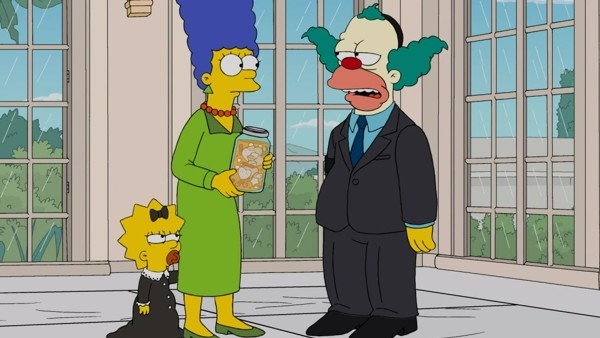
What It Represents: Ratings desperation.
Clown In The Dumps was the tepidly received Season 26 premiere, which probably wouldn’t have gotten such a bad press if not for the utterly desperate (and just straight up dishonest) marketing.
As the premiere, it was given a bit of an extra push. That’s to be expected; even though you can pick up an episodic show like The Simpsons anywhere along the line, season premieres get more press to try and nab viewers right from the start and establish their routines.
We were told initially that a major character was going to be killed off, and naturally fans were curious. Burns was old, but he played a major part in the dynamic. Abe, then? Almost as old and bit more superfluous? Moe, Lenny, Carl, Skinner, one of the Lovejoys or one of the Van Houtens were the early guesses from the fan base.
Then we were told it would be called Clown In The Dumps. Krusty, like Burns, Flanders and the core Simpsons, seemed too crucial to go. Sideshow Mel then? Or would Bob meet this end, once and for all?
Nope. Rabbi Krustofsky, that quote unquote ‘major’ character who’d made just 4 substantial appearances. What a pointless lie.
10. Homer Vs Dignity
What It Represents: The new style of humour/The Homer Show.
There are so, so many episodes with Homer as the lead character either acting unpleasant or being put into ridiculous situations, but Homer Vs Dignity is a fitting nominee from a crowd of hundreds.
The post Golden Age era is sometimes called the Jerkass Homer period, named after what Homer once sarcastically called himself. These episodes are characterised by Homer taking the lead far more frequently, acting without thought or consequence and generally making life miserable for his friends, family and fellow Springfieldites.
Homer Vs Dignity is not an absolutely perfect example of this in the way that Homer Simpson In: Kidney Trouble is. There’s definitely some Jerkass in there, but he’s been worse.
The fact he gets raped by a panda in a scene played for laughs though more than qualifies it here though.
It’s not, after all, just representing Jerkass Homer as an entity, but also the shift to less grounded humour which coincided with it. Homer Vs Dignity sees him doing all sorts of weird stuff as Burns’ ‘prank monkey’.
Oh, and Homer is heavily implied to have been raped by Marge in The Strong Arms Of The Ma, too. Classy.
9. The Boys Of Bummer

What It Represents: Ridiculous plots.
British viewers at least had the silly title to laugh at; everybody else didn’t even get that.
The Boys Of Bummer shows how nonsensically the entire town revolves around the actions of the Simpson family alone, and the plot leaps from one extreme to the next.
It starts, naturally enough, with Bart, Milhouse and other Springfield kids on a baseball team. Bart’s their hotshot, but he’s also a bit of a showboater and glory hog. So far, so normal.
The episode hots up when in a championship Little League game, Bart drops an easy catch and continues to fumble the ball until the runner makes it home. The way he keeps goofing up is, admittedly, hilarious, and if that was as absurd as the episode got, we’d be fine.
Except isn’t not. The town turn on Bart until he goes deranged, writing I Hate Bart in massive letters all over Springfield, before jumping off the water tower in a suicide attempt.
Marge asks nicely if they can replay the moment to give Bart confidence, and for some reason they agree. There’s a strange flash forward at the end between an old Bart & Milhouse too which adds nothing.
8. The Great Phatsby
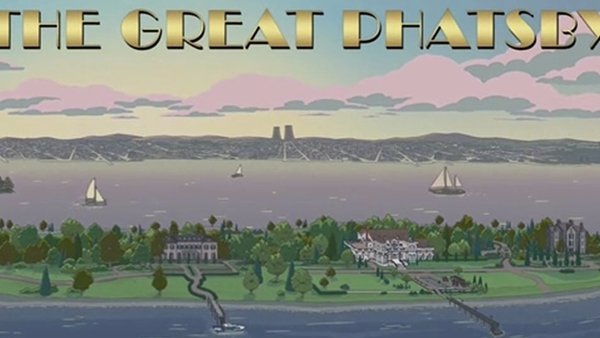
What It Represents: Bad movie parodies.
Again, the Treehouse Of Horror episodes, which these days are popular parodies more often than just horror plots, will get their chance to shine eventually. Even away from that though, The Simpsons typically wedge parodies in for no reason these days.
Season 29 dedicated a full episode to parodying the largely forgotten ‘70s detective show Banacek. Also, fresh off his immersion shattering cameo in Game Of Thrones, Ed Sheeran starred in Haw-Haw Land, a kind of sort of La La Land parody... except the only thing it took from La La Land was the dance number on the cars and a vague music/love story theme.
Speaking of Game Of Thrones, The Serfsons is a rare exception to the rule these days, providing a decent fantasy parody which even predicted Daenerys’ madness.
Still, The Shinning it ain’t.
The Great Phatsby has the nod here though because it’s a double episode of 42 minutes and never justifies it. There’s not even much Gatsby about it, instead Burns gets into the music business but is left defrauded and penniless by some rappers.
That’s not quite what happens in the book, old sport.
7. Homer Vs Dignity
What It Represents:The decline is here to stay.
While The Principal And The Pauper was the first chink in the show’s armour in Season 9, Kill The Alligator And Run in Season 11 was proof positive (if any was still needed) that the show was on a decline.
Not a slump, a lull, or a blip, but a one way descent from which it would never recover.
Arguably moreso than Homer Vs Dignity, it’s also a great example of what a jerkass Jerkass Homer is. After going to Florida to help relax away his insomnia, Homer recovers and ends up partying with all of the spring breakers.
It neglects his family, you could maybe argue, but so far, so not particularly jerkass.
However, once spring break ends he forces them to stay with him indefinitely (who cares about work or school, right?) and keep his party buzz going. This ends with him killing the titular alligator, although they don’t get a chance to run as the whole family is then arrested.
It transpires later that the alligator wasn’t dead and the family are released, on the condition that they never return to Florida. After the panhandle saw this side of the Simpsons, who can blame them?
6. I Want You (She’s So Heavy)

What It Represents: Marge/Homer marriage troubles.
Homer’s weight (and associated laziness) becomes a problem for Marge in this episode, as it has countless times before. She gets a new interest, Homer improves himself briefly, and her interest is dropped. Same old same old.
The same basic plot of Homer and Marge having marital difficulties happened in Werkin’ Mom, I’m Dancing As Fat As I Can and Heartbreak Hotel (as well as I Want You) in Season 30 alone, but it was tired way before this year. You could even put That ‘90s Show in this category too, and that was far from the first.
However, I Want You (She’s So Heavy) is representing them because it involves Homer getting a hernia, which manifests as a tiny fat man voiced by Wallace Shawn. Oh, but Maggie can see it, and ultimately kills him.
Every Man’s Dream, the woeful Season 26 premiere ran this one close, but the hernia is just impossibly ridiculous.
Every Man’s Dream, for what it’s worth, was weird Girls pseudo crossover where Homer cheats on Marge with Lena Dunham’s character. Conversely, Marge gets with this woman’s father, played by Adam Driver, who’s Dunham’s boyfriend in Girls.
This all turns out to be a dream.
5. Kamp Krustier
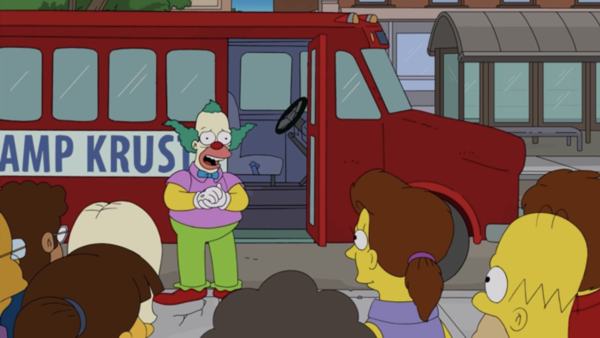
What It Represents: Cashing in on nostalgia.
Though it’s not a problem you’ll see mentioned all that often, The Simpsons trying (and largely failing) to exploit their own nostalgia has crept up in recent years, becoming very annoying.
The reason you don’t hear to much about it is because it’s a more newer issue; those who complain about the show tend to have enough common sense to have quit a while ago. Those still clinging on to it tend to shuffle around, embarrassed, with their heads down.
Kamp Krustier isn’t an absolutely terrible episode, and at face value is just simply not the fifth worst 22 minutes the show has ever put out. However, considering the original Kamp Krusty has a genuine claim as one of the best episodes ever (although there’s more than 50 golden ones which deserve to be in the conversation), this episode feels like a desecration.
There was just no reason to go back to it, and the episode barely provides one. Similarly, The Old Blue Mayor She Ain’t What She Used To Be begins inexplicably with the monorail again, and the Sideshow Bob rake gag has been pummelled into the dirt. Please stop.
4. Moe Goes From Rags To Riches
What It Represents: Poor concepts.
Moe’s stock has risen massively over the last decade. Once just another supporting cast member for Homer to bounce dialogue off, he’s become probably the biggest non-Simpson in the show.
Perhaps it’s because the racism scandal, ridiculous though it seems, has left Apu frozen out, or because they’ve written Skinner into a corner.
There’s also the fact Mr Burns has become a catchall villain and Flanders, who initially seemed like the biggest supporting character in the show, has seen his well run dry.
You can’t discount Hank Azaria’s fantastic voice acting as a factor though, or just that Moe is a great character; hilariously surly and a loveable loser, he has surprising consistency too.
He gets an episode at least once a season now; King Leer, Eeny Meeny Maya Moe, The Seemingly Neverending Story and The Princess Guide are all great examples of it working.
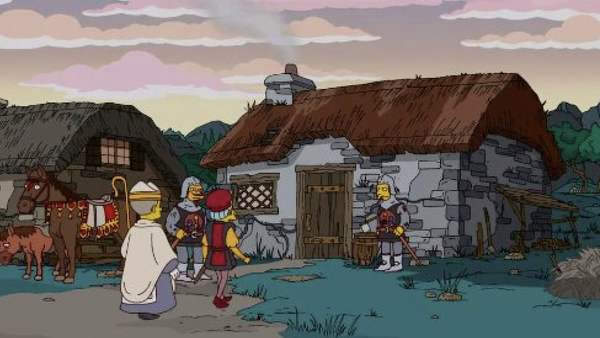
Moe Goes From Rags To Riches though just isn’t. It’s half about Moe, and half the tale of his Jeremy Irons voiced bar rag, travelling through its history a la The Red Violin.
The rag was part of the Bayeux Tapestry, the American Civil War, an Everest expedition and a truly terrible Simpsons episode.
3. Lisa Goes Gaga
What It Represents: Too many guest stars.
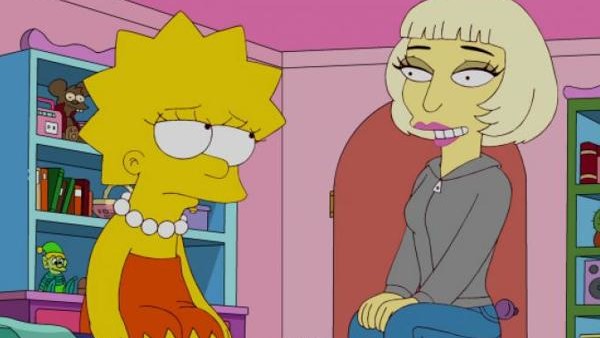
Many people probably expected Lisa Goes Gaga to be top here, but that’s actually part of the reason why it isn’t. It has such a notoriety around it that you go into it with the worst expectations, and such is the hyperbolic nature of Simpson fans, Lisa Goes Gaga can’t possibly live down to those expectations.
Lady Gaga is actually used pretty well, and even if a lot of the jokes don’t land, they at least hit targets like her famously eccentric dress style with Homer cooking and eating her meat dress. The ‘Lisa Simpson: Superstar’ song isn’t terrible either.
The overly positive moral with nothing to cut through the treacle isn’t what the show was built on though. Gaga kissing Marge comes a little out of nowhere too.
It’s become the typical example held up to demonstrate The Simpsons’ overuse of guest stars. Though the fact it was built around Lady Gaga is better than random walk ons (Steph Curry having a couple of throwaway lines in 22 For 30, to name one of many examples), many still weren’t impressed.
It swung too far the other way and became ‘The Lady Gaga Show’ for a week.
2. Treehouse Of Horror XXII

What It Represents: Treehouse Of Horrors getting worse.
Treehouse Of Horror episodes are the flagship of any season. A mainstay since Season Two, even fans who skip the rest of the season tend to catch the Treehouse. If they did so for XXII, they’d have been sorely disappointed.
There’s already been some buzz around the upcoming Treehouse Of Horror, although with it being episode 666 and Treehouse XXX, that’s understandable.
Back to XXII. By far the worst offender is The Diving Bell And The Butterball, an unflinchingly cruel parody of the French movie about a tragic man with locked in syndrome, The Diving Bell And The Butterfly.
It mocks the horrible disease without subtlby having Homer communicate through farting the alphabet. At the end, he can fart spiderwebs and becomes a locked in Spider-Man. It’s all a bit pathetic, really.
Dial D For Diddly, with Ned as a Dexter style killer is redeemable, but the religious angle is wedged in and it throws too much spotlight to Homer.
Finally there’s a long, Bart centric Avatar parody In The Na’vi with no horror whatsoever. Bart does impregnate Kang and Kodos’ daughter though, so that’s something?
Season 30’s Geriatric Park and Multiplisa-ty ran XXII close too.
1. The Musk Who Fell To Earth

What It Represents: Overusing guest stars... again.
The overuse of guest stars comes up again as many fans would argue its far and away the number one issue with the show. Also, it’s not fair to leave it out when, despite Lisa Goes Gaga getting most of the flack, The Musk Who Fell To Earth is just the worst.
Elon Musk is so popular that his stock can seemingly survive his random accusations of paedophilia against divers in Thailand. However, based off his utterly uncharismatic performance here, it’s hard to know why.
Lady Gaga at least brings some of the talent she showcased in American Horror Story and A Star Is Born. Musk though is monotone and mirthless, plus the episode is far too excited to have him in it.
There’s been a shift in the tone of guest stars in general, too. They used to be a bit more seamless, or at least add a bit of richness. Now they’re either pointless or drag the episode to a standstill by gobbling up the whole plot.
A recent Treehouse Of Horror ‘joke’ saw celebrities like Taylor Swift, Bruce Springsteen and Jennifer Lawrence, all chosen for having the gaul to turn the show down, being dismembered.