6 Worst Ever Comic Book TV Shows
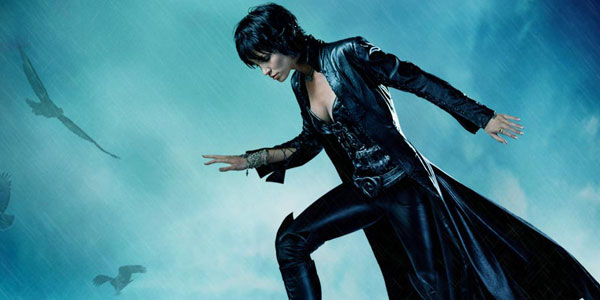 Comic books and television have a very long relationship. Since 1952s The Adventures of Superman, which featured George Reeves as the Man of Steel, there have been numerous attempts to bring superheroes to the small screen, both in animation and live-action. The results have been a pretty mixed bag. 1966s Batman unfortunately set public perception of comic book superheroes being juvenile and campy, and thats a perception that not many live-action shows sought to correct. Animation has fared slightly better, especially since the 90s, which saw the debut of the groundbreaking Batman: The Animated Series. Not only did it bring us the most-accurate adaptation of The Dark Knight in the history of film and television, but it also showed to the general public that animation and superheroes could be serious and appealing to adults without alienating children. With the advancement of technology and new avenues for release such as digital streaming, as well as the public hungering for more superhero action after blockbuster successes like The Dark Knight Trilogy and The Marvel Cinematic Universe, there has never been a better stage for TV shows based on comic books. The CWs Arrow just wrapped up a very successful first season while this fall will see the debut of Marvels Agents of S.H.I.E.L.D. on ABC. And with Joss Whedon helming the show, the man who was responsible for not only The Avengers but hugely-popular cult TV shows like Buffy The Vampire Slayer, Angel, and Firefly, it looks like its going to raise the bar even higher. Of course, this wasnt always the case. For every Arrow or The Incredible Hulk, there are about a dozen more attempts that were just plain awful. Here were going to look at some of the worst of the worst. Since thats a pretty wide net to cast, Im going to set a few ground rules: 1) Just focus on live-action, throwing animated series into the mix would increase the available candidates by a lot. 2) No made-for-TV movies or unaired pilots, this is only for shows that were able to amass a few episodes under their belt.
6. Smallville
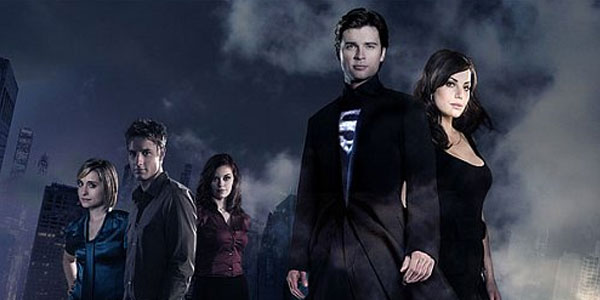 Back in 2001, The WB network launched this series, which was to focus on Clark Kents life in the Kansas town of Smallville, attending high school while dealing with his superhuman abilities and discovering the truth of his origins. Alfred Gough and Miles Millar set two basic rules for the show: Clark would not fly and he would not don the Superman costumeno flights, no tights. The series took notes from different comic book incarnations, including the Superboy comics, by showing that Clark was friends with Lex Luthor. Kryptonite, which landed in Smallville along with the ship carrying young Clark, served as a MacGuffin that granted powers to local inhabitants of the town, giving the show a freak of the week format in its early stages. At first, the show was actually pretty good. Michael Rosenbaum has provided the best live-action version of Lex Luthor to date while John Schneider and Annette OToole were perfect as the Kents and Allison Mack quickly struck a chord with viewers. Former Superman Christopher Reeve even voiced his approval for the series and appeared on the series as a scientist who helps Clark discover his Kryptonian heritage. But after the shows third season, it quickly went downhill and became obvious that the producers were running out of stories to tell about a pre-Superman Clark Kent. Rather than wrap up the series after three or four years and then segue into a series about Superman (likely due to the development of the film Superman Returns at that time), the producers tried to keep it going. Soon, elements from not only Superman comics, but the wider DC Universe kept propping up. Lois Lane and Jimmy Olsen became recurring cast members in the fourth and sixth seasons, respectively, and fellow superheroes the Flash, Aquaman, the Cyborg, Green Arrow, Black Canary, the Martian Manhunter, Zatanna, Supergirl, Superboy, Booster Gold, and the Justice Society all appeared before Clark became Superman. In addition to Luthor, virtually every member of Supermans rogues gallery went up against Clark, including Doomsday, Brainiac, General Zod, and Darkseid. The show spent its last few years with Clark living in Metropolis and working at the Daily Planet, while operating as a superhero known as the Blur and wearing a Matrix-esque costume with a white S-shield on his shirt. Which begs the question, what was the point of the no flights, no tights rule when there were so many other characters on the show who were flying around in tights? The show had to continue to reach for more and more implausible situations and storylines, with a common trope being characters knocked unconscious or suffering from partial amnesia in order to show how nobody knew who Clark was. By the final seasons, the show had not only jumped the shark, but seemed to try and challenge itself to see how many times per season it could jump the shark. Sometimes, there were multiple jumps in a single episode and by the series end, Wellings Clark had become a whiny hypocrite who appeared to be the least heroic character on the show.
5. The Crow: Stairway To Heaven
 I will admit, this show was something of a guilty pleasure for me in high school, as I was obsessed with The Crow. Originating as an independent comic by writer/artist James OBarr, The Crow tells the story of Eric, who along with his fiancée, are brutally murdered by a gang of criminals. One year later, Eric returns from the dead, watched over by a mysterious crow, and exacts brutal revenge on the men who killed him. The comic was adapted into a movie in 1994, which is notable not only for being an excellent movie, but also for the tragic on-set death of lead actor Brandon Lee. The 1996 sequel, The Crow: City of Angels, featured a new character resurrected by the crow and turned into a failure. Then in 1998, producer Bryce Zabel was assigned the task of developing The Crow as a syndicated TV series. Zabel based the story on the 1994 film and the pilot was a condensed version of the movie. However, at the end of the story, instead of returning to the Land of the Dead to be with Shelly, Eric was stuck on Earth, required to set the wrong things right in order to balance the cosmic scales so he could be with Shelly. The comic featured very graphic violence and mature themes, and the movie received a hard R rating. So to be acceptable for network syndication, and to accommodate the much-smaller budget, a lot of corners had to be cut. While The Crow was a very dark film with almost every scene taking place at night, Stairway To Heaven featured most of its scenes set during the day. The make-up used for the character also appeared washed out and very faint, and the fight scenes needed a lot of work. With a few exceptions, Eric never killed anyone, as it was established that anyone killed by a Crow would be resurrected as a Snake, their evil counterparts. While there were some good, dark episodes that showed what the shows potential could be, ultimately it was extremely limited by the restrictions of broadcast TV and suffered from cheesy writing, generally-awful guest stars, and poor fight choreography. Despite this, Mark Dacascos and Marc Gomes did pretty good work as Eric Draven and Detective Albrecht. They werent as good as Brandon Lee and Ernie Hudson were in the film, but they were far better than theyre given credit and had pretty good chemistry together.
4. Lois & Clark: The New Adventures Of Superman
 In 1992, Warner Bros had reacquired all the TV and film rights to Superman and as such, began production on a new Superman TV series. Rather than continuing with the Superboy series that ran from 1988-1992, they had producer and writer Deborah Joy LeVine develop a new take on the character. LeVine incorporated numerous elements from John Byrnes 1986 revamp of the Superman comics, such as making Clark Kent more aggressive and assertive and being the primary personality with Superman being an alter-ego, as well as Lex Luthor being depicted as a ruthless corporate tycoon instead of a mad scientist. Just as the title suggests, the focus was more on the relationship between Teri Hatchers Lois Lane and Dean Cains Clark Kent, becoming more of a soap opera-style take on Superman. While Cains performance as Clark was fairly good, there was almost no differentiation between that and his portrayal of Superman. Hatchers Lois, on the other hand, was inconsistent. She went from being a strong-willed woman, and these scenes are when she shines, but then she was alternately depicted as a hopeless romantic and a damsel in distress shrieking for Supermans help. I was in elementary school when this show was on the air, and man did I love it. But when I had a chance to watch it on DVD a few years ago, I could barely get through it. With the exception of John Sheas Lex Luthor, virtually every single villain to appear on this show was one-note and poorly cast. And even Luthor went from being an intimidating villain to nothing more than a jealous ex-boyfriend. Frequent romantic foils were introduced to challenge Lois and Clark, almost all of them successively worse than the last, although special mention has to be given to Tracy Scoggins irritating Cat Grant. Once Lois and Clark actually got together and began dating, any spark that existed between Cain and Hatcher pretty much evaporated into thin air. In order to try and regain some of this chemistry, the producers relied on a succession of cheap tricks, the worst of which being a fake wedding episode, in which Clark married a frog-eating clone of Lois, while the real Lois was kidnapped by Lex and became afflicted with amnesia. People seem to have fond memories of this series, but looking back on it, the flaws of turning Superman into a romantic comedy become more and more painfully obvious.
3. Birds Of Prey
Hot off the success of Smallville, The WB wanted a show that was somehow related to Batman, but it couldnt actually be a Batman series. Series creator Laeta Kalogridis came up with this show. But apparently, The WB didnt learn from Smallvilles success and created something that was completely different. The show takes place in the future of New Gotham, which has apparently been abandoned by Batman. Former Batgirl Barbara Gordon (played by Dina Meyer) has been paralyzed by the Joker and now uses her computer and hacking skills as Oracle. Her field operative is Helena Kyle, the Huntress, played by Ashley Scott. The daughter of Batman and Catwoman, the Huntress is a metahuman who inherited the powers of agility, strength, healing, a danger sense, and enhanced vision from her mother. Also joining them is Dinah Redmond (Rachel Skarsten), a teenage metahuman with limited telepathic and telekinetic powers, who is later revealed as the daughter of superhero Black Canary. Helena is ordered to see a psychiatrist after being convicted of vandalism, and that psychiatrist is Dr. Harleen Quinzel (Mia Sara), who is actually Harley Quinn, the lover of the Joker who seeks revenge on New Gotham for what it did to him. With the exception of Meyers Oracle, the show featured incredibly terrible acting, particularly from Scott and Sara. Any relation to the excellent Birds of Prey comic book or the Batman mythos was pretty limited. With its focus on a super-powered heroine with a past, a wheelchair-bound assistant with computer hacking skills, and the metahuman community, the entire series is a reminder of the 2000-2002 Jessica Alba vehicle, Dark Angel. And I do not mean that in a good way. Meyer was really the shows only saving grace and its a pity that the first time we see Oracle in another medium, its saddled with so much bad surrounding her. The shows confusing back-story was far too much for the average viewer, and far too removed for fans of the Bat-mythos to really find ground with anyone. What might have worked much better is to keep Oracle as she was in this series, but use the Helena Bertinelli Huntress and the actual Black Canary as the main cast. Fortunately, this show only lasted thirteen episodes before merciful cancellation put it out of its misery.
2. Ninja Turtles: The Next Mutation
 Turtlemania had taken the world by storm in the late 80s and early 90s, but by 1996, it was on life-support. The third live-action film was poorly received and the classic animated series ended with its tenth season. But in 1997, Saban Entertainment decided that this dead horse could still use some more flogging. For all the worries about Michael Bays upcoming reboot of the Turtles, I sincerely doubt it could ever be as bad as this was. Loosely a continuation of the three live-action films, Saban decided to stick to the live-action format and attempted what was basically a rip-off of the Power Rangers. They even guest-starred in an episode of Power Rangers in Space. The costumes were cheaply-made and looked awful. The Turtles all received slight tweaks to their classic looks, with larger headbands and some different weapons for Leonardo and Michelangelo. The show was infamous for introducing Venus de Milo, a female turtle who Turtles co-creator Peter Laird hates with a passion. He hated her so much that when discussing the 2007 CGI film TMNT with director Kevin Munroe, Laird told Munroe that there is absolutely to be no mention of Venus de Milo. Munroe said Laird hated the character so much, even joking about her was enough to anger him. The show had Shredder and the Foot Clan in the beginning, but they were quickly replaced by a new villain, Dragon Lord and his army of humanoid dragons, called the Rank. They were trapped in an enchanted glass years ago and recently escaped (sound familiar?). With the exception of the Shredder and the Foot, all of the villains were poor characters created for the show. There was also no mention of longtime Turtle allies April ONeil or Casey Jones. And for some reason, perhaps with the intention of introducing a romantic subplot between Venus and one or all of the other Turtles, the characters are no longer blood-related, they're brothers in name only. The show was heavy on the cheese and extremely low on production values. For all the camp of the original animated series, it really pales in comparison to this. The show only lasted one season before being cancelled for reasons that have never been made quite clear. Some sources say the production budget was too large, others say it suffered from poor ratings. Fortunately, this show has become a footnote and in 2003, we got the far-superior rebooted animated series that was much closer to the comics.
1. The Amazing Spider-Man
 If your reaction to this headline is, wait, there was a live-action Spider-Man TV series? How did I miss that? then consider yourself extremely lucky. Back in the late 70s, CBS was getting something of a reputation for being a superhero network. Lynda Carter had been thrilling TV audiences as Wonder Woman since 1975 and 1977 saw the release of Bill Bixby in The Incredible Hulk. The late 70s also saw two extremely awful made-for-TV Captain America films and a made-for-TV Doctor Strange film. While Wonder Woman and The Incredible Hulk were well-received and fondly remembered to this day, Captain America and Doctor Strange are less so. But nothing was as bad as The Amazing Spider-Man. Beginning as a made-for-TV movie in 1977 in which university student Peter Parker (Nicholas Hammond) gets bitten by a radioactive spider and gets his familiar powers. But theres Uncle Ben in this retelling, no lessons about power and responsibility. Instead, Peter becomes Spider-Man when a mysterious guru mind-controls people into robbing banks and threatens to force ten people to commit suicide unless hes paid $50 million dollars. In 1978, the film was followed by a live-action series called The Amazing Spider-Man. Hammond reprised his role as Peter with a different actor playing J. Jonah Jameson in the series. Although calling him Jameson is something of a misnomer, as the name was the only thing he had in common. Gone was the flamboyant personality from the comics (which J.K. Simmons captured so well in the Raimi trilogy), and instead this Jameson was more of a kindly father-figure. Maybe they confused Jameson with Uncle Ben? Speaking of family, Aunt May was also in this series, although played by a different actress every time she appeared. No villains from the comics ever made an appearance in the series and Spider-Man frequently went up against mad scientists, insane cultists, international criminals, and thieves. The costume looks like a bad attempt as cosplay, especially with the oversized web-shooters and belt, plus those ridiculous eyes. Ive seen fan trailers with higher production values than this. It lasted only thirteen episodes, spread out over two seasons before being cancelled, despite doing well in the ratings department. The series was notable for Stan Lee dismissing it as too juvenile. Stan Lee, the man who pretty much never has a bad word to say about any Marvel adaptation, cant even bring himself to defend this monstrosity.