9 Ways To Fill The Void Left By True Detective

It's over now, so here's what you can do to get that familiar fix.

Aaaaand...breathe. It's been eight long, almost interminable weeks but, last night, we finally reached the end of True Detective. Nic Pizzolatto and Cary Joji Fukunaga's superlative crime drama has inspired more think pieces than HBO's none-more-different series Girls, more analysis than Breaking Bad, and more fan art than My Little Pony: Princess Is Magic (well, maybe not quite, but close). The story of Louisiana detectives Rust Cohle (Matthew McConaughey at the height of his "McConaissance") and Marty Hart (who has never been further away from Cheers) investigating cult-ish goings on amongst the marshes has come to a close. And a definitive close, too, since the show will follow an "anthology" structure kinda like American Horror Story, with each season taking up with a completely new story, set of characters and cast. Which makes this first season of True Detective all the more unique. Every episode was infused with literary allusions, mysteries hidden in the set design - possibly even opening credits - and genuinely believable, complex characters. Which lead not only to the critical acclaim but also a rabid fan base seemingly pouring all their energies into discussing the relationships, unpacking the references, and trying to piece together who on Earth this "Yellow King" fella is (I still reckon it's the yellow dude in the crown spied in almost every scene). That's a lot of energy and enthusiasm that now has no place to go. And I know the feeling; as amazing as the show - and that finale - was, it's left me kinda empty. Where am I meant to get my fix of Southern Gothic now? Is there anything similar to True Detective in TV, films or books? Where did this Pizzolatto guy come from, anyhow? Fear not, my fellow obsessives, for I've put together a little reading/watching list of stuff that compliments our dearly-departed TV fixture quite nicely in tone, plot, and style. I'm gonna assume that we've all seen the more obvious stuff - like Se7en, whose religious fanatic serial killer almost looks tame now - and instead delve into the murky, seedy underbelly of crime and humanity that Rust Cohle so gleefully splashed around in. Best enjoyed with a six pack of Lone Star. Perhaps poured into a Big Hug Mug.

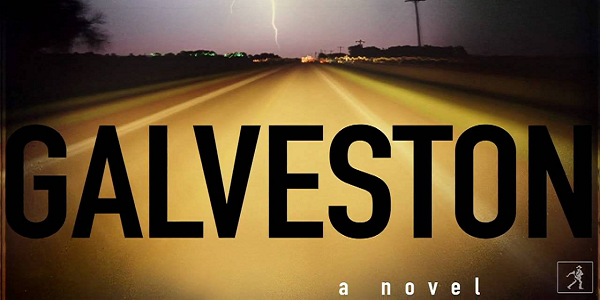
9. Galveston By Nic Pizzolatto

It might seem an obvious place to start off, but True Detective creator/writer Nic Pizzolatto's debut - and to date only - novel does have a lot in common with his dense, rich and disturbing TV show. We start, as in True Detective, in Louisiana as narrator Roy Cady is diagnosed with a terminal illness. Cady is an enforcer for the local bookmaker-cum-gang boss, but after a botched job and his rescue of a young woman we learn that is, in the words of Cohle, more of a bad man who "keeps the other bad men from the door". Whilst Pizzolatto's first book, a collection of short stories, is less crime-centric but rich in character detail, Galveston can almost be seen as a practice run for a lot of the concepts that were later explored True Detective. Or it might just further highlight Pizzolatto's obsessions, and hint at what recurring themes we'll see in the next season. Along with the same atmospheric Louisiana setting and meaty dialogue, Galveston features a fractured narrative (with our "hero" reflecting on past adventures in the present day, where repercussions are still being felt), a morally complex central character, and explores ideas of masculinity and misogyny in the modern South of America. Oh, and there's a bit where Cady cuts up his empty beer cans into little men, which is a neat trick we've seen before.

8. Anything Involving Dennis Lehane

A name that often gets mentioned when people are looking for something "similar" to True Detective is Dennis Lehane. Author of eleven novels - three of which have been adapted for film - and a few episodes of The Wire and Boardwalk Empire, Lehane is probably best known for the movie versions of his books Mystic River, Gone Baby Gone and Shutter Island. The latter is a bit of an anomaly in Lehane's bibliography, being a period piece that was written as an homage to B-movies and pulp fiction. It's the other two that will go a ways to helping you deal with the loss of True Detective. Mystic River, adapted to film by Clint Eastwood in 2003 with an all-star cast, and 2008's Gone Baby Gone, directed by Ben Affleck and starring True Detective cast member Michelle Monaghan, may not quite share the pessimistic world view of Rust Cohle, but they're certainly under no allusions as to the sort of awful things people are capable of. The former stars Sean Penn, Tim Robbins and Kevin Bacon as friends who share a disturbing secret from their childhood which rears its ugly head once again when one of their young daughters disappears and is later found brutally murdered. Gone Baby Gone, to cheer things up a little, features Monaghan and Casey Affleck as a couple of PIs investigating, er, the disappearance of a woman's young daughter. Both the books and the films are, like True Detective, much more concerned with the circumstances that allow such crimes to occur, and the effects it has on those involved, than solving the crimes themselves. They'll also make you lose faith in humanity, so they've got that in common, too!

7. Twin Peaks

Twin Peaks not only set the stage for True Detective, but basically every critically-acclaimed piece of television of the past couple of decades (except sitcoms, although it had its moments). David Lynch and Mark Frost's cult classic may not have much in common with Nic Pizzolatto and Cary Joji Fukunaga's on the surface, but delve a little deeper and there's a lot to discover. Where True Detective has a cinematic swagger to it, Twin Peaks is decidedly TVish, with a look inspired by cheesy soap operas. You know: bright colours; beautiful people; melodrama. It is overblown where True Detective is understated. Surreal where True Detective is grounded in reality. Like its descendant, though, Twin Peaks has a central mystery fuelling it, and uses it as a catalyst to explore all the dark recesses of the population in an otherwise idyllic-seeming little mountain town. FBI Agent Dale Cooper's eccentricities are a little more in check than Rust Cohle's, and his partner Sheriff Harry S Truman is a lot more relatable than Marty Hart, but the exploration of man's underlying capacity for great evil sure is similar to what happened in Vermillon Parish. It lost its way as it got into the second season, as that central mystery - who killed Laura Palmer? - was wrapped up entirely too quickly, leaving the writers scrabbling to come up with a new premise to base the show around. It almost made up for that with a finale and prequel movie that are the opposite of all the mystical references in True Detective (where TD leaves them as window dressing, TP brings them to terrifying reality), and the show still has a cult following that continue to pick over the show's myriad loose ends and general weirdness.

6. The King in Yellow By Robert W Chambers
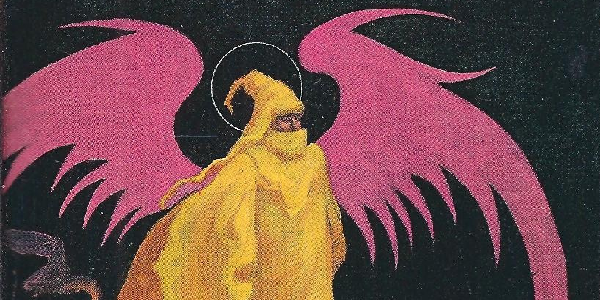
Carcosa. Black stars rise. The Yellow King. All of these phrases that came from the mouths of the most unhinged characters across True Detective's eight episodes have their origins in Robert W Chambers' insanely influential and sort of obscure 1895 book The King in Yellow. I say sort of obscure; as soon as people made the connection between Chambers' book and True Detective, it shot up Amazon's bestseller list (partly because it's out of copyright and so free on Kindle). Also, to be fair, Carcosa doesn't totally originate with The King in Yellow. It was actually named in Ambrose Bierce's 1893 book Can Such Things Be?, but it's Chambers who fully fleshed out the mythos that True Detective drew upon. The book is made up of a series of interlinked short stories revolving around the (fictional) titular play, which drives anyone who reads it mad. All the stuff about black stars, twin suns, and taking off masks come from the excerpts of the play that are sprinkled throughout the stories. Not only that, but the ubiquitous spiral seen carved into people's backs, painted on buildings and flown in by flocks of birds can been seen as an interpretation of the Yellow King's symbol from the book. Amongst other things, Chambers influenced the cosmic horror of HP Lovecraft, a man whose fiction was no stranger to the crushing, unimaginable evil mankind are constantly under threat of. True Detective grounded that feeling a little, but the oppressive and unrelenting nastiness that's present throughout the first season is just as evident as The King in Yellow. And if you actually read it, you'll have one up on your friends who still don't understand what all this Carcosa business is about.

5. LA Confidential

If you want a grim view of the world with a side order of widespread corruption and young women being killed, then look no further than James Ellroy. Principally inspired by his own mother's unsolved murder back in the 50s, Ellroy's crime fiction is characterised by a pessimistic worldview, dense plotting and plumbing the depths of human depravity. Which, along with his unique/unreadable (depending on who you ask) writing style, means that the best way of enjoying his work is probably with Curtis Hanson's film version of LA Confidential. Starring then-unknowns Guy Pearce and Russell Crowe (along with Kevin Spacey, Danny DeVito and Kim Basinger from The Simpsons), LA Confidential tells the story of a group of homicide detectives in 50s Los Angeles who come a cropper of widespread police corruption and the burgenoning tabloid cult of celebrity in Hollywood. Along with a downbeat feel and a cast of reasonably unlikable characters played by big-name actors, what LA Confidential has in common with True Detective is its differences between the two leads: the by-the-book Sergeant Exley (Pearce), whose cold demeanour alienates him from his colleagues (remind you of anyone?) and the hot-headed Officer White (Crowe), a technically good policeman who sometimes lets his emotions, and fists, run any with him (remind you of anyone?).

4. Top Of The Lake

Almost like an alternate reality version of True Detective, Jane Campion's masterful six-part BBC series Top of the Lake deals with the themes of what bad men do to women from a female perspective. Mad Men's Elisabeth Moss pulls off both a New Zealand accent and the performance of a career as Detective Robin Griffin, an inspector from Sydney who's called into the small town of Laketop when it's discovered that a local 12-year-old girl is pregnant. She sticks around when said girl suddenly disappears. It transpires that Griffin has her own history with the town which she is forced to face when trying to track down the heavily pregnant Tui, coming up against the girl's father and local gang boss Matt Mitcham (Peter Mullan, who apparently has it in his contract that he can never play nice people), old flame Jono, off-kilter guru GJ (Holly Hunter) and a police force that's alternately indifferent and openly misogynistic. Campion's cinematic credentials give the show a similar prestige look to True Detective, and utilises New Zealand's gorgeous mountainous landscapes to evoke the claustrophobia that True Detective harnesses so well from the misty swamps of Louisiana. The delicate ecosystem of Laketop and the nature of the case at hand give Top of the Lake a moral ambiguity that's maybe even more complex than True Detective's. And it's got about half as many laughs.

3. The Conspiracy Against the Human Race By Thomas Ligotti
If you really want to get into the mind of Rust Cohle - and whilst I can't necessarily blame you, I do also worry about you - then Thomas Ligotti is the place to start. The pessimistic worldview that Matthew McConaughey's character outlined during his numerous memorable monologues on the show are not only informed by this offbeat philosophical tome, but are often almost directly quoted from it. One of Rust's little screeds seems particularly Ligotti-esque: "We became too self-aware; nature created an aspect of nature separate from itself. We are creatures that should not exist by natural law." The first non-fiction work by horror novelist Ligotti, The Conspiracy Against the Human Race, the book approaches ideas that Cohle has been spouting since episode one, from "are we living to our full potential" to "should the human race voluntarily end itself"? Influenced as much by the cosmic terror of the aforementioned HP Lovecraft as philosophers like Schopenhauer, Ligotti's book manages to be even more terrifying than anything The King In Yellow can dredge up, because it's entirely grounded in reality.

2. The Killing

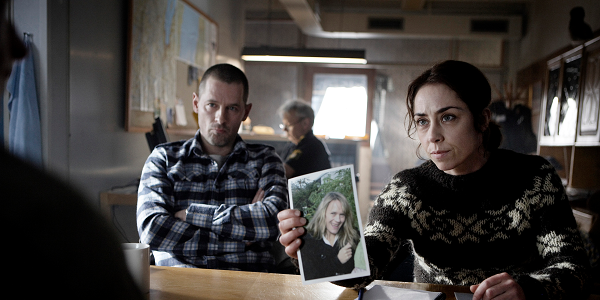
That's the Danish original (or Forbrydelsen for you pedants/legit Danes), rather than the American remake that recently got cancelled and resurrected for a second time. Whilst Pizzolatto did actually work on the AMC adaptation, he admitted in a recent interview that he worked from showrunner Veena Sud's route map and wasn't all that happy with it. Especially the generally reviled first season finale he's credited as writing. Whilst the Americanised Killing was an ambling mess, stretching out the central mystery for way too long and chucking in unnecessary twists in place of resolution, the original is probably the closest we've got to a proto-True Detective. With nicer jumpers. Each season (there's been three so far) has centred around one self-contained story that gets solved by the end; the development of characters, especially protagonist Detective Inspector Sarah Lund, are the focus nearly as much as the mystery itself; and, whilst it often deals with disturbing crimes, it doesn't linger on gory details, instead showing us the way the murders reflect the society they were committed in.

1. Just Re-Watch True Detective

Honestly, there's still so much to True Detective that it's probably worth watching the whole thing again. Each scene is so densely populated in weird little references, red herrings, foreshadowing and character quirks that going through it all after seeing the finale and trying to pick up on all of the clues as to the Yellow King's identity, where Rust and Marty's relationship went south and how exactly everything connects up could almost be as enjoyable an experience as watching it through the first time. Plus you get to watch that awesome and celebrated six-minute tracking sequence from episode four again, and listen to the amazingly atmospheric and inspired soundtrack put together by T Bone Burnett. In fact, you've technically already re-watched True Detective, and are currently re-watching it, and are watching it for the first time, simultaneously. After all, time is a flat circle...

Contributor
Contributor

Tom Baker is the Comics Editor at WhatCulture! He's heard all the Doctor Who jokes, but not many about Randall and Hopkirk. He also blogs at http://communibearsilostate.wordpress.com/