Game Of Thrones: 13 Things You Learn Rewatching Season 1
When you rewatch the Game of Thrones, you learn or you die.

With Game of Thrones Season 8 - and, with it, the END of Game of Thrones - just a few mere weeks away, now is the time to be starting your rewatch of Seasons 1-7, if you haven't already done so.
Game of Thrones is a densely packed series within a densely packed universe, and so much happens in any season that there's a lot to remember before the new episodes start. Add in the fact that it's always immensely rewarding to rewatch it anyway, along with the fact some of these episodes aired eight years ago, and it becomes a necessity to have another run through the entire series before the final season gets underway.
Going back through, there are some obvious moments engraved into memory, like the beheading of Ned Stark, Cersei's iconic "when you play the game of thrones..." line, or Daenerys stepping out of the fire, unburnt, with three baby dragons. There's a lot you ultimately forget about though, from smaller character beats to things hiding in plain sight. On top of that, there's even more that takes on a whole new meaning with the additional context of six more seasons. And while you're at it, check out our recap podcast too:
13. Jaime Is Truly AWFUL

Jaime Lannister is one of Game of Thrones' most fascinating characters. His redemption arc moved a huge step forward in Season 7, when he finally decided to walk away from his sister/lover Cersei, instead going to join the fight in the North.
Indeed, Jaime's become such a complex individual, and increasingly heroic - or at least, someone you want to root for - over the years, it's easy to forget how it all started for him. In Season 1, there's not a great deal of that complexity there. Hints, maybe, in his relationship with Tyrion and idea of honour with fighting, but mostly he's an absolute dick.
Watching it back now, it's hard to believe they're the same character. For the first half of Season 1, Jaime is basically the main villain of the show: he antagonises all the good guys, pushes Bran from the window, fights with Ned, stabs Jory through the eye... not only does he look like Prince Charming from Shrek, but he's even more loathsome and downright despicable. It's a testament to George R.R. Martin, showrunners Dan Weiss and David Benioff (with the odd misstep), and above all the superb performance of Nikolaj Coster-Waldau that not only has Jaime been transformed, but to such an extent that you forget how truly bad he was in the first place.
12. Robert And Cersei's Scene Is Lowkey One Of The Best
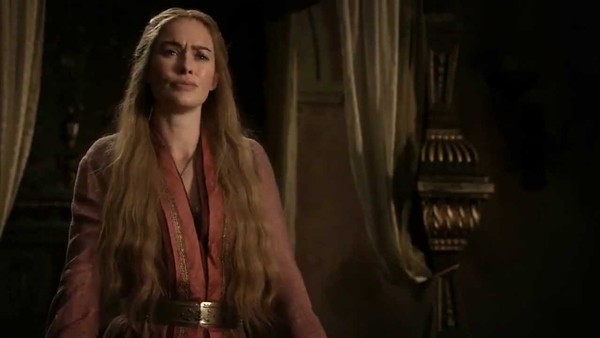
Game of Thrones grabs headlines with its epic battles, but the show's true strength lies in the conversations that take place off the battlefield. The quiet moments - often but not always in dark rooms - where two great characters are able to have a tête-à-tête dripping with significance.
Season 1 is full of such moments, from Robert and Ned in the Crypts of Winterfell during the very first episode, to Tyrion and Jon outside the feast, or Cersei and Ned in the gardens at King's Landing. All of these are celebrated, but the best is one that often gets overlooked.
Coming in the fifth episode, The Lion and the Wolf, Robert and Cersei talk about the impending threat of the Dothraki, which then turns into a powerful, painful, and frank discussion of their marriage. We see, hear, and feel all of the resentment between them: the fact Robert never could've loved her, that she could never replace Lyanna, and that he couldn't live up to her expectations.
Add in the talk of their child together, which Cersei lost, and it makes for a poignant reminder of Cersei's journey. Like with Jaime, it's easy to forget where she started and what she's been through, especially now she's one of the show's major villains. Right here in this incredible scene - which was invented for the show - we not only get a military lesson that would prove Robert was right in Season 7, but a sad look into a loveless marriage that would help define one of the show's best arcs, even if it doesn't get the credit for doing so.
11. Varys' Allegiances
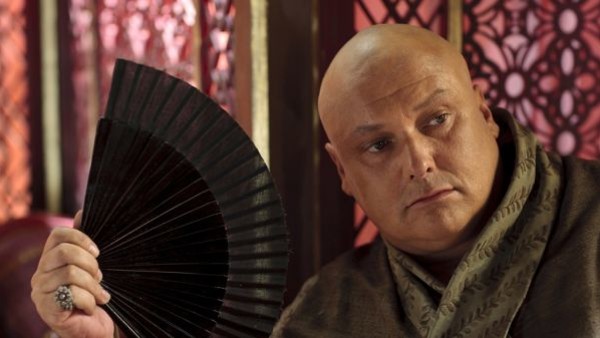
Like with Petyr Baelish, Varys' motivations were often unclear in the earlier seasons of Game of Thrones. The Spider would spin webs and whisper to his little birds, and the only thing we could trust is that we couldn't trust him. One of his finest moments in Season 1 comes in his conversation with Illyrio Mopatis, overheard by Arya, as they talk of it being too soon, of Drogo's army crossing the Narrow Sea, and with Varys saying: "This is no longer a game for two players, it never was."
There are hints to a bigger plot, but it's kept deliberately vague there, and rarely revisited afterwards. Just after this, Varys supports King Robert's plan to have Daenerys killed.
We're clearly not supposed to think much of it after that, which is why Varys revealing his allegiances to Daenerys Targaryen comes as something of a surprise in Season 5. Now, we know he's always been working for the good of the realm, and his goal - even if it wasn't totally clear (and they may even have had plans for Aegon at that point) - was established right back in Season 1. Varys is the game's greatest player.
10. Doreah Foreshadows Dragonglass And Faceless Men

There's not a great deal memorable about Doreah, one of Daenerys' handmaidens. Not that she's a bad character by any means, but she obviously isn't a real focal point.
The exception to that comes in her steamy scene with Viserys, where she tells him of things she's seen, including: "A man from Asshai with a dagger of real dragonglass... a man who could change his face the way that other men change their clothes. And... a pirate who wore his weight in gold and whose ship had sails of coloured silk."
At the time, these fanciful things she speaks of mean nothing to viewers. Looking back, though, we can see they're highly significant. Dragonglass is now one of the most important materials in Westeros, since it can kill White Walkers. The changing faces refer to the Faceless Men, who have played a huge part in Arya's story. The pirate most likely refers to Salladhor Saan, who admittedly hasn't played a key role, but is from Lys like Doreah. It could be a reference to Euron (the pirate) bringing the Golden Company to Westeros (weight in gold), which is going to happen in Season 8, but that's a major stretch.
Not only have two of those things at least become very important, but all three (if we say the pirate is Saan) were introduced in Season 2. That's some brilliant foreshadowing.
9. Of Course Lysa Was Lying

Now we know that Lysa and Littlefinger conspired to kill Jon Arryn, the murder that sets all of the following events into motion. Back in Season 1, though, things weren't so simple. At that time, we were told that Jon had been murdered by the Lannisters, and there was no reason not to believe that. Sure, Littlefinger was sketchy and Lysa was weird, but the Lannisters were the real villains of the piece. Of course they murdered Jon Arryn.
Watching it back with the context of knowing, though, and you can't believe you ever fell for it. Lysa Arryn is among the most desperate and deplorable people going, who wouldn't hesitate to through someone out of the Moon Door and not even her own sister can fully trust. Of course this person, breastfeeding her son who is far too old for this such, would have no problem murdering her husband.
If that's not enough, though, there's also a more subtle hint that you can only really pick up on rewatch, once it's been established. When Ned learns of Jon's death, a little part of Littlefinger's leitmotif is played, telling us he was involved before we'd ever be able to know what that meant.
8. Cersei Predicts Stannis' Defeat

Another great moment of foreshadowing, and another excellent moment for Cersei. Joffrey, full of the kind of unearned brattish bravado that helped make him so dislikable, has plans to form a Royal Army. When Cersei asks what would happen if they rebelled, he says he'd send men North and take Winterfell.
Cersei warns him against this, first telling him that the North is "too big and too wild" to be controlled by an outsider, and then that "when winter comes, the Seven Gods together couldn't save you and your Royal Army. A good King knows when to save his strength, and when to destroy his enemies."
It's another brilliant dialogue scene, but one with a few hints as to what we can expect. The Lannisters do try to take the North by enlisting the help of the Boltons, a plan that ultimately fails. Stannis takes an army North to take Winterfell, and, just as Cersei predicted, was defeated by winter. And as Queen, Cersei knew exactly when to destroy her enemies. It was all laid out right there in Season 1.
7. The Tragedy Of Hodor, And Bran The Warg

When first watching Game of Thrones - or doing any rewatch prior to Season 6 - Hodor is presented as the loveable oaf archetype. He can only say his name, but he's clearly very kind-hearted, evidenced in the way he carries Bran around.
Watching it with the full knowledge of what happened/happens to him, though, knowing the hows and whys of him being Hodor, and it becomes much more difficult. The humour that was once there is accompanied by an undercurrent of tragedy, and you're left looking at all of their scenes a little differently.
When Hodor is forced to carry Bran around, it feels like a sign of how easy it'll be for Bran to control him later on in the series. There are moments, such as Hodor helping him down the hall, that link back to the Three-Eyed Raven's cave. It'd be impossible to know, of course, what would happen, but it colours it all differently.
The same can be said for knowing where Bran ends up. The raven appearing to him, his connection with Summer, his and Osha's conversation about the weirwood tree - there's so much here informing that idea that Bran not only can warg, but that he'll eventually become the Three-Eyed Raven, and it connects Hodor to that path before even the showrunners knew it would happen.
6. The Lower Budget Didn't Really Hurt It
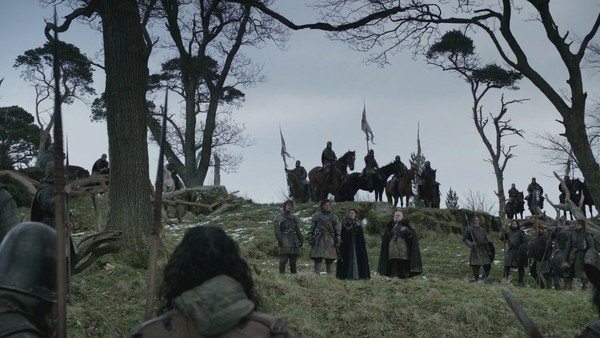
It's a bit odd to think of Game of Thrones' first season being low budget, when it had money most TV shows of that time could only dream of. Most of the Season 1 episodes were estimated to have cost around $6m each. It's nothing to be sniffed at, but it wasn't enough to show the battles, as evidenced by the fact the showrunners had to fight for more money to make Season 2's Blackwater.
This meant that battles couldn't really be shown in the first season, which sets it apart from most that follow, given they've become a series hallmark. And yet, despite not having as much money, it never suffers from it. The smaller moments are all so good that it never feels like it needs the bigger budget at this point.
It's a smaller scale, more self-contained story than the sprawling epic that would follow (I mean, S1 was sprawling too, but in relative terms it wasn't), which means the low budget actually works. And it forces them to get creative too: the Battle of Whispering Wood is expertly done, for example. When they try to do something similar in Season 7, it doesn't quite work as well because we're so used to the big action sequences, but Season 1 doesn't lose anything on rewatching despite that.
5. Daenerys Realises Viserys' Goal

A lot has been made of the first Daenerys scene, where she steps into a scalding hot bath - much to the distress of her handmaidens - and is absolutely fine. It's true this does nicely foreshadow the final scene of the season, and set her up to become 'the Unburnt', but there's a lot more than that to be gained for Dany's arc in Season 1.
As we enter the final season, Daenerys stands on the precipice of becoming Queen of the Seven Kingdoms. She has to deal with the White Walkers first, but still has eyes on the Iron Throne. She's sailed to Westeros, taken the Dothraki with her, and won a number of other nobles to her cause. In short, she's now achieved almost everything her brother Viserys was aiming to do back in Season 1.
There's also a strong argument to be made that, in terms of a season-long arc, Dany has never been better than in Season 1. Her arcs have long felt inconsistent, most notably her struggles in Qarth, and resulted in great moments (.e.g. Dracarys, burning the Khals etc) than great storytelling. Season 1, though, features a strong performance from Emilia Clarke - she brings a good mix of strength and vulnerability here, without being too distant - but more so it's still the most coherent and, on an overall season level, most well-realised arc she's had.
4. The Bookending Of White Walkers And Dragons

The White Walkers are very much a huge part of the show now, having increasingly crept into things season upon season. Their presence has got bigger as the years have gone on, to the point they're now endgame, but it's easy to forget they started the whole thing off too. Their appearance in the Season 2 finale is the first major moment, with the very first scene of the entire show revolves around White Walkers, even if we didn't know what it'd lead to back then.
While the effects work is very different to what we see now - they've been through a couple of re-designs since, plus there's a much bigger budget to play with - the opening is quite horror-tinged, with the mystical creatures laying waste to the members of the Night's Watch. The final scene of Season 1, meanwhile, is dragons coming into the world.
As we get to the final season, there have been some complaints about it suddenly focusing on the White Walkers, and the army of the dead vs dragons being the bigger focus. And yet, for all the politics and warfare of the show, Season 1 is bookended by these two things. Right from the very beginning, it was showing us the futility of these wars and rivalries, because it's coming down to ice and fire, and death can't be stopped.
Season 1 also marks the first appearance of the mysterious patterns the White Walkers make, and it's interesting that, looking back now, while we know more about the Walkers themselves, the patterns STILL remain a mystery.
3. Ned's Not An Idiot, But He Is VERY Naive - And His Death Is Still Shocking

While Season 1 quietly builds Jon and Daenerys as its two heroes - another thing that's more noticeable on re-watch is how it gradually shifts them into place for their heroic journeys - it's Ned Stark who stands as the central protagonist. That's why his death worked so well back then, and is why it still works now.
Even knowing that he dies, even after having seen the moment so many times and it becoming a part of the pop-culture lexicon, you still can't believe it actually happens. Rewatching, there's still a part of you that thinks he's going to get out of it because he's the hero. Sadly, he never does.
What makes this worse, in light of knowing where it ends up, is you can see just how many mistakes Ned makes. On first watch, this isn't as much of an issue because you assume he'll get out of it fine. But when you know he dies, and you see the way he wrongly trusts people to be as honourable as he is, you're left screaming at the television. He has a number of opportunities to do things differently. He's the Hand of the King, so he could establish much more power for himself before making a move. He could see through Littlefinger. He should DEFINITELY know Cersei isn't going to simply pack her bags and leave.
Ned's an honourable man and he does understand Westeros well, so it'd be a little unfair to call him an idiot. But when you rewatch, you see his naivety shine through. At the same time, though, it's balanced by knowing where his children end up. By the fact his children learn his lessons, and as they all come back to Winterfell, will honour his legacy.
2. R+L=J Hints

Season 6 finally confirmed the biggest Game of Thrones fan theory: Jon Snow is not Ned Stark's bastard, but the son of Lyanna Stark and Rhaegar Targaryen. Season 7 went further, showing that they were married, and Jon - or Aegon - is a legitimate child.
Suffice to say, Season 1 feels very different with that knowledge, and not just because it feels like Jon is called a bastard every single time he appears on screen.
One of the first scenes of the show sees Ned and Robert visit Lyanna's statue, which immediately tells us that, despite being dead, she's an important playing in this story, and it turns out that goes far beyond Robert's love for her. Likewise, Ned chooses his words carefully with Jon, saying he's his "blood" rather than 'son', which hammers home how honourable he is, but also is the biggest hint of Season 1. Their parting ends with a promise of talking about his mother when he returns. Tragically, that never happened, and yet Jon Snow himself will now return from King's Landing and learn the truth about his mother.
There's even Benjen's words to Jon as he warns of to think twice about joining the Night's Watch, saying: "You don’t understand what you’d be giving up. We have no families. None of us will ever father sons." When Jon argues against that point, his uncle says: "You might, if you knew what it meant." Then, it was coming from a person who didn't have children, talking of missed opportunities. Now? Is it a man who knows the truth? Does he know Jon is giving up being the heir to the Iron Throne, and that his own son would be too? What Ned went through to protect that secret?
This, Ned's scene with Jon, the scene with Robert - rewatching, it's impossible not to stare a little harder at them, squinting for the signs of R+L=J. And yes, there's also the wood carving, but given how much it looks like a 'P' not a great deal can be read into that.
1. All The Death Foreshadowing

Game of Thrones features a lot of death, and it also likes to foretell it. These are the kind of moments rewatching is made for, and they're present right from the very first episode. One of the first things we see the Starks do is find the direwolves, and their mother has been killed by a stag. Or in other words, the sigil of House Stark has been murdered by House Baratheon, which would come to pass in episode 9 when Joffrey orders Ned's execution. Squinting a little, you could also say this plays into Robert's own death too, since he dies of a torso wound.
More obvious when it comes to Robert is the introduction of Tywin Lannister who, when we first meet him, is skinning a stag. This is the same episode in which Robert would then die, but it goes further too, since it's Tywin's intervention that leads to Stannis' defeat at Blackwater.
Theon, meanwhile, is keen to kill the direwolves in this moment. It's his first instinct, which makes even more sense when he later turns against the Starks and eventually kills Rodrik Cassel. Creepiest of all, though, is when Bran tells Rickon that their father and brother will be back soon. Rickon, in his only memorable moment before his death, says "No, they won't."
Have you rewatched Season 1? What things did you learn while doing so? Let us know down in the comments.