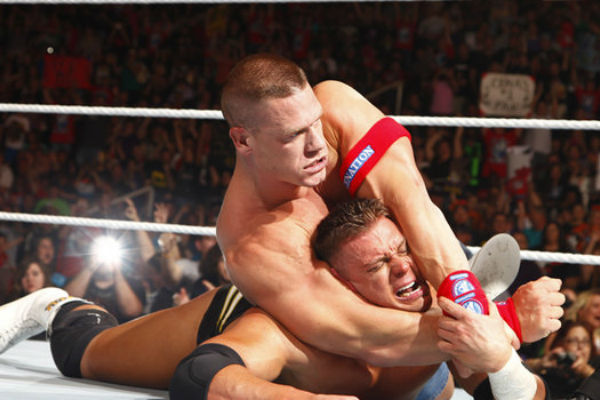
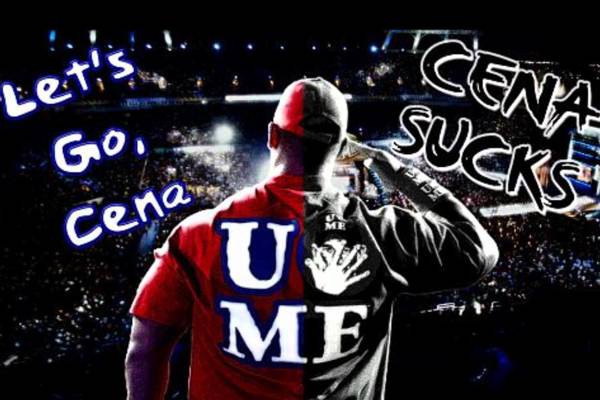
10 Things I Hate About John Cena

The real problem with WWE's golden boy, and what to do about it.
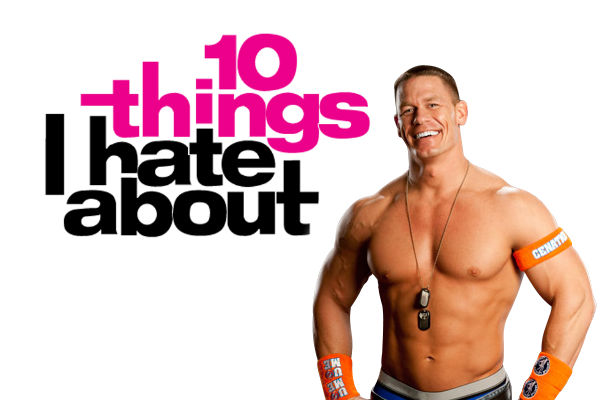
John Cena has been WWE€™s main event mainstay, the face of the company, for over a decade now. Throughout that time the only thing that€™s really changed about him is his shorts (€˜jorts€™ to cut-off cargo pants - definitely a trade-up). Now, in the old days the people that hated John Cena were the geekiest of the geeky wrestling fans, the ones that used to call themselves the IWC - the Internet Wrestling Community. However, that decade at the top coincided with the transition of online wrestling discussion from message boards and the so-called €˜IWC€™ to a more general, less nerdy dialogue, as the rise of social media, the smartphone and cheaper broadband connections made the internet widely available to all. That means that, in the last ten years or so, everyone€™s had an opinion on WWE€™s most controversial star, not just furious, sweary obsessives with Dorito crumbs in their beards and keyboards stuck on ALL CAPS. He€™s your prototypical, archetypal white meat babyface star: clean of cut, square of jaw, an American patriot who€™s about as unthreatening as the GI Joe action figure he resembles most. And yet still, there are valid reasons to raise an eyebrow at this most wholesome of figures. This article is a look at some of the problematic issues that Cena represents: some tongue-in-cheek, some a little more serious.

10. The Real John Cena Won€™t Stand Up

In the last few years, people have felt it important to draw a distinction between €˜John Cena€™, the fifteen-time world champion and heroic never-giver-upperer, and John Felix Anthony Cena, the teen bodybuilder turned wrestler, charity hand-picked representative of the largest wrestling promotion in the world for over a decade. Yes, one€™s a real person and the other is a character he plays on television, and yes, it€™s important to know which one you€™re talking about, especially given the fact that they look so similar and come with the same first and last name. Only - can everyone stop telling us so enthusiastically that they might hate the character, but that in real life John Cena is a stand-up guy, a sweetheart, a paragon of virtue etc etc? I understand that making sure that people differentiate between the two is important, but it€™s not €˜devil€™ for one and €˜angel€™ for the other. I know almost nothing about John Felix Anthony Cena, and the same goes for almost everyone reading this article. The man behind the gimmick remains a cipher: every time he's interviewed out of character, he's presenting only the corporate line, in the corporate style. It's just another character. Yes, that cheerfully corporate character does some amazing work for charity. I know that the effect Cena's had on the Make A Wish kids he's worked with is just wonderful - but charity work is part of his job (which nets him millions of dollars a year), so that€™s not the most reliable barometer of whether he€™s a cool dude or not in real life. Jimmy Saville did loads of charity work, and that department store Santa is a drunk who lives alone. Perhaps you've heard about all the allegations of repeated infidelity when Cena was married, and the muttering about his apparently deliberate burial of stars that might have proven a threat to his spot. To hear his detractors talk, he's killed as many careers as Triple H, just with a smile on his face instead of a sledgehammer in his hand. I'm sure there's just as much exaggeration and misunderstanding there as there is in all the talk of his imminent sainthood. The real John Felix Anthony Cena could be an angel, or he could be the devil: but he's far more likely to represent a moving point on that spectrum, like everyone else, and the only people who'll ever know for sure are his friends and family. Since that's the case, let's stop pretending that we know enough about the real life John Cena to fawn all over him.

9. He€™s What Happens When Two Huge Eras Collide

The character that Cena has played on television isn€™t just a professional wrestling gimmick, a white meat babyface in primary colours. He€™s the skewed product of the worst parts of two booming eras of WWF/E pro wrestling: the golden era of the eighties, and the Attitude Era. John Cena€™s overcoming-all-odds Superman character is a throwback to that huge rock n€™ wrestling golden era, when Wrestlemania was just beginning. Cena is the Hulk Hogan of the modern era, complete with younger audience, over-inflated physique and indomitable persona. He wears pretty much all of his own merchandise to the ring at all times, and often to public appearances, meaning that he€™s almost never out of his ring gear - because he€™s a human action figure, and this is his brand. That outfit that CM Punk and The Rock have poured scorn on is both a superhero costume and product placement. However, Cena also represents the worst part of the Attitude Era, all shouting, catchphrases and immediate recourse to gratuitous violence as a way of resolving conflict... not to mention the casual homophobia and misogyny, accusations that still befall The Rock whenever he returns to WWE to ad-lib some pre-prepared promos. The two aren€™t mutually exclusive, but they don€™t sit well together. The €˜John Cena€™ that€™s a cartoon character role model for the little kids that adore him is the same €˜John Cena€™ that delivers Attitude Adjustments and STFs to people that look at him funny, and who makes childish references to women he doesn€™t like being whores, and men he doesn€™t like enjoying the sexual company of other men he doesn€™t like. €˜John Cena€™ is a clear attempt to market a top level star that represents the two biggest eras of growth in the company€™s history. WWE just need to be much more careful about keeping the playground banter out of the playground. It's 'John Cena' who needs an attitude adjustment.

8. His Miraculous No-Selling Comeback Is Now An Official WWE Thing

You€™ve all seen it dozens upon dozens of times: Cena takes huge moves through tables or barriers and foreign objects to the face, but nothing fazes him. Often, he€™ll recover completely during the same match, abandoning efforts to sell the damage he€™s taken. It€™s irritating, because John Cena the performer is actually really good at selling injury - he€™s believable and credible, and it increases the drama of a match when he does it. He just doesn€™t do it consistently. Remember how hard they worked to sell us on Alberto Del Rio€™s lethal cross armbreaker? Now remember Cena powering through the hold while it was applied to an already (kayfabe) hurt arm, to suddenly pull off a powerbomb? How about taking a brutal DDT to the exposed concrete at ringside, only to leap back up literally seconds later and defeat all of his opponents one by one as though nothing had happened? The worst part is that it€™s contagious. Roman Reigns no-sells damage in exactly the same way. Look at the Royal Rumble this year: attacked, brutalised and carted off to receive urgent medical attention, he returned to the match half an hour later completely restored to health, selling nothing of that beatdown. Even Daniel Bryan had started to do it a little bit, before his hiatus with injury and eventual retirement: and Daniel Bryan was taught in-ring storytelling at the knee of William Regal. Thanks to a decade of Cena on top, WWE babyfaces with the €˜indomitable€™ characteristic don€™t seem to feel the need to sell any longer. Can WWE not see that this makes a nonsense of our suspension of disbelief, and makes us like these characters a little less? Where€™s the heroism in defeating someone that easily? Sami Zayn works hard for his victories, and he doesn€™t win all the time€ but when he does, it means more, and it takes something out of him. That€™s the kind of hero that kids should be looking up to, because life is hard and things don€™t come easily.

7. If He Can€™t Lose Cleanly, He Becomes Predictable

It€™s generally accepted that a babyface champion on Cena or Hogan€™s level gets an astonishing level of protection when it comes to deciding who they lose to and how. That means that on the rare occasions when they put someone over cleanly it means something huge - Daniel Bryan and Brock Lesnar are two obvious recent examples that spring to mind. However, in the vast majority of other matches the outcome is as predictable as canned laughter and TV dinners. That€™s why Cena€™s run as the United States Champion with the weekly open challenge last year was so rewarding for us long time fans to witness. The competitive matches that WWE€™s top guy was suddenly having on free television were fresh, dynamic and exciting, quickly becoming a standout segment on RAW. Why? Because for the first time in years, it seemed as though Cena could lose to someone below him on the pecking order. There shouldn€™t be this huge gulf of ability between the upper midcard and the main event. It makes everyone else in the company look like numpties. Bret Hart and CM Punk worked with everyone and (generally speaking) made them look as good as possible. Cena may be huge in the business, but he€™s smaller than Jack Swagger, an amateur wrestling standout, and Cesaro, a physical freak with astonishing timing. He should have trouble taking both those men out€ and it looks better when he does, makes him out to be a more heroic fighting champion. If he always defeats the odds, they€™re not that odd to begin with.

6. He Coasts On The Microphone

This is something that many WWE superstars who have natural talent on the stick are guilty of. Where someone like Daniel Bryan has to focus to deliver a cracking promo, people like Cena and Punk can often just wander out and adlib a brilliant promo. And, of course, when you know you can do that, sometimes you just don€™t try as hard. There are dozens of examples of Cena arriving at ringside and seeming to have nothing to say, amiably filling time until the arrival of his sparring partner in that segment. That kind of laziness is one of many reasons why people can find 'John Cena' so frustrating to get behind as a character, because when John Cena the performer genuinely goes for it he€™s one of the best in the business... and when he doesn't he's just a lazy hack, wasting everyone's time. Check out this one from 2014 again, a promo with Paul Heyman leading up to Cena€™s destruction at the hands of Brock Lesnar at SummerSlam: https://youtu.be/e--AmjzPB3Q?t=10m55s We want that guy. Primary colours and kiddy-friendly patter aside, we like that guy. He could do with calling everyone €˜Jack€™ a little less, but that John Cena? That John Cena is a hero and a main eventer that everyone can get behind.

5. He's A Narrative Cul-De-Sac

This complaint comes with a mournful sigh, sadly. John Cena doesn€™t bury as many people as his haters seem to think he does. The buck doesn€™t stop with him when it comes to his creative, as it did with Hulk Hogan in WCW for example. Many of the examples of Cena €˜keeping people down€™ come from the short-sighted, reductive writing that€™s been associated with the majority of the WWE product for as long as Cena has been in and around the main event. But Cena does have stroke backstage: surely, if there was an angle or a finish that he felt was off, he could use that stroke to have it rewritten or rebooked? Well, absolutely€ but let€™s not blame on malice what could be explained by incompetence. Maybe he€™s just not very good at that kind of storytelling - the kind of careful plotting that good booking needs. He wouldn€™t be the first big star to prefer to leave it to the writers and agents. Still, working with Cena tends to do more harm than good to up-and-coming stars. Bray Wyatt and the Family were made to look foolish by him. In six months, the Nexus went from the fearsome faction that destroyed Monday Night RAW to a selection of jobbers that couldn€™t keep Cena down for more than a few seconds, let alone out for the count. Cena powered through Del Rio€™s devastating finisher with a bum wing. He crushed Rusev€™s advance to the top of the midcard, and the younger star has never recovered. And let€™s not even go into how working alongside Cena killed Zack Ryder€™s career. The best pro wrestling main event stars find a way to get their opponent over when their opponent puts them over. Bret Hart, I'm looking at you again. John Cena, on the other hand, is always booked to be the star of every angle, and no one else gets to play. He may not be intentionally burying his opponents, but when the result of entering into an angle with him is an inevitable loss in stature, is that just a distinction without a difference?

4. He's Not A Professional Wrestler

There's a misconception that, because Cena (the performer) is the hardest working performer WWE's ever had, that he's 100% committed to and passionate about professional wrestling. €˜John Cena€™ (the character) was created within the WWE system and John Cena (the performer) was raised as a WWE guy. He has few interests outside of work and now that his marriage is over and he€™s in a relationship with Nikki Bella it can be argued that he has no life outside of work. He€™s got WWE in his blood, not wrestling. The WWE style is ingrained in everyone who works there, but people like Cena haven€™t really ever known anything different. I mentioned that performers like CM Punk and Bret Hart could work with anyone: that€™s because they€™d worked with everyone. Cena€™s worked the same kind of matches with the same kind of people - often, the same people over and over again - for his entire career. In his day, Daniel Bryan could carry most mediocre wrestlers to a good-to-great match, and he very rarely had a bad one. John Cena can€™t say the same, and it€™s not just because Bryan was objectively better than Cena. It€™s because, despite a sixteen year career, Cena has little breadth of experience. Bryan could have left WWE in 2013 and gone back to being Bryan Danielson in Japan, or travelling the independents. If John Cena were released tomorrow, it€™s almost unthinkable that he€™d go and wrestle somewhere else. He€™d be more likely to segue into a television or film career, something he's already sowing the seeds for.

3. He Lives In His Own Private WWE Universe
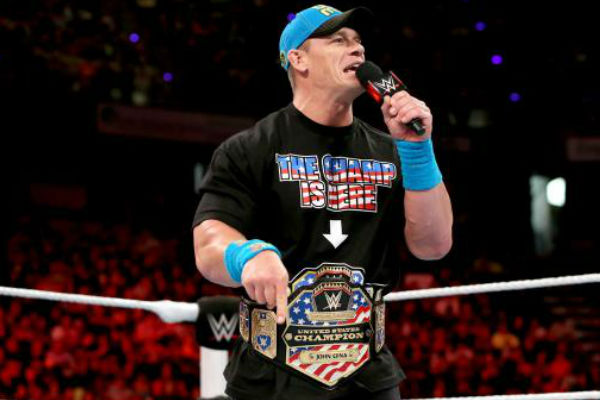
Continuing on from that, Cena (the character) doesn€™t exist in the same world as the rest of the WWE roster. Other guys wear one of their own t-shirts backstage and on their way to the ring because otherwise they€™d be wandering the arena for hours on end in what amounts to their underwear. Like I said earlier: Cena wears his merchandise like it€™s a superhero costume. Crowd reactions don€™t matter to Cena - they don€™t change how he€™s booked or really affect how he acts. Not only that, but wins and losses don€™t really affect him (beatdowns even less so). After losing to The Rock at Wrestlemania in 2012, he had the so-called worst year of his career. During this annus horribilis, he beat Brock Lesnar in his first match back in the company, main evented 75% of the year€™s pay-per-views, and never lost cleanly again. That€™s John Cena€™s version of being in a slump. Since Cena€™s got to feud with someone, he ends up tangling with people who exist in a more reality-based world: people who lose cleanly occasionally, who don€™t come to expect the main event will be handed to them, who aren€™t handed regular title shots. Since Cena rarely loses cleanly, and rarely sells consistently, the default booking position is that he will win his match, probably cleanly, barely selling the offence of his opponent. Afterwards, he will smile and joke as if the half-hour slugfest he's just had never happened. His opponent will then have to carry on After Cena, entering into new storylines and feuds, but with less of an aura than they had Before Cena. That's their career, divided into two: BC and AC. He's not just an opponent: he's a cataclysmic event in a pro wrestling character's career, like an earthquake or a serious illness. Very few stars have the aura to survive a programme with John Cena. His loss to Kevin Owens last year was a beginning. The United States title open challenge series went a huge amount towards addressing this common criticism of the John Cena character: he sold consistently and believably in decent-length television matches, and narrowed the perceived gap between him and the rest of the roster. When he returns from injury, WWE should capitalise on that by continuing to book up-and-coming stars in competitive matches with Cena, keeping him a part of the same world as the rest of the roster. He should wear different clothes occasionally, too. Just a thought.

2. The John Cena Conversation

I addressed this a little in the introduction to the article€ but for the last decade, the John Cena conversation has gone along the same kind of lines. It€™s all €˜he buries potential competitors for his spot€™; €˜he can€™t wrestle€™; €˜he€™s for kids, not adult wrestling fans€™; €˜he should turn heel€™. As the hate began getting one-sided, more and more people came out of the woodwork defending Cena, because as many people loathe bandwagons as love them. These days, the John Cena conversation isn€™t really even about John Cena anymore. It€™s how smart you are, as a fan, to the business. It€™s about the kind of wrestling you watch versus the kind of wrestling you love. It€™s about what kind of a wrestling fan you are, and the value judgments you set aside for people who don€™t think the same way as you. As someone who writes about wrestling for a living, I get really, really bored with the John Cena conversation. I don€™t want to have the same old boring arguments about whether he can wrestle, or whether he buries people. I know his STF sucks, his punches look terrible and that he has the athletic ability of a Lego man, and of course the whole world would be better if he turned heel. That conversation has been going on too long. I don€™t care anymore, and I don€™t want him to stop being John Cena. I just want him to be part of good segments, good matches, good angles and good feuds. I want him to stop cutting promos he could deliver in his sleep and start burning the house down every time he picks up the mic, and I want him to give that Cena rub to people who could do with a boost in the eyes of casual wrestling fans - the Cesaros, the Owens', the Nevilles and the Zayns - like he did last year while holding the US title.

1. It's Silly To Genuinely Hate John Cena

When you€™re a pro wrestling fan, you invest a huge amount of your time, money and - let€™s face it - emotion into the shows and the characters you get into. We€™re one of the most passionate, pigheaded and unreasonable fandoms in the world: that€™s why we argue like unruly children over the slightest thing that we disagree about. And John Cena is one of the things we argue about the most€ but we don€™t have to. The John Cena conversation doesn€™t have to carry on until the man retires, or dies, or is convicted of a felony or whatever. The fact is, it€™s unreasonable and silly to really hate Cena. Oh, you can get flashes where it makes nothing but sense: when he put the Nexus down, I had a weird irrational moment when I fantasised about throttling him, and when he shouted at Kevin Owens for €˜not being a man€™ last year after he lost to him, I and many others felt compelled to shout back (I didn€™t, though. I€™m not a crazy person, I just play one on TV). Sometimes I really, really want to hate John Cena... but that's ridiculous. I€™m older than Cena, and like many of you I remember what wrestling was like a dozen years or more before he arrived on the scene. He€™s a product of the way Vince McMahon and the WWE do business in the 21st century. He was made in a WWE factory to be the WWE€™s top guy, and he does what he€™s been booked to do, what he was created to do. Hating John Cena because of everything he€™s not is like hating a pop star for not being a singer/songwriter in a band, or hating a Hollywood leading man for not being a chameleonic character actor. It€™s okay to prefer the hard-working, touring band or the acclaimed, award-winning actor, and it's okay to prefer the music or the films that they make: but there€™s still a place for pop stars, movie stars and John Cena in the world.

In this post: 
John Cena
 
Posted On: 
Contributor
Contributor

Professional writer, punk werewolf and nesting place for starfish. Obsessed with squid, spirals and story. I publish short weird fiction online at desincarne.com, and tweet nonsense under the name Jack The Bodiless. You can follow me all you like, just don't touch my stuff.