14 WWE Network Risks That WWE Worries About

Wwe Network ImageEach year when the WWE publishes it's annual report there's a long list at the end under the "Item 1A. Risk Factors" heading. This details the "risks and uncertainties associated with the business that could adversely affect the operating performance and financial condition." With the launch of the WWE Network, there's a plethora of new and specific pitfalls for WWE should something go awry.

14. Domestic TV Rights
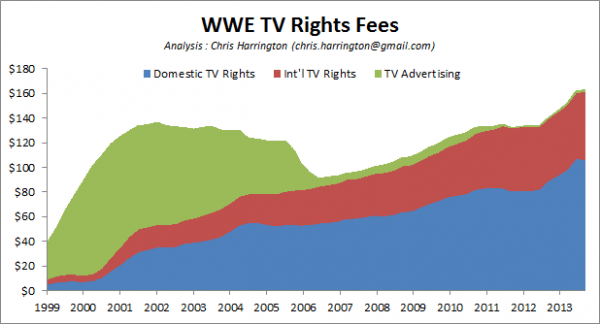
Last year, WWE successfully changed all of their NBCU agreements to be coterminous (ending on the same date) for September 2014. They're looking to make a new TV deal and whomever they agree to work with, that's where WWE will land for several years. WWE really wants to triple their domestic TV Rights Fees but so far it's very murky whether they'll even be able to double them. While TV Rights Fees are separate from the WWE Network, the honest truth is that WWE can easily tolerate years of profit losses on the WWE Network provided they secure an incredibly lucrative TV Rights package. Conversely, WWE will be terrible shape (expect a collapsing stock price) should they not leave TV negotiations significantly ahead of this year's $105.9M.

13. Lack Of Experience With Going Over-the-Top

Wwe Network As WWE puts it, "while we have significant experience monetizing content across many platforms, we do not have the same level of expertise in the distribution platforms that will carry our digital over the top WWE Network on a subscription basis and we could experience significant setbacks in such monetization efforts". Simply put, their concern is the "possible loss of very significant revenue". Regardless what Vince McMahon now claims, originally the WWE Network was conceived as a traditional television channel (either basic or premium) akin to either G4 or HBO. Going OTT gives a lot more power to WWE in regards to retaining revenue and not having to split it with the distributors. On the flipside, it's a new, expensive and difficult landscape to navigate and WWE has struggled with other ventures that were outside their wheelhouse (XFL, Casino, The World Restaurant, WBF, WWE Studios/Films). While they've hired people with television experience, I haven't seen any notable talent acquisitions from over-the-top streaming powerhouses like Hulu or Netflix.

12. End Of Pay-Per-View

In 2013, PPV was still a profitable and large source of revenue for the WWE. It provided over $34M in OIBDA (operating income before depreciation and amortization) and $82.5M worldwide revenue. Each WWE Network subscriber no longer needs traditional PPV coverage to get wrestling PPVs. Therefore, WWE worries that "distributors may decide to no longer carry such programming and we cannot require them to do so." The problem is that many WWE fans aren't going to order the network, and don't want to be left in the cold. We've already seen DishTV pulling the plug (leaving about 17% of PPV subscribers in the dark, some of which likely do no have broadband plans that make WWE Network feasible). What would happen if DirecTV followed suit? In order to cover a total collapse of domestic PPV ($66.9 million in 2013), that would require the WWE Network to maintain over 559,000 annual subscribers.

11. Subscribers - Attract, Retain And Replace

WWE acknowledges that "markets for entertainment video are intensely competitive", there is "vast amounts of pirated materials" and "competition with respect to service levels, content offerings, pricing and related features". With the WWE Network, WWE is thrusting itself into direct competition with everything from Cable On-Demand, Netflix, Hulu, Youtube, UFC Fight Pass, illegal content, DVD rentals and Blu-Ray sales. They are worried about seen as a "good value"; otherwise, they know that people will cancel their subscription because of "the need to cut household expenses, unsatisfactory content, competitive entertainment at a lower price and customer service issues". Certainly, we're already seeing that with households that tried WWE Network this past week but were frustrated with lack of support on certain devices (such as XBOX360) or service quality issues (for instance the live streaming problems during the NXT ArRival event). Historically, the conversion from trial to paid subscription is above 90% for services according to companies such as Netflix. WWE also frets about how they will attract these "new subscribers to replace subscribers who cancel" but does not outline a specific plan how to achieve this.

10. It's Expensive Launching The WWE Network

vince-mcmahon-millon-dollar They note that the WWE Network required "significant capital expenditures and operating costs to build the infrastructure, reconfigure and edit content for digital delivery and provide adequate marketing and customer services". In Item 6 "Selected Financial Data" they specify that WWE spent about $4.0M in 2011, $8.2M in 2012 and $10.7M in 2013 on "emerging content and distribution efforts, including WWE Network". That's $22.9M in the three years prior to launch (which will require annual revenue from over 191,000 subscribers). WWE Network, even at the lowest break-even tier of one million subscribers, was still $55M.

9. Timing Is Everything

WWE Network is launching at what the company considers "a relatively early stage" for a "subscription digital streaming" service. They make two claims: "our fans are technologically sophisticated" and "the market is not saturated". WWE doesn't elaborate much on the first claim (technologically sophisticated) which is certainly going to be a major component of succeeding in launching an "over-the-top" video network. I've written about my concerns when you match up the WWE viewer profile against the adoption of streaming services but initial Network adoption estimates look to be stronger than I originally anticipated. WWE is also concerned with market saturation and worries that "dominant competition in the market for this type of service going forward". Clearly, the market leader is Netflix with Hulu (a partner that WWE has worked with for Raw & Smackdown replays) is also a substantial player. Can WWE attract enough subscribers to sustain a service dedicated to their particular niche programming?

8. Partnerships And Trust

"If we are not successful in entering into and maintaining these relationships, or if we encounter technological, licensing or other impediments to our streaming content, or if viewers migrate from our platforms to platforms we do not or cannot utilize, our ability to compete successfully could be adversely impacted." WWE wants people to watch the Network through home computers & tablets (PC/Macs), streaming devices (AppleTV & Roku), game consoles, smart televisions & internet connected Blu-ray player and mobile devices. However, they note that "agreements with consumer electronics providers are typically relatively short term in duration" and "our business could be adversely affected if...a number of partners do not continue to provide access to our service or are unwilling to do so on terms acceptable to us." This is an important point because WWE did quite well getting a wide variety of devices to support the Network up front, including AppleTV. Apple's aggressive revenue split (70/30% Apple) is exactly the sort of thing that drove Vince McMahon to butt heads with MVPDs (Cable & Satellite Distributors) over sharing PPV revenue in the past. In the future, orphaning devices or not keeping up with the times could easily be a reason that WWE Network starts losing subscribers.

7. Information Security & Privacy

"Our servers and those of third parties we will use in our operations are vulnerable to computer viruses, physical or electronic break-ins and similar disruptions." More importantly, WWE notes that if hackers were able to access their system it would be "harm our business, be expensive to remedy, expose us to litigation and/or damage our reputation. Our insurance does not cover expenses related to such disruptions or unauthorized access". Indubitably, the Target Data Breach which exposed person data including credit card numbers for more than 110 million customers is looming large in many people's minds. While most of the network billing & streaming backbone is handled by MLBAM and the customer service by Harte Hanks, it's WWE's reputation on the line and as they point out, a breach would not only be costly but something they'd have to absorb since insurance wouldn't cover the costs.

6. Outside Contractors

"We will rely on an outside contractor to supply significant portions of the technology and infrastructure to deliver our content and interact with the user, including the payment methods." This is an uncomfortable place for WWE. In order to launch on all of these devices, they must depend on vendors which can "acquire, maintain, and enhance the technology to manage the streaming of content to our subscribers in a timely and efficient manner". Not only does this open WWE to fear that "subscribers' personal computers or other devices" could be harmed by "software used in our operations" but when "our technology or that of third parties we will utilize in our operations fails or otherwise operates improperly, our ability to attract and/or retain subscribers or add new subscribers may be impaired". This has been exemplified by two big hiccups during the initial launch: the sign-up/billing system crashing for four hours on 2/24 and the XBOX360 App remaining unusable for a full week.

5. Acts Of God

Hbk God 20060420 Should HBK's tag partner and noted nemesis of Vince McMahon, GOD, decide to smite the WWE Network they admit that they "do not maintain entirely redundant systems" and "a disrupting event could result in prolonged downtime of our operations and could adversely affect out business". This would include "fires, floods, earthquakes, power losses, telecommunications failures, break-ins and similar events". In today's age of cloud computing, we'd like to believe that no single failure would lead to the catastrophic collapse of the WWE Network. However, should the WWE Network crashes (as some fear it might during a period of exceptional demand such as Wrestlemania 30), that will be huge blow to customer confidence in the service and there could be enormous subscriber base ramifications down the line. We've seen other online networks such as PSN struggle with staying online during peak demand.

4. Net Neutrality & Government Regulations

Omega Glory Star Trek Constitution In the future, we may see some lobbying by WWE against laws that shape what rights internet users have. As noted, "growth and development of the market for online commerce may lead to more stringent consumer protection laws, which may impose additional burdens" on WWE. The company is especially concerned about the role of the FCC with "net-neutrality" rules. They worry about "potentially significant political and economic power of local network operators" and "discriminatory and anti-competitive practices" by local network operators which would "impede our growth, cause us to incur additional expense or implement usage based pricing, including meaningful bandwidth caps". WWE does not want to have to start paying the providers "due to heavy bandwidth use of audio/visual content" so that subscribers can access the Network. As noted, if "operators create tiers of Internet access service and either charge us or our service providers for, or prohibit us from being available through, these tiers, our business could be negatively impacted." Their risk statement goes even further about how they are worried that network operators "have an incentive to use their network infrastructure in a manner adverse to our success" and "provide preferential treatment to their data or otherwise implement discriminatory network management practices". This isn't just a domestic concern as "in international markets these same incentives apply however, consumer demand, regulatory oversight and competition may not be as strong". Certainly bandwidth caps are going to be a major issue for some customers, especially those currently on low-tier internet plans (will you upgrade just for the WWE Network?) or living in countries where unlimited internet is rare or expensive.

3. Big Brother And Your WWE Network Privacy

Wwe Network LaunchWWE is excited that they can track what you watch on the WWE Network and hopefully use those analytics to improve the service. However, they're also concerned that "we face certain legal obligations regarding the manner in which we treat... data supplied by our fans... and WWE Network subscribers". They worry that "increased regulation of data utilization practices that limit our ability to use collected data could have na adverse effect on our business". Furthermore, they go as far as to say that if they "disclose data about our subscribers in a manner that was objectionable to them, our business reputation could be adversely affected, and we could face potential legal claims". This appears to be a greater concern overseas (presumably in European countries) because they specifically mention that "internationally, we may be come subject to additional restrictions on our treatment of customer information".

2. Whose IP Is It Anyways?
"From time to time, third parties allege that we have violated their intellectual property rights." In this modern age, it's becoming increasingly difficult to protect technological innovations against all manner of legal claims, including patent trolls. Should WWE be "unable to obtain sufficient rights, successfully defend our use, or otherwise later our business practices on a timely basis in response to claims against us for infringement, misappropriation, misuse or other violation of third-party property rights, our business could be adversely affected". There's a lot of companies that are "devoting significant resources to developing patents that potentially affect aspects of streaming services" and there's "numerous patents that broadly claim means and methods of conducting business on the Internet." I am surprised to read that WWE, "have not searched patents relative to our technology". Obviously getting into a prolonged fight with a patent assertion entity could potentially cost millions of dollars and result in force further investment in "non-infringing technology" or entering "into royalty or licensing agreements" to keep the WWE Network online. Regardless of the true merit, the process will "result in costly litigation and diversion of personnel".

1. Suitable Marketing Channels

"We intend to spend significant amounts on marketing, including promotional offerings, to attract, retain and renew subscribers, but access to suitable marketing channel might not be available. If companies we plan to use to promote WWE Network believe that we could negatively impact their business, decide that they want to enter similar businesses or wish to support our competitors, we may not be given access to such marketing channels". This is an interesting and provocative statement. Starting the WWE Network was disruptive and did anger a lot of people in the television industry. USA Network isn't thrilled that WWE is telling people to switch over to the pre and post-Raw shows on the Network. Hulu isn't happy that the WWE Network is competing with them in the digital space, especially when replays of Raw & Smackdown programming is supposed to be living there exclusively. Multichannel Video Programming Distributors (Cable Companies and Satellite Providers) aren't happy that WWE is dropping the online PPV price and cutting them out of the revenue sharing. Surely, some of these fights are playing out during the domestic TV Rights negotiations with NBCU and other media giants. We're going to see some of these distributors turning more attention to promoting UFC and Boxing, still PPV heavyweights, instead of promoting upcoming WWE events. By launching during Road to Wrestlemania season, WWE ensured they could get the most eyeballs on the product during a critical period, but they also risked putting the cart before the horse as they don't have their domestic TV deals for 2015 and beyond locked down yet. They've stirred a hornet's nest and it's not entirely clear whether they can hit their target of one million customers without needing to cross into a lot of other marketing channels, some which might be a lot more hostile than originally expected. The WWE Network provides the company with a lot of potential and a lot of headaches. So far, it's been a bumpy launch but the real test will come Wrestlemania week!

In this post: 
WWE Network
 
Posted On: 
Contributor
Contributor

I'm a professional wrestling analyst, an improviser and an avid NES gamer. I live in Saint Paul, Minnesota and I'm working on my first book (#wrestlenomics). You can contact me at chris.harrington@gmail.com or on twitter (@mookieghana)