5 Reasons John Cena Is Hulk Hogan 2.0

Sports entertainment’s two biggest juggernauts!
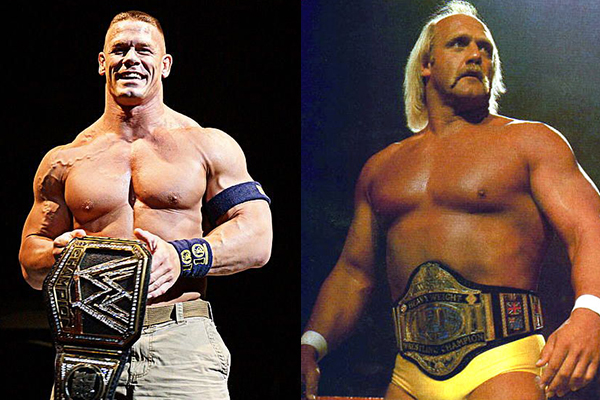
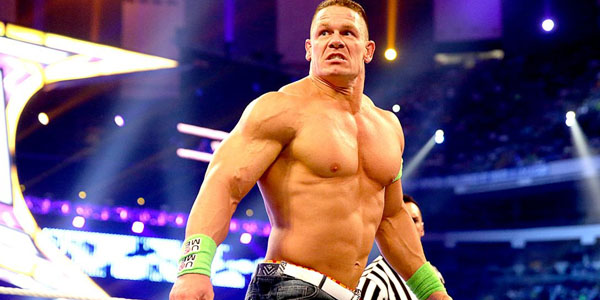
When it comes to John Cena, there are generally three camps: You hate John Cena. You love John Cena. If you€™re like me, you hate to love John Cena. Or vice versa. But why? As WWE€™s franchise player for over a decade, €œBig Match€ Cena has remained relatively flawless in and outside the ring. He€™s retained a stellar win-loss record, avoided public scrutiny, and is celebrated worldwide for his consummate professionalism and charitable work. Despite some injuries, the Cenation leader has never missed more than a few months of action and earned his mythic place among wrestling€™s Mount Olympus: from Stone Cold Steve Austin and The Rock to the Ultimate Warrior and (excluding the current controversy) the Immortal Hulk Hogan€” Perhaps that€™s just it: we€™ve seen this meteoric rise in the late 80s and 90s already. John Cena doesn€™t feel like an €œoriginal€ character as much as diesel doppelganger inspired by Hulkamania€™s world domination. Is John Cena merely Hulk Hogan 2.0, recycled for the PG Era to sell more phosphorescent t-shirts and armbands, while hopefully entertaining and inspiring us? Has Cena failed to live up to his predecessor and meet our lofty expectations? Or has Cena superseded the Hulkster by NOT giving us what we want? This article examines sports entertainment€™s two biggest juggernauts and the polarizing repackaging of the €œSuperhero Babyface.€

5. Debut Push

https://www.youtube.com/watch?v=ZEYcnqiRcVM Despite Hulk Hogan and John Cena sharing the same amount of syllables and rainbow-colored anything, their respective debuts and pushes were quite different. In 1979, Hogan victoriously debuted for the then WWF against unknown Harry Valdez...a wrestler almost as hard to locate as Sasquatch. Hogan was slowly built thereafter, floating non-exclusively between promotions like New Japan Pro Wrestling and the American Wrestling Association. When Vince McMahon purchased the WWF from his father to untie the territories, he handpicked Hogan as the company€™s keystone. Hogan looked perfect and was full of catchphrases endorsing three wholesome tenets of €œtrain hard, say your prayers, and eat your vitamins!€ Hogan was built against unstoppable monsters and ultimately claimed WWF gold from the villainous Iron Sheik at Madison Square Garden in January €˜84. However, John Cena didn€™t have it so easy. Cena, unlike Hogan, was not invincible at first. Vince learned that a hero needed to be flawed, that everything couldn€™t come too easy or else the superhero gimmick wouldn€™t run wild, brother!
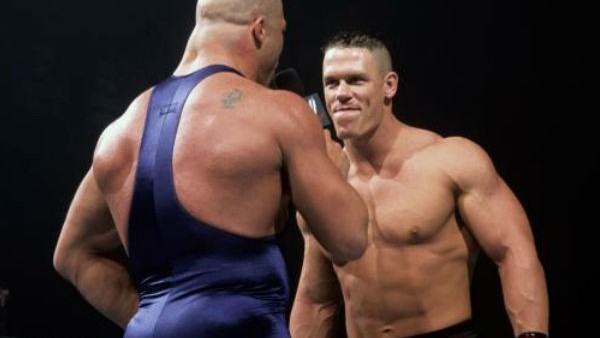
John Cena made his formal TV debut in 2002 against a much more reputable Kurt Angle. But unlike Hogan, Super Cena lost his TV debut and floundered during Vince€™s effort to establish a new brand of superstars during the €œRuthless Aggression€ movement. Yet Cena€™s colorful charisma was chock-full of one-liners and just as entertaining, especially during his fan-favorite Doctor of Thuganomics run. It was Cena€™s popularity, not necessarily his wins, which catapulted him up the ranks to claim his first WWE title at Wrestlemania 21. While Hogan held his first world title for an incredible 1,474 days, Cena only held his for less than a year. Hogan steamrolled competition, often burying developing superstars along the way, whereas Cena earned his stripes over the course of several years: he juggled various titles, fluctuating between the main event and mid-card. Cena was forced to endure ridicule from avid ECW fans in his feud with Rob Van Dam and being pinned by Kevin Federline€”yes, remember Britney€™s boorish boo? Neither did I. But everyone did remember Cena€™s tireless workrate.

4. Heel Turn

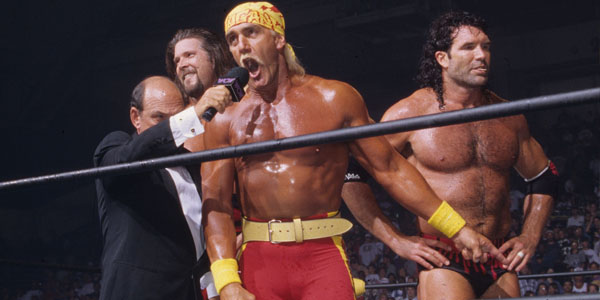
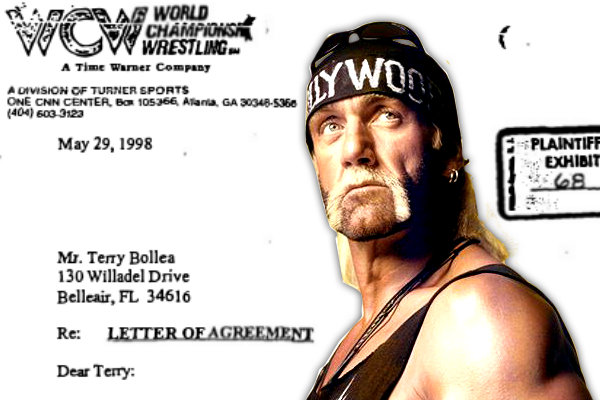
There are few wrestlers who drew more ire of fans for their €œgoodness€ than Hulk Hogan and John Cena. While Dwayne €œThe Rock€ Johnson quickly turned heel upon the infamous €œDie Rocky Die€ chants that quickly followed after his debut, Hogan and Cena played the long-term game. So when Hogan jumped ship to WCW in June €˜94, it was shocking but refreshing the longtime American hero turned on his fans and formed the NWO. Everything from Hogan€™s look to his name changed. Yet despite years of teasing angles, there seems to be no future indication of a Cena heel-turn€”because it already happened. Unlike Hogan, Cena is the face of a now publicly traded company. Thus, he can€™t turn traditionally heel, as who would sell as much merchandise or fill his philanthropic spot? While we all love Daniel Bryan, he€™ll have to pass concussion tests first. Therefore Cena discovered a way to subtly evolve his character, while adhering to €œnever give up€ in his matches, on his young fans, or the secret to his success.
Cena€™s complexity is based on inverting expectation. We want him to turn heel so bad, we boo and chant €œCena Sucks.€ We root for Cena to turn, likely because he is in a premiere position to enact change and upset the status quo€”much like Steve Austin, The Rock, or CM Punk had beforehand. We also, as fans, love raising heroes up to tear them down and watch their fall. It€™s our cathartic release. But the more Cena doesn€™t acquiesce, the more he smiles and flaunts his unbreakable goodness. Cena purposefully doesn€™t change his predictable moveset (not counting that abysmal springboard Stunner), and often gloats in his promos that we can€™t make him €œembrace the hate€, as Kane tried to in their 2012 feud. Cena€™s brilliance comes from his longevity and refusal to break his character, building heat like no other €œface€ before him by condescending our attempt to destroy his good name. The greatest trick the devil ever pulled was convincing the world he didn€™t exist, and Cena has found a tactful, subversive way to pull the wool (or one of his headbands) over our eyes.

3. The Rock

In a Q&A session with The National, Hulk Hogan claimed that he was supposed to wrestle John Cena at WrestleMania XXV as part of the big 25th Anniversary event. But thus, the dream match-up never manifested when Hogan suffered from lingering back injuries. The two did share a handful of RAW matches, but we never got a chance to witness the battle between an absurdly effective Five Knuckle Shuffle Vs. Hogan€™s Atomic Big Boot & Leg Drop. With neither man able to test their drawing power against one another, they each sought and wrestled one of the few men who could test their limits: Dwayne €œThe Rock€ Johnson, WWE€™s Golden Boy. The Rock, unlike both Hogan and Cena (at the moment), has rocketed to the number #1 box-office action star. There€™s not a single property alive that won€™t explode with Dwayne Johnson attached, no matter how sophomoric the film or entertainment. The Rock€™s is also one of the few, if only megastar, that has been used as a benchmark for Hulk Hogan and John Cena. The Rock€™s matches with both weren€™t as much stamps of approval, but tests to the enduring brand of both Hogan and Cena.
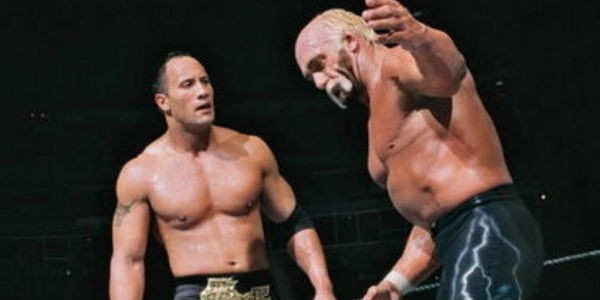
Wrestlemania 18 featured Icon vs. Icon: Rock Vs. Hogan in a match deciding once and for all who would be immortalized as the greatest ever. While obviously subjective, the match was a once-in-a-lifetime event where€”if you didn€™t go blind from the flashing cameras€”we saw an aged Hogan lose cleanly to The Rock. The match quality itself was standard, considering how immobile Hogan was compared to the Rock€™s inhuman athleticism, but established that the Hogan brand itself was enough to tell a great story. What was meant to be Hogan€™s swan song validated any doubts we had about either men€™s legacy, if you were even silly enough to reserve any doubt. Nearly a decade later, Cena found himself in The Rock€™s crosshairs at WrestleMania 27. Like Hogan, an overconfident Cena lost clean, but would go on to avenge himself at WrestleMania 29 and ending The Rock€™s last title reign. Just as Vince had booked before, Cena met an obstacle and overcame it to reinstate his top-billing reputation.

2. Creative Control

wwe / WCW Any high-profile superstar earns the right to partly steer their career after working their way up the bureaucratic ladder. But only after there has been a fair amount of reciprocity, giving back to those following behind. It€™s one thing being the face of a company, but another to leverage personal interests jeopardizing another€™s ascension. Creative control is as much a privilege as it is a curse. Hogan has an extensive history refusing to relinquish creative control or do favors for fellow talent. Just ask Eric Bischoff and Ted Turner, who€™ve cited letting the inmates run the asylum as the precursory downfall of WCW (obviously along with poor financial management and the AOL-Time Warner merger debacle). But Hogan had long before upset Vince McMahon. In his 1993 return alone, Hulk refused dropping the strap to Bret Hart because of the Hitman€™s undersized stature. Instead, Hulk agreed to put over Yokozuna, where even then Hogan didn€™t lose clean but by a €œfireball shot€ from a ringside Japanese photographer. While Hogan recently tried to aid the distant second TNA/Impact Wrestling, his old habits failed to build new stars. Hogan€™s lingering injuries and Dixie Carter€™s limited budget ultimately led to his exit. Cena, however, has surprisingly grown into a generous elder statesman. While we can ridicule Super Cena for his absurd comebacks and often bouncing back with a single AA, he€™s matured into a quality standard insuring the next generation of superstars can stand the heat. Cena€™s recent matches with NXT graduates like Kevin Owens or willing contenders to his weekly US Title Open Challenge have elevated countless superstars. Safe to say, Cena€™s single-handedly reestablished the US Title with prestige and reinvigorated an aimless mid-card now seeing a resurgence€”partly in thanks to WWE€™s new Performance Center and developmental system. Contrary to Hogan, who rarely entertained (or at least, eventually undermined) giving rising superstars a platform to shine, Cena strives to strengthen and secure his WWE brethren€™s future, no matter their position on the card. Yes, Cena certainly makes much more bank than his cohorts, but as a living commodity he shares the wealth built in his name.

1. Legacy

Both Hulk Hogan and John Cena have undoubtedly, regardless of current controversies, cemented their legacies. They€™re crucial to pro wrestling / sports entertainment€™s current growth and maturation. There are also few others as dedicated to philanthropy like Hogan and Cena. For decades, both have volunteered for Make-A-Wish and countless other charities. Not only is their altruism celebrated worldwide, but contributes to their in-ring persona: good guys who always do the right thing. But while Hogan€™s faltered throughout his career€”from 1994€™s steroid scandal to 2015€™s unfortunate rascism blacklisting his current WWE relationship€”Cena has, almost irritatingly, remained untouchable: even transitioning into film while remaining a grueling WWE schedule and public spotlight. One could go on to cite Cena€™s unshakeable moral compass for his success or his undeniable work ethic, but it€™s Cena€™s ability to get under our skin and inspire€”even when we want to see him fall€”that wins us over.
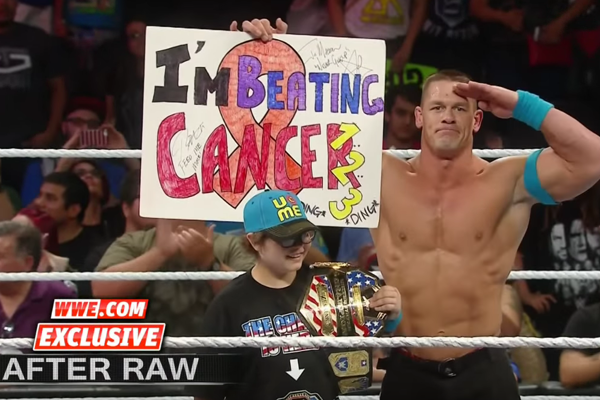
There are innumerable ways in which John Cena has inspired us, but I ask to look no further than the June 1st, 2015 episode of Monday Night RAW. Cena and Owens had begun their feud, Owen was positioned as an envious father whose own son liked Cena more than him. During the middle of a heated promo, Cena suddenly turned from his adversary to address a cancer-survivor in the crowd: a small, quiet child adorned in kaleidoscopic Cena merch and holding up a colorful sign declaring €œI€™m Beating Cancer!€ And it was here, almost breaking kayfabe to address us directly, that Cena pointed at the child and declared: €œIf I say or if I wear the words, €˜Never Give Up,€™ not only am I telling the truth, but I am encouraging old and young alike to do the exact same thing!€ Hogan will hopefully mend his fences with WWE and continue to inspire future fans with his stellar library of matches, promos, and every other good deed he€™s performed throughout his groundbreaking career. But it€™s Cena, who evolved with with the times and leading the next incarnation of superstars. Question is: who will fill Big John€™s shoes when the time comes?

Contributor
Contributor

Eli Samuel is a NYC-based writer, producer, and creative consultant. His work is hosted at DiscourseFilm.com