10 Best Mad Scientist Movies

It's alive, it's alive!

The character of the mad scientist has permeated literature and cinema since the days of the Gothic horror novel. Whether they're evil geniuses out for power and control or well-meaning scientists trying to do something good for the world who just happen to be missing a few marbles, it's a staple character of dozens of horror and science fiction works, as archetypal as the wise sage. The mad scientist character is also more than capable of transcending genres - just as they can serve as living embodiments of the worst excesses and indulgences of mankind, so too can they make us laugh with their wild eccentricities. They push beyond the boundaries found acceptable by their peers and others around them, taking things one - or several - steps further than the sane. In a sense they are projections of the darker side of ourselves, daring to push their experiments in a direction devoid of the sense of ethics which guides the majority. Transcendence is out in cinemas, and already it€™s taken a critical panning and is well on the way to becoming Johnny Depp€™s fourth flop in a row, proving that good ideas, even well-worn ones, can be handled badly even if you throw £100 million at them. To console readers over this disappointment here€™s a selection of ten great mad scientist movies, ones which get it right where Transcendence got it so wrong.

10. Re-Animator

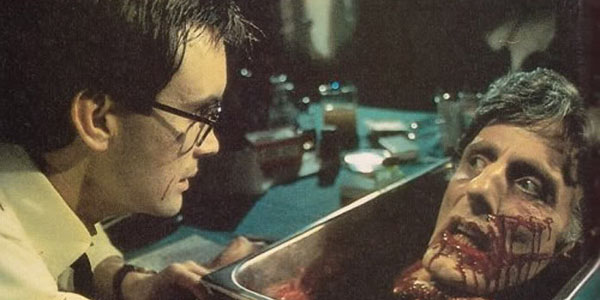
There have been a number of great actors through cinema history who have been a little too successful with an earlier role, to the point that audiences come to identify them almost exclusively for a particular performance. Anthony Perkins as Norman Bates in Psycho is an obvious example - Jeffrey Combs as Herbert West in the cult classic Re-Animator is another. As the title implies, Re-Animator is a quintessential mad scientist movie through and through, with Herbert West determined to bring the dead back to life no matter the cost. Based on the story by H. P. Lovecraft called Herbert West - Reanimator, director Stuart Gordon takes the Frankenstein-esque model and injects it with a sharp streak of bizarre comedy and full-on gore, creating one of the greatest horror-comedies of all time.;. Released in 1985, Re-Animator can be viewed as part of the golden age of Hollywood horror when excess and gore was splattered across the screen with macabre delight, and indeed the genre today often feels like little more than lazy, corporate fare completely lacking in the inventively gleeful over the top excesses of their predecessors. Gordon and Combs went on to make two sequels, both entertaining but never quite reaching the same heights as the original.

9. The Incredible Hulk

When Ang Lee had a stab at bringing the green giant to the screen in 2003's Hulk, the reception wasn't the best - while some think it's a decent and underrated attempt at filming the essence of the character, many fans were not impressed, so several years later Marvel Studios reacquired the rights and handed it over to writers Zak Penn and Edward Harrison and director Louis Letterier. The result, The Incredible Hulk, while certainly no masterpiece, is nevertheless a fairly solid comic book adaptation which more than compensates for the lack of action many people criticised about Ang Lee's version. Edward Norton stepping into Eric Bana's shoes to play Bruce Banner/Hulk (who in turn has since been replaced by Mark Ruffalo), as the scientist for whom getting mad is what it's all about. A lighter, faster paced and leaner movie than its predecessor, this time Banner goes up against Emil Blonsky, a soldier who takes on superhuman qualities after loaning his body for a military experiment and becomes the Abomination. The backlash against Lee - who had attempted to make a more cerebral film examining the conflicted nature of Bruce Banner, with a hit and miss finished product which had great moments intermingled with more ponderous ones - compared to the significant success of The Incredible Hulk points to the preferences of the audience, who prefer loud, action-packed spectacles when it comes to Hollywood entertainment. We'll have to wait and see if Ruffalo can carry the character through a feature of his own - for the time being, Marvel can't seem to make their minds up whether or not a sequel is in the works.

8. The Cabinet Of Dr. Caligari

Widely considered to be one of the most influential horror movies of the silent era, Robert Weine's The Cabinet of Dr. Caligari is great example of a film from the German Expressionism art movement. It fuses stylised sets combined with eccentric performances to achieve a uniquely unsettling atmosphere, as effective today as it was when it was released in 1920. For a film so old there are a number of genuinely chilling sequences, not least the sight of the creepy sleep-walking puppet murderer Cesare (Conrad Veidt), lumbering out of his coffin as he goes about his proxy killings for the titular Dr. Caligari (Werner Krauss). As with F. W. Murnau's silent masterpiece Nosferatu, the angular sets and deliberately unnatural movements of the actors create a mood of unreality €“ a sense of dislocation from the familiar which enhanced the ambiguity of the flashback sequences. We're no longer in the real world €“ we're inside the fractured mind of a lunatic, the darkest aspect embodied in the tall, gaunt form of Cesare as he looms menacingly over his sleeping prey. Cesare may be the one carrying out these atrocious acts, but it is Dr. Caligari himself who is the crazy architect behind them all. Or is he? As the audience travels back and forth between the psychiatric hospital and the events as we are told them, the line between fantasy and reality becomes increasingly blurred.

7. Metropolis

What's the first thing you think of doing when your beloved one dies? Well, if you're a mad scientist, one option might be to replace them with a robot and hope that nobody notices. That's the course of action taken by Rotwang (played by Rudolf Klein-Rogge) in Fritz Lang's science fiction landmark, Metropolis. Klein-Rogge pretty much set the standards for how to portray the mad scientist on the silver screen, his wild-eyed frantic scientist one of the great performances of the silent era. It helps matters considerably that Metropolis is such a groundbreaking movie - just as Weine's The Cabinet of Dr. Caligari utilized the expressionistic aesthetic which was so popular in Germany at the time, so too did Fritz Lang draw upon the art movement to inform the look and feel of his film. It's amazing to think that, at the time of its release, Metropolis heavily divided the critics, with many of them lambasting the film as overblown, muddled and far too long. Still, it has more than stood the test of time, while its message about conformity and absolute power is as strong today as it was in 1927.

6. The Boys From Brazil

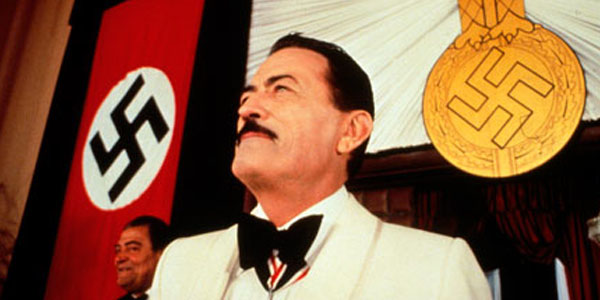
Sadly, every so often the real world throws up a mad scientist who takes the horrors and excesses of fictional realms to disturbing new heights - one such scientist was the Nazi Dr. Josef Mengele, otherwise known as the Angel of Death, a man whose fascination with genetics and deformities led him to commit an untold number of unspeakable acts on the victims who filled the concentration camps during the Second World War. The Boys From Brazil picks up after the war and takes us to Paraguay in the 1970s, where a number of high profile Nazis were thought to be hiding out in the aftermath of the war, holding clandestine meetings and plotting the return of the Reich to the global stage. It follows Ezra Lieberman (played by Laurence Olivier) an aging Nazi hunter who sets out to track down Mengele and gets more than he bargained for once he's deep inside the jungles of Latin America. The Boys From Brazil merges history, fiction and speculation to good effect, with an all-star cast which also features James Mason and Gregory Peck and able direction from Hollywood stalwart Franklin Schaffner which swiftly drives the intrigue forwards. As for what it is that Mengele is cooking up in his jungle laboratory, let's just say it bring a new definition to the expression "master race".

5. The Fly

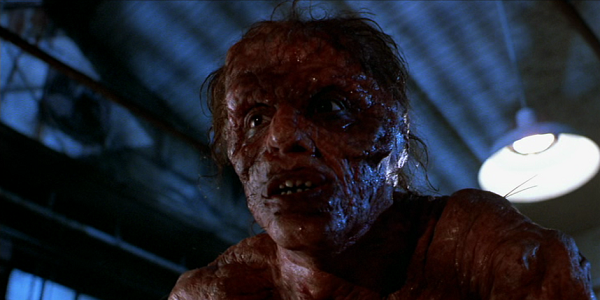
Anyone who has seen the original 1950s version of The Fly will have a good idea of just how wonderfully tacky and entertaining American B-movies of the era were. It's hard to believe that they scared the pants off audiences at the time, not least because by today's standards the special effects are so bad they're good. The same can't be said for David Cronenberg's 1986 remake, which, like John Carpenter's remake of The Thing From Another World, took gross-out gore in whole new directions. The premise for The Fly sees our mad scientist, Seth Brundle (Jeff Goldblum) trying to perfect a teleportation device. After accidentally teleporting himself along with a common housefly, Brundle slowly starts to deteriorate, as his body begins to fall apart - literally - while rationality and compassion slip away from his mind. Goldblum delivers a solid performance which both plays on his familiar acting style as much as it subverts it, and there's a surprisingly tender undercurrent to his plight which adds a layer of complexity. David Cronenberg was the ideal choice of director for The Fly, obsessed as he often is with cataloging man's morbid fascination with excessive body horror. Another classic 80s horror movie, The Fly also boasts some of the most disturbing and memorable practical special effects in film history, a reminder that pre-CG was still a time for impressive, visceral visual design.

4. The City Of Lost Children

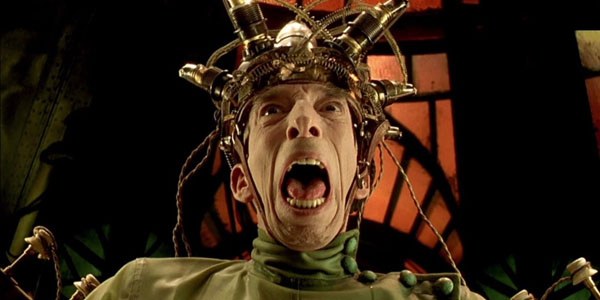
Jean-Pierre Jeunet and Marc Caro made a name for themselves with the visually distinct, hyper-stylized film Delicatessen - their follow up, the equally visually daring movie The City of Lost Children, delivered to the screen another deliriously bonkers scientist, this time one who is intent on stealing the dreams of children. Straddling surreal fantasy and steampunk-inspired science fiction, The City of Lost Children stars Ron Perlman as a sailor and harpooner by the name of One who sets out to rescue a child and in the process discovers the strange bio-mechanical kidnapping cult. The mad scientist Krank (a wonderfully over-the-top Daniel Emilfork) is rapidly aging on account of his inability to dream himself, and needs the dreams of children to stave off his imminent death. Krank is without a doubt one of the foulest, most demented mad scientists to have graced the screen, and The City of Lost Children, with its sinister mood and darkly inventive visual style, deserves the status of instant cult classic it has since earned. Such a shame, then, that Jeunet seemed to lose his knack for ingenuity by the time he came to filming Alien: Resurrection - although the pressures of the studio were perhaps as much to blame as anything.

3. Frankenstein

Few screen presences have had such a cultural and historical impact as that of Boris Karloff made up as Frankenstein's monster in James Whale's seminal 1931 adaptation of Mark Shelley's classic novel. The flatted head, vacant stare and bolts protruding from his neck have left an indelible imprint on the minds of millions, so much so that it has become the definitive appearance for the character. Frankenstein is a film that more than deserves its enduring reputation as one of the greatest horror movies ever made - far from being a cheap thrill, Whale shoots with an incredible flair for invention and an eye for striking compositions which make full use of the potential for black and white photography. Karloff inhabits the role of Frankenstein's monster with just the right degree of sensitivity required - the reactionary, narrow-minded villagers (standing in for society as a whole) are the true villains, after all. Of course, it's Heinrich Frankenstein himself who we have to thank (or blame) for this particular tale, a man hell-bent on bringing humans back to life via the power of electricity no matter what the price. It's interesting to note that some of the special effects were achieved by using a real life Tesla coil, made by a Nikola Tesla himself, who, while perhaps not mad, was certainly an eccentric genius on a level rarely seen throughout history.

2. The Back To The Future Trilogy

While some mad scientists preoccupy themselves with particularly nefarious ends such as reviving the dead or creating a superhuman race, others have far more intriguing ambitions which lack the sinister overtones. Dr. Emmett Brown - Christopher Lloyd's wild-haired inventor in the 80s classic Back to the Future series - is one such scientist, who dreams up what is perhaps the coolest creation in mad scientist movie history: the time traveling DeLorean. As mad scientists go, Doc Brown is without a doubt the most benign on this list - he's also, thanks to Lloyd's flamboyant performance, perhaps one of the most entertaining to watch. One of the joys of watching the Back to the Future trilogy is seeing the various characters in their different manifestations throughout history (and into the future). Brown, in contrast, rarely changes - as grand architect of the time traveling antics which become increasingly out of control he spends much of the franchise pulling the strings, increasingly desperate to resolve the paradoxical messes his invention leads to. Co-writer Bob Gale reportedly came up with the idea for Back to the Future while pondering whether or not he'd be friends with his father if they'd gone to school together, and it is this focus on characters which makes the series such a winner, trumping even the wonderful attention to detail of past and future small town America and giving the action its emotional core.

1. Dr. Strangelove Or: How I Learned To Stop Worrying And Love The Bomb

Stanley Kubrick was no stranger to the darker side of human nature, mining the territory for much of his career. But with Dr. Strangelove Or: How I Learned to Stop Worrying and Love the Bomb, his 1964 masterpiece in Cold War satire, he exposed both the absurdity and hubris of the leading scientists responsible for escalating the threat of nuclear war. The character of Dr. Strangelove - the ex-Nazi scientist who now works for the American government - points to the real world CIA Operation Paperclip, in which top German scientists were "poached" by the organization to help them develop technology. Besides offering a scathing commentary on the folly of aligning with notable war criminals, Strangelove also encapsulates the insane war planning of the era, in which Mutually Assured Destruction (the acronym for which is more than fitting) drove an increasingly dangerous policy of nuclear brinksmanship. Peter Sellers once again proved his incredible acting abilities, playing not just the role of Dr. Strangelove but also a British RAF officer and the American President. The movie's ending, in which a montage of nuclear bombs explode to the soundtrack of We'll Meet Again by Vera Lynn is a striking sequence of satire at its darkest. As for the pie fight which didn't make it to the final cut, Kubrick's explanation for dropping it sums up the point of the film: "I decided it was farce and not consistent with the satiric tone of the rest of the film." Satire doesn't come much better than this. Enjoyed reading this list? Are there any notable mad scientist movies you felt should have been included? Why not post a comment below?

Contributor
Contributor

Andrew Dilks hasn't written a bio just yet, but if they had... it would appear here.